
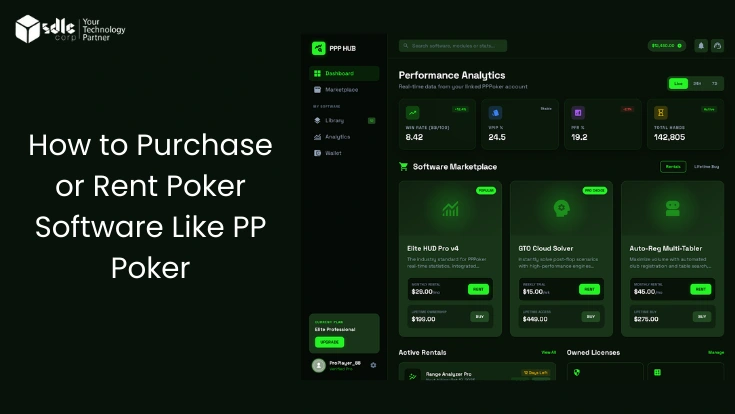
How to Purchase or Rent Poker Software Like PP Poker
When you search for poker software for sale, most listings look similar. The real difference is in the parts operators depend on every day: wallet tracking, club controls, agent hierarchy, rake rules, admin logs, settlement reports, anti-cheat tools, and export access.
Key Features of Poker Software Like PP Poker
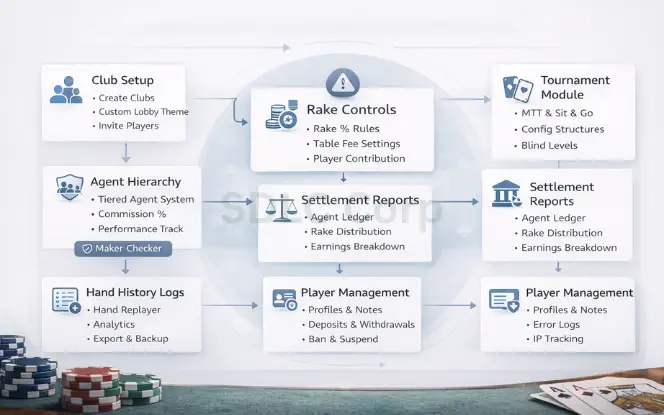
Most PP Poker-style products use a club-first operating model. Because of that, club roles, permissions, and settlement reports matter as much as table UI. A reliable poker game software package should cover the full club workflow and provide clean records for disputes, payments, and audits.
Club and union setup
Review club creation, role permissions, player limits, union controls, and operator-level configuration.
Agent hierarchy
If your model uses agents, verify settlement views, commission logic, permissions, and adjustment logs.
Rake and settlement
Check rake caps, promotion controls, hand histories, settlement reports, and export formats.
If a vendor calls a product “PP-style,” ask them to show club creation, role assignment, rake setup, settlement reports, adjustment logs, and hand-history exports in one continuous demo.
Buy vs Rent Poker Software: Which Option Is Right for You?
You can buy online poker software under a license, or you can rent white label poker software as a hosted service. Both options can work, but they differ in launch speed, control, hosting, data ownership, upgrade risk, and long-term cost.
| Factor | Buy Poker Software | Rent / White Label / Turnkey |
|---|---|---|
| Launch speed | Slower because setup, hosting, and integrations take time. | Faster because the core stack is usually ready. |
| Control | Higher because deeper logic and workflow changes can be requested. | Medium because vendor policies and shared infrastructure may limit changes. |
| Hosting | You can choose cloud, region, and infrastructure model if the contract allows. | Often vendor-hosted, with limited infrastructure control. |
| Data ownership | Stronger if contracts clearly define export rights and database access. | Varies, so export terms and exit support matter more. |
| Upgrades | Your team controls release timing, but also carries release risk. | Vendor pushes updates, which can reduce effort but create dependency. |
| Long-term cost | Higher upfront cost, lower recurring platform fees later. | Lower upfront cost, but recurring fees can grow over time. |
If you need strict hosting rules, deeper customization, or a stronger exit path, buying poker software can be better. If you want speed and lower upfront cost, renting a turnkey poker software solution may fit better.
Step-by-Step Process to Buy Online Poker Software
Check the live demo
Ask the vendor to create a club, set rake rules, assign roles, generate settlement reports, pull hand histories, and export records. If exports are slow or unclear, dispute handling will be painful.
Test the sandbox
Test deposits, withdrawals, refunds, webhook retries, manual adjustments, approval limits, reason codes, and gateway idempotency before signing.
Confirm terms
Lock down export rights, wallet ledger access, hand history exports, audit logs, migration support, SLA response times, and exit timelines in writing.
How to Rent Poker Software: White Label vs Turnkey Options
White label poker software
White label models are useful when speed matters. You can launch faster with existing infrastructure, branding options, hosted workflows, and support from the platform provider.
Turnkey poker software
Turnkey models may include hosting, back office, payment setup, maintenance, and support. Confirm what is included before comparing offers.
If you rent, your exit plan matters more than your launch date. Require exports for hand histories, wallet ledger entries, club reports, settlement reports, and admin audit logs.
Poker Platform Software Architecture: What You Need to Know
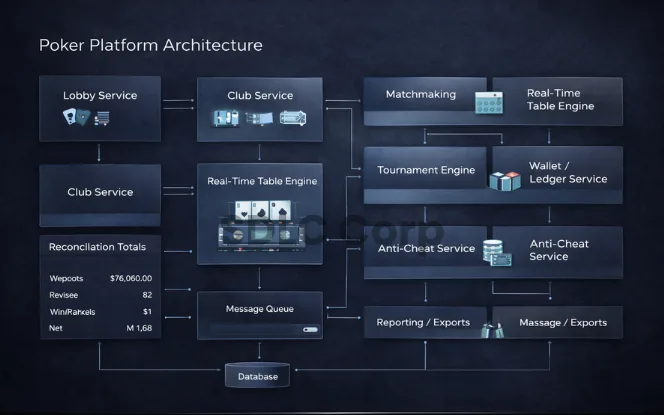
Architecture affects latency, stability, and player disputes. Even if you rent the software, you should understand how the platform handles lobby services, matchmaking, seating logic, real-time table state, tournament engines, admin services, audit logs, and reporting exports.
- Ask where table state lives and how the system recovers after failure.
- Confirm reconnect behavior during an active hand.
- Request load-test evidence and concurrency limits.
- Compare platform limits with your player-growth plan.
Payments and Wallet Setup for Real Money Poker Software
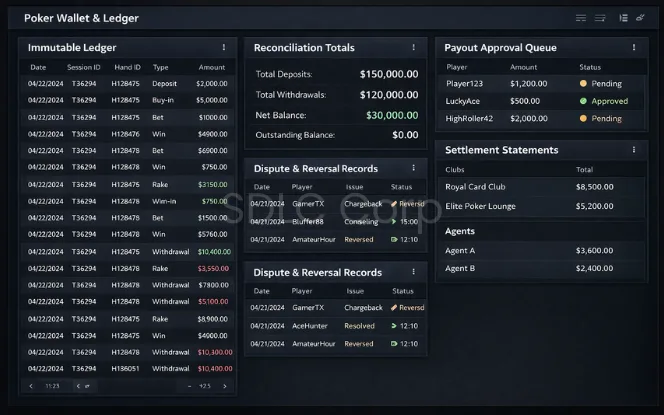
Payments are where many poker operators face operational risk. A real-money platform needs a ledger, not a simple balance number. Every deposit, bet, win, rake deduction, withdrawal, refund, and manual adjustment should create a traceable entry.
Ledger and reconciliation
Confirm reconciliation reports, wallet totals, dispute tracking, reversal records, and settlement statements for clubs or agents.
Gateway reliability
Ask for webhook samples and idempotency rules. Without idempotency, payment retries can create duplicate balance credits.
Secure Poker Software: Anti-Cheat and Fair Play Features
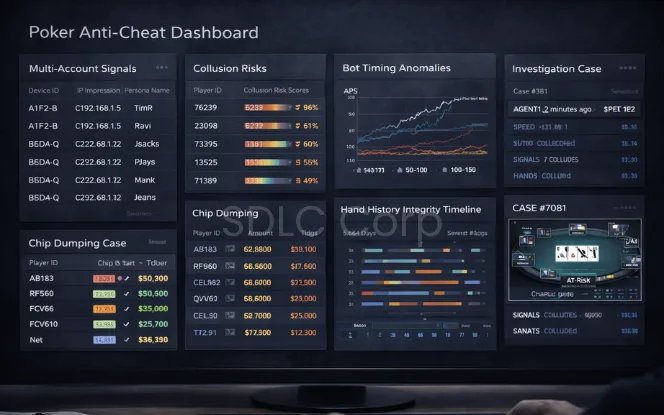
“Secure” should mean specific controls, not generic promises. Review both platform security and game integrity before choosing a vendor.
Admin security
MFA, role-based access, rate limits, audit logs, and protected operator dashboards.
Anti-cheat controls
Multi-account detection, device signals, bot indicators, collusion patterns, and chip-dumping checks.
Hand-history integrity
Tamper-evident histories, reliable event trails, searchable records, and exportable dispute evidence.
Compliance Basics Before You Launch
Compliance depends on your target market. This is not legal advice, but your platform choice should support licensing needs, KYC/AML workflows, geo controls, responsible gaming tools, audit exports, restricted-region controls, wallet history exports, and admin action logs.
How to Choose the Best Poker Software Provider
Use this checklist to compare online poker software providers and filter out vendors that cannot prove operational readiness.
- Live demo of clubs, roles, settlement, disputes, and exports.
- Sandbox tests for deposits, withdrawals, retries, refunds, and adjustments.
- Ledger model that supports reconciliation and immutable entries.
- Admin MFA, RBAC, and complete audit logs.
- Anti-cheat tools and investigation workflows in the admin panel.
- Load-test proof, uptime history, and monitoring visibility.
- Data ownership, export formats, and exit terms in the contract.
Contracts, Pricing, and Launch Plan
Contracts protect you during incidents. Negotiate uptime definitions, response times, escalation steps, breach notification terms, data ownership, export rights, and termination support before you pay.
For poker software pricing, ask what drives the quote. Concurrency, tournaments, fraud tooling, payments setup, and platform coverage all increase cost. Meanwhile, custom poker software development costs more because security, ledgers, anti-cheat, and operations tooling must be built around your product model.
To run your own poker site, launch in stages. Start with a limited pilot, reconcile daily, and tune fraud rules. Then expand limits, payment rails, and regions step by step.
Need Help Choosing Poker Software?
SDLC Corp helps operators evaluate PP Poker-style platforms, white-label poker software, wallet-ledger requirements, admin controls, anti-cheat workflows, and custom poker software development paths.
Conclusion
Choosing poker software like PP Poker is not only about the game UI. Wallet safety, settlement accuracy, admin control, exports, and anti-cheat workflows decide whether the product can scale. Use demos, sandbox tests, export proof, and contract checks to compare vendors properly.
If you want speed, renting white label poker software can be the right path. If you need deeper control, stronger ownership, and a tailored platform roadmap, a custom poker build may be a better long-term option.