

The iGaming industry is growing fast. However, regulation is growing just as fast. Because of that, adding compliance late often leads to delays, rework, and audit stress.
A compliance-by-design iGaming platform fixes this at the system level. In other words, compliance is built into onboarding, payments, gameplay, withdrawals, and reporting from day one. As a result, teams reduce risk, launch with more confidence, and build stronger trust with regulators, partners, and players.
What “Compliance-by-Design” Means in an iGaming Platform
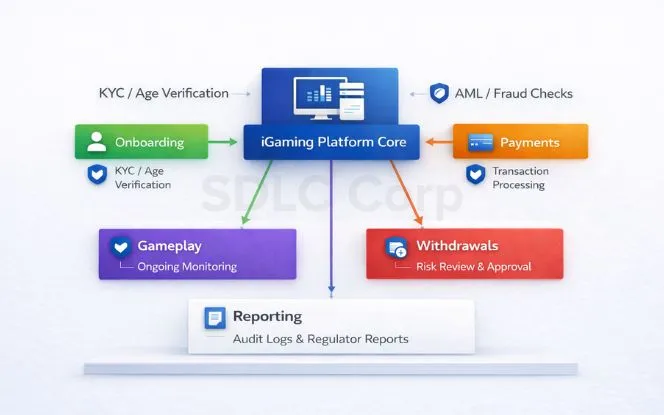
Compliance-by-design means your platform enforces compliance requirements as part of normal product behavior. So, instead of depending on manual checks or disconnected tools, the platform itself applies rules, records decisions, and supports reviews.
Practical Definition
In practice, this means the platform is designed so that:
- Registration triggers identity and age checks,
- Payment events trigger AML and fraud rules,
- Access is controlled by geolocation and jurisdiction settings,
- Responsible gaming actions are enforced in account and wallet flows,
- And key decisions are recorded in audit-ready logs.
Because of this design, compliance becomes operational and measurable. As a result, teams can manage risk in real time instead of reacting later.
What It Is Not
Compliance-by-design is not:
- Only a legal policy document,
- Only a third-party KYC tool integration,
- Only a launch checklist,
- Or only a support/compliance team responsibility.
Instead, it is a platform design strategy. Therefore, product, engineering, compliance, and operations teams must align early.
Why Compliance Should Be Built From the Start
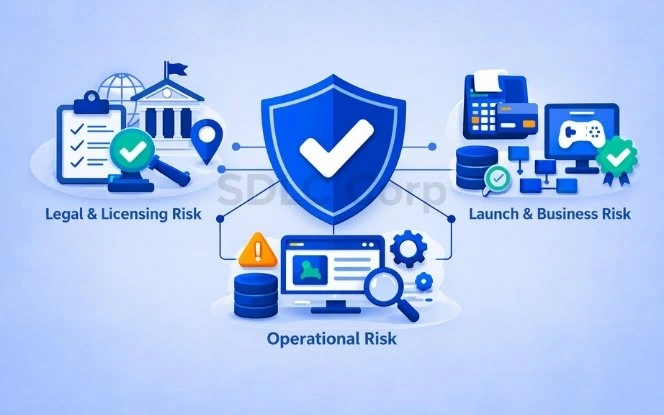
Many teams try to move fast by adding compliance later. However, that approach usually creates more work. Because compliance touches onboarding, payments, gameplay, and withdrawals, late changes often affect core services and user journeys.
1. It Reduces Legal and Licensing Risk
Each jurisdiction has different requirements. So, if your platform cannot apply location-specific rules reliably, you may face delays during licensing or market entry. In addition, teams may need to redesign critical workflows under pressure.
2. It Reduces Operational Risk
When compliance logic is built into the platform, teams can automate checks, route alerts correctly, and record outcomes consistently. Therefore, compliance teams spend less time collecting data from separate systems. As a result, audits and internal reviews become easier to handle.
3. It Reduces Launch and Business Risk
Operators also need trust from payment partners, game providers, and regulators. So, a platform with strong compliance controls and traceable workflows usually creates more confidence. Moreover, it helps leadership plan launches with fewer surprises.
Core Compliance Requirements That Must Become Platform Features
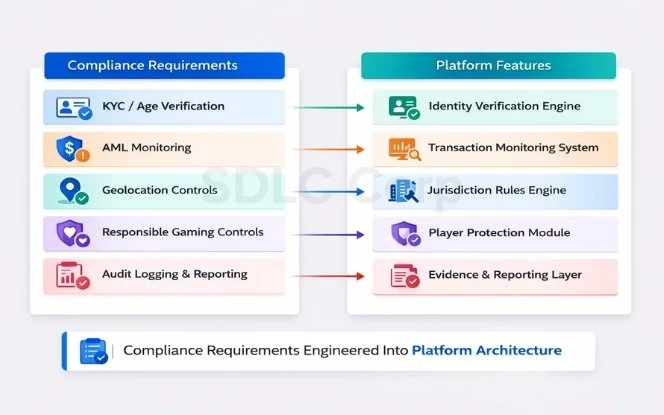
A common mistake is treating compliance requirements as separate tasks. However, in a real iGaming platform, these controls are connected. Therefore, teams should design them as part of one system.
KYC (Know Your Customer) and Age Verification
KYC should be designed as a workflow, not a single API call. For example, your platform may need to support:
- Identity data capture and validation,
- Document verification,
- Face match or liveness checks,
- Age verification,
- duplicate account detection,
- Step-up verification for higher-risk cases,
- Manual review queue for exceptions.
Because onboarding friction affects conversion, a risk-based approach is often better than using the same path for every user.
AML Monitoring and Fraud Controls
AML and fraud controls should cover the full lifecycle, not only withdrawals. So, the platform should monitor:
- Deposits and transaction velocity,
- Gameplay behavior patterns,
- Rapid deposit-withdrawal cycles,
- Bonus abuse indicators,
- Suspicious account activity,
- And trigger-based escalation events.
In addition, the system should store evidence for each alert and decision.
Geolocation and Jurisdiction Enforcement
Geolocation is a compliance control, not just a UI feature. Therefore, your platform should enforce access decisions server-side and keep decision logs. This is important because restricted access failures can create major regulatory problems.
Responsible Gaming Controls
Responsible gaming controls should be embedded into account and wallet behavior. For example:
- Deposit limits,
- Loss limits,
- Session limits,
- Cooling-off periods,
- Self-exclusion,
- Risk-triggered interventions,
- And player-facing control history
These controls matter because player protection is now a core regulatory expectation in many markets.
Audit Logs and Reporting
Every important compliance action should be traceable. So, the platform must record what happened, when it happened, who made the decision, and which rule was applied.
Reference Architecture for a Compliance-First iGaming Platform
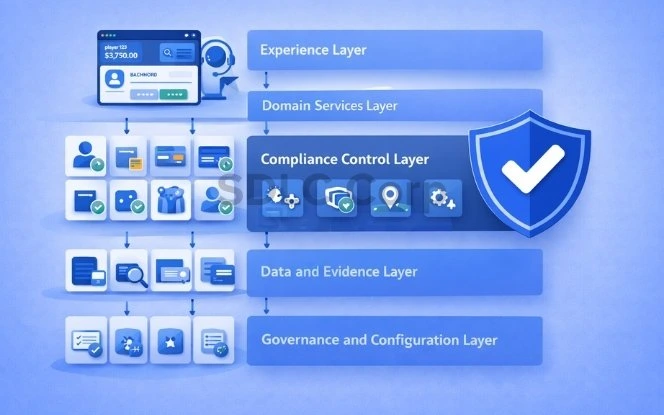
A compliance-by-design platform works best when the architecture clearly separates business functions from compliance controls. However, those layers still need to exchange events and decisions in real time.
Key Layers of the Compliance Platform Architecture
Experience Layer
This layer includes:
- Player web/mobile interfaces,
- Admin panel,
- Support interface,
- And compliance review dashboard.
The user experience should show clear status messages. For example, if a withdrawal is under review, the platform should display a valid status instead of a generic error.
Domain Services Layer
This layer includes core platform services such as:
- Player account service,
- Wallet and transaction service,
- Payment service,
- Gameplay event service,
- Bonus service,
- Withdrawal processing service.
These services should emit structured events. Then, compliance services can evaluate them without hardcoding logic into every business service.
Compliance Control Layer
This is the core of the model. It often includes:
- KYC orchestration engine,
- AML/risk monitoring engine,
- Geolocation policy service,
- Responsible gaming policy service,
- Rules engine,
- Alerting service,
- Case management workflow.
This layer matters because it centralizes compliance logic. Therefore, teams can update rules faster when regulations change.
Data and Evidence Layer
This layer stores:
- Event logs,
- Audit records,
- Case history,
- Evidence references,
- Reporting datasets.
Because audits often require historical proof, this layer should support reliable retention and searchability.
Governance and Configuration Layer
Rules change often. So, the platform should support:
- Rule versioning,
- Approval workflows,
- Role-based access control,
- Change history,
- And rollback-ready configuration management.
Without this layer, teams may depend on code releases for policy updates, which slows response time.
Core Technical Features That Make the Platform Compliant in Practice
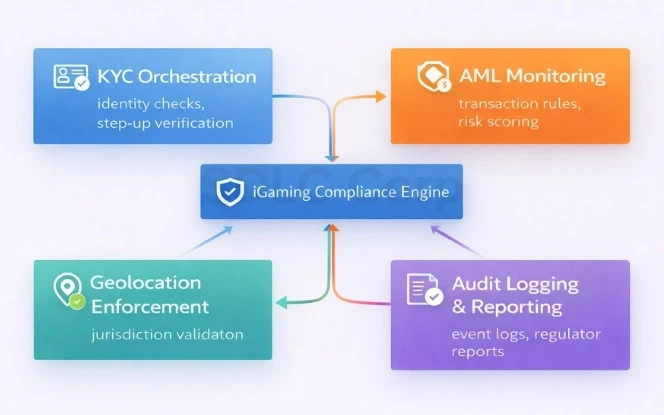
This section is where many blogs stay generic. However, real platform design needs implementation detail. So, below are the features that should work together as one compliance system.
KYC Onboarding and Identity Orchestration
A strong KYC flow supports multiple outcomes, not just pass/fail. For example, the platform should handle:
- Approve,
- Step-up verification,
- Manual review,
- Reject with reason code.
In addition, it should manage API failures, retry logic, and timeout handling. Because provider outages happen, the platform must protect both user experience and operational visibility.
AML Monitoring and Risk Scoring
AML monitoring should combine rule thresholds and behavioral signals. So, the platform can detect unusual activity earlier.
Key capabilities include:
- Real-time or near-real-time alert generation,
- Configurable risk rules and thresholds,
- Transaction pattern checks,
- Alert severity scoring,
- Analyst review workflows,
- Evidence linking and notes,
- Case escalation and closure status.
As a result, teams can prove how they handled alerts, not just that alerts existed.
Geolocation Compliance Engine
The geolocation engine should apply jurisdiction rules consistently across login, gameplay access, and sometimes payment-related actions. In addition, it should log decision evidence and confidence level where relevant. This improves auditability and dispute handling.
Responsible Gaming Controls and Interventions
Responsible gaming controls should be enforceable and traceable. Therefore, the platform should support both player-driven and system-triggered actions.
Examples include:
- Self-service limits,
- Self-exclusion workflows,
- Cooling-off requests,
- Session reminders,
- Risk-based review triggers,
- Manual intervention records,
- Communication history.
This design supports player protection while also helping teams demonstrate compliance actions clearly.
Audit Logs, Decision Tracking, and Case History Management
This layer is one of the most important trust mechanisms in the platform.
Audits, disputes, and internal investigations rely on clear evidence.
So the logging system must be able to answer key questions quickly:
- What happened?
- When did it occur?
- Which rule was applied?
- Who reviewed the case?
- Why was that decision made?
If the system cannot answer these questions quickly, operations slow down and trust in the platform decreases.
Regulator-Ready Reporting and Dashboards
Reporting should be designed early. So, teams can avoid late data mapping work before audits or market launches.
Include support for:
- Scheduled compliance exports,
- Alert and case summaries,
- Operational compliance dashboards,
- Exception queues,
- Jurisdiction-specific report templates.
End-to-End Compliance Workflows (What Good Execution Looks Like)
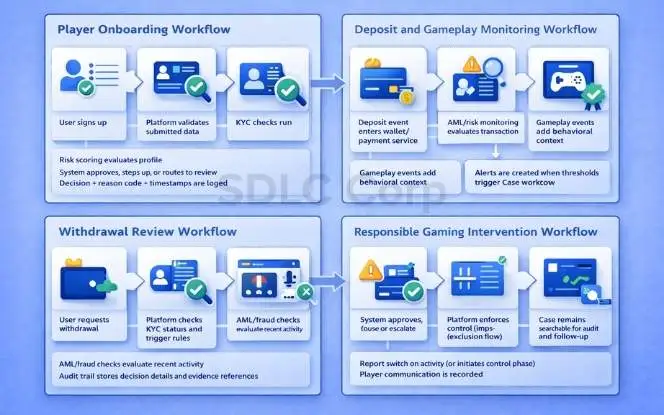
Compliance-by-design becomes real through workflows. Therefore, it is important to design and document key flows clearly.
Player Onboarding Workflow
- User signs up
- Platform validates submitted data
- KYC checks run
- Risk scoring evaluates profile
- System approves, steps up, or routes to review
- Decision + reason code + timestamps are logged
Deposit and Gameplay Monitoring Workflow
- Deposit event enters wallet/payment service
- AML/risk monitoring evaluates transaction
- Gameplay events add behavioral context
- Alerts are created when thresholds trigger
- Case workflow records analyst actions and outcomes
Withdrawal Review Workflow
- User requests withdrawal
- Platform checks KYC status and trigger rules
- AML/fraud checks evaluate recent activity
- System approves, pauses, or escalates
- Audit trail stores decision details and evidence references
Responsible Gaming Intervention Workflow
- System detects trigger or threshold
- Review task or automated action starts
- Platform enforces control (limit/pause/exclusion flow)
- Player communication is recorded
- Case remains searchable for audit and follow-up
Data, Auditability, and Reporting Design Principles
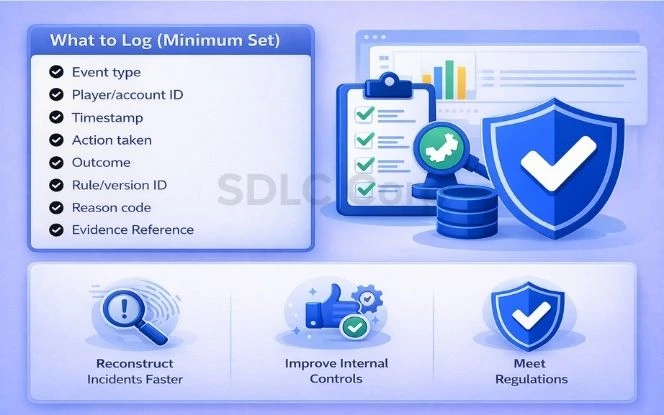
Data quality is a compliance issue. Therefore, platform teams should design compliance data carefully from the start.
What to Log (Minimum Set)
- Event type
- Player/account ID
- Timestamp
- Action taken
- Outcome
- Rule/version ID
- Reason code
- Reviewer ID (if manual review)
- Linked evidence reference
Why This Matters
When data is complete and structured, teams can reconstruct incidents, answer regulator questions faster, and improve internal controls. On the other hand, weak logging creates gaps that are hard to fix later.
Practical Implementation Roadmap (Phased Approach)
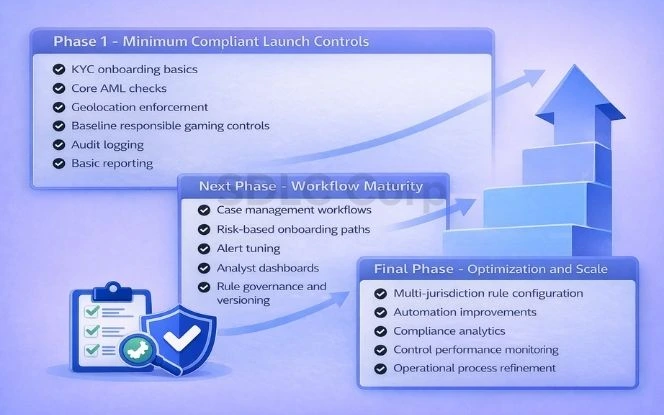
A compliance-by-design approach does not mean building everything at once. Instead, a phased roadmap helps teams protect launch speed while building a strong base.
Phase 1- Minimum Compliant Launch Controls
- KYC onboarding basics
- Core AML checks
- Geolocation enforcement
- Baseline responsible gaming controls
- Audit logging
- Basic reporting
Next Phase - Workflow Maturity
- Case management workflows
- Risk-based onboarding paths
- Alert tuning
- Analyst dashboards
- Rule governance and versioning
Final Phase - Optimization and Scale
- Multi-jurisdiction rule configuration
- Automation improvements
- Compliance analytics
- Control performance monitoring
- Operational process refinement
This model works well because it balances compliance readiness and business execution.
Common Mistakes Teams Should Avoid
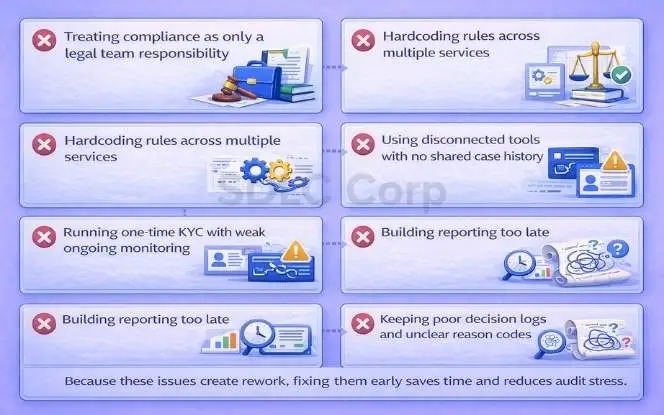
Even strong teams make avoidable mistakes. However, you can reduce risk early if you plan for them.
- Treating compliance as only a legal team responsibility
- Hardcoding rules across multiple services
- Using disconnected tools with no shared case history
- Running one-time KYC with weak ongoing monitoring
- Building reporting too late
- Keeping poor decision logs and unclear reason codes
Because these issues create rework, fixing them early saves time and reduces audit stress.
How to Evaluate a Platform or Engineering Partner
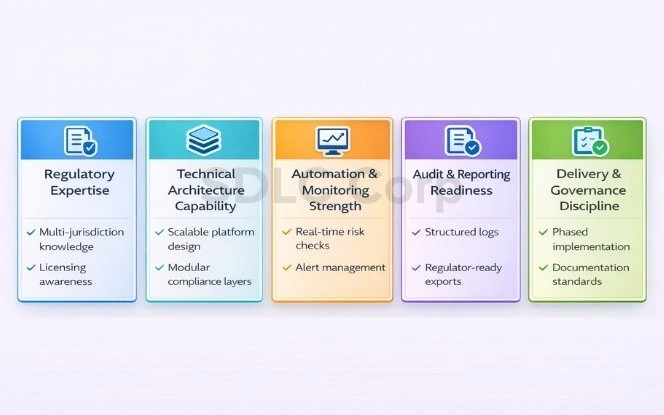
If you are building or modernizing an iGaming platform, partner selection matters. So, ask questions that reveal practical delivery experience.
Ask for:
- Real workflow examples (not just feature lists),
- Rule versioning and change management approach,
- Audit log and data model design,
- Configurable vs hardcoded control boundaries,
- Jurisdiction-specific reporting support,
- Experience integrating KYC, AML, geolocation, and RG into one platform flow.
These questions help you identify teams that understand both compliance operations and platform engineering.

Conclusion
A compliance-by-design iGaming platform is not just a compliance improvement. It is a platform maturity strategy. Because compliance controls, workflows, and evidence are built into the system, teams reduce rework, improve audit readiness, and launch with more confidence.
At the same time, they build stronger trust with regulators, partners, and players.
If you are planning a new iGaming platform or upgrading an existing one, start with architecture. Then map compliance requirements into workflows, decision logic, and data design from day one.
That is how compliance becomes scalable, practical, and reliable.
FAQs
What is a compliance-by-design iGaming platform?
It is an iGaming platform where compliance controls are built into the architecture from the start. Therefore, KYC, AML, geolocation, responsible gaming, audit logs, and reporting operate as core platform capabilities.
Is this approach only for large operators?
No. Smaller operators can also use this model. However, they should implement it in phases, starting with core controls and strong logging.
Which features should be built first?
Start with KYC, AML basics, geolocation enforcement, responsible gaming baseline controls, audit logs, and reporting. These form the minimum reliable compliance foundation.
Can third-party compliance tools still be used?
Yes. However, the platform should orchestrate those tools and record the decisions. That is what makes the system traceable and audit-ready.
Can one platform support multiple jurisdictions?
Yes, if the platform supports configurable rules, versioned policies, and jurisdiction-aware reporting. Even then, local legal review is still required before launch.