United States:
Transform Digital LLC
44 Montgomery Street, Suite 300
San Francisco, CA 94104
SDLC Corp is a mobile game development company building iOS and Android games from hyper-casual to mid-core, multiplayer, and RPG. Work with senior Unity and Unreal Engine teams for full-cycle delivery: design, development, backend, QA, and launch support. Unity and Unreal Engine specialists. Full source code, no revenue share.

Get a Free Consultation
SDLC Corp builds iOS and Android games end-to-end—from GDD and prototyping to launch, Live Ops, and retention updates. We design monetization and progression early, so your game is ready to perform after release—not just pass store review.
Ship both platforms together with a production-ready build plan no “build iOS first, port later” delays.
We match engine choice to your genre and gameplay goals during discovery, then build for smooth performance and scalable updates.
You receive 100% of the project source, native modules, and build pipelines—no revenue share and no licensing lock-ins.
Senior developers, artists, and QA focused on commercial delivery built for deadlines, device coverage, and store compliance.

Every rating on independent B2B platforms reflects a real Mobile Game Development outcome — verified against an actual engagement, not self-reported.
Selected clients — logos shown with permission where applicable. Additional references available under NDA.
“Working with SDLC Corp was a smooth, transparent, and professional experience.
“SDLC Corp delivered a smooth and professional development experience.”
“High-Performance Betting App with Excellent User Experience
Our mobile game development services cover every phase—from GDD and prototyping to launch, store approval, and LiveOps. We build monetization, retention, performance, and App Store/Google Play requirements into production so your game ships ready to grow—not just ready to release.
High-fidelity game art, character animation, UI/UX, VFX, and optimized assets built to run smoothly on mid-range iOS and Android devices.
Concept → prototype → production → launch. Engine selection (Unity or native), milestone planning, QA coordination, and release readiness under one team.
IAP setup, battle pass, subscriptions, pricing, and balanced sinks/sources designed during GDD—so monetization supports gameplay, retention, and fair progression.
Events, A/B testing, push messaging, remote config, and post-launch tuning planned early to improve Day-1/Day-7 retention and keep content shipping fast.
Real-time or turn-based multiplayer, matchmaking, leaderboards, and anti-cheat foundations—built for scalability with secure backend architecture.
Submission handling, compliance checks, metadata and store listing optimization, and release support to reduce rejections and improve discoverability at launch.
Genre impacts engine choice, monetisation, live ops, and store requirements. As a mobile game development company for iOS and Android, we validate your genre early in discovery so performance, backend architecture, and content scope match your audience and target devices.
One-tap and casual mobile games built for fast iteration, CPI optimisation, and ad/IAP monetisation. We prototype and A/B test core-loop variations before locking final mechanics.
Progression-heavy games with economies, live events, and long-term retention systems. We design balance-ready economies and ship remote config tools so tuning doesn’t require constant app updates.
Real-time PvP, co-op, and competitive modes with scalable matchmaking and low-latency infrastructure. We plan multiplayer backend and networking before full production to avoid costly rework later.
AR experiences using ARKit and ARCore from SDK integration to device testing and store readiness. We design interactions around real-world tracking, lighting, and performance constraints.
Physics-driven gameplay, sports simulation, and fantasy sports integrations for iOS and Android. We scope authentic physics, data feeds, and real-time stat systems during discovery to keep gameplay consistent.
Child-friendly learning games with safe UX patterns, parental controls, and privacy-first design. We build for COPPA/FERPA-aligned requirements and app-store compliance from day one.
We choose our mobile game development stack based on your genre, target devices, and business model so your game ships faster, runs smoother, and scales cleanly. Engine and backend decisions are locked in discovery before production assets begin.
Unity (LTS) Unreal Engine 5 Cocos2d-x, Godot, GameMaker—plus native modules in Swift (iOS) and Kotlin (Android) when needed.
iOS (App Store, TestFlight, Xcode) • Android (Google Play, Gradle) • Cross-platform builds (Unity, Flutter, WebGL) • Instant Games when lightweight distribution is required.
Photon (Fusion/PUN), PlayFab, AWS GameLift, Node.js, Firebase, Socket.IO—backed by MongoDB/Redis where appropriate, with anti-cheat support (e.g., EasyAntiCheat) for competitive titles.
Ad mediation (ironSource, AppLovin MAX, AdMob, Unity Ads) • IAP/subscription helpers (RevenueCat) • Attribution + deep links (AppsFlyer, Adjust, Branch) • Product analytics (GameAnalytics, Amplitude).
Remote Config + A/B testing, push/CRM (OneSignal, Braze), cohort tracking (D1/D7/D30), Mixpanel insights, and LTV modeling to support ongoing optimization.
Blender/Maya/ZBrush, Spine for 2D animation, Substance Painter, TexturePacker, optimized mobile shaders (HLSL/GLSL), and addressable asset workflows to keep builds lightweight and stable.
We build mobile games for performance, scalability, cross-platform consistency, and long-term player retention. Our engineering focus covers smooth gameplay, optimized pipelines, monetisation readiness, and store-compliant delivery.
We develop for iOS and Android using scalable Unity/Unreal workflows, ensuring consistent gameplay, UI, and device support across screen sizes and performance tiers.
Responsive gestures, UI interaction layers, and input tuning that improves usability, reduces friction, and supports higher engagement on mobile.
Optimized art pipelines and efficient asset delivery to balance visual quality with stable mobile performance and faster build sizes.
Matchmaking, leaderboards, player sync, and secure backend connectivity built to support scalable sessions and competitive gameplay.
Frame rate (FPS), memory, load times, and device compatibility tuned for entry-level to premium phones—so gameplay stays smooth under real conditions.
Release workflows for App Store and Google Play: QA validation, device testing, policy compliance checks, and launch-ready builds.

Our mobile game development process is milestone-based: you approve each phase before we move forward. We validate early on real iOS and Android devices—with QA running continuously—so performance and store compliance are built in from day one.
We confirm platform, genre, monetization model, and target device tiers (mid-range Android + mid-tier iOS). We lock the engine and backend approach early to avoid costly mid-production changes.
We deliver a playable prototype of the core loop on physical devices (not just a simulator). This helps validate feel, performance, and controls before full production.
Development runs in sprints with regular demos and device builds. Systems like monetization and LiveOps are built alongside gameplay, not bolted on later..
We complete device testing, performance checks (frame rate, memory, load times), and App Store / Google Play compliance reviews. Submission assets (screenshots, preview video, store metadata) are prepared in parallel to reduce launch delays.
We manage seasonal content updates, OS compatibility testing, and SDK updates. Mobile platforms change often, so ongoing maintenance keeps your game stable and compliant.
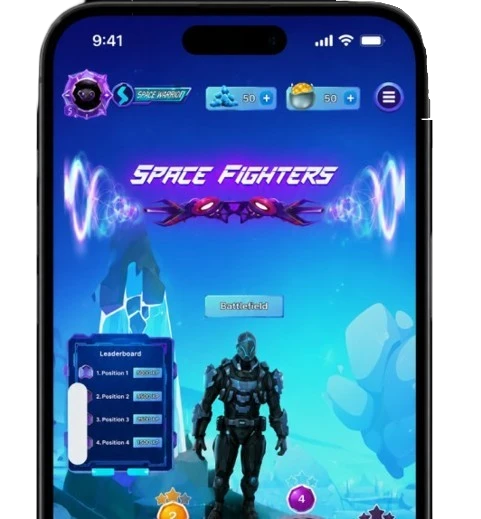
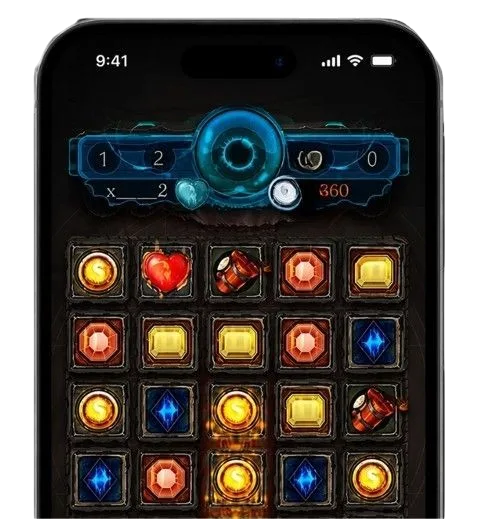
Four mobile game development company projects — casual, RPG, multiplayer, and competitive genres — each with a different engine, monetisation model, and platform challenge.
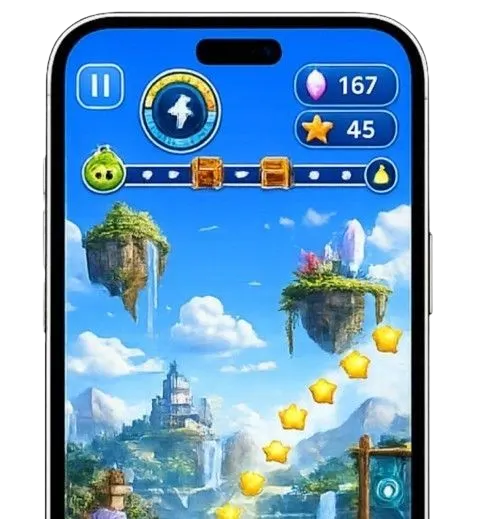
Cross-platform casual puzzle game shipped on iOS and Android. We built A/B testing for core loop variations during prototype — before locking final mechanics. Day-7 retention hit 38% at soft launch — above the 32% casual genre benchmark. Furthermore, the A/B infrastructure let us tune the core loop without app updates post-launch.
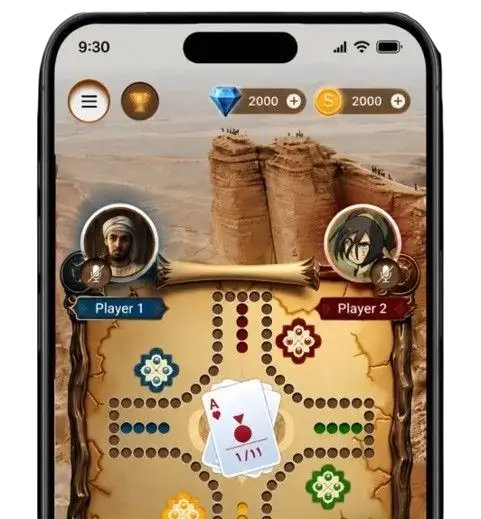
Unity mid-core RPG with live-service infrastructure. We architected the remote config system during GDD — not as a post-launch retrofit. Three live balance passes shipped post-launch without a single app update. In short, RPG economy work done at GDD delivered results that post-launch tuning alone cannot match.
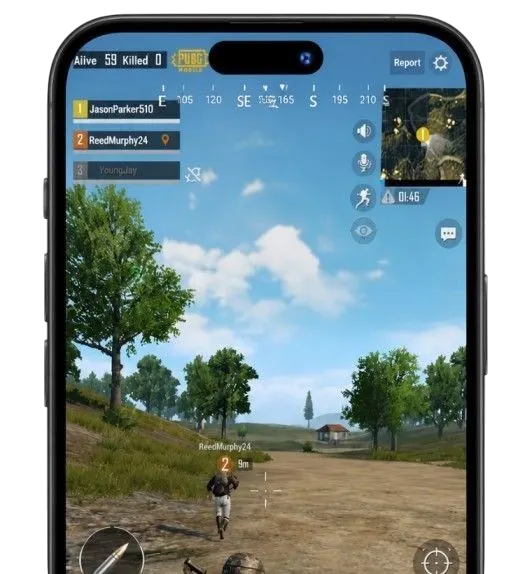
Competitive mobile shooter on AWS GameLift and Photon. We architected the backend before gameplay — not during QA. Verified under 80ms latency across four regions at launch. EasyAntiCheat scoped at discovery.
Cross-platform AR game using ARKit and ARCore from one Unity codebase. Spatial anchoring architected during discovery. Multi-surface plane detection for indoor and outdoor play. Mid-range device profiling ran every sprint.
What separates SDLC Corp as a mobile game development company from generalist agencies — and why studios and startups return after their first project.
We profile against mid-range Android hardware from sprint one — it is non-negotiable on every build. 70% of mobile players are on mid-range hardware — flagship-only optimisation produces games that fail in the real market. This is the single biggest technical differentiator between specialist mobile studios and generalists.
iOS and Android submission, review handling, and metadata optimisation are part of our service — not a client handoff task. Store algorithms reward specific metadata patterns, so we optimise listings alongside gameplay.
Economy systems, IAP flows, and ad placements are designed during GDD — before art production locks — and validated at prototype stage. Revenue design retrofitted after launch consistently underperforms economy-first design.
We build A/B testing, push alerts, and remote config during production. Your day-30 retention target becomes a production spec — not a post-launch hope. Your game ships with a retention system, not just a game.
You own 100% of your mobile game project — Unity scenes, native code, backend services, and build pipelines. Every deliverable transfers to you on final payment — you own it outright.
Our Clutch profile, GoodFirms listing, and Sortlist record carry verified reviews from mobile studios and brands that shipped commercial products. Clients check vendor history before committing real budgets.
A hyper-casual prototype takes 2–4 weeks. A full casual mobile game runs 3–6 months. A mid-core RPG with live economy runs 9–14 months. A cross-platform multiplayer title runs 12–18 months. Timeline is driven by feature depth, art quality, and backend complexity — not engine choice. We confirm scope and timeline during discovery before any production commitment.
A hyper-casual game costs $15k–$40k. A full casual mobile title costs $40k–$120k. A mid-core game with live economy costs $120k–$350k. A cross-platform multiplayer title starts at $350k+. The primary cost driver is feature depth and art quality — not engine licensing. Contact us for a line-item estimate within 48 hours of submitting your GDD or brief.
Unity is the right choice for most mobile games — strongest mobile optimisation tools, broadest device coverage, largest mobile-specific talent pool. Unreal Engine suits high-fidelity mid-core mobile where visual quality is the primary differentiator. Native Swift/Kotlin is right when performance demands exceed any game engine. We confirm the engine during discovery — reversing this mid-production is the most expensive mistake in mobile development.
Yes. Full source code transfers on final payment — Unity project files, native iOS/Android code, backend services, and build pipelines. Everything transfers on final payment, with no lock-in of any kind. We provide full technical docs so your team can maintain and extend the codebase after handover.

United States:
Transform Digital LLC
44 Montgomery Street, Suite 300
San Francisco, CA 94104

United Kingdom:
30 Charter Avenue, Coventry
CV4 8GE Post code: CV4 8GF United Kingdom

United Arab Emirates:
Unit No: 729, DMCC Business Centre Level No 1, Jewellery & Gemplex 3 Dubai, United Arab Emirates

India:
715, Astralis, Supernova, Sector 94 Noida, Delhi NCR India. 201301

Qatar:
B-ring road zone 25, Bin Dirham Plaza building 113, Street 220, 5th floor office 510 Doha, Qatar

© 2026 SDLC Corp. All Rights Reserved.