
Cross-Platform Game
Development Company
SDLC Corp builds one game for iOS, Android, PC, console and web from a shared codebase, with platform-specific controls, performance tuning and store submission handled by one team.
Cross-Platform Game Genres We Build
 Fantasy RPG
 Action Chase
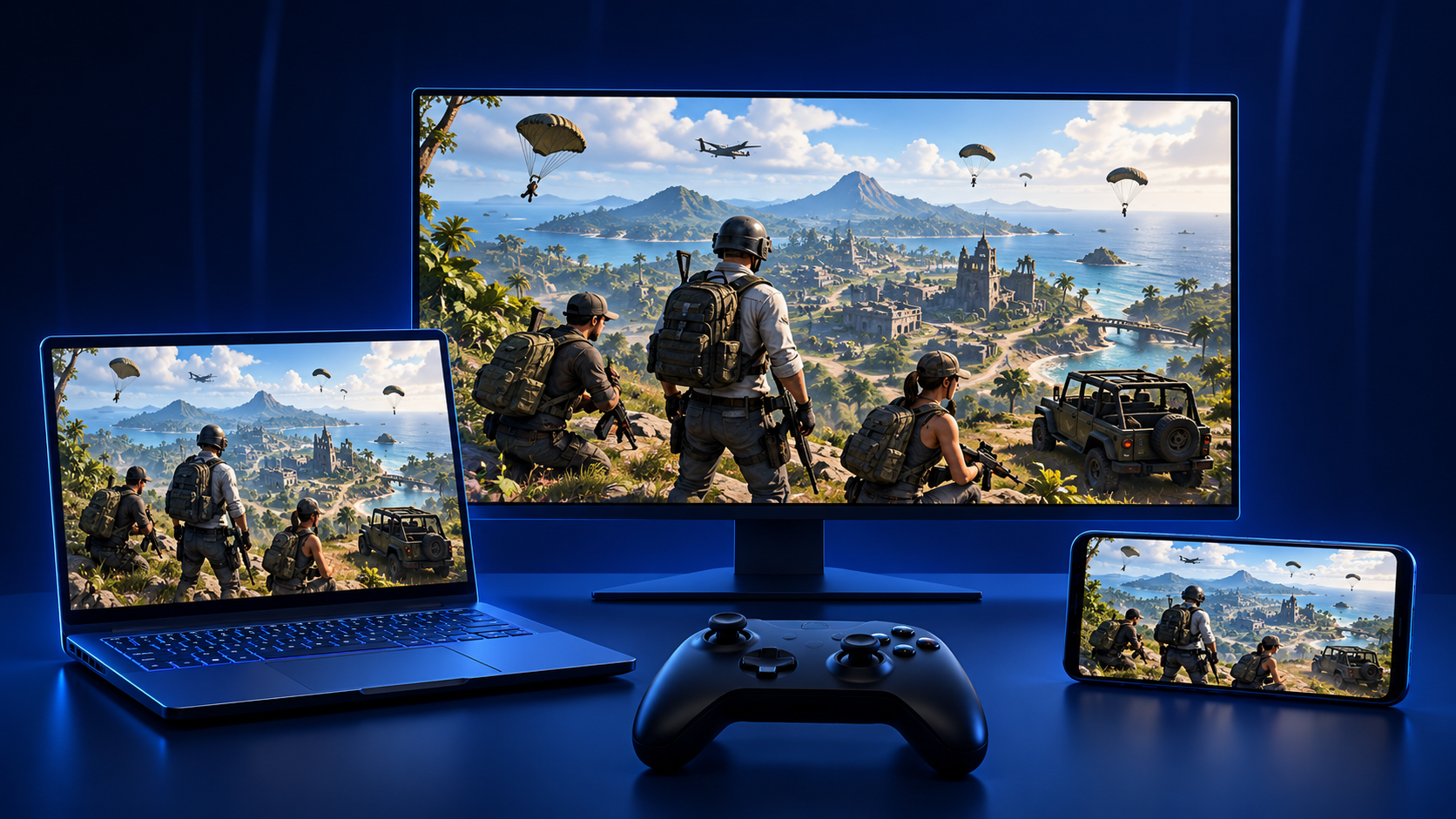 Cross-Platform
 Heist Action
 Multiplayer Team





Cross-Platform Game Case Studies
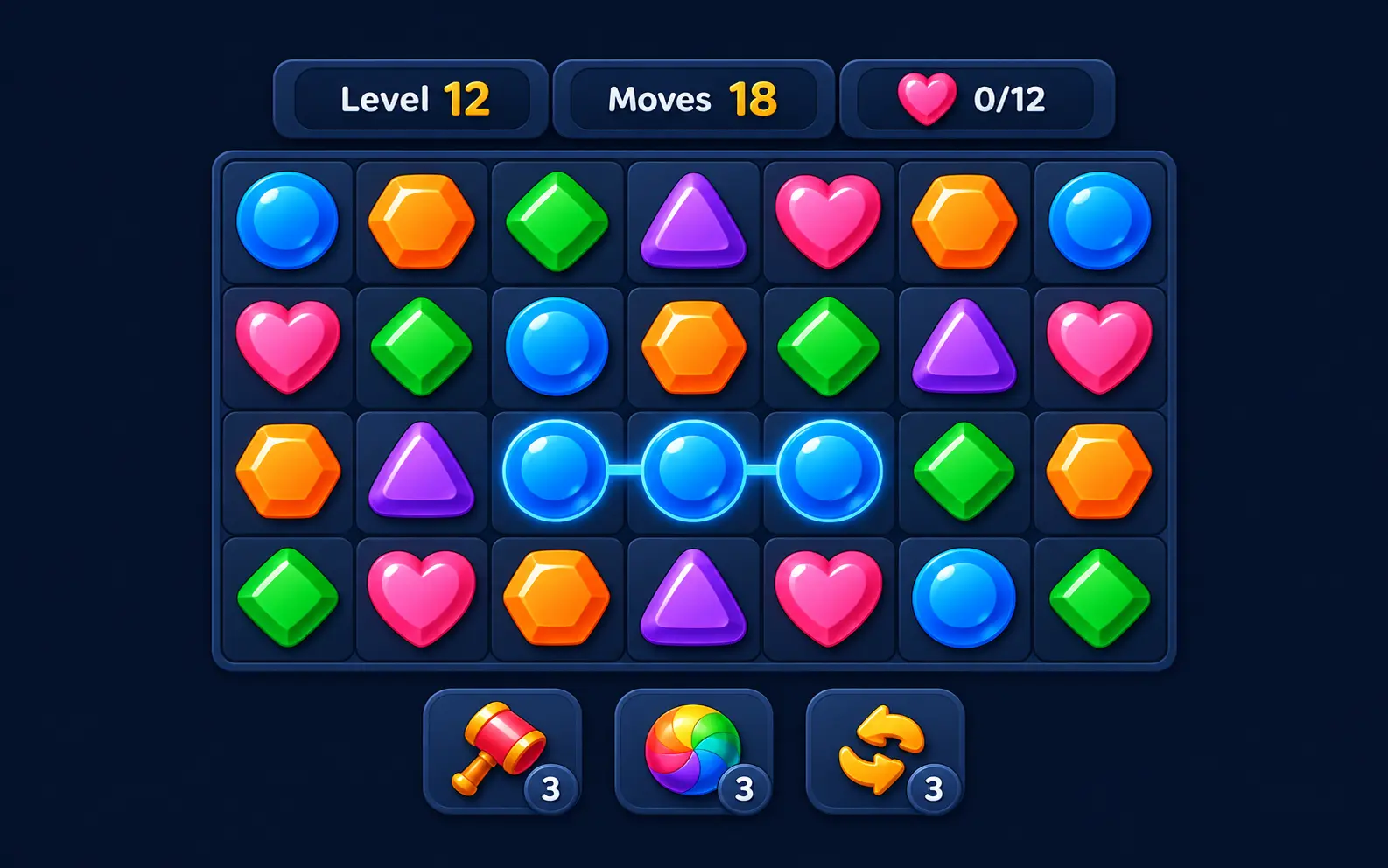
Explore Match-3 puzzle and real-time multiplayer Ludo case studies. Open each project to see its details.
Match-3 Game Development
Explore the Match-3 game development project in the full case study.
- Match-3
- Puzzle Game
- Game Development
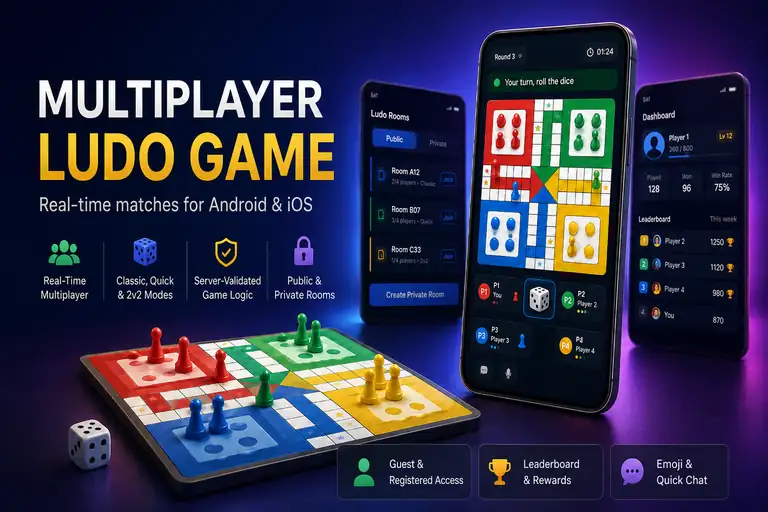
Real-Time Multiplayer Ludo Game for Android & iOS
Developed a release-ready Unity Ludo game with synchronized four-player matches, public and private rooms, timed turns, reconnection support, and server-validated dice and token moves across Classic, Quick, and 2v2 modes.
- Android
- iOS
- Unity
- Real-time multiplayer
Have a Cross-Platform Game Idea? Let’s Build It for Every Platform.
Request a Multi-Platform Roadmap → View All Game Case Studies →Cross-Platform Game Development Services
We follow one process for every platform: plan your target list in discovery, build a shared codebase, adapt controls and UI for each device, test on real hardware and ship through each store.
Mobile Game Development
iOS and Android builds from one codebase, with touch controls, device-range testing, store-ready builds and LiveOps support.
Build Mobile Games →PC Game Development
Windows and Mac builds for Steam, Epic Games Store and GOG, with keyboard, mouse and controller input mapped for each store.
Launch on PC →Console Game Development
PlayStation, Xbox and Nintendo Switch builds, with platform UI rules, performance targets and certification fixes handled by one team.
Ship to Console →WebGL and HTML5 Games
Browser builds that load fast on desktop and mobile, sharing gameplay code and assets with your app and PC versions.
Build for the Web →Game Porting
Move an existing game to new platforms. We audit the code, rework controls and UI, then optimize performance for each target.
See Porting Steps →Cross-Play and Multiplayer Backend
Shared accounts, matchmaking, cloud saves and cross-progression, so players on mobile, PC and console can play together.
How It Works →Cross-Platform QA and Testing
Real-device testing on every target, covering performance, input, UI scaling and store or console compliance checks.
Release Support →LiveOps and Updates
Patches, events and content drops released across every store on one plan, with shared analytics for all platforms.
Plan Your LiveOps →Looking for full-cycle production across every platform? Explore our game development services.
Engines We Use for Cross-Platform Games
The engine you choose decides how far one game can travel. SDLC Corp helps you select technology for cross-platform delivery based on gameplay style, visual quality, performance goals, multiplayer needs, budget, timeline, and launch strategy. Our core engines are Unity and Unreal Engine.
| Engine | Best For | Main Benefit |
|---|---|---|
| Unity | 2D, 3D, mobile, WebGL, AR/VR, cross-platform games | Fast builds and wide platform reach |
| Unreal Engine 5 | PC, console, VR, cinematic, high-fidelity 3D games | Advanced visuals and AAA-style production |
| Godot | Indie games, prototypes, lightweight 2D/3D games | Flexible and open-source development |
| Cocos2d-x | Lightweight 2D mobile games | Strong 2D performance |
| Custom Engines | Specialized or long-term game products | Full control over game systems |
Platforms We Build For
Mobile
PC & Desktop
Console
Web
Immersive (VR/AR)
One game plan, built for every platform above. Platform-specific controls, UI, and performance tuning are included.
How One Codebase Reaches Every Platform
Shipping the same game to phones, PCs and consoles is an engineering problem, not a repackaging step. These are the six layers we plan before production starts.
Input and Controls
Touch, mouse and keyboard, and gamepad all map to one action layer, so gameplay code never reads a device directly. Controller prompts and rebinding are set per platform.
UI and Safe Areas
Layouts adapt from phone notches to ultrawide monitors and TV safe zones. Text size, tap targets and menu focus follow each platform's rules.
Performance Budgets
Each device class gets its own frame rate, memory and load-time targets, profiled on real hardware instead of the editor.
Texture and Asset Pipeline
One source asset is compressed for each target: ASTC on modern mobile GPUs, ETC2 on older Android devices, and BC formats on PC and console. Build size follows each store's limits.
Backend and Accounts
Shared player accounts, cloud saves, matchmaking and entitlements sit on one backend, so progress follows the player from phone to PC to console.
Build and Release Pipeline
Automated builds produce signed packages for every target from one branch, with a platform test pass before each release candidate.
What is shared and what is not: gameplay, economy and backend code is shared across platforms. Input, UI layout, rendering settings and store integration are platform-specific, and that is where most of the porting effort goes.
Cross-Platform Store Release and Certification
We prepare your game for store review and console certification with platform checks and pre-submission QA.
| Platform | What Gets Reviewed | What We Handle |
|---|---|---|
| Apple App Store | Apple App Review Guidelines , privacy labels and in-app purchase rules | Signing, TestFlight builds, privacy and purchase setup, and fixes after review feedback |
| Google Play | Google Play target API requirements , Data safety form and app bundle size | App bundles, device-range testing and store listing assets |
| Steam | Steam review process , build upload through Steamworks and separate Steam Deck compatibility checks | Depot setup, achievements, cloud saves and a Steam Deck test pass |
| Epic Games Store | Epic Games Store requirements and partner review tools | Build packaging, store page assets and optional online services integration |
| PlayStation, Xbox and Switch | Platform-specific technical and certification requirements: PlayStation Partners , Xbox Requirements and Nintendo Developer Portal | Requirements checklist, pre-submission QA, submission support and fix cycles |
Console documentation may require developer approval and an NDA. Final approval and timelines depend on the platform holder.
Porting an Existing Game to a New Platform
Already have a game on one platform? First, we audit the codebase and target-device limits. Next, we adapt controls, UI and rendering. Finally, we test on real hardware and prepare the new build for review.
- 1
Codebase Audit
First, we review the engine version, dependencies, platform-specific code and technical debt.
- 2
Feasibility and Baseline
Then, we measure current performance and set targets for each new platform.
- 3
Input, UI and Rendering
After that, controls, layouts and graphics settings are reworked for the target device.
- 4
Platform QA
Next, we test on real hardware and prepare for store or certification review.
- 5
Submission and Patches
Finally, we support the release and ship fixes after launch feedback.
- Mobile to PC
- PC to console
- Console to PC
- Native build to WebGL
- Unity mobile to Switch
Choose the Right Model for Cross-Platform Game Development
Three ways to work with us, from extra hands on one platform milestone to a full team that owns the build from concept to LiveOps.
Game Co-Development
Best for studios that already have an internal team but need extra support for specific features, systems, art assets, optimization, or platform milestones.
Includes- Gameplay systems, UI modules, and multiplayer features
- Art support, backend development, QA, and optimization
- Porting support for mobile, PC, console, WebGL, and AR/VR
Full-Cycle Game Development
Best for clients who want one expert team to manage the complete game production process from concept and engine selection to launch, porting, and LiveOps.
Includes- Discovery, GDD, prototype, and production planning
- Unity, Unreal, 2D, 3D, gameplay, art, and backend
- QA, platform optimization, launch, and post-launch support
Dedicated Game Development Team
Best for long-term projects that need a stable game development team instead of rotating contractors, freelancers, or scattered platform vendors.
Includes- Unity developers, Unreal developers, and engine specialists
- 2D/3D artists, backend engineers, QA testers, and PMs
- LiveOps, updates, performance tuning, and ongoing support
How Much Does Cross-Platform Game Development Cost?
Budget grows with platform count, content volume and certification needs, not with the engine alone. These ranges are planning estimates, not quotes.
| Scope | Typical Budget | Typical Timeline | What Drives Cost |
|---|---|---|---|
| Single-platform MVP or prototype | $15,000 to $50,000 | A few weeks | Core mechanic, art style, one target device class |
| 2 to 3 platforms | $50,000 to $120,000 | Several months | Platform count, art volume, backend and multiplayer scope |
| Full multi-platform or console-ready | $120,000 and above | Several months or longer | Console certification, cross-play, live services, content volume |
| Adding a platform to an existing game | Quoted after codebase assessment | Depends on the audit | Code quality, engine version, controls and UI rework, performance gaps |
After discovery, every project gets a written scope, timeline and cost, and an NDA is available before you share confidential details.
Build One Game.
Launch Across Every Platform.
Work with a team that builds scalable games for mobile, PC, console, WebGL, and AR/VR using the right engine and production workflow.
Get a Cross-Platform Game Quote
Our Cross-Platform Game Development Process
First, we agree the scope and platform targets. Then, we prototype, select the architecture and build in milestones. Before release, we test on real devices; after launch, we support updates and LiveOps.
Discovery and Requirement Analysis
First, we review your game idea, audience, genre, platform goals, monetization model, visual style, multiplayer needs, budget, and timeline.
GDD and Prototype Planning
Next, we prepare the GDD and prototype plan to define gameplay, controls, UI flow, levels, progression, economy, monetization, and architecture.
Engine Selection and Architecture
Then, we select Unity for fast cross-platform builds or Unreal Engine for high-quality 3D, PC, console, and cinematic game production.
Game Design and Development
After that, our team builds gameplay systems, UI/UX, characters, environments, animations, levels, backend systems, multiplayer features, and integrations.
QA, Launch and LiveOps
Finally, we test gameplay, performance, device compatibility, multiplayer stability, store readiness, post-launch updates, and LiveOps support.
Technologies Behind Our Cross-Platform Game Development
From Unity and Unreal Engine to mobile platforms, WebGL, multiplayer frameworks, cloud infrastructure, content pipelines, and launch-ready production tools.
 Unity
 Unreal Engine
 Godot
 WebGL
 iOS
 Android
 Steam
 Nintendo Switch
 Meta
 AWS
 Photon
 Firebase
 Kubernetes
 Google Cloud
 Docker
 NVIDIA
 Blender
 Autodesk Maya
 Spine 2D
 Figma
 Cocos
 Node.js
 MySQL
 PostgreSQL
 Python
 JavaScript
 C++
 Playstation
 PHPAndroid
How to Pick the Right Cross-Platform Game Studio
Studios often compare vendors on price alone. These seven checks separate a team that has shipped on several platforms from one that has only built for one. Use them with any studio you shortlist, including us.
Shipped Titles on Your Platforms
Ask for live store links on each platform you need, not screenshots or trailers.
Engine Fit, Not Engine Habit
A good partner justifies Unity or Unreal against your game and your team, instead of defaulting to one.
Console Experience
Ask which platform requirements they have passed before, and who handles the submission.
Cross-Play and Backend Skill
Find out who builds accounts, matchmaking and cloud saves, and whether it is the same team.
Real-Device QA
Request the device list and test plan. Emulators and editors do not catch thermal or memory limits.
Ownership and Handover
Source code, assets, builds and IP should transfer to you, in writing, with no revenue share.
Clear Scope and Pricing
Look for milestone-based scope with timeline and cost agreed before development starts.
Why Game Studios Trust SDLC Corp
Our 90+ game development engineers are part of SDLC Corp’s 1,200+ engineering team. To date, they have delivered 400+ game development projects.
3D Game Development
“They were willing to discuss alternative approaches and explain the practical implications of design decisions.”
Educational Games
Tal highlighted SDLC’s educational game development and organized QA. The review also notes responsive fixes and clear communication as the project grew in scope.
Game Development
Eunice praised clear communication, thorough documentation, and clean, scalable code. The review also highlights reliability under heavy use and a responsive team.
Cross-Platform Game Development Guides
Explore practical SDLC Corp guides on cross-platform play, console gaming communities, Android game development, game development cost, and platform optimization workflows.


Let's Discuss Your Game Project
Share your requirements, timeline, existing build, or game concept. SDLC Corp will review your project and recommend the right scope, team structure, and delivery approach.
What happens next?
We review your brief, estimate scope, and recommend the right team model.
- NDA Available
- 106+ Games Delivered
- Response Within 1 Business Day
No sales pressure. We reply with realistic scope and delivery recommendations.
Cross-Platform Game Development FAQs
Straight answers on cross-platform vs cross-play, engines, porting, cost, timeline, console certification, and how to choose a development partner.
Cross-Platform Basics
Cross-platform game development is building a game so it runs on multiple platforms, such as iOS, Android, PC, console, and web, from a shared codebase and production pipeline, with platform-specific controls, UI, and optimization where needed.
Cross-platform means the game is available on more than one platform. Cross-play means players on different platforms can play together in the same session. A game can be cross-platform without supporting cross-play.
Unity is usually the best fit for mobile, 2D, WebGL, casual, and broad cross-platform games. Unreal Engine is usually better for realistic 3D, PC, console, VR, and cinematic games. Both export to mobile, PC, and the major consoles from one project, so platform count rarely decides the engine. Your game, visual target, team, and budget do.
Yes, if the game is built for it. Cross-play needs cross-platform matchmaking, unified player accounts, backend services, and compliance with each platform holder's rules. Requirements vary by platform and title, so we review them during planning.
Porting, Cost & Timeline
Yes. SDLC Corp provides cross-platform game porting services, including mobile to PC game porting, across mobile, PC, console, WebGL, Unity, Unreal Engine, and custom engines. We start with a codebase assessment and platform feasibility review, then give you a scoped estimate in writing. Cost depends on the current code, target platforms, controls and UI changes, and certification needs.
A single-platform MVP or prototype may cost $15,000 to $50,000. A 2 to 3 platform cross-platform game may cost $50,000 to $120,000. Full multi-platform or console-ready production can cost $120,000+, depending on scope, engine, art, backend, multiplayer, and certification needs.
The timeline depends on game complexity, platform count, engine choice, art style, multiplayer needs, backend systems, and certification requirements. A prototype may take a few weeks, while a full game can take several months or longer.
Each platform holder reviews submissions on its own schedule, and a failed requirement means another review cycle. We plan several weeks for submission and fixes and run a pre-submission checklist, so common failures are caught before the build is sent.
Planning & Partner Fit
Start where your target players already spend their time. Mobile suits casual and free-to-play games, PC suits strategy and mid-core titles, and console works best once the game is stable on PC. A staged launch spreads cost and lets early player data guide the next port.
Look for shipped titles on the platforms you need, a reasoned engine recommendation, console certification experience, real-device QA, and a written scope with timeline and cost. With SDLC Corp you also receive full source code, assets, and build files, and there is no revenue-share model.