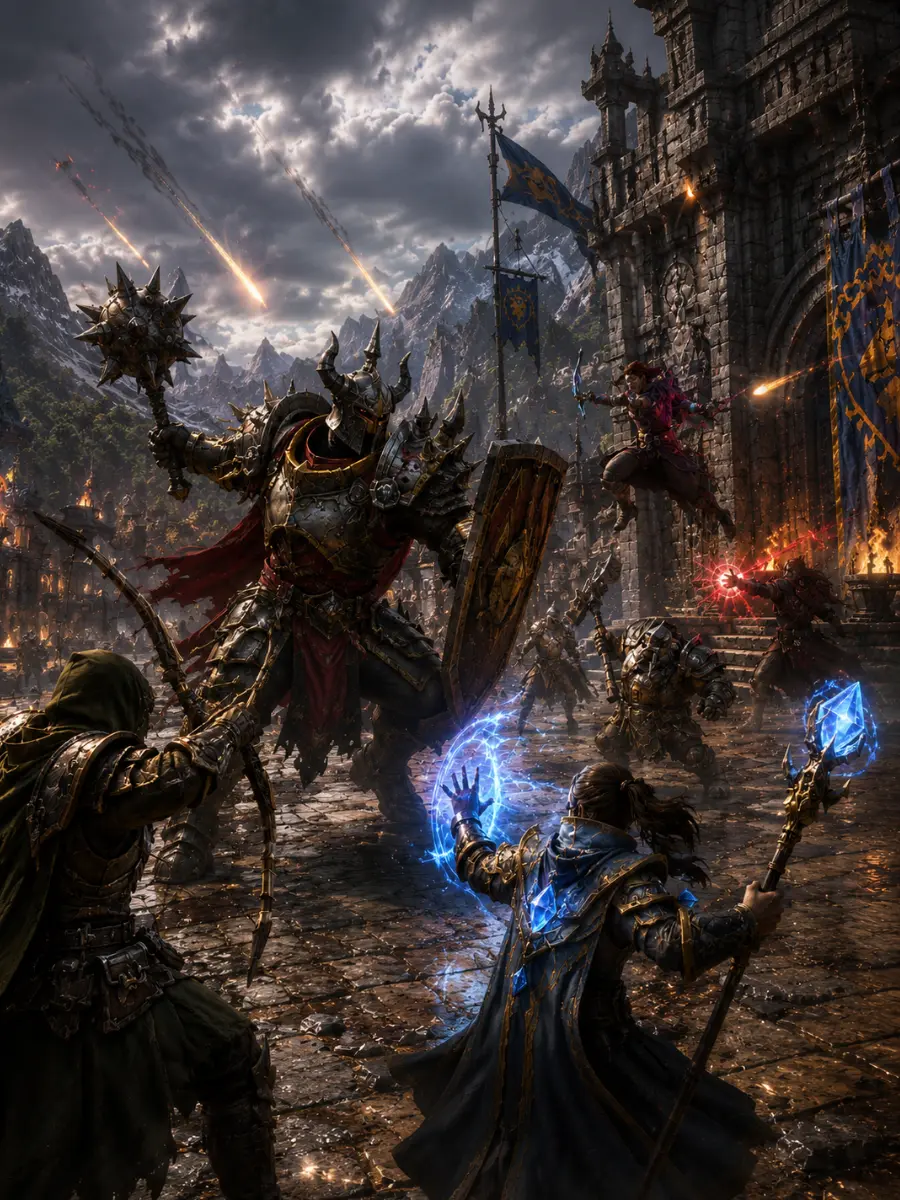

PC Game Development Company
SDLC Corp is a PC game development company building games for Steam, Epic, and GOG — from indie titles to AAA productions on Unreal Engine 5 and Unity. Our team covers the full project: concept, art, engineering, multiplayer, QA, and store launch. Every build ships with a scalable graphics settings menu, controller support, and platform-specific packages ready for submission.

Overview of Our PC Game Development Company
SDLC Corp is a trusted PC game development company covering the full cycle — from desktop builds to video game development across all platforms — from game design and art production through to engine programming, server setup, platform certification, and Steam/Epic store submission. We work across Unreal Engine 5 for AAA titles and Unity for indie and cross-platform builds — chosen based on your platform targets and production timeline, not team preference.
Native builds for Windows 10/11 and macOS with hardware-specific tuning passes. Additionally, we include signed installers and store-ready packages for each distribution channel.
Steam, Epic Games Store, GOG, and itch.io submission packages with all needed assets. Furthermore, our team manages the submission so clients do not need to learn each store's interface. Furthermore, our team manages the submission process so clients do not need to learn each store's interface.
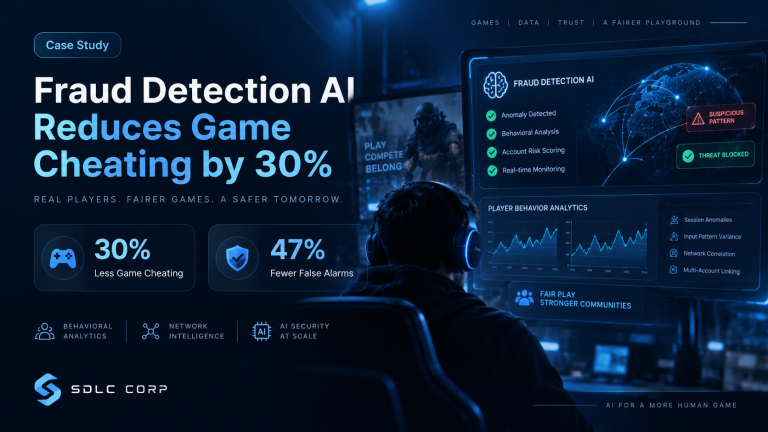
Dedicated servers, matchmaking, lobbies, and anti-cheat for competitive PC games and esports titles.
Scalable quality menus so every player gets the best experience for their hardware — from entry-level GPUs to high-end rigs.
Keyboard, mouse, controller, and custom key-rebinding built to PC standard. We also support HOTAS, steering wheels, and specialist controllers for simulation titles.
Steam Workshop integration and a mod API for community-driven content creation.
Choosing the right PC game development company matters most in three areas. First, PC players expect far higher graphical fidelity — 4K textures, ray-traced lighting, and high frame rates. Second, games must support a wide hardware range, from integrated graphics to multi-GPU rigs. Furthermore, distribution channels (Steam, Epic, GOG) each need separate submission packages.
Additionally, all our PC builds include a scalable graphics settings menu. Given that PC hardware diversity is far greater than mobile, a game without one loses a large part of its player base — before the first review appears on the store page. Therefore, we treat a proper settings menu as a launch requirement, not a polish task.
Client Reviews & Verified Ratings
Every score links to a live review profile, verified April 2026. All scores come from real game studios who shipped live PC and desktop products — not demos.
11 reviews · Quality & Schedule 5.0
155+ reviews · Global Leader 2024
49 reviews
"SDLC Corp delivered our open-world PC RPG on Unreal Engine 5. The Nanite geometry system and Lumen lighting matched the visual target we set in the concept phase. Steam launch passed Valve's technical review on the first submission."
"Our 100-player PC multiplayer game needed a scalable specific server setup on AWS. SDLC Corp delivered the full stack — Photon Fusion networking, anti-cheat, and matchmaking. The matchmaking service handles peak load without manual scaling."
"We needed our mobile game ported to PC with Steam Workshop mod support added. SDLC Corp handled both — the port passed QA in four weeks and the mod API shipped with full documentation. Player-created mods went live on Workshop day one."
Our PC Game Development Services
SDLC Corp delivers expert PC game development services from concept to store launch — covering desktop game development for Windows, Mac, Steam, Epic, and GOG. We work across any stage — concept, art, engineering, QA, or full-cycle delivery. Each service has a defined scope and deliverable list so clients know exactly what they receive at every milestone.
Our PC game developers build for Windows, Mac, and Linux. Furthermore, we extend to mobile or console when a project needs cross-platform support. Our team uses Unity for cross-platform projects and Unreal Engine 5 for PC-exclusive AAA titles. Additionally, we manage the full build pipeline so clients receive platform-specific builds without managing a separate build team. Furthermore, we manage the full build pipeline — so clients receive platform-specific executables, signed installers, and store-ready packages without coordinating a separate build team.
From ideation to deployment, our PC game development services cover every stage — concept, art, engineering, QA, and store launch — with a defined scope and deliverable list at every milestone.
We port mobile, console, or web games to PC with full PC tuning — rescaled UI, keyboard and mouse controls, adjustable graphics settings, and widescreen/ultrawide support. Our mobile game development practice ensures the original mobile build also stays intact and verified after the port. Because porting without regression-testing the source build is a common mistake, we run both build QA passes before delivery.
Our PC game art team produces environment modelling, character design, VFX, UI/UX, and cutscene animation. For our 3D game development PC projects, we use ZBrush, Maya, and Substance Painter to hit AAA visual standards.
We run compatibility tests across 30+ hardware setups — from integrated Intel graphics to high-end RTX 4090 builds. Our QA team also tests across Windows 10, Windows 11, and the two most recent macOS versions. Since PC hardware diversity is far greater than console, compatibility testing must cover the full matrix rather than a single target device.
Our pc game development company provides a specific post-launch support window covering crash reports, performance patches, content updates, and store page management. Specifically, our team monitors Steam reviews and player reports for the first 30 days and issues priority patches within 48 hours for critical issues. Given that Steam's review score can drop sharply in the first week, fast post-launch response is not optional for commercial PC games.
Technology Stack We Use
We use the engines, tools, and infrastructure that leading PC studios use worldwide. Specifically, every technology in our stack is chosen for its PC gaming track record — not its familiarity to a generalist developer.
Unreal Engine 5 (Nanite, Lumen, Chaos physics) for AAA PC titles. Unity 2022 LTS (HDRP) for indie and cross-platform PC games. Godot 4 for lightweight 2D and 3D PC games. Custom engine integration for studios with existing proprietary technology.
DirectX 12 Ultimate. Vulkan API. NVIDIA DLSS 3 and AMD FSR 3 upscaling. Ray tracing and path tracing pipelines. RenderDoc and NVIDIA Nsight for GPU profiling. WebGL and WebGPU for browser-based PC games.
Photon Fusion for server-authoritative multiplayer. PlayFab for player data, analytics, and economy. WebSockets and Socket.IO for real-time events. AWS EC2 specific game servers. EasyAntiCheat integration. Redis for low-latency match state.
C++ for Unreal Engine and performance-critical systems. C# for Unity game logic. Python for tooling and build automation. TypeScript and Node.js for backend game services. Lua for in-game scripting and mod API.
Steam (Steamworks SDK, Workshop, Achievements). Epic Games Store. GOG Galaxy SDK. itch.io. Microsoft Store (Windows app certification). Mac App Store notarisation.
AWS (EC2, RDS, S3, CloudFront). Google Cloud. Azure PlayFab. GitHub Actions for CI/CD. Perforce Helix Core for large binary assets. Crashlytics and Sentry for live error tracking.
Types and Genres Our PC Game Development Company Covers
Our PC game development company builds across all major desktop gaming genres. Each genre has different technical demands — from AI pathfinding in strategy games to physics simulation in racing titles. We document genre-specific requirements in the game design phase before any code is written.

We build educational and indie PC games — from interactive learning titles with adaptive difficulty to experimental indie games that push genre boundaries. Furthermore, our education game builds comply with COPPA and FERPA for clients serving school districts. Furthermore, our education game builds comply with COPPA and FERPA for clients serving school districts. Most general game studios cannot handle this without specialist legal review.

We build fast-paced PC action games with tight hit detection, responsive control systems, and fluid camera work. Third-person action cameras need a separate tuning pass — collision avoidance, lock-on, and dynamic distance — and must be built per-game, not copied from a template.

We build PC puzzle and strategy games with AI opponents, procedural level generation, and leaderboard systems. Our 2D game development team handles the flat UI systems most puzzle and strategy games rely on, while our AI team builds opponents that scale from casual to expert without hardcoded difficulty tiers.

We create immersive PC RPGs with rich storytelling, character progression trees, open-world exploration, and dialogue systems. Our RPG game development practice has shipped three open-world RPG titles. Each one needed a separate quest management system — because off-the-shelf quest plugins break in open worlds where players can complete objectives in any order.

We build realistic sports simulations, arcade-style sports games, and FPS games for PC. FPS game development on PC demands low-latency hit registration, high tick-rate servers, and anti-cheat — all of which we build in-house. Physics-based sports games need a separate tuning phase. Ball physics, player collision, and referee logic each interact in ways that produce odd results until the system runs with a full team count. Although most sports game bugs look minor in code review, they become obvious and game-breaking in a first play session.

We build life, city, vehicle, and management simulation PC games. This genre has the highest depth-to-player-count ratio in PC gaming — a focused audience expects deep, realistic systems where every mechanic produces a meaningful outcome.
Why Clients Choose the PC Platform
PC offers capabilities no other platform matches. Our PC game development company helps clients use each one deliberately — not just list them as features.
PC hardware has no fixed ceiling. A well-optimised PC game scales from entry-level entry-level GPUs up to 4K ray tracing on high-end rigs. Since visual quality is the primary purchase driver for PC game buyers, this ceiling matters commercially — not just technically.
PC games support keyboard and mouse, controllers, HOTAS, steering wheels, and VR controllers simultaneously. This freedom drives genre diversity — simulation, strategy, and competitive games all thrive on PC because the input options match each genre's needs.
PC games with mod support generate 3–5x more sustained playtime than those without. Our PC game development company builds Steam Workshop integration and a mod API into projects where the genre supports it. Community modders then become an extension of the studio without adding to payroll. Consequently, the game stays active long after launch without ongoing development spend. Community modders then become an extension of the studio without adding to payroll. Consequently, the game stays active long after launch without ongoing development spend.
PC is the dominant eSports platform. High refresh rate monitors, low-latency peripherals, and uncapped frame rates require specific engine configuration beyond a standard build. Our team configures server tick rates, client prediction, and lag compensation to meet tournament standards from day one.
PC games can launch at the same time on Steam, Epic, GOG, and a developer's own site. Each store has different revenue shares, visibility algorithms, and player demographics. Our PC game development company helps clients choose the right store mix for their genre — since a survival game and a puzzle game have very different optimal distribution paths.
PC has no platform holder restricting game content the way console certification does. This makes PC the right first platform for experimental mechanics, adult-rated content, and early-access launches. Furthermore, PC players have the highest tolerance for unfinished games — making Steam Early Access a viable commercial strategy that simply does not exist on console.
Multi-Platform Coverage
Our PC game development company builds from one shared codebase across all platforms. Therefore, game logic, player data, and multiplayer state stay consistent whether a player is on desktop, tablet, or console.
Windows 10 and 11 builds with DirectX 12, scalable graphics settings, and Steam SDK. All builds pass Windows compatibility validation before submission. Furthermore, we include signed installers and store-ready packages. Keyboard, mouse, and controller all supported with full key-rebinding menus.
Cross-platform code shares game logic with the PC build via our mobile game development studio. Touch controls and portrait/landscape layouts are separate modules so the PC and mobile UX do not compromise each other.
Tablet builds use a wider UI layout tuned for larger touch targets. Although tablets share the mobile build, we run a separate tablet QA pass covering stylus input, split-screen text readability, and battery thermal performance under sustained gameplay.
PlayStation 4/5 and Xbox via our console game development practice. Console builds need separate controller-only UI validation, certification submission packages, and platform-specific trophy/trophy/achievement systems. We handle all three without requiring the client to hold first-party developer accounts.
Why Choose Our PC Game Development Company
Here is what makes SDLC Corp a different kind of studio.
Our PC game developers each bring 15+ years of games industry experience — built across studios before and at SDLC Corp. Notably, every engineer has shipped at least one commercial PC title — not just demos. You work directly with engineers who have shipped commercial titles — not juniors supervised by a senior. Get in touch to be matched with the right team for your genre and engine. You work directly with engineers who have shipped commercial titles — not juniors supervised by a senior. Each has shipped at least one commercial PC title — not just demos or prototypes. Our leads have shipped on Steam, Epic, and GOG. They know the cert steps, page asset specs, and launch-day monitoring process. First-time PC publishers consistently underestimate all three. In short, our team has already solved these problems — so clients do not pay to discover them for the first time.
We have shipped PC games for studios across the USA, UK, Canada, UAE, Japan, and India. PC game distribution is global by default — Steam has users in 190+ countries. We design for global launch from day one: right-to-left language support, regional Steamworks pricing, and GDPR-compliant data handling.
We use Unreal Engine 5, Unity HDRP, DirectX 12 Vulkan, Photon Fusion, and PlayFab — the same tools used by leading commercial PC studios. Furthermore, we hold active developer accounts on Steam, Epic, and GOG. This means our team handles store submission directly rather than handing off a build and leaving the client to navigate a new platform for the first time.
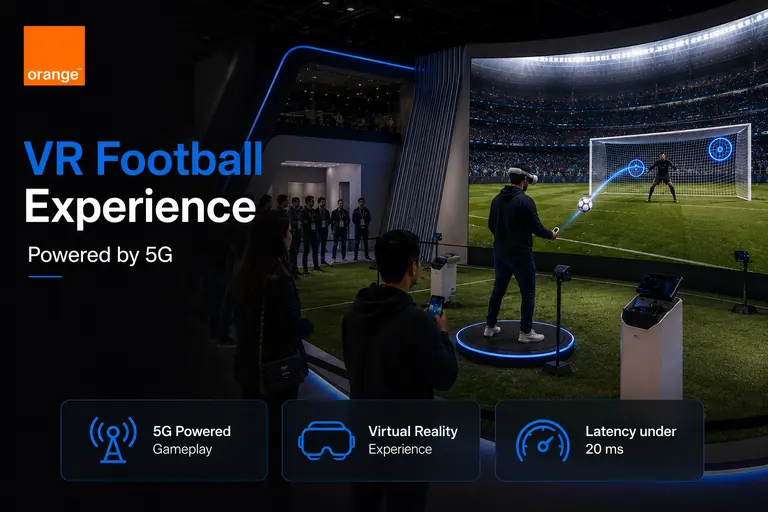
Our VR game development and AR game development practices work alongside our PC team. VR PC games (Meta Quest PC Link, SteamVR, PlayStation VR2) have specific performance targets — 72–120fps with sub-20ms motion-to-photon latency — that require separate optimisation work. We treat VR as a distinct target, not an afterthought added post-launch.
Our Clutch profile and GoodFirms listing carry verified reviews from PC game studio clients who shipped live commercial products.
All source code, build scripts, asset libraries, and store account materials transfer to you at project close. Because PC games require ongoing patches — engine updates, OS fixes, new store requirements — owning your codebase means your team can respond without paying a vendor rate. PC games require ongoing patches — engine updates, OS fixes, and new store requirements. Owning your codebase means your team can respond to any platform change without paying a vendor rate. No lock-in. In short, you own your game completely.
Our Development Process — Step by Step
Our process runs from concept to store launch with signed deliverables at every stage. Clients always know what was built, what we tested, and what ships next. Contact us for a detailed timeline and cost breakdown — most quotes are ready within 48 hours.
We lock genre, platform list, engine choice, hardware baseline, frame-rate target, and distribution stores. Engine selection is decided here — changing it mid-project costs as much as restarting. Store selection also affects tech requirements: Steam Workshop, Epic achievements, and GOG offline mode each need separate scope. Therefore, we lock both engine and store targets in week one.
We produce the game design document covering core loop, AI behaviour, multiplayer architecture, and monetisation plan. Furthermore, we run a Steam competitor analysis for the target genre — identifying average review scores, player feedback themes, and competitor pricing before a single line of art or code is produced.
Concept art, environment modelling, UI wireframes, and audio assets run in parallel with the first engineering sprint. Concept approval and grey-box level blockout happen at the same time. The team tests level design in-engine before any production art replaces placeholder geometry. This prevents redesigns that only surface after art assets are built.
We build game mechanics, AI systems, multiplayer networking, save systems, settings menus, and store SDK integrations in parallel sprints. Each sprint closes with a playable build review. Although reviews add time to the calendar, they catch fundamental gameplay problems before the final QA pass — when fixing them would require rewriting a core system.
Compatibility tests across 30+ hardware profiles, multiplayer stress tests at 150% of peak concurrent target, and store-specific technical review checklists. Steam's technical review catches issues — missing EULA, broken controller detection — that only appear in a store-submission build. We run the checklist before submission, not after a rejection.
We handle store page setup — capsule art, screenshots, trailer upload, system specs, and regional pricing. Our team monitors Steam forums and reviews for the first 30 days. Moreover, we issue priority patches within 48 hours for critical bugs. Given that Steam's review score is the single most important commercial metric for PC games, fast launch-window support is non-negotiable.
Common Questions About Our PC Game Development Company
A standard PC game development services engagement — the most common project type for our PC game development company — takes 16–24 weeks for a single-player indie title with Steam integration. A multiplayer game with dedicated servers and anti-cheat adds 6–10 weeks. Open-world or large-scale RPG titles take 40–60 weeks depending on scope. The most common timeline risk in any PC game development company project is a GDD that changes after coding starts. Therefore, we lock the GDD before any code is written.
An indie PC game with a single-player campaign ranges from $40,000–$120,000. A multiplayer PC game with dedicated servers ranges from $100,000–$300,000. An open-world Unreal Engine 5 title starts at $300,000 and scales with content volume. We provide a line-item quote after reviewing your game design document. Most studios get a detailed cost and timeline estimate within 48 hours of first contact. — since quoting without a defined scope produces estimates that are inaccurate by 40%+.
Yes. Our PC game development company builds the full Steam submission package — store page assets, system specs, SteamPipe build upload, achievement integration, cloud save setup, and the Steam technical review checklist. Our team holds an active Steam developer account and has completed the review process across multiple published titles. Consequently, our builds pass Steam's technical review on the first submission in most cases.
Yes. We port mobile (Unity or Unreal) and console games to PC with full platform tuning — rescaled UI, keyboard and mouse controls, graphics settings menu, and widescreen support. The port includes a regression test pass on the original platform build. Additionally, we run a fresh PC QA pass across 30+ device profiles before the Steam submission. Most mobile-to-PC and console-to-windows game development ports take 8–14 weeks. However, source codebase quality is the biggest variable — a clean Unity build ports in 8 weeks; a spaghetti codebase can take twice that.
Contact Us
Share a few details about your project, and we’ll get back to you soon.
Let's Talk About Your Project
- Free Consultation
- 24/7 Experts Support
- On-Time Delivery
- sales@sdlccorp.com
- +1(510-630-6507)