
Match-3 Game Development for iOS and Android
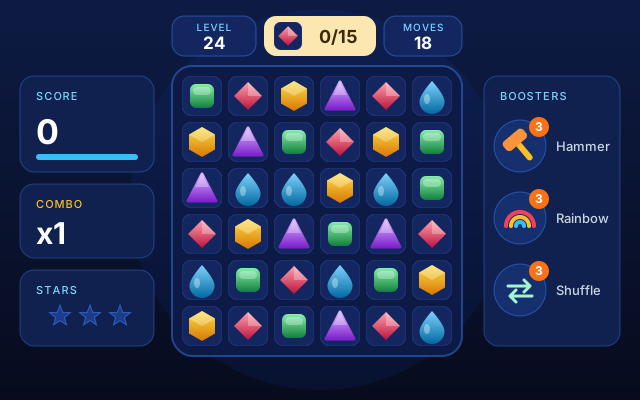
This match-3 game development walkthrough shows how SDLC Corp designs and builds a casual puzzle game for iOS and Android. It covers gameplay, progression, rewarded ads, and optional in-app purchases that keep players coming back.
- Casual match-3 gameplay with levels, boosters, and clear goals.
- Rewarded ads and optional purchases that players control.
- Analytics that track retention, ad views, and spending.
Project at a Glance
A casual match-3 game for publishers and studios that want players to return and revenue that never interrupts play. The scope fits our casual and board game development work and our mobile game development service.
Publishers, Studios, and Brands
Teams planning a first casual title or a new puzzle release. They want clear rules, steady progression, and a revenue model that players accept.
-
Genre Casual Match-3 Puzzle
-
Platforms iOS and Android
-
Engine Unity and C#
-
Delivery Design to Store-Ready Build
Rewarded Ads and Purchases
Optional ads and in-app purchases that players control.
Casual Mobile Players
Short sessions, simple rules, and steady progress.
Balancing Retention and Ad Revenue
A match-3 game succeeds when players return tomorrow. However, ads and purchases can push them away if they appear at the wrong moment. For a deeper look at the genre, read how to develop a game like Candy Crush Saga.
A match-3 game has to solve six problems:
- Levels that stay engaging as difficulty rises.
- Progression that teaches new players without boring them.
- Rewarded ads that players choose to watch.
- Optional purchases that feel fair.
- Smooth performance on low-end and mid-range phones.
- Clear data on where players leave or spend.
The game needs fun levels, fair rewards, and data to guide each change.
Gameplay, Progression, and Monetization
Our puzzle game development scope covers three connected areas. Each one supports the same aim, which is longer play with fair revenue.
Core Match-3 Gameplay
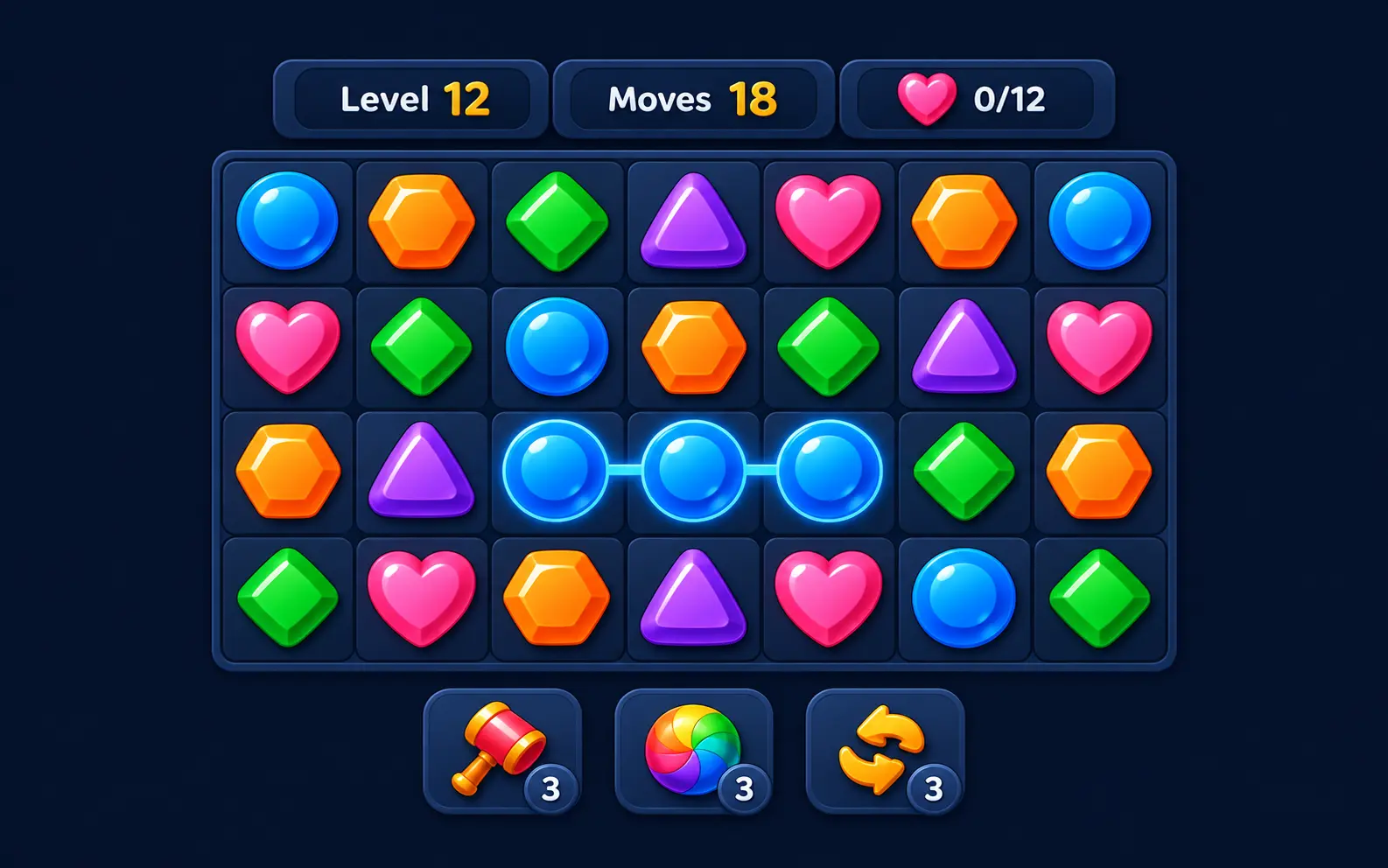
Players swap tiles to clear goals before they run out of moves. Clear rules keep each level fair and easy to understand, and every new blocker or booster first appears in a level that teaches it.
- Match-3 mechanics with scoring and objectives
- Blockers that add variety to levels
- Boosters and extra moves for hard levels
- Colorful visuals and simple navigation
Progression and Player Engagement
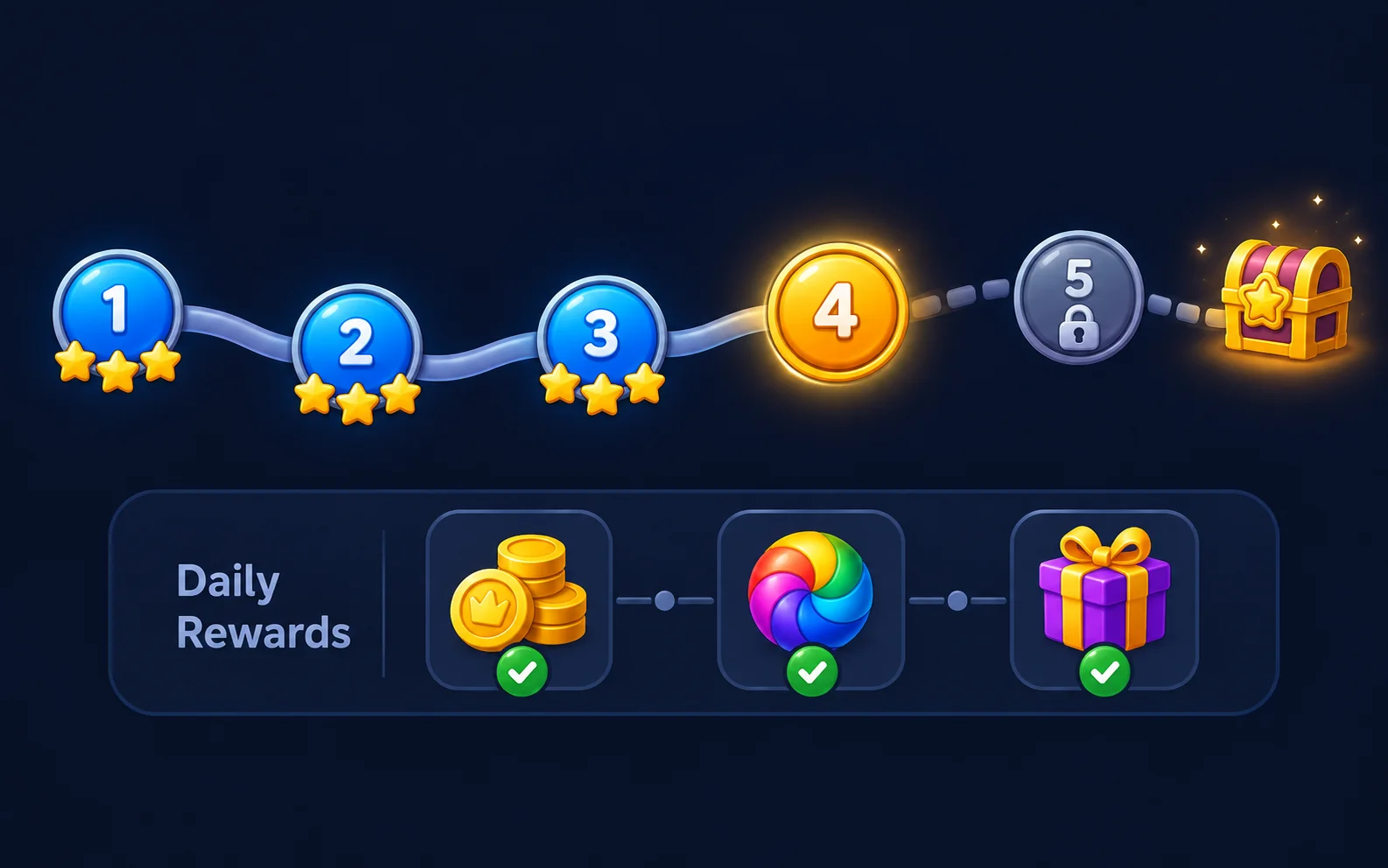
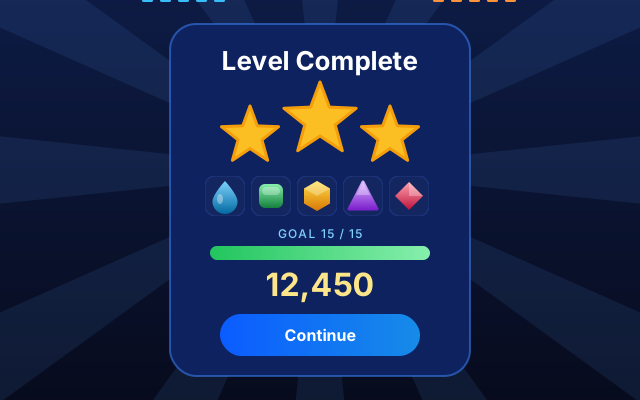
Early levels teach the rules in small steps. Difficulty then rises slowly, so players feel steady progress, and an easier level after a hard one keeps sessions relaxing.
- Short onboarding in the first levels
- A balanced difficulty curve
- Daily rewards and login streaks
- Challenges and limited-time events

Non-Intrusive Monetization
This mobile game monetization model keeps ads optional, so players decide when to watch. Optional purchases cover boosters, lives, and currency. For the wider picture, read how in-app purchases are driving mobile game revenues and how to balance gameplay and monetization in mobile games.
- Rewarded ads for extra moves or lives
- Purchase products for boosters and currency
- Currency balance between free and paid rewards
- Ad and purchase events sent to analytics
Our Match-3 Game Development Process
We follow the iterative process used by our Unity game development company teams, and each stage ends with a playable build.
- 01
Plan
First, gather requirements, study leading match-3 games, and set level design rules. We also agree the first goals, blockers, and boosters.
- 02
Prototype
Next, build a playable core loop in Unity to test how matching feels. Swap speed and cascade timing are tuned at this stage.
- 03
Build
Then add levels, boosters, progression, daily rewards, and the in-game economy. Level data stays editable so designers can adjust boards.
- 04
Integrate
After that, connect rewarded ads, in-app purchases, analytics, and progress saving. Each integration is tested on its own first.
- 05
Test
Later, run functional, gameplay, and device tests on target iOS and Android phones. Fixes are retested on the same devices.
- 06
Prepare and Measure
Finally, tune levels with test data and set up retention tracking. Day 1 and Day 7 retention, session length, rewarded ad engagement, and purchase conversion show whether players return and whether ads and purchases work without hurting play.
Technology Stack Behind the Game
Our Unity mobile game development stack covers the game, ads, purchases, analytics, and crash monitoring. It follows our game development approach, with the Unity documentation as the technical reference.
- Unity
- C#
- iOS
- Android
- Level Design
- Boosters
- Blockers
- Daily Rewards
- AdMob or LevelPlay
- Rewarded Ads
- In-App Purchases
- Google Play Billing
- Apple StoreKit
- Firebase Analytics
- Firebase Crashlytics
- Event Tracking
- Firebase or Custom Backend
- Progress Saving
- Login Streaks
- Live Events
- Functional Testing
- Device Testing
- Bug Fixes
- Launch Readiness
Results and Tracked Metrics
The analytics setup tracks five metrics that show whether players return and whether ads and purchases work without hurting play.
| Metric | What It Shows |
|---|---|
| Day 1 Retention | Share of new players who return the day after installing the game. |
| Day 7 Retention | Share of new players who are still playing a week after install. |
| Session Duration | Average time a player spends in a single session. |
| Rewarded Ad Engagement | How many players opt in to rewarded ads and watch them to the end, measured with AdMob rewarded ads events. |
| Purchase Conversion | Share of players who buy a booster or currency pack, tracked from store purchase events. |

Let's Discuss Your Game Project
Share your requirements, timeline, existing build, or game concept. SDLC Corp will review your project and recommend the right scope, team structure, and delivery approach.
What happens next?
We review your brief, estimate scope, and recommend the right team model.
- NDA Available
- 106+ Games Delivered
- Response Within 1 Business Day
No sales pressure. We reply with realistic scope and delivery recommendations.