Casual Game
Development Company

SDLC Corp is a casual game development company. We build puzzle, match-3, hyper-casual, Ludo, card, and arcade games with multiplayer, AI opponents, and LiveOps. Backed by 400+ game development projects, our team handles design, art, development, QA, and launch for mobile, web, PC, and console.
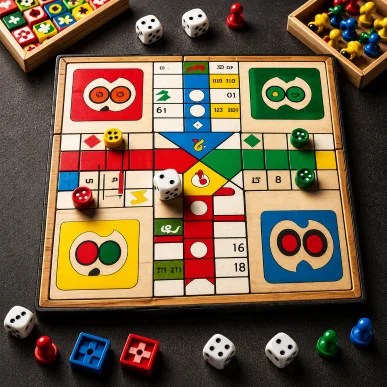
Colorful Ludo board game with dice and four-colour tokens in a multiplayer match. Multiplayer Ludo
Online card game table with playing cards and chips during a live round. Card Games
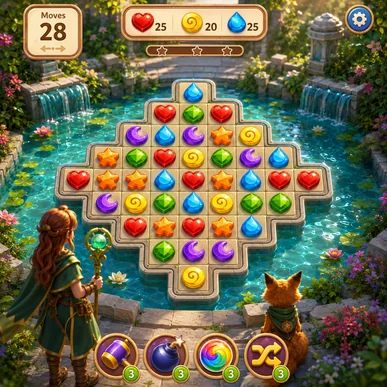
Colorful fantasy match-three puzzle game set in a magical garden with a young adventurer and fox companion. Puzzle & Match-3
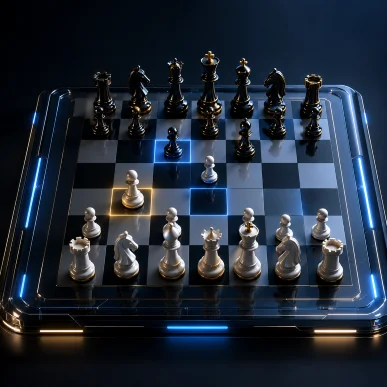
Chess board mid-game with pieces positioned for a strategic move. Chess Games
Realistic off-road racing buggies speeding through a sunlit rocky canyon trail. Hyper-Casual

Rated on leading industry platforms

Working with leading technologies

  • Unity
  • Unreal Engine
  • iOS & Android
  • Blender
  • Blockchain
  • AR / VR
  • Photon
  • AWS
Case Studies

Casual Games We Have Built

See how we built a multiplayer Ludo game and a Unity match-3 reference build for iOS and Android. Each case study covers gameplay systems, monetization, and the tech stack. It also shows how our casual game developers took the game from concept to a playable release.

Mobile Multiplayer · Ludo

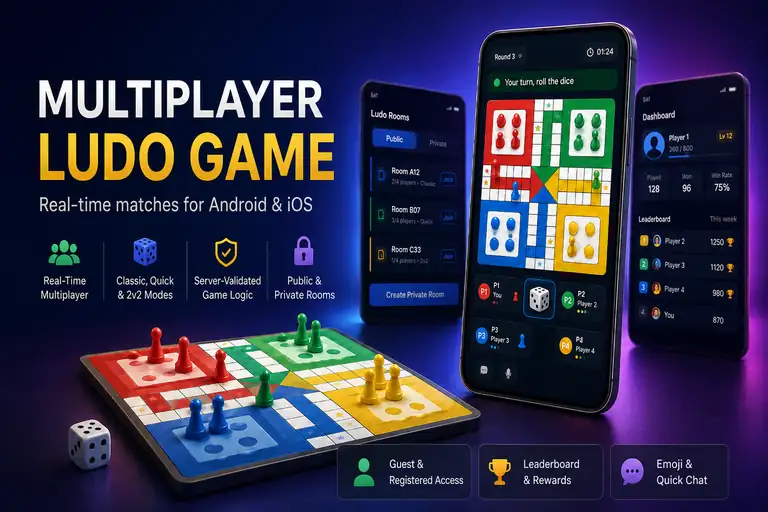
Multiplayer Ludo Game for Android & iOS

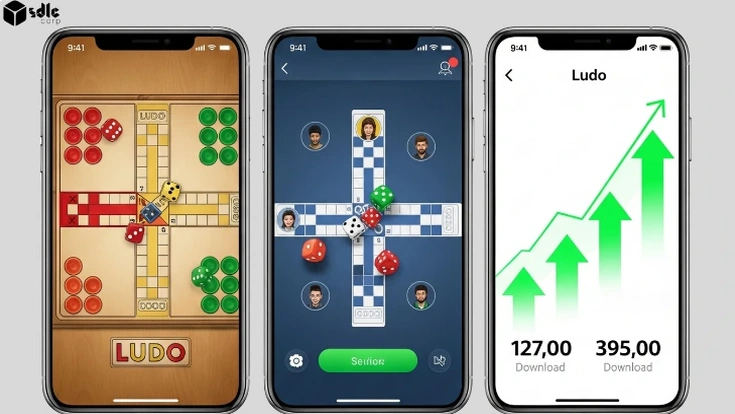
A Unity Ludo game with four-player matches, public and private rooms, and timed turns. Reconnection support also helps players rejoin interrupted matches within a set time window. In addition, Classic, Quick, and 2v2 modes pair familiar board play with real-time multiplayer.
Game Type Multiplayer Ludo
Platforms Android & iOS
Multiplayer Ludo mobile game interface with a Ludo board and player controls
Reference Build · Match-3 Puzzle

Match-3 Puzzle Game for Android & iOS

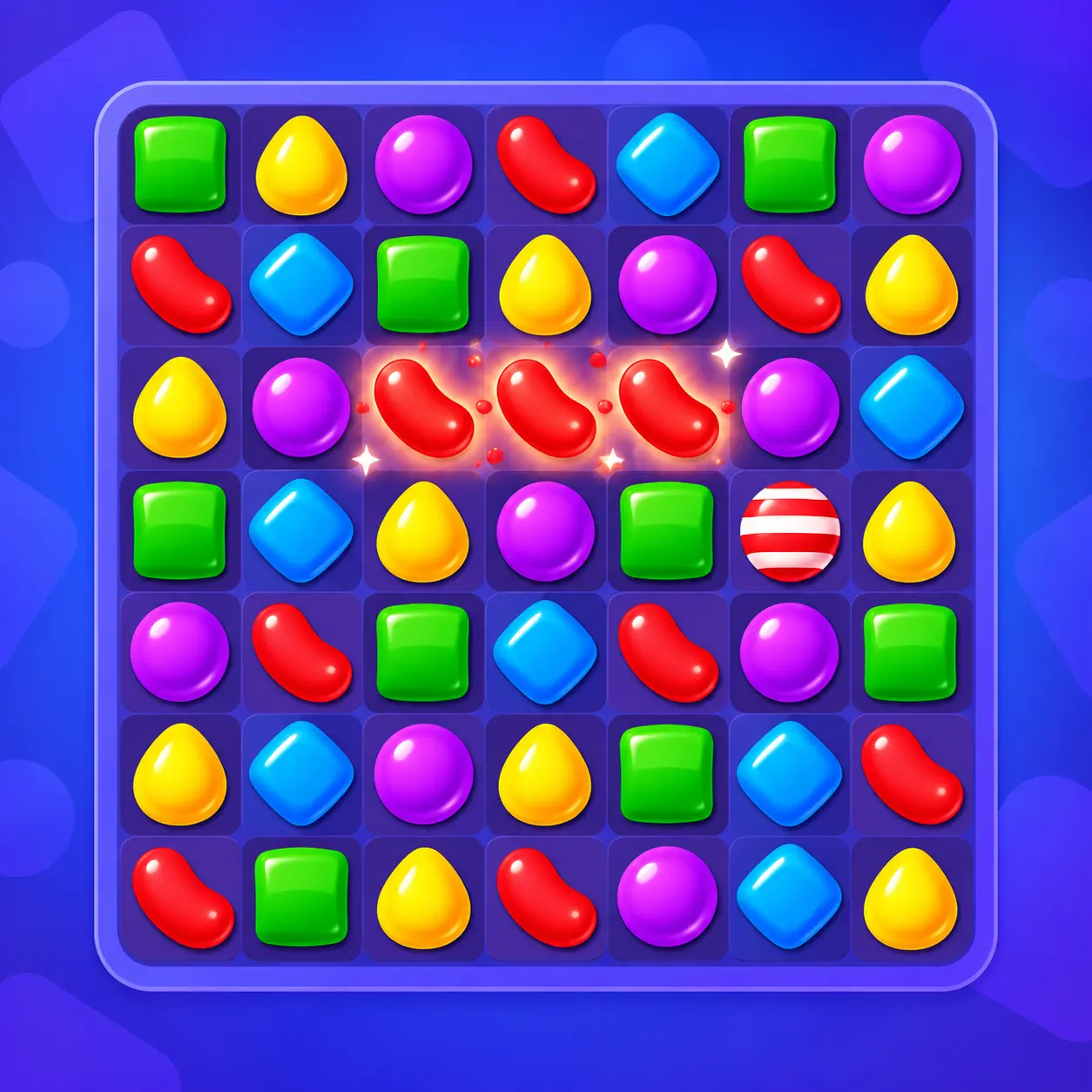
A Unity and C# match-3 reference build with tile-matching levels, boosters, and steady progression. For example, players can watch a rewarded ad for extra moves or buy boosters through in-app purchases. Meanwhile, the build tracks D1 and D7 retention, session length, and purchase conversion for later tuning.
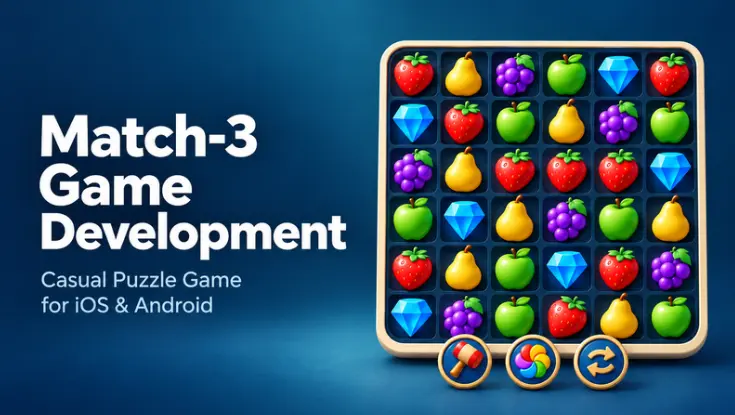
Game Type Match-3 Puzzle
Platforms Android & iOS
Match-3 puzzle game built in Unity for iOS and Android with tile-matching levels and boosters

Have a Casual Game Idea? Let’s Build It

Our Services

Custom Casual Game
Development Services

We offer full-cycle casual game development across eight genres, from quick puzzle sessions to multiplayer board play. One team covers design, development, testing, and post-launch LiveOps. As a result, you work with one partner from prototype to live game.

Puzzle & Match-3 Game Development

Build match-3 and puzzle games with level design tools, booster economies, rewarded ads, and live events.

Start a Puzzle Build

Hyper-Casual Game Development

Prototype one-touch hyper-casual and hybrid-casual games, test them on short ad campaigns, then scale the winners with rewarded ad mediation.

Start a Hyper-Casual Build

Ludo Game Development

Launch Ludo games with private rooms, matchmaking, AI players, fair dice logic, tournaments, and cross-platform play.

Build a Ludo Game

Card Game Development

Develop card games with deck logic, server-side shuffling, private tables, matchmaking, tournaments, and scalable game servers.

Deal Your Card Game

Chess Game Development

Build chess games with move validation, game clocks, tiered AI, ranked matchmaking, puzzles, analysis, and learning modes.

Develop a Chess Game

Carrom Board Game Development

Ship carrom games with realistic board physics, precise striker aiming, ranked matches, practice modes, and seasonal events.

Start a Carrom Build

Arcade Game Development

Create endless runners, stackers, and skill games with tuned touch input, level progression, leaderboards, and 60-second replay loops.

Start an Arcade Build
Genre Comparison

Types of Casual Games We Develop

Compare eight casual game genres side by side. Each genre runs on a different core system, and that system then shapes how we plan your build.

Casual game genres compared by gameplay, core system, and platforms.
Game TypeHow It PlaysThe System That Makes It WorkPlatforms
Puzzle & Match-3 Swap, match, and clear levels A level pipeline with a booster economy and difficulty tuned from player data
MobileWeb
Hyper-Casual One-touch runs of under a minute A fast prototype loop and a session built around rewarded ads
Mobile
Ludo Dice rolls decide the race home Server-side dice RNG with checks against spoofed or replayed rolls
MobileWeb
Board Turns, rules, and a bit of luck A rules engine you can retune without shipping a new build
MobileWebPC
Card Hands, melds, and scoring rounds A server-side shuffle, plus validation that rejects invalid table actions
MobileWebPC
Carrom Aim, flick, and read the rebound Striker physics and collision tuning tested across your target devices
MobileWeb
Chess Pure skill, no luck, clock running A move-validation engine plus AI you can dial from beginner to brutal
MobileWebPC
Arcade Reflex runs, 60 seconds at a time A difficulty curve and reward loop that earns the next replay
MobileWebPCConsole
Game Design

What Makes a Casual
Game Work

With good casual game design, players learn the game in seconds and finish a satisfying round within minutes. Just as important, they have a reason to come back tomorrow.

Core Loop and Onboarding

One simple action with a clear reward. We prove it in a playable prototype, so the first session teaches itself.

Progression and Economy

Levels, unlocks, currencies, and boosters that pace rewards and give players goals worth returning for.

Retention and Monetization

Ads, purchases, daily challenges, and events planned together, so revenue does not cost the player experience.

Cost & Timeline

Casual Game Development Cost and Timeline

Typical casual game development cost and timeline ranges by scope. They run from simple hyper-casual builds to full cross-platform titles. After that, a short discovery phase confirms the figure for your game.

Casual game cost and timeline by scope.
ScopeExamplesTypical CostTypical Timeline
Simple single-platform game Hyper-casual, simple puzzle, or arcade $15,000-$40,000
8-12 weeks
Multiplayer game with AI Ludo, card, chess, or carrom $40,000-$90,000
14-16 weeks
Full cross-platform title Match-3 or arcade with LiveOps and in-app purchases $90,000+
6-9 months
Gameplay Systems

Gameplay Features We Can
Integrate

Players rarely see these systems, yet they notice at once when one is missing. That is why we scope rules engines, multiplayer, AI opponents, leaderboards, and fair-play checks to each title. As a result, a simple game carries only the systems it needs.

Rules Engine

Your rulebook turned into dependable logic. It covers legal moves, turn order, scoring, penalties, win conditions, and edge cases.

Multiplayer & Matchmaking

Quick match, private rooms, friend invites, and teams. Reconnect handling also lets a dropped player rejoin their seat within a set time window.

AI Opponents

Bots fill empty seats and also keep offline play alive. In addition, each bot has difficulty tiers and human-like move timing tuned per genre.

Progression & Rewards

Levels, unlocks, daily challenges, streaks, and currencies that give players a reason to open the game again tomorrow.

Leaderboards & Tournaments

Friend, regional, and seasonal boards, plus brackets, leagues, and prize tables for competitive and event-driven play.

Fair Play & Anti-Cheat

The server validates moves, dice rolls, shuffles, and results, then flags invalid actions. Secure accounts and transactions sit behind it.

Revenue & Retention

Casual Game Monetization
and LiveOps

We plan monetization alongside the game design, not after launch. That way, ads, in-app purchases, and LiveOps events lift player retention and revenue without hurting play.

Advertising

Rewarded, interstitial, and banner ads with mediation, placed where they support the session instead of interrupting it.

Purchases and Subscriptions

Currency packs, boosters, passes, cosmetics, and subscriptions, with server-side receipt validation.

Analytics and LiveOps

First, Firebase events track funnels and conversion. We also run A/B tests on levels and offers, and ship live events without a new build.

Ready to Build
Your Casual Game?

Work with a team that builds scalable casual games from the first prototype to a live release. We handle balanced mechanics, multiplayer, and LiveOps in one place.

Talk to Our Casual Game Experts
Multiplayer Ludo game built by our casual game development company
Development Process

Our Casual Game Development Process

Our workflow runs from discovery and a playable prototype through testing, release, and LiveOps. Along the way, you review a playable build at each key milestone.

  1. Discovery & Requirement Analysis

    We review your game concept, target players, genre, and platforms. Next, we map rules, game modes, visual direction, monetization, multiplayer needs, and timeline.

    Project Scope Platform Plan
  2. Game Design & Prototyping

    We define the core loop, controls, progression, economy, and win conditions. Then we build a playable prototype to prove the main mechanic before full production.

    GDD & Economy Playable Prototype
  3. Game Art & Development

    Our artists create 2D and 3D game art and animation for characters, boards, cards, and interfaces. Meanwhile, developers build gameplay systems, AI, backend, multiplayer, purchases, and analytics.

    Milestone Builds Core Systems
  4. QA & Game Balancing

    Our quality assurance team runs functional, device, and performance testing. We also check networking, AI, purchases, security, and edge cases before release.

    QA Reports Balancing Pass
  5. Launch & LiveOps

    We handle platform submission, launch monitoring, and bug fixes. After launch, we run analytics, balancing, seasonal events, new content, and maintenance.

    Store-Ready Build LiveOps Support
Handover

Casual Game
Project Deliverables

You receive the game build, source code, design document, art files, backend setup, and QA report. Ownership then transfers at project close under the agreed terms, and the handover lists any third-party licences.

Game Build

A store-ready build for each agreed platform, with listing assets.

Backend and LiveOps Setup

Cloud backend, leaderboards, analytics, and purchase integration, with admin access and documentation.

Game Design Document

Core loop, progression rules, economy balance, and the LiveOps content plan.

Art and Design Files

Source files for the interface, characters, boards, cards, and animation.

Source Code

The full project repository with documented architecture.

QA Report and Support Plan

Device test results, a known-issues list, and the agreed post-launch schedule.

Why Choose Us

Why Choose Our Casual Game Development Company

Our 90+ game development engineers are part of SDLC Corp’s 1,200+ engineering team. To date, they have delivered 400+ game development projects. For casual games, we support studios, publishers, and brands with playable prototypes, server-side game rules, and LiveOps tooling.

5.0/5 Clutch
4.9/5 GoodFirms
4.8/5 DesignRush
5.0 / 5 on GoodFirms · Review summary
Mobile Game App

Nik praised SDLC’s technical guidance, responsive app development, and focus on functional UX. His review describes support throughout the transition from beta to a stable version.

Nik Bonaddio
Founder and CEO, BigBrain Games
17 July 2024
5.0 / 5 on GoodFirms · Review summary
Educational Games

SDLC developed a virtual classroom, sample games, an authoring tool, and additional games from the client’s designs. Tal highlighted QA reporting, fixes, and regular communication as project requirements evolved.

Tal Segel
CEO, Helen Doron Connect
17 July 2024
400+ Game Development Projects
90+ Game Development Engineers
30+ Countries Served
An NDA is available before you share confidential features, product plans, or code.
Agree source code, assets, builds, and ownership terms, including third-party licences.
Confirm features, costs, timelines, and review milestones before production begins.
Request a Casual Game Plan Share your brief. We’ll map the right game mechanics, platforms, team, timeline, and delivery path.
Technologies

Technologies for Cross-Platform Casual Game Development

Our core game engines are Unity, Cocos, and Godot. A typical Unity game then connects to Photon, Firebase, or a cloud backend. As a result, cross-platform game development stays on one codebase. Beyond engines, our stack covers multiplayer networking, databases, and 2D and 3D art tools.

Unity logoUnity
Unreal Engine logoUnreal Engine
Godot logoGodot
WebGL logoWebGL
iOS logoiOS
Android logoAndroid
Steam logoSteam
Nintendo Switch logoNintendo Switch
AWS logoAWS
Photon logoPhoton
Firebase logoFirebase
Kubernetes logoKubernetes
Google Cloud logoGoogle Cloud
Docker logoDocker
Blender logoBlender
Autodesk Maya logoAutodesk Maya
Spine 2D logoSpine 2D
Figma logoFigma
Cocos logoCocos
Nodejs logoNode.js
MySQL logoMySQL
postgresql logoPostgreSQL
javascript logoJavaScript
cplusplus logoC++
Playstation logoPlaystation
Insights and Guides

Casual Game Development Insights and Guides

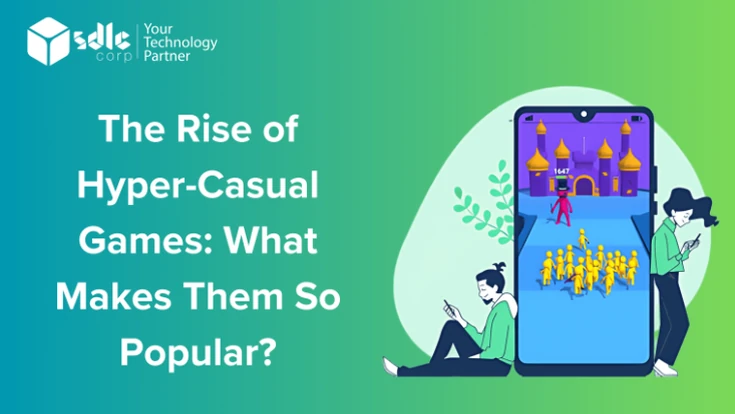
Read practical SDLC Corp guides on hyper-casual design, Ludo and board games, and chess with AR. They also cover engagement mechanics and monetization.
Start Your Game Project

Let's Discuss Your Casual Game Project

Share your requirements, timeline, existing build, or game concept. SDLC Corp will then review your project and recommend the right scope, team structure, and delivery approach.

What happens next?

We review your brief, estimate scope, and recommend the right team model.

  • NDA Available
  • 400+ Game Development Projects
  • Response Within 1 Business Day

No sales pressure. We reply with realistic scope and delivery recommendations.

FAQ

Frequently Asked Questions

Clear answers on the casual games we build, pricing, timeline, and ownership. We also cover multiplayer, AI, engines, monetization, and support.

Games & Capabilities

A casual game development company designs and builds games that players learn in seconds and enjoy in short sessions. Typical titles include match-3 puzzles, hyper-casual runners, and quick card or board games. In practice, the company covers design, art, engineering, testing, release, and LiveOps. It also builds in the progression, rewards, and monetization that bring players back.

Pricing, Timeline & Ownership

Multiplayer & AI

Monetization, Platforms & Support