Ludo Game Development Company

SDLC Corp is a Ludo game development company that builds custom Ludo games for Android, iOS and web. Our team handles game design, real-time multiplayer, admin tools and post-launch updates. As a result, you get one partner from the first sketch to a live game with steady player growth.

  • 6 Ludo Game Modes
  • 2 to 4 Players per Board
  • Android, iOS and Web
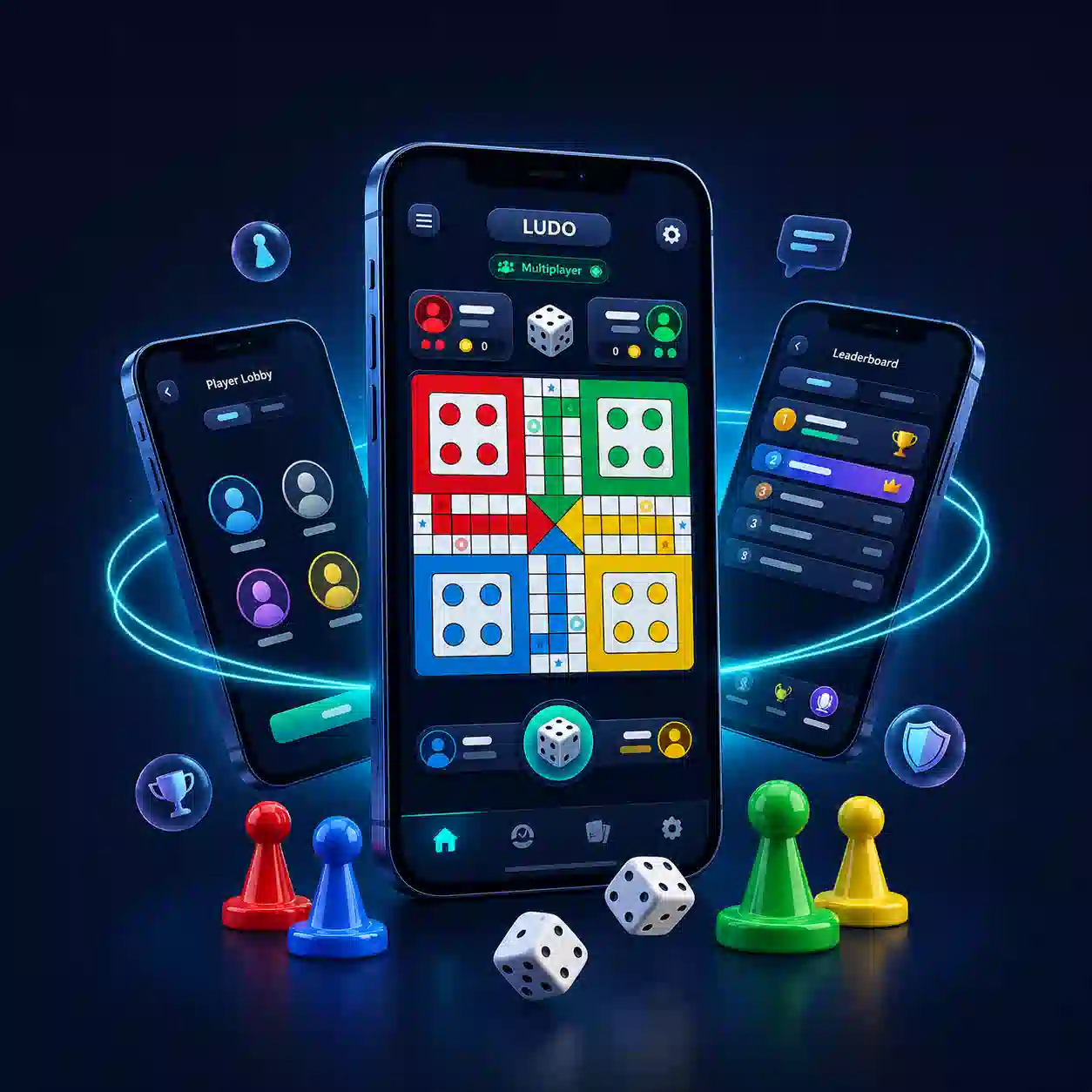
Ludo board on a phone showing a live four-player turn-based match Online Ludo Match
Trusted on Leading Review Platforms
Case Studies

Our Ludo and Match-3 Case Studies

See how our game development team built a real-time, four-player Ludo game and planned a casual match-3 puzzle game for Android and iOS.

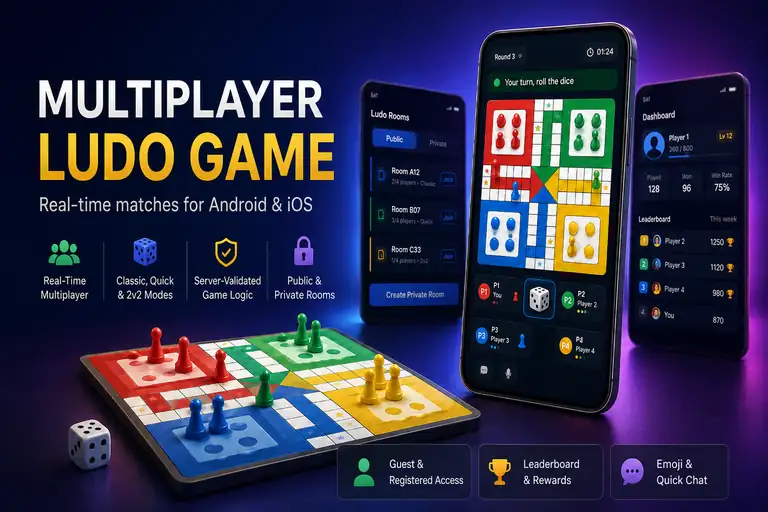
Real-Time Multiplayer Ludo Game for Android and iOS

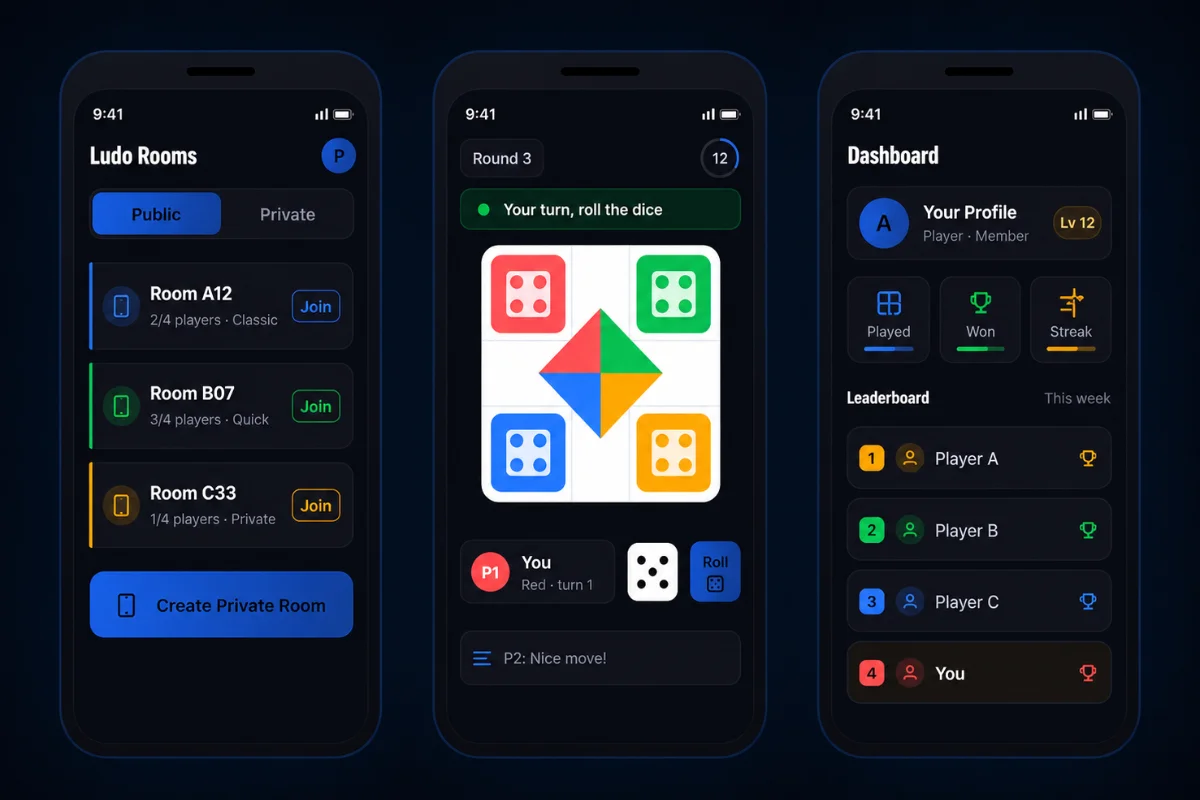
A mobile gaming company needed a four-player Ludo app with public matchmaking, private rooms and timed turns. We developed the game in Unity C# with a Socket.IO real-time server. It shipped with three modes: Classic, Quick and 2v2. Behind the scenes, the backend checks every dice result and token move.

Platforms:
Android & iOS
Delivery:
14 to 16 Weeks
Read the Ludo Case Study
Multiplayer Ludo game interface for Android and iOS developed by SDLC Corp

Match-3 Puzzle Game Development for iOS and Android

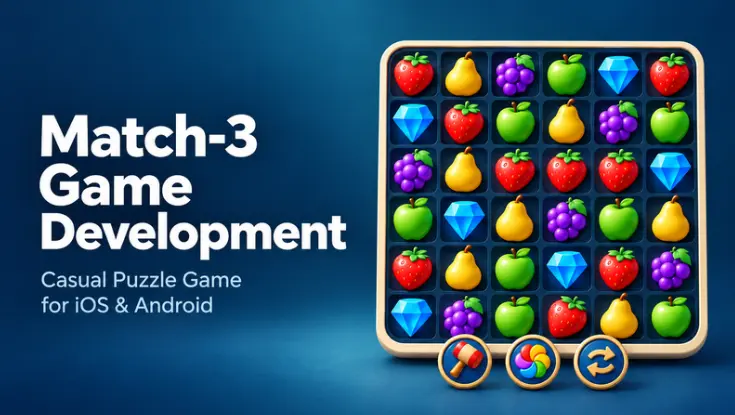
This case study shows how we plan a casual match-3 puzzle game that keeps players coming back. We used Unity C# for three-tile matching, boosters, blockers and a level map with daily rewards. In addition, rewarded ads and optional in-app purchases add revenue without blocking play. Firebase Analytics then tracks five KPIs, including Day 1 and Day 7 retention.

Release:
2 Platforms
Development:
6 Phases
Read the Match-3 Case Study
Match-3 puzzle game screens for iOS and Android with tiles, boosters and a level map
Our Services

Ludo Game Development Services

We cover every stage of a Ludo project, from game design and art to multiplayer servers and live updates.

Custom Ludo Game Development

First, we design the rules, boards, tokens and animations around your brand. Then we build the game in Unity, so one codebase runs on every platform.

Ludo Game Art and UI/UX

Our artists design boards, tokens, dice and menus in 2D or 3D. We also test every screen for easy one-hand play on small phones.

Multiplayer Ludo Development

We build real-time online play with Node.js and Socket.IO. Matchmaking, turn timers and reconnect handling keep each match fair and in sync.

Ludo with AI Opponents

Our AI-driven bots play at easy, medium and hard levels. Because they fill empty seats, players rarely wait long for a match.

Cross-Platform Ludo Apps

A single Unity build runs on Android, iOS, web and desktop. Our cross-platform game development team also keeps accounts and progress in sync across devices.

Ludo LiveOps and Support

After launch, we ship new boards, events and fixes. We also track D1, D7 and D30 retention, ARPDAU and crash rates, then tune the game based on that data.

Game Modes

Ludo Game Modes We Build

Each mode changes match length and player count. Together, they serve both quick sessions and long play with friends.

Classic Ludo

Standard rules with four tokens per player on a 2 to 4 player board. Players must bring every token home, so matches run longer.

Quick Ludo

Fewer tokens or a timed round end the match in minutes. This mode suits mobile players who play in short breaks.

Team Ludo (2v2)

Two partners share one goal and win together. As a result, team play drives more chat and more friend invites.

Tournament Mode

Players join brackets or leaderboard events to win coins and badges. You set the entry rules, rounds and rewards from the admin panel.

Private Rooms

To begin, a host shares a room code with friends or family. Everyone then joins the same board, chats and sends emojis during play.

Vs Computer and Offline

Players face AI bots or pass one device around the table. This mode also works without an internet connection.

Features

Core Features of Our Ludo Games

These features decide whether a player returns after the first match.

Fair Dice Logic

The server rolls the dice, not the phone. Therefore, players cannot change results on a modified device.

Real-Time Sync and Reconnect

Each move reaches every player almost instantly. If someone drops, the game holds the seat and restores the match state on return.

Smart Matchmaking

The system pairs players by skill level and region, so matches stay balanced. When the queue runs short, bots fill the empty seats.

Themes and Custom Boards

For example, you can add seasonal boards, token skins and dice styles. Players unlock them through play or buy them as in-app items.

Rewards and Leaderboards

Above all, daily bonuses, missions and ranked tables give players a clear reason to come back each day.

Admin Panel

Ludo Admin Panel Features

Your team runs the whole game from one web dashboard, with no code changes.

Ludo admin panel modules and what your team can do with each one
ModuleWhat Your Team Can Do
Live DashboardTrack daily active users, match counts, session length and revenue as they happen, so issues surface early.
Player ManagementSearch players, review match history and block accounts that break the rules.
In-App Purchases and CoinsSet coin packs, prices and bundles. Then review purchase logs by date and region.
Tournament ControlCreate events, set schedules and pick rewards. The system then updates leaderboards when each round ends.
Notifications and AdsSend push messages to player groups. You also control ad placement and how often ads appear.
Reports and ExportsIn addition, you can download retention, revenue and activity reports as CSV files for your team.
Our Process

Our Ludo Game Development Process

We work in two-week sprints and share a playable build at every stage.

  1. 1 to 2 weeks

    Discovery and Game Design

    We define the modes, rules, monetization and target devices. Then we write the game design document and the project plan.

  2. 2 to 3 weeks

    UI/UX and Prototype

    Our artists create the boards, tokens and screens. Next, you play a clickable prototype before full development starts.

  3. 6 to 9 weeks

    Development

    Developers build the Unity game client, the real-time server and the admin panel side by side. You also get a test build after every sprint.

  4. 2 to 3 weeks

    QA and Load Testing

    Testers check gameplay on real Android and iOS devices. In addition, we simulate heavy match traffic to test server stability.

  5. Ongoing

    Launch and LiveOps

    We publish to Google Play and the App Store and monitor crashes and server health. After that, we ship updates based on player data.

Technology

Technologies We Use for Ludo Game Development

We pick proven tools for each layer of the game. For the client, we build most Ludo games in Unity and follow its multiplayer guidance.

Unity game engine logoUnity

Cocos2d-x game engine logoCocos2d-x
C# programming language logoC#
Kotlin
Swift
HTML5 and JavaScript logoJavaScript (HTML5)
Node.js backend runtime logoNode.js
Socket.IO real-time messaging logoSocket.IO
Redis in-memory database logoRedis
MongoDB database logoMongoDB
MySQL
Firebase backend platform logoFirebase
Amazon Web Services (AWS) cloud logoAWS
Microsoft Azure cloud logoAzure
Jenkins CI/CD automation logoJenkins
GitHub code hosting logoGitHub
Spine 2D animation software logoSpine
Blender 3D modeling software logoBlender
Adobe Photoshop logoPhotoshop
Appium
Firebase Analytics
Cost & Timeline

Ludo Game Development Cost and Timeline

Cost depends on platforms, game modes, art style and multiplayer scale. Below are the typical ranges for our Ludo projects.

Ludo game development indicative budgets, timelines and typical deliverables
Project ScopeIndicative BudgetIndicative TimelineTypical Deliverables
Basic 2D Ludo$15,000 to $25,0008 to 12 weeksClassic and vs computer modes, local play on one device, ads and a basic admin panel.
Custom 2D Multiplayer Ludo$25,000 to $50,00012 to 16 weeksCustom art, three to four game modes, online multiplayer, AI bots and in-app purchases.
Advanced 3D Multiplayer Ludo$50,000 to $100,00020 to 40 weeks3D boards, tournaments, clubs, LiveOps tools and cross-platform accounts.
Why SDLC Corp

Why Choose SDLC Corp for Ludo Game Development

We focus on stable gameplay, clear ownership and long-term support. Our 90+ game development engineers are part of SDLC Corp's 1,200+ engineering team. To date, they have delivered 400+ game development projects.

5.0 / 5 on Clutch
3D Game Development
“They were willing to discuss alternative approaches and explain the practical implications of design decisions.”
400+Game Development Projects
90+Game Development Engineers
30+Countries Served
  • Full Source Code and IPYou own the code, art and design files at handover. We also sign an NDA before discovery begins.
  • One Team, End to EndDesigners, Unity developers, backend engineers and testers work as one team. As a result, you deal with a single project manager.
  • Built to ScaleWe plan the server for growth from day one, with load balancing and Redis-based session state. So the game holds up as player numbers rise.
  • Support After LaunchOur team fixes bugs, updates the game for new OS versions and adds features as your player base grows.
FAQ

Ludo Game Development FAQs

How much does Ludo game development cost?

A basic 2D Ludo game costs about $15,000 to $25,000. A custom 2D multiplayer game usually costs $25,000 to $50,000. However, an advanced 3D multiplayer game runs from $50,000 to $100,000. The final cost depends on platforms, modes, art and server scale.

How long does it take to build a Ludo game?

A basic 2D Ludo game takes 8 to 12 weeks. A custom multiplayer game takes 12 to 16 weeks. Meanwhile, an advanced 3D build usually needs 20 to 40 weeks.

Which platforms can you build a Ludo game for?

We build for Android, iOS, web and desktop. Since we use Unity, one codebase covers every platform. As a result, updates reach all players at the same time.

Can you add AI opponents and offline play?

Yes. Our bots play at three difficulty levels and fill empty seats in online matches. In addition, offline mode lets players face bots or share one device.

How do you keep dice rolls fair and stop cheating?

The server generates every dice roll and checks every move. We also encrypt game traffic, detect modified apps and flag unusual win patterns.

Will we own the source code and IP?

Yes. At handover, you get the full source code, art files and documentation. All IP moves to you under the contract.

Which engagement models do you offer?

We offer three models. A fixed-price project suits a clear scope and deadline. A dedicated team suits long-term work, while time and materials fits a scope that will change.

Can you work alongside our in-house team?

Yes. We can take on one part, such as the multiplayer server or the art. Your team then handles the rest, and both teams share one sprint board.

What support do you provide after launch?

We offer monthly plans that cover bug fixes, OS updates, server monitoring and new content. You can also add developers for larger updates.

Start Your Game Project

Start Your Ludo Game Project

Share your idea, target platforms and budget. Our team will reply with a clear scope and estimate.

What happens next?

We review your brief, estimate scope, and recommend the right team model.

  • NDA Available
  • 400+ Game Projects
  • Response Within 1 Business Day

No sales pressure. We reply with realistic scope and delivery recommendations.