
Carrom Board Game Development
Company
SDLC Corp is a carrom board game development company that builds custom carrom apps for Android, iOS and the web, with realistic coin physics and responsive striker controls. We add offline play, AI opponents and online multiplayer, then take your game from prototype through testing to app-store release.

Rated on Leading Review Platforms





Built into every carrom game
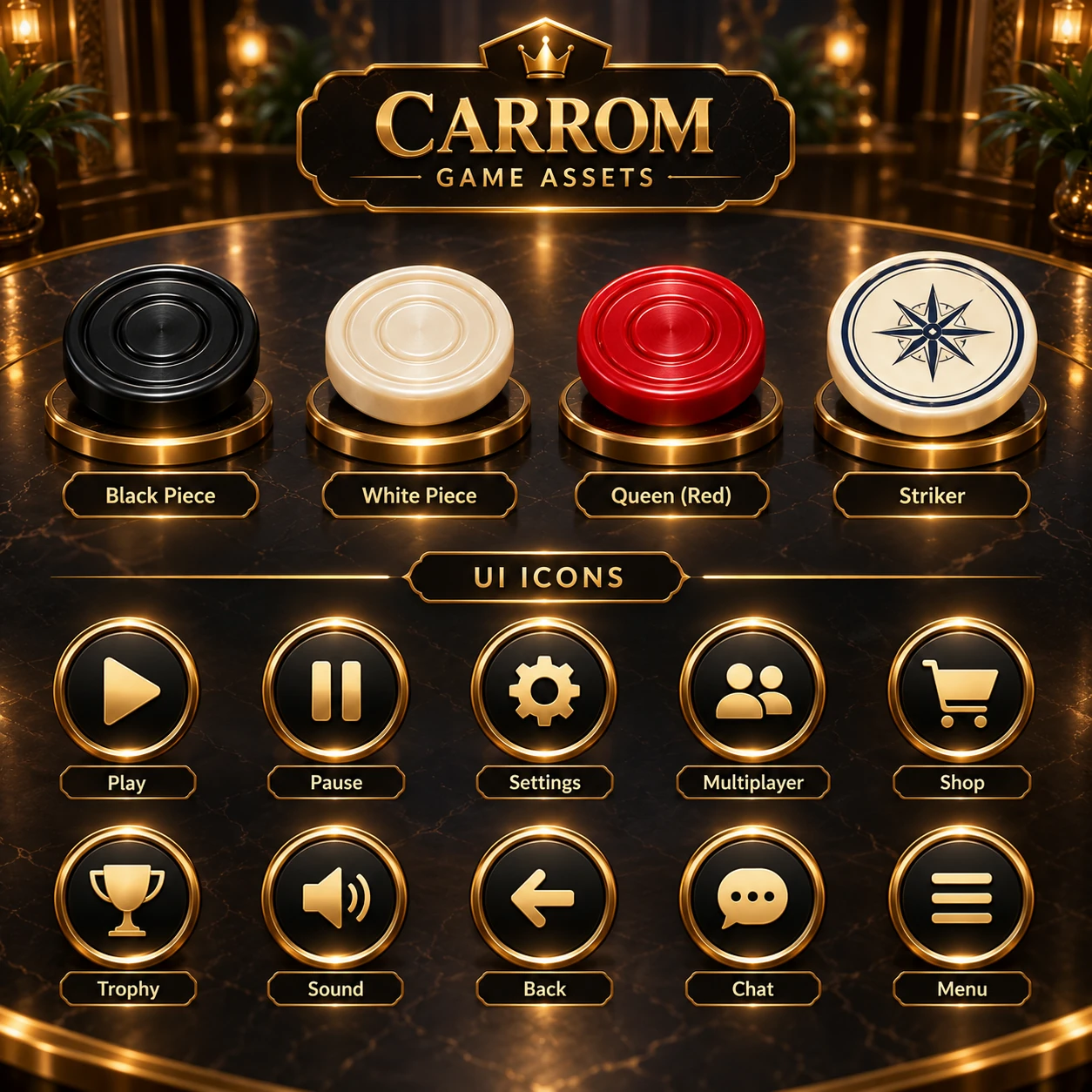
- Striker Controls
- Coin Physics
- Offline Play
- AI Opponents
- Online Multiplayer
- Android
- iOS
- Web & HTML5
Board Game Work That Carries Over to Carrom
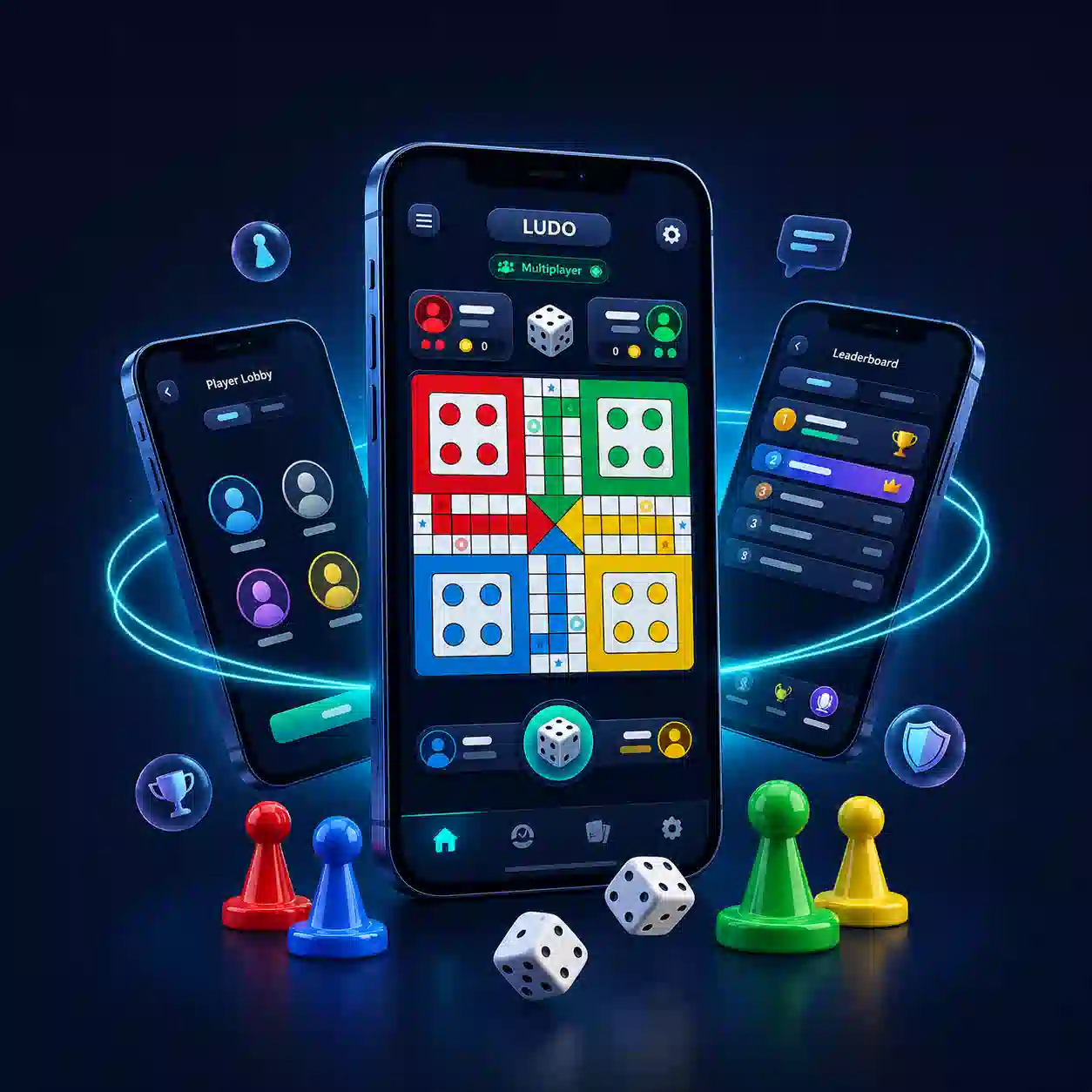
Our real-time Ludo build solved the same problems a multiplayer carrom game faces: synced turns, fair results and dropped connections. The same physics and multiplayer core supports our wider board game development work.
Real-Time Multiplayer Ludo Game
A mobile gaming company needed a four-player Ludo app with public matchmaking, private rooms and timed turns. We built a server-authoritative engine, so the server rolls the dice and validates every move (100% server-validated turns). Players who drop rejoin at the exact turn, and Android and iOS ship from one Unity codebase.
Want to See How It Would Work for Carrom?
Carrom Game Development Services for Android, iOS and Web
Pick the service that fits your roadmap, whether you start from a new idea or improve a live carrom game.
Carrom Game App Development
Android and iOS carrom apps with game UI, physics, player profiles and QA. Our mobile game development team also prepares Google Play and App Store releases.
Online Multiplayer Carrom
Real-time 1v1 and 2v2 matches with private rooms and invites. Server turn checks and reconnection keep every match fair.
Offline Carrom and AI Opponents
Practice modes and AI opponents with several difficulty levels. Progress saves without a network.
Carrom Board UI/UX and Game Art
Board themes, striker and coin skins, menus, tutorials and animations in 2D or 3D, with clear touch targets.
Custom Rules and Game Modes
Classic, freestyle, disc pool and house-rule variants. We lock the final rule set during discovery.
Web and HTML5 Carrom
Browser builds with mouse aiming, light assets and no install step, from our HTML5 game development work.
White-Label Carrom Game
A reusable carrom base with your branding, themes and supported rules, so launch needs less build time.
Carrom LiveOps and Admin Panel
Bug fixes, balancing and content updates after launch. The admin panel covers players, reports, match history and leaderboards.
Why Choose SDLC Corp for Carrom Game Development
Compare us on project practices, clear deliverables and how we answer your technical questions.
Prototype-First Decisions
We validate striker feel and rule logic before you commit to full production art and backend work, so the most expensive mistakes surface in week two, not month four.
Clear Game-Mode Scope
Decide early whether release one needs offline practice, friends mode or wider matchmaking.
Cross-Platform Planning
We fix supported devices first, then set real performance and input targets through our cross-platform game development process.
Source-Code Terms in Writing
Ownership, licences, third-party dependencies and handover duties sit in the signed agreement.
Transparent Milestone Acceptance
You review playable builds against agreed gameplay, UX and quality criteria.
Updates After Launch
Maintenance, bug fixes, analytics review and new modes run as separately scoped work.
Carrom Game Modes Players Look For
Start with the modes your players already know. Then, add new ones once you see how people play.
Classic Black and White
Each side pockets its own colour and must cover the queen. Our classic mode follows International Carrom Federation rules, with house-rule options.
Freestyle Points Mode
Any coin can be pocketed. Black, white and the queen carry different points, so every shot is a scoring choice.
Disc Pool Mode
A pool-style variant with simpler rules and shorter matches. It suits quick mobile sessions and rematches.
1v1 and 2v2 Online
Friendly or ranked matches for two players. Doubles seat partners opposite each other, just like the real board.
Pass and Play
Two to four players share one device and take turns on the same board. Because it needs no account, families pick it up fast.
Tournaments and Leagues
Bracket or league play with virtual coins and non-cash rewards, run on a schedule you control.
Features Players Expect in a Modern Carrom Game
A good carrom game makes the first match easy and the hundredth match still fun, without extra complexity.
Tutorial and Practice
Guided onboarding explains aiming, coin pocketing, queen rules and turn flow, so first-time players learn fast.
Private Rooms and Invites
Players invite friends with shareable room codes and pick the rules for each table.
Fair Match State
The game checks turns, fouls, pocketed coins and results the same way every time, so no device can bend the outcome.
Progression and Leaderboards
Optional levels, achievements, cosmetic unlocks and non-cash leaderboards keep players returning.
Guest Play and Accounts
New players try practice mode at once. Later, optional sign-in saves profiles, progress and friends.
In-Match Quick Chat
Preset messages and emojis let players react, without open text chat that needs moderation.
Localization and Accessibility
Language-ready menus, readable UI, scalable controls and adjustable audio for each target market.
Match History and Reconnection
Saved results, reconnect windows and fair rules for interrupted turns or abandoned games.
Realistic Carrom Physics and Striker Controls
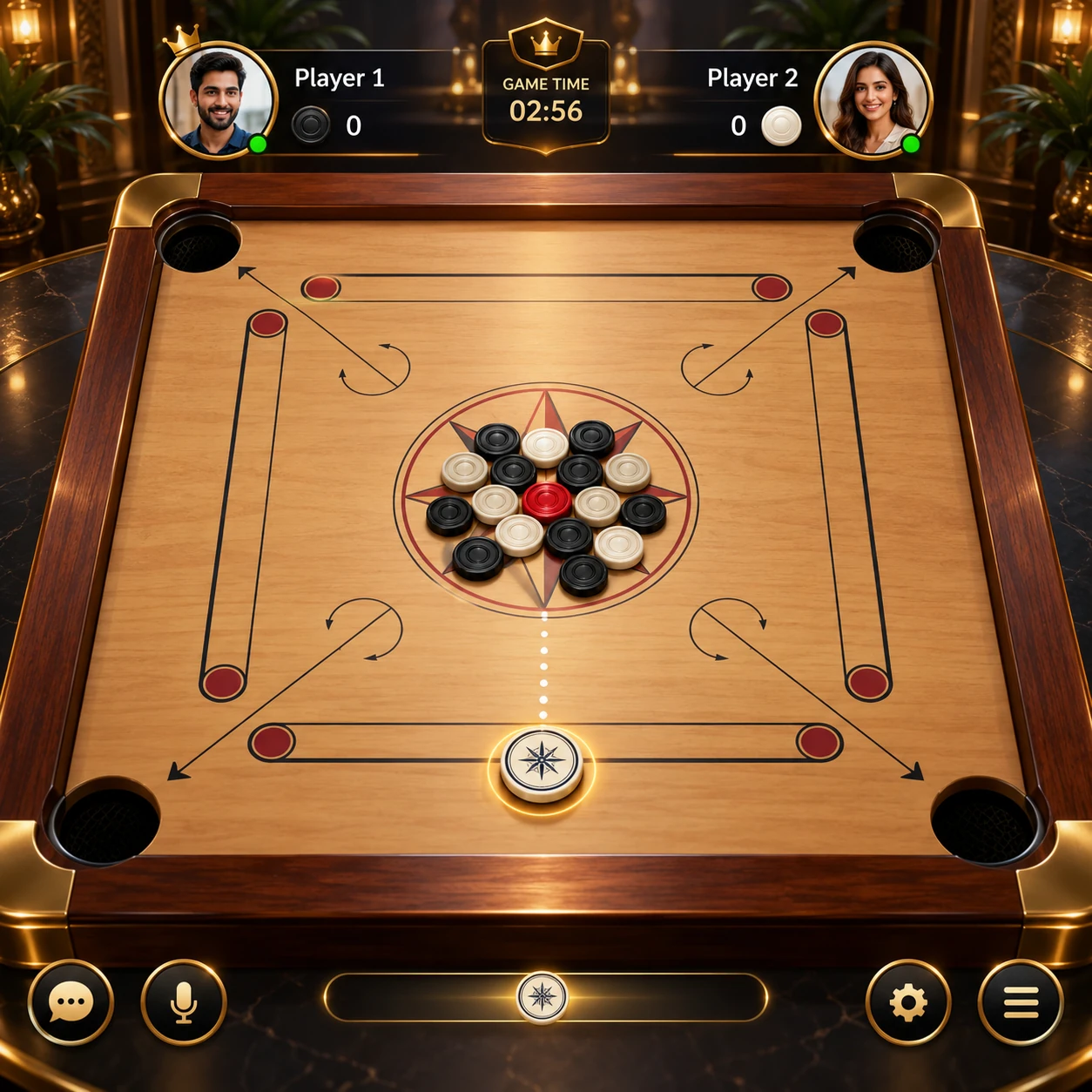
A digital carrom game lives or dies on how the striker, coins, cushions and pockets behave.
Striker Aiming and Power
Drag-to-aim controls, a predictable power gauge, aiming guides and clear feedback on touchscreens.
Coin Movement and Rebounds
We model friction, collisions, cushion rebound and pocket detection. In Unity, we tune Physics Material 2D friction and bounciness, then playtest every shot type.
Consistent Outcomes
Reproducible game-state rules decide shot results and scoring. For multiplayer, a trusted server validates moves, so players never see conflicting boards.
Device-Friendly Gameplay
Touch targets, animations and rendering settings adapt to different screen sizes and mid-range devices.
Technology Used for Carrom Game Development
We pick tools by target devices, game complexity and multiplayer needs, not by habit.
Unity and C#
A practical choice for cross-platform gameplay, input and physics prototypes, backed by our Unity game development team.
Physics2D and Custom Rules
Collision handling, friction, board geometry, pocket detection and consistent scoring logic.
Node.js and WebSocket
Node.js with Socket.IO runs player rooms, turn validation and live match events.
Cloud and Data Services
Storage for accounts, friend lists, game settings and analytics. We choose the provider to fit your budget and region.
AI Opponent Logic
Rule-based search or shot simulation, with difficulty settings tested by real players.
QA and Release Tools
Automated checks and device testing run first. After that, crash monitoring and store-submission pipelines take over.
Our Carrom Game Development Process
A phased workflow proves game feel, usability and multiplayer reliability before release.
Discovery and Requirements
Define players, game variants, supported devices, scope and acceptance criteria.
Playable Physics Prototype
Test aiming, collisions, rebounds, pocket detection and basic rules on target devices.
UX, Art and Core Build
Develop game screens, reusable visuals, AI or offline modes and accessible input.
Multiplayer Integration
Add friend invites, rooms, authoritative turn checks and network recovery as needed.
QA and Publishing
Test queen and foul rules, replayed shots, disconnect recovery, touch input and device performance.
Post-Launch Support
Monitor crashes, gather feedback, improve balance and plan the next update.
Carrom Game Development Cost and Timeline
Physics tuning, networking, art volume and device testing drive most of the budget. Use these ranges to plan before your scoped quote.
Prototype or Offline MVP
Physics, aiming, basic rules, offline practice or AI. Typically 6–10 weeks.
Multiplayer Product
Accounts, friend rooms, 1v1 and 2v2 matches and server checks. Typically 14–20 weeks.
Expanded Cross-Platform Release
Several modes, progression, localization, admin panel and LiveOps. Typically 5–8 months.
These are planning ranges, not fixed prices. Store fees, hosting and ongoing LiveOps are scoped separately. We give a fixed estimate after discovery.
Book a Discovery WorkshopWork With Experienced Carrom Game Developers
Share your concept or current build. We reply within one business day with a scope, a platform plan and a cost range.
Get Your Carrom Game EstimateWays to Hire Carrom Game Developers
Pick a delivery model that suits your current team and how clear your requirements are.
Complete Product Development
One delivery scope covering game design, development, QA, release preparation and handover.
Dedicated Carrom Game Developers
Add Unity, backend or UI/UX specialists to your team with agreed duties. You can also hire game developers for long-term work.
Prototype and Technical Review
Validate gameplay architecture, physics or multiplayer feasibility before a larger build.
Let's Plan Your Carrom Game Project
Tell us your target platforms, preferred game modes and product goals. We can use this information to outline a practical development scope.
What happens next?
We review your brief, estimate scope, and recommend the right team model.
- NDA Available
- 400+ Game Development Projects
- Response Within 1 Business Day
No sales pressure. We reply with realistic scope and delivery recommendations.
Carrom Game Development FAQs
Straight answers to the questions buyers ask most about features, platforms, cost and delivery.
A carrom board game development company designs and builds digital carrom games for Android, iOS and the web. The work covers striker and coin physics, rules, UI/UX, AI opponents, online multiplayer, testing and store release. SDLC Corp also supports the game after launch.
Most carrom games cost between $15,000 and $100,000. An offline MVP with AI opponents sits at the lower end. In contrast, a cross-platform multiplayer game with progression, an admin panel and LiveOps sits at the top. We give a fixed estimate after discovery.
An offline prototype or MVP takes about 6 to 10 weeks. A multiplayer carrom game usually needs 14 to 20 weeks. For reference, our real-time Ludo game reached store-ready builds in 14 to 16 weeks. Larger cross-platform releases can take 5 to 8 months.
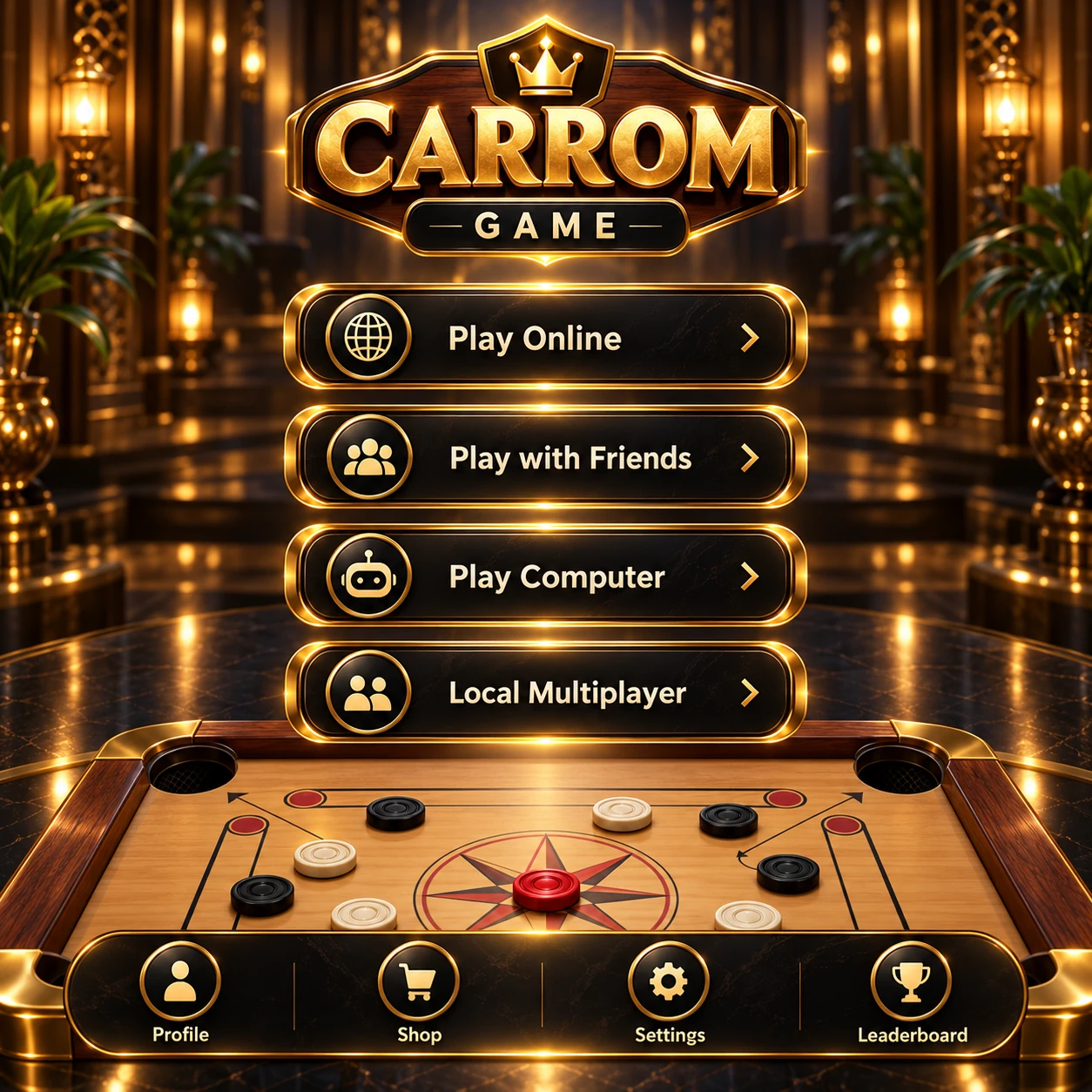
Common modes are classic black and white, freestyle points, disc pool, 1v1 and 2v2 online, pass and play, and play against the computer. Many games also add tournaments with virtual coins. We help you choose the modes for your first release.
Yes. An offline mode lets players practice against AI without an internet connection. We set difficulty through shot accuracy, shot choice and strategy. However, online friend matches still need a connection.
We tune friction, coin mass, cushion bounce and pocket size, then playtest shots on low, mid and high-end devices. As a result, the same shot behaves the same way each time. In multiplayer, the server confirms each result, so every player sees one board.
Yes. We use Unity to ship Android and iOS from one codebase. Multiplayer can include 1v1 and 2v2 matchmaking, private rooms, friend invites, turn sync and reconnection handling.
Yes, we can build a carrom game with a similar feature set: disc pool and freestyle modes, striker upgrades, cosmetic shops, leaderboards and online matches. We do not copy another game’s art, names or code. Instead, we build your own design and brand.
We build free-to-play carrom games with virtual coins and non-cash rewards. Cash-prize play is legal in some markets and banned in others, such as India under the Promotion and Regulation of Online Gaming Act, 2025. So we only scope it once your legal team confirms the target markets.
Yes. Source code, assets, builds and IP transfer to you under the signed agreement. After launch, support can include bug fixes, crash monitoring, device updates, gameplay balancing and new modes.



