
Battle Royale Game Development Company

SDLC Corp is a battle royale game development company for studios that build multiplayer games for iOS, Android, PC, and console. We build playable prototypes, develop complete games, and improve existing builds. Before production, we agree on the match format, target platforms, and player count. That gives your team a clear scope for development and multiplayer testing.

iOS battle royale game preview iOS
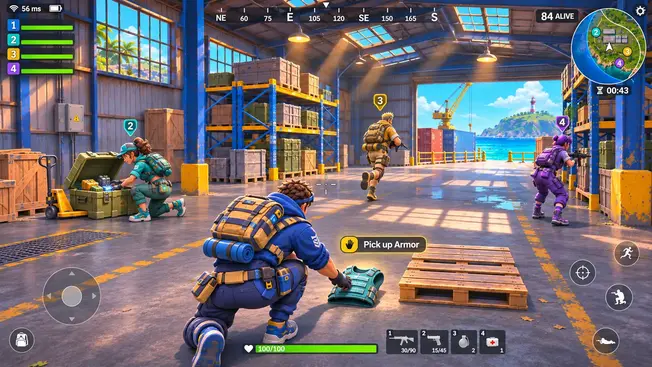
Android battle royale match preview Android
Multiplayer battle royale match preview Multiplayer
Battle royale PC gameplay preview PC
Battle royale console gameplay preview Console

Rated on leading industry platforms

Working with leading technologies

  • Unity
  • Unreal Engine
  • iOS & Android
  • Blender
  • Blockchain
  • AR / VR
  • Photon
  • AWS
Case Study

Featured Multiplayer
Game Project

Battle royale game development relies on fast, server-checked multiplayer play. This Ludo project shows how our team builds that layer and ships it on Android and iOS.

Multiplayer Ludo for Android and iOS

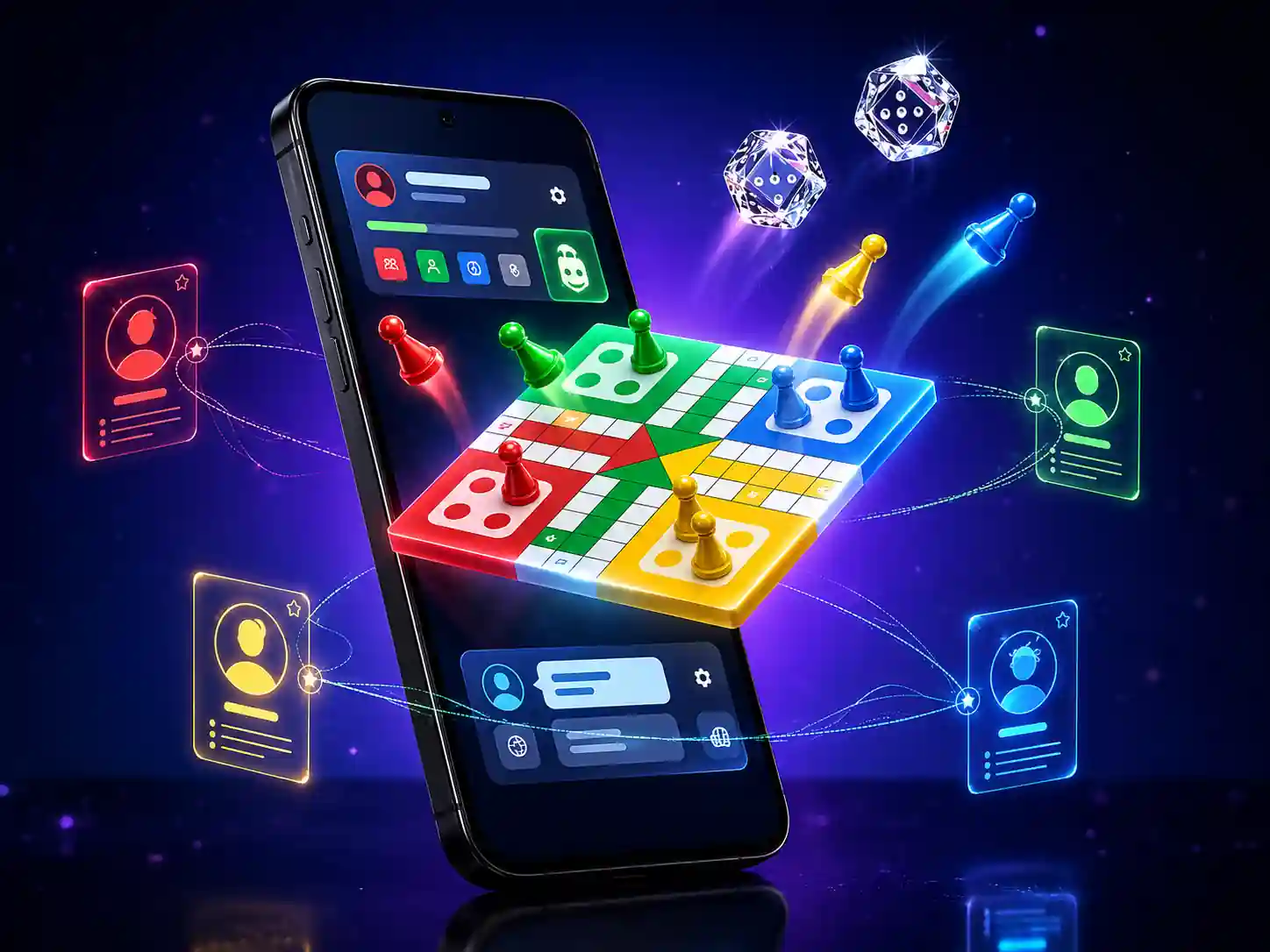
In this multiplayer game development project, SDLC Corp built a real-time Unity game. It has public and private rooms, timed turns, and three game modes. During each match, the server checked dice results and token moves to keep play in sync. We delivered store-ready Android and iOS builds in 14–16 weeks.
Game Modes3
Players per Match4
Delivery14–16 Weeks
Read the Multiplayer Ludo case study
Ludo game board showing a live four-player turn-based match
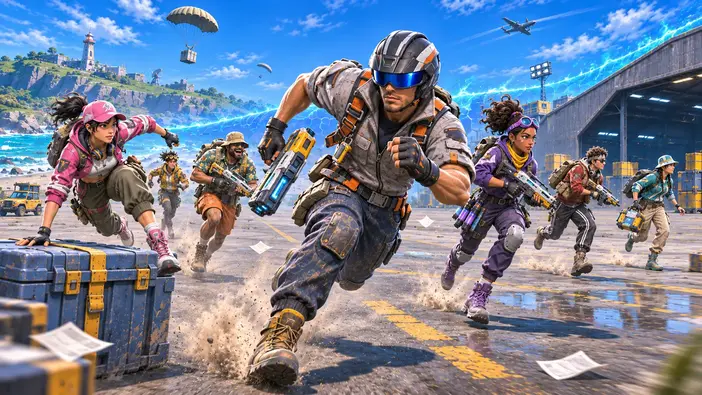
Battle royale game artwork
Our Services

Battle Royale Game
Development Services

Our battle royale game development services cover full games and focused work inside an existing build. For example, you can commission a new map, a dedicated server backend, or a port to another platform.

Custom Battle Royale Game Development

We build mobile, PC, and console games with original maps, characters, and match rules. Your agreed scope then sets the first release.

Battle Royale Game and Map Design

We size each map to the player count and place drop zones, loot, and cover. Greybox playtests then shape the layout before art starts.

Dedicated Server and Backend Development

We build matchmaking, lobbies, and player data services. The server owns match state, while client prediction and lag compensation keep shooting responsive.

Battle Royale Co-Development

Our battle royale game developers add features such as squad play or spectating to your codebase. First, we agree on integration and approval.

Performance Optimization and Porting

We fix frame rate drops, memory spikes, and network bottlenecks on your target devices. We also port finished builds to new platforms.

LiveOps and Content Updates

We run balance patches, limited-time modes, and seasonal content. Where the backend allows it, event settings change without a client update.
Gameplay Features

Battle Royale Gameplay and
Multiplayer Features

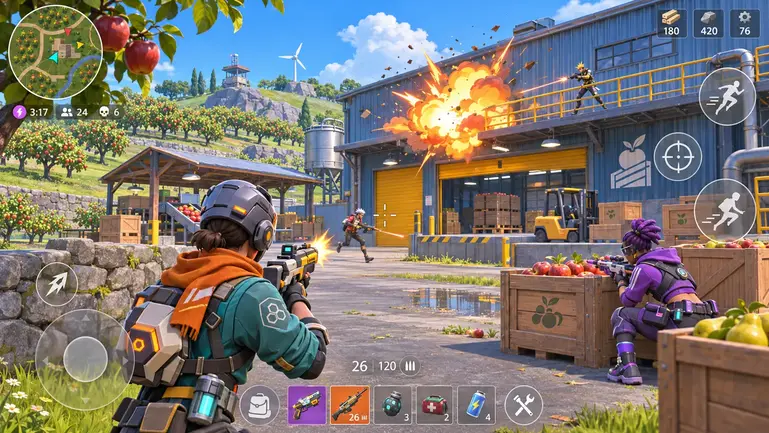
In battle royale games, loot, map routes, and zone timing set the pace of each match. So we design these systems together, and a change to one still fits the whole match.

  • Landing and Loot

    Give players a choice of landing spots, gear, and routes from the first minute of each match.

  • Shrinking Safe Zone

    Close the playable area in phases. As a result, players move closer together as the match goes on.

  • Elimination and Spectating

    Apply the rules for solo or squad elimination. After elimination, players can follow teammates where the mode allows it.

  • Reconnect and Recovery

    Let players rejoin an active match after a short connection loss. Meanwhile, the server holds their state for a set time window.

  • Server-Side Fair Play

    The server checks critical actions such as damage, movement, and item pickups. It also logs suspicious events for your team to review.

  • Battle Pass and Store

    Add a seasonal battle pass, a cosmetics store, and rewarded ads on mobile. Because items are cosmetic only, purchases don’t change match balance.

Battle royale game artwork
Platforms

Battle Royale Games for
Mobile, PC, and Console

Mobile battle royale game development starts with touch controls and a defined device range. For PC and console, however, we plan for other input methods, hardware targets, and release rules.

Android Battle Royale Games

Android work covers a defined device range, split into low, mid, and high tiers. Then, during testing, we check memory use, graphics settings, and match performance on each tier.

Explore Android game development

PC Battle Royale Games

PC battle royale game development covers keyboard and mouse input, graphics settings, and target hardware. In addition, we plan the build and submission steps for your chosen storefront, such as Steam.

Explore PC game development

Console Battle Royale Games

For console projects, we scope controller layouts, platform services, and certification. That includes Sony TRC, Xbox XR, and Nintendo Lotcheck requirements for your target systems.

Explore console game development
Tech Stack

Battle Royale Game Engines
and Development Tools

Your platforms, match size, and current codebase decide the battle royale tech stack. For large Unity matches, for instance, we use Netcode for Entities, which Unity designed for competitive action games. Then we profile performance on the target hardware.

  • Unity logoUnity
  • Unreal Engine logoUnreal Engine
  • Netcode for Entities
  • Photon logoPhoton Fusion
  • Amazon GameLift Servers
  • PlayFab
  • Node.js logoNode.js
  • Easy Anti-Cheat
  • Blender logoBlender
  • Maya
  • Substance 3D Painter
  • Figma logoFigma
  • Unity Profiler
  • Unreal Insights
Battle royale game artwork
Development Process

Our Battle Royale Game
Development Process

Our battle royale development process ends each milestone with something your team can review and approve. That way, problems show up early, while they are still cheap to fix.

  1. Scope and Design

    A project brief with match rules, target platforms, player count, and release requirements.

  2. Playable Match

    Next, a playable build with lobby entry, landing, loot, zone changes, and match completion.

  3. Load-Tested Beta

    A beta build and a test report on match size, simultaneous sessions, latency, and reconnects. Beyond that, the report lists live clients and bots separately.

  4. Launch and Handover

    Finally, a release build, store submission files, and a handover session with your team.
Cost and Timeline

Battle Royale Game Development
Cost and Timeline

How much does it cost to develop a battle royale game? It depends on maps, modes, art, platforms, and match size. Adding a second platform, for example, adds work on controls, device testing, and release.

Battle royale game development cost and timeline for mobile projects by project scope
Project ScopeWhat It IncludesMobile Cost and Timeline
Focused Feature WorkOne scoped task on an existing build, such as a new mode, a map update, a performance pass, or a bug-fix sprint.Under $25,000 · Scoped per task
Playable PrototypeOne map, 50-player matches, basic weapons, and simple loot and zone rules. It runs without dedicated servers and is built for feedback.$25,000–$75,000 · 12–16 weeks
Soft Launch and Full ReleaseMultiple maps, dedicated servers, matchmaking, a battle pass, anti-cheat, LiveOps tools, and app store release.$75,000+ · 24–60 weeks

These ranges cover mobile projects. For PC and console projects, we estimate against your brief and list hosting, licenses, and LiveOps as separate items.

Multiplayer battle royale game artwork
Why Choose Us

Why Studios Choose SDLC Corp
for Battle Royale Development

Our 90+ game development engineers are part of SDLC Corp’s 1,200+ engineering team. To date, they have delivered 400+ game development projects.

5.0 / 5 on Clutch
3D Game Development
“They were willing to discuss alternative approaches and explain the practical implications of design decisions.”
Sushant Ashtaputre Senior Associate, Digital Entertainment Company July 14, 2026
400+Game Development Projects
90+Game Development Engineers
30+Countries Served
One team for game and server. Gameplay, backend, and art stay in one team, so fixes don’t wait on handoffs between vendors.
NDA before concept sharing. We can sign an NDA before you share your game design or existing build.
Clear handover terms. Before work starts, we agree on the source code, deployment scripts, and documentation you’ll receive.
Request a Battle Royale Game Plan Share your concept or current build to get started.
Start Your Game Project

Discuss Your Battle Royale Game Project

Tell us your target platform, project stage, and match size. If you already have a build, list what you want to add or fix. We’ll reply with questions and a first estimate.

What happens next?

We review your brief, estimate scope, and recommend the right team model.

  • NDA Available
  • 400+ Game Development Projects
  • Response Within 1 Business Day

No sales pressure. We reply with realistic scope and delivery recommendations.

Request a Proposal
FAQ

Battle Royale Game
Development FAQs

These answers cover match size, timelines, dedicated servers, bots, cross-play, and engines.

Commercial battle royale games usually run 50 to 100 players per match. Free Fire uses 50, for example, while PUBG uses 100. We agree on your target during discovery. Then we load test it on the planned servers. The test measures latency, match completion, and how many matches run at once.

On mobile, a playable prototype takes 12 to 16 weeks. A soft launch or full release takes 24 to 60 weeks. Adding PC or console extends the plan, because each platform needs its own input, testing, and certification work. Extra maps and modes also add time.

Yes. Our battle royale dedicated server development covers server builds, fleet scaling, region routing, and match logs. We often host on Amazon GameLift Servers. Hosting cost depends on regions, match length, network traffic, and peak simultaneous matches. So we estimate it separately from development.

Yes. Many battle royale games fill early matches with bots while the player base grows. We set bot skill by match bracket, so new players face easier lobbies. Bots also help us load test before real traffic arrives. As real player numbers rise, the share of bots per match drops.

Yes, if the game’s architecture and platform rules allow it. First, we review account linking, matchmaking pools, input rules, and how each platform ships updates. Cross-progression, which carries account progress between platforms, goes through the same review. For new projects, our cross-platform game development team plans both from the start.

Unity suits mobile-first games that must run on many Android devices, from budget phones to flagships. Unreal Engine, on the other hand, suits PC and console games that need high-end visuals. In both cases, we decide after checking your platforms, match size, and your team’s engine experience.