Realistic Battle Royale · 100 Players · Unreal Engine · PC & Mobile
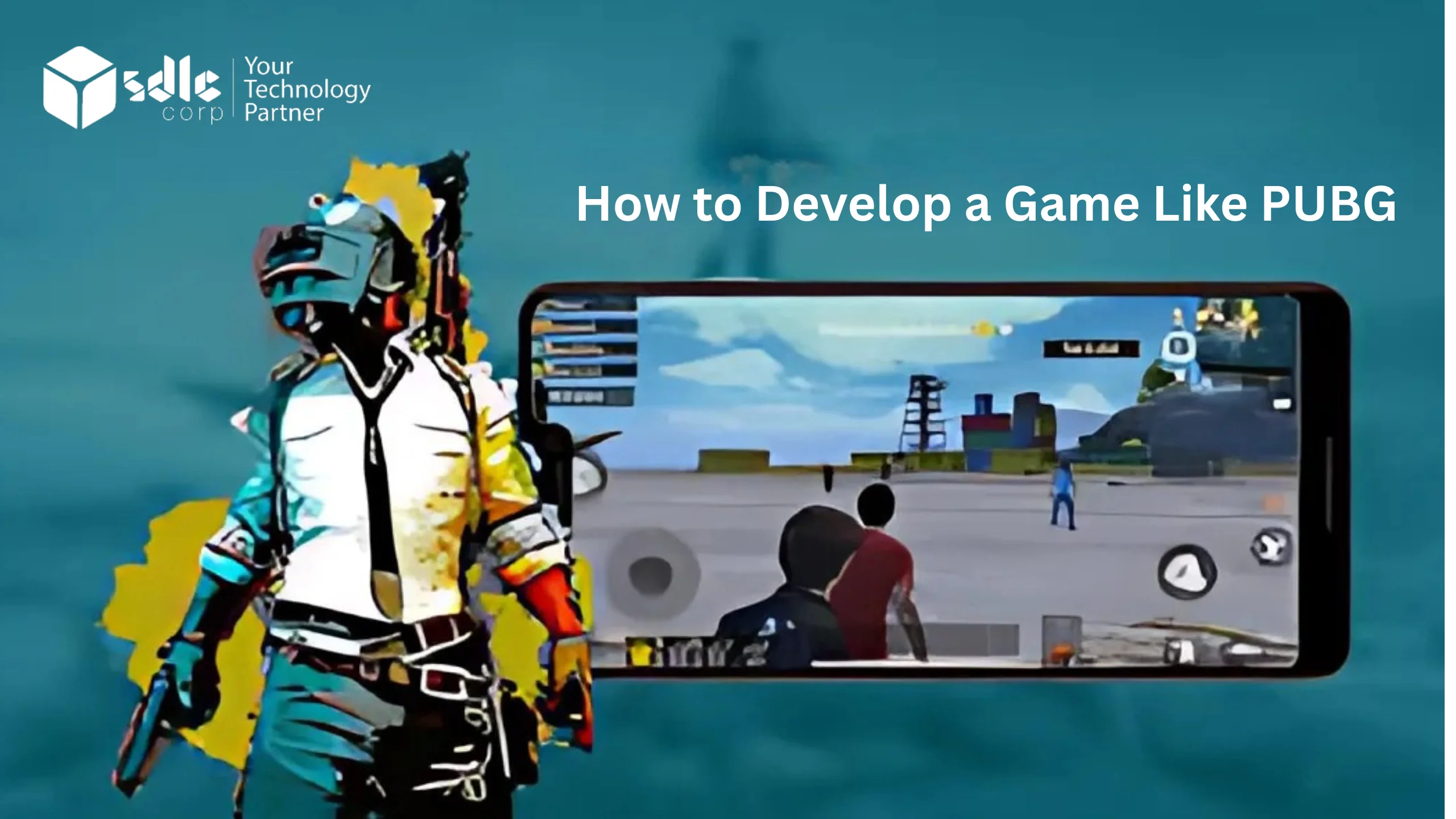
Playerunknown's Battlegrounds (PUBG) defined the battle royale genre. Developed by KRAFTON, it launched on PC in 2017 and subsequently spawned PUBG Mobile (developed by Tencent), which has surpassed 1 billion downloads. The two products are architecturally and commercially distinct: the PC version is a premium, high-fidelity simulation running on Unreal Engine 4, while the mobile adaptation is optimised with touch controls and reduced asset fidelity.
Knowing which of these you want to build is the first decision you must make before any development begins. This guide covers what it actually takes to develop a game like PUBG — the architecture, engine choices, server requirements, and realistic costs that a serious studio needs before committing budget. The "$10k–$50k" figures you've seen elsewhere are for demos, not production games.
How this differs from our Free Fire guide: Our Free Fire development guide covers mobile-first battle royale with 50 players, Unity engine, and low-end Android optimisation. This guide covers a different product: higher-fidelity PC/console-origin game with 100 players, realistic ballistics, Unreal Engine, and a different monetisation model. Choose your guide based on the product you're actually building.
1. PUBG vs Free Fire — Choose Your Product First
 Step 1 — Product Decision
The most important decision is whether you are building a high-fidelity PC/console battle royale or a mobile-accessible battle royale. These are different products with different engines, different server architectures, different team compositions, and different cost profiles. They should not be treated as the same project at different quality levels.
- Engine: Unreal Engine 4 or 5
- Graphics: Photorealistic, high-poly
- Players: 100 per match
- Map size: 8×8km (Erangel)
- Match duration: 25–35 minutes
- Revenue model: Premium + cosmetics
- Hardware req: GTX 1060 / 8GB RAM minimum
- Engine: Unity (Free Fire) or UE4-mobile
- Graphics: Optimised, stylised
- Players: 50–100 per match
- Map size: Reduced for mobile performance
- Match duration: 10–20 minutes
- Revenue model: Free-to-play cosmetics
- Hardware req: 2GB RAM Android / iPhone 7+
If your target is mobile-first with low-end device support, the Free Fire development guide is more relevant. This guide focuses on the higher-fidelity higher-fidelity PC-origin product, Unreal Engine, 100-player server architecture, and realistic ballistics physics.
2. Architecture for a 100-Player High-Fidelity Battle Royale
Step 2 — ArchitectureA 100-player battle royale must handle 100 simultaneous players with full physics simulation, ballistics calculations, and vehicle dynamics — all server-authoritative. This is roughly 4× the server compute load of a 50-player game, and it compounds when running hundreds of concurrent matches.
- Authoritative dedicated servers: Every action — movement, shooting, vehicle physics, looting — is validated server-side. The original game faced persistent cheat problems because certain systems were partially client-authoritative at launch. Design server authority in from day one.
- 8×8km open-world streaming: A map this size cannot be loaded entirely into memory. Level streaming loads terrain chunks as players move. The server must manage this streaming consistently for all 100 players simultaneously.
- Ballistics simulation: PUBG uses realistic bullet drop, travel time, and wind deviation. These physics calculations run on the server every tick. This is computationally expensive — budget dedicated CPU cores per match server, not shared resources.
- Vehicle physics: Car, motorcycle, boat, and aircraft physics all run on the server. Vehicle desync (where the car appears in different positions to different players) was PUBG's most visible early bug — solve it architecturally, not with client-side interpolation tricks.
- Zone calculation: The blue zone shrinks deterministically — same seed, same timeline every match. This is broadcast to all clients but calculated server-side and non-negotiable.
Server cost reality: A single 100-player match requires approximately 4–8 vCPUs and 8–16GB RAM at 30 ticks/second. At 1,000 concurrent matches, that is 4,000–8,000 vCPUs in your server fleet. AWS GameLift with auto-scaling is the practical solution — budget $15k–$40k/month at meaningful scale.
3. Core Features of a Battle Royale
Step 3 — Feature Set4. Technology Stack
Step 4 — Tech Stack5. Graphics, UI/UX, and Spectator Design
= Step 5 — DesignPUBG's visual identity is grounded military realism — neutral colours, realistic weapon models, environmental storytelling through abandoned buildings and vehicles. This aesthetic is achievable in UE5 with a mid-sized art team, but the poly counts and texture resolutions involved create performance challenges that require a dedicated technical art pipeline.
- LOD (Level of Detail) strategy: At 100 players across an 8km map, you cannot render everything at maximum quality simultaneously. Implement aggressive LOD switching: full-quality player models within 100m, two lower-quality LOD tiers beyond. Vegetation, buildings, and terrain all need LOD management.
- Third-person vs first-person: Both perspectives are supported simultaneously. Third-person gives positional awareness advantages; first-person is more immersive. Decide at architecture stage — mixing perspectives in the same match creates balance problems.
- HUD minimalism: The HUD is deliberately sparse compared to arcade shooters — health, boost bars, ammo, zone timer. The minimalism is intentional and requires restraint in UI design. Clutter reduces immersion and readability.
- Inventory screen: Managing 100+ loot item types with attachment slots, weight limits, and comparison stats. This is one of the most complex UI systems in the game and consistently cited in new player surveys as confusing. Invest serious UX research here.
6. Monetisation — Revenue Model
Step 6 — RevenueThe PC version was initially a paid game ($30) with cosmetic DLC. The mobile version is free-to-play with cosmetics. A new studio building in this genre will almost certainly use a free-to-play model — the paid premium model requires significant brand trust that a new IP doesn't have at launch.
- Battle/Royale Pass: The "Royale Pass" is a seasonal battle pass with free and paid tiers. It provides consistent monthly recurring revenue and gives players clear progression goals that drive daily sessions.
- Direct cosmetic shop: Limited-time outfits, weapon finish skins, parachute skins. Unlike Free Fire's gacha-heavy model, The mobile version sells many cosmetics directly at fixed prices — simpler legally (no loot box regulation concerns) and often preferred by Western players.
- Collaborations: The game has run collaborations with BLACKPINK, Jujutsu Kaisen, and other IP. Collaboration skins drive significant revenue spikes. Budget IP licensing fees (5–15% of collaboration revenue) and plan at least two major collabs in your first year post-launch.
- Esports: The Global Championship has prize pools of $2M+. Building esports infrastructure (observer tools, broadcast overlay API, tournament match server options) takes 3–6 months additional development but dramatically increases brand visibility and player aspiration.
7. Legal — IP, Platform Ratings, and Regional Restrictions
Step 7 — Legal- IP independence: Specific map names (Erangel, Miramar), weapon names (Kar98k, M416), and character designs are protected. You cannot use these names or designs. Weapon models based on real firearms require separate licences from manufacturers (or you name them fictional variants — e.g., "KR98" instead of "Kar98k").
- Age ratings: PEGI 16 (EU), ESRB Teen/Mature (US), CERO D (Japan). Realistic violence in battle royale games consistently receives age-gated ratings. Platform distribution (Steam, PlayStation, Xbox) requires submission and approval — budget 8–12 weeks for ratings submission per territory.
- China regulations: China requires blood to be removed or recoloured, death animations modified, and end-screen messaging to avoid "winner" language. PUBG Mobile China (Game for Peace) required a full content modification. If targeting China, design content variants from the start.
- India OCI rules: PUBG Mobile was banned in India in 2020, relaunched as Battlegrounds Mobile India (BGMI) under local data storage compliance. Any game with significant India market ambitions must plan for local data hosting.
- Real firearm model licences: Some studios license weapon designs from manufacturers (Sig Sauer, FN Herstal). Others use fictional variants. Licensing adds authenticity and avoids claims; fictional variants avoid fees but may affect realism appeal to hardcore players.
8. Team Structure and Development Process
Step 8 — Team & ProcessThe original was built by a team of approximately 35 people over 18 months before Early Access launch. The PC version shipped with known rough edges — The game famously launched in Early Access and used player feedback to iterate. This approach (ship rough, improve publicly) is harder to execute for new IPs without existing community goodwill.
- Lead UE5 Developer (1): Must have shipped a multiplayer title in Unreal Engine. UE multiplayer networking is a specialisation within Unreal development — a skilled single-player UE developer is not a substitute.
- Multiplayer / Network Developer (2): Server-authoritative game loop, dedicated server build pipeline, packet optimisation. The most critical and hardest-to-hire role for this project type.
- 3D Environment Artists (3–4): 8×8km maps require substantial terrain art. Must work within UE5 Nanite/Lumen constraints and hit LOD targets. Separate from character artists.
- Character / Weapon Artists (2): Realistic weapon models with attachment variants, character rigs for clothing system. Weapon models are high-stakes — realistic detail is expected and noticed.
- Technical Artist (1): Shader performance, LOD pipeline, draw call optimisation. The difference between "runs at 60fps" and "runs at 30fps" on equivalent hardware.
- Game Designer (2): Map design, weapon balancing, zone timing, loot spawn tuning. Weapon balance in particular is a continuous post-launch job.
- Anti-Cheat / Security Engineer (1): Dedicated resource. Cheating in battle royale games is severe and persistent. Without dedicated security engineering, cheat developers will outpace your reactive patches.
9. Real Cost to Develop a Game Like PUBG
Step 9 — InvestmentThese are costs for a production-quality game intended for commercial launch. KRAFTON invested approximately $3–5M and 35 people over 18 months before Early Access — and it launched with significant technical issues that took another 12 months to resolve.
| Scope | What's Included | Investment | Timeline |
|---|---|---|---|
| Vertical Slice / Prototype | One map, 20–30 players, basic gunplay, no economy, no anti-cheat, closed test only | $50,000 – $100,000 | 16–24 weeks |
| Early Access MVP | 2–3 maps, 100 players, full gunplay + vehicles + ballistics, basic cosmetics, Steam Early Access | $200,000 – $400,000 | 30–48 weeks |
| Full Commercial Launch | 4+ maps, full cosmetics system, ranked mode, BattlEye anti-cheat, esports observer tools, PC + mobile | $400,000 – $1,000,000 | 48–72 weeks |
| AAA Battle Royale Scale | The KRAFTON team at full production is 300+ people. This budget range reflects what they spent. | $3,000,000+ | 18–36 months |
Ongoing server costs: At 50,000 daily active users, dedicated server hosting runs $20k–$50k/month on AWS GameLift. Anti-cheat licensing (BattlEye) is typically a revenue share deal. Budget live ops (monthly updates, seasonal events) at 25–35% of initial development cost per year — a battle royale without monthly content dies within 90 days of launch.
Trusted by 200+ Clients Globally









Pre-Development Checklist
- Decide PC/console vs mobile from day one — these are different products requiring different engines, teams, and pipelines
- Design server-authoritative architecture before any client development — retrofitting it is a near-total rewrite
- Commission original weapon and character assets — no KRAFTON assets, even as placeholder art
- Plan anti-cheat from day one — BattlEye or equivalent, plus server-side anomaly detection. Cheat developers will target your game within weeks of public launch.
- Budget for ongoing weapon balance tuning — The game balance team works continuously post-launch. Ship with an analytics pipeline, not just a game.
- Submit for PEGI/ESRB ratings before setting a launch date — ratings submission takes 8–12 weeks and cannot be expedited
- If targeting mobile specifically, review our Free Fire mobile guide — the Unity engine, 50-player architecture, and low-end device optimisation covered there are more relevant for a mobile-first product
Frequently Asked Questions
How do I develop a game like PUBG?
Start by deciding whether you are building a PC/console game or a mobile game — these require different engines, teams, and architectures. For PC: use Unreal Engine 5, design server-authoritative multiplayer from day one, plan for 100-player dedicated server infrastructure, and integrate BattlEye anti-cheat before launch. Expect 30–48 weeks for an Early Access MVP. SDLC Corp's Unreal Engine team delivers full-cycle battle royale development.
How much does it cost to build a game like PUBG?
A vertical slice prototype costs $50,000–$100,000. An Early Access MVP with 100-player servers, full ballistics, and basic cosmetics costs $200,000–$400,000 over 30–48 weeks. A full commercial PC launch with anti-cheat, ranked mode, and esports tools runs $400,000–$1,000,000. PUBG itself required approximately $3–5M. Any quote under $50,000 covers a demo, not a production battle royale.
What's the difference between building a PC/console game vs a Free Fire-style game?
PC-style: Unreal Engine 5, 100 players, 8×8km maps, realistic ballistics, PC/console-first, higher hardware requirements, $200k–$1M development cost. Free Fire-style: Unity, 50 players, smaller maps, stylised graphics, mobile-first for mid-range Android, $100k–$300k development cost. See our Free Fire guide if your target is mobile-first with low-end device support.
Which engine is best for a PC/console battle royale?
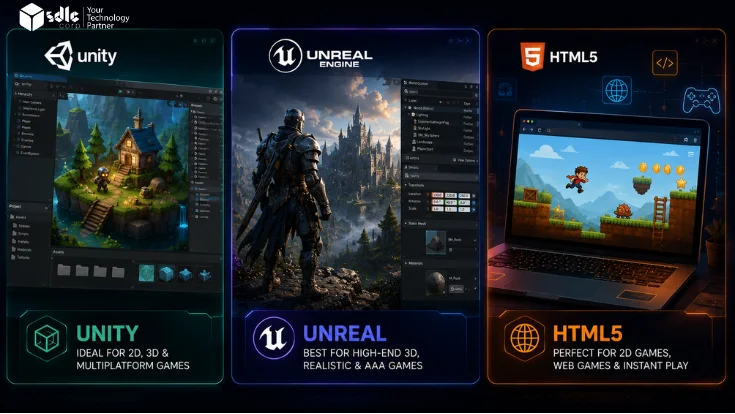
Unreal Engine 5 for PC and console. PUBG PC runs on UE4, and UE5 offers significantly improved large-scale environment rendering via Nanite and Lumen. For mobile-only, Unity is more practical — better mobile optimisation tools and a larger mobile developer talent pool in key markets like India. PUBG Mobile itself is built in UE4 with extensive mobile-specific modifications.
How do I handle cheating in a battle royale game?
Three layers: client-side cheat detection (BattlEye or Easy Anti-Cheat), server-side statistical anomaly detection (speed above maximum velocity, kill rate above human capacity, position teleportation), and replay validation (storing match replays for post-game analysis and appeals). The studio dedicated significant engineering resource to anti-cheat post-launch — budget this as an ongoing cost, not a one-time integration.