Buy Now Pay Later Product Build
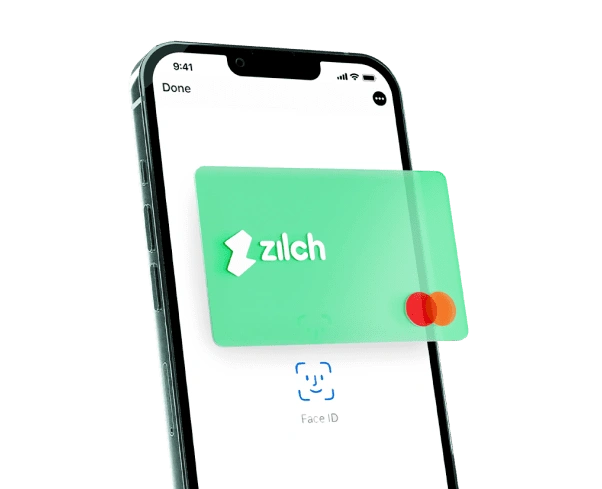
A BNPL product requires borrower onboarding, repayment flows, merchant-side logic, and admin visibility. This case study is useful for teams planning lending or installment-based FinTech products.
View BNPL case studySDLC Corp develops FinTech software for banks, NBFCs, startups, and financial service providers. From digital banking apps to payment, lending, wallet, and trading platforms, we build secure systems that support real financial workflows.
Choosing a FinTech development partner involves more than just coding. You need systems that handle transactions, user verification, integrations, and reporting without breaking under scale. Therefore, we focus on building structured FinTech platforms that support banking, payments, lending, and trading workflows from day one.
We design systems with role access, audit logs, and transaction tracking so teams can manage risk and reporting effectively.
Instead of starting from scratch, we use modular components for payments, KYC, and ledgers to speed up initial releases.
Our engineers work on financial systems such as wallets, lending platforms, and trading apps across different markets.
We build APIs and services that connect with payment gateways, banking systems, analytics tools, and third-party platforms.
Our FinTech software development services cover banking, payments, lending, wallets, trading, insurance, and risk workflows. In practice, this helps teams plan products around real transaction flows, integrations, admin needs, and reporting requirements.
Online banking portals, account systems, customer dashboards, and open banking API connections.
Banking software development companyBanking apps with login flows, transfers, card controls, alerts, and finance dashboards.
Mobile app development servicesDigital wallets, payment apps, P2P transfers, QR payments, and multi-currency flows.
eWallet app developmentLoan origination, borrower dashboards, repayment flows, credit checks, and BNPL modules.
P2P lending platform developmentTrading apps, portfolio dashboards, order workflows, brokerage tools, and API integrations.
Trading software development companyPolicy systems, claims workflows, underwriting tools, customer portals, and admin dashboards.
Insurance software development companyKYC flows, risk queues, audit trails, transaction alerts, reporting screens, and review workflows.
AI fraud detection in FinTech paymentsPortfolio dashboards, goal tracking, advisor tools, reporting views, and financial analytics.
Financial analytics servicesCrypto wallets, token systems, smart contracts, DeFi apps, and blockchain payment flows.
Blockchain wallet development companyAI is now part of many FinTech products, especially where decisions depend on transaction data and user behavior. As a result, teams use AI to support fraud checks, credit scoring, monitoring, and customer support workflows without replacing human review.
Models identify unusual transactions and route them to review queues for verification.
Data from transactions, borrower profiles, and external sources helps support lending decisions.
AI assistants handle common queries and pass complex issues to support teams.
Pattern detection helps track activity across accounts and flag events for further checks.
FinTech platforms handle payments, user data, and transactions, so security and audit controls should be part of the system design from the start. Therefore, we implement logging, access rules, and monitoring workflows that support internal reviews, risk checks, and reporting processes.
Tokenization, isolated services, and secure transaction handling help reduce exposure in payment workflows.
Role-based access, audit logs, and activity tracking support internal control and review processes.
Encryption, data handling rules, and user consent flows support privacy-focused applications.
Transaction tracking, alerts, and review queues help teams monitor activity and investigate events.
Documentation, risk checks, and system controls support structured security and audit processes.
The choice of technology affects performance, integrations, and long-term maintenance. Therefore, we use a mix of backend frameworks, cloud services, and data systems that support transaction-heavy FinTech applications across banking, payments, lending, and trading.
A clear process helps financial software teams control scope, reduce rework, and plan releases with fewer surprises. In practice, our FinTech software development process covers discovery, design, architecture, development, testing, launch, and support in a structured way.
We review product goals, user flows, integrations, and regulatory considerations to create a practical project scope.
We design customer journeys, admin screens, wireframes, and Figma layouts before development starts.
Next, we define the system structure, data flows, access rules, API needs, and security requirements.
Development moves in planned sprints with regular demos, backlog reviews, and working builds for feedback.
After that, we test core workflows, integrations, roles, edge cases, and security items based on project scope.
Finally, we support deployment, release checks, issue fixes, monitoring setup, and post-launch improvements.
Different FinTech projects require different delivery approaches. For this reason, we offer multiple engagement models so teams can choose based on scope, timelines, and internal resources.
A full team works on your roadmap. This model suits ongoing product development and scaling platforms.
Best for MVPs or modules with clear requirements, where scope and delivery expectations are already outlined.
Works when requirements evolve over time. Teams adjust priorities as the product develops.
Add developers to your team for specific roles or short-term needs without changing your core structure.
These case studies show how FinTech products can be planned around user flows, transaction logic, platform features, and product improvement goals. In practice, they help teams understand what similar financial software builds may involve.
A BNPL product requires borrower onboarding, repayment flows, merchant-side logic, and admin visibility. This case study is useful for teams planning lending or installment-based FinTech products.
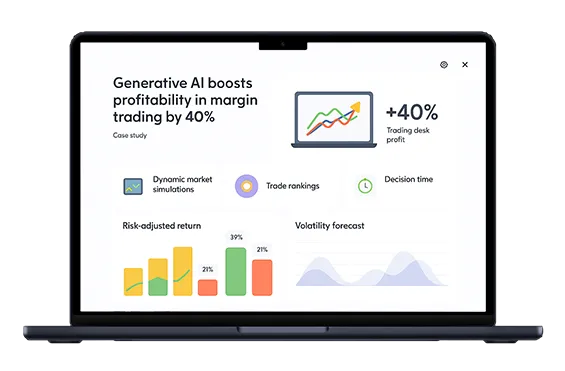
View BNPL case studyA trading platform may need analytics views, alert flows, risk messages, and better product guidance. This case study fits teams improving trading or investment software.
View trading case studyThe cost of FinTech software development depends on product scope, integrations, and system complexity. In most cases, teams start with a smaller build and expand over time. The ranges below give a general idea based on typical project types.
Client feedback is most useful when it explains how a team communicates, manages scope, and handles product changes. With that in mind, these comments focus on collaboration, delivery clarity, and technical support during financial software projects.
“The team helped us structure our wallet product around payments, user roles, and admin workflows. Their communication made scope decisions easier during each release cycle.”
“We needed developers who could understand lending workflows and work with our internal team. The SDLC Corp team supported feature planning, backend updates, and sprint reviews.”
“Their team worked with us on trading platform features, API flows, and release planning. The process was clear, and technical questions were handled without unnecessary delay.”
These answers cover the main questions teams ask before starting a FinTech software development project, including cost, timeline, compliance support, modernization, and launch planning.
FinTech software development cost varies by product scope, features, integrations, security needs, and delivery model. As a general planning range, MVPs may start around $45,000, while larger platforms can move into six-figure or higher budgets.
A smaller MVP may take 8 to 14 weeks, while a full product can take several months. Meanwhile, enterprise platforms usually need more time because they include deeper integrations, testing, admin tools, and release planning.
We can build technical workflows that support your compliance scope, such as tokenized payment flows, role access, audit logs, consent flows, KYC steps, and transaction monitoring. However, certification, legal review, and final compliance approval usually involve your legal, compliance, and audit partners.
Yes. We work on FinTech modernization projects such as cloud migration, API integration, backend refactoring, data migration, mobile app rebuilds, and admin dashboard improvements. The exact scope depends on your current architecture and business goals.
Yes. In many cases, starting with an MVP helps teams test core user flows before adding advanced features. For example, a wallet, lending, or trading MVP can begin with onboarding, transactions, admin controls, and basic reporting.
Share your digital banking platform, payment system, wallet app, lending solution, trading platform, RegTech tool, or FinTech modernization requirement. Then, our team will help you define the next practical step.

United States:
Transform Digital LLC
44 Montgomery Street, Suite 300
San Francisco, CA 94104

United Kingdom:
30 Charter Avenue, Coventry
CV4 8GE Post code: CV4 8GF United Kingdom

United Arab Emirates:
Unit No: 729, DMCC Business Centre Level No 1, Jewellery & Gemplex 3 Dubai, United Arab Emirates

India:
715, Astralis, Supernova, Sector 94 Noida, Delhi NCR India. 201301

Qatar:
B-ring road zone 25, Bin Dirham Plaza building 113, Street 220, 5th floor office 510 Doha, Qatar

© 2026 SDLC Corp. All Rights Reserved.