


United States:
2457 Kane Lane, Batavia, Illinois
60510
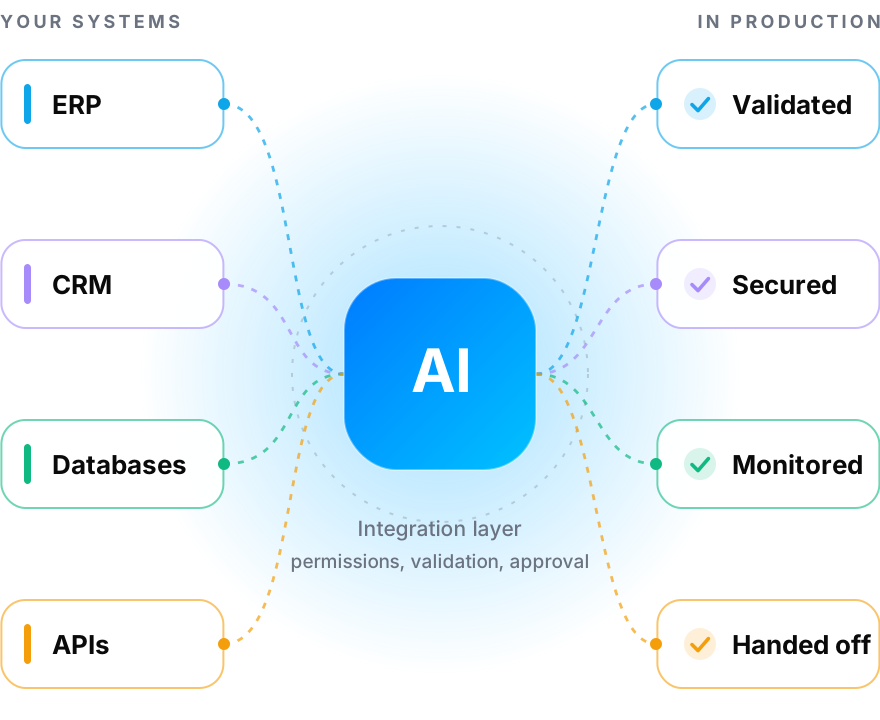
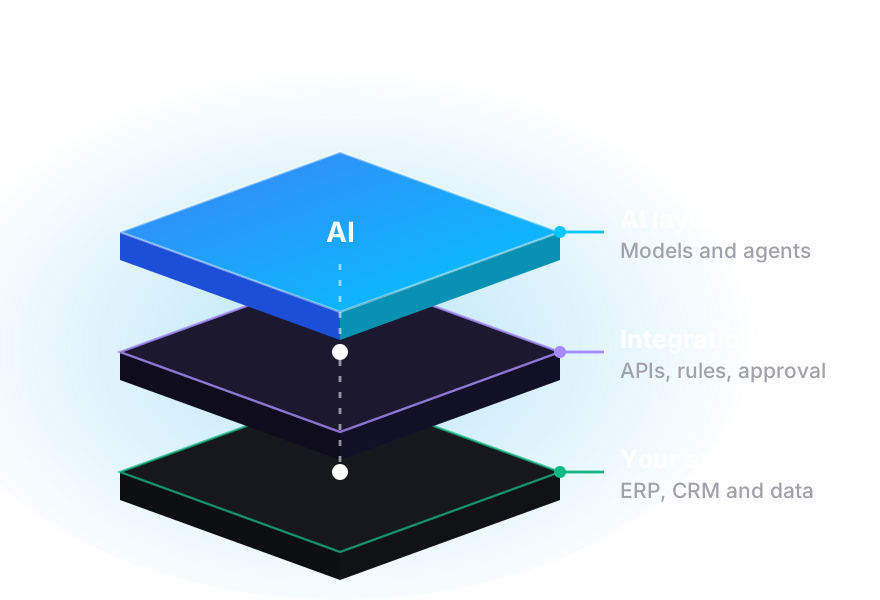
AI integration services connect AI models and applications to the systems a business already runs, including ERP, CRM, databases and APIs. Implementation then takes that connected capability into production, where it is validated, secured, monitored and handed to the team that owns it. Because both come from one team, SDLC Corp delivers them as one engagement.
Trusted by enterprises, government bodies and universities worldwide


Powered by leading cloud & AI platforms
Company-wide delivery experience across client engagements; implementations and models represent different measures of work.
AI integration services connect AI models and applications to your ERP, CRM, databases and APIs. Then AI implementation services take that capability into production and hand it to your team.
Integration
Add AI around workflows such as document intake, approvals and reporting while the ERP stays responsible for business transactions. Works with Odoo, SAP, Oracle and NetSuite.
Integration
Connect AI with customer, lead, opportunity and service workflows inside your CRM, for lead scoring, record enrichment and case summaries.
Integration
Connect commercial or open models, custom AI services and internal applications through secure APIs, with logging and fallbacks.
Integration
Give AI applications the structured information they need through controlled services and your existing data platforms.
Integration
Embed AI into web apps, portals and enterprise software, including older systems that cannot be replaced, using middleware or batch where there is no API.
Integration
Insert AI into defined process steps to classify, extract, summarize, predict or assist, with validation and human approval where needed.
Implementation
Deploy into the cloud, private, hybrid or supported on-premise environment your policies require, with access control and monitoring.
Implementation
Test accuracy, permissions and failure behavior against real business data before go-live, including what happens when a system is unavailable.
Implementation
Deliver configuration, documentation, monitoring and operational ownership to the team that runs the system.
Six types of AI capability, connected to the ERP, CRM, data and service platforms your business already runs.
Connect language models with business applications and workflows. See LLM development services.
Integrate retrieval with document repositories and permissions. See RAG development services.
Connect agents to approved APIs and tools with controlled action boundaries. See agentic AI development.
Deploy prediction, classification and forecasting models into live applications. See machine learning development.
Connect extraction and document intelligence with ERP, finance and logistics workflows.
Embed text, image and multimodal generation into products. See generative AI development.
Six stages that connect AI to your systems and end with someone on your side owning it.
Understand the target AI capability, existing applications, system ownership, data flows, APIs, security requirements, users and production constraints.
OutputSystem map and integration scope
Define the integration architecture, data flow, validation, permissions, workflow rules and operational boundaries.
OutputArchitecture, data flow and rules
Build APIs, connectors, application services and the required enterprise integrations.
OutputWorking APIs and connectors
Test AI outputs, data mapping, permissions, workflow behavior, failure scenarios, human approvals and system changes.
OutputTest results and sign-off
Release in stages: a controlled pilot, parallel operation with the existing workflow, human validation of outputs, then gradual expansion.
OutputLive production release
Monitor availability, latency, failure rate, human escalations, workflow completion, cost and downstream record integrity, then hand over with documentation and escalation procedures.
OutputDashboards, documentation and a named owner
Production AI sits inside a controlled enterprise architecture, not beside it, so every result passes validation, business rules and, where needed, human approval before it reaches your system of record.
Control
Your ERP, CRM and data platforms stay authoritative. AI prepares and validates, and only approved data reaches them.
Patterns
APIs, events, webhooks, middleware, native extensions or batch, chosen by what the receiving system supports.
Review
Low-confidence outputs and important changes go to a person for approval before anything is written.
Chosen for what the receiving systems support, not for what is newest.
AI integration adds systems and data flows to an application, so security covers the whole integration path and governance is part of implementation, not a separate document.
Identity and access
Approved identities for users, services and system-to-system connections, with application and business permissions applied before AI touches any information.
Endpoints and credentials
Service endpoints, tokens and integration credentials are protected, and credentials stay out of prompts, application logs and client code.
Data and network
Business information is encrypted in transit and at rest where required, and integration services run inside your enterprise network boundaries.
Evidence
Relevant requests, system changes and approvals are recorded so every AI action can be traced.
Resilience
What happens when a provider, API or downstream system is unavailable is decided in advance, not found out in production.
Governance
Approved models and data sources, reviewed changes before rollout, defined human oversight, named operational owners and an incident process. See AI governance consulting services.
Real implementations where AI was connected to existing applications and business workflows.
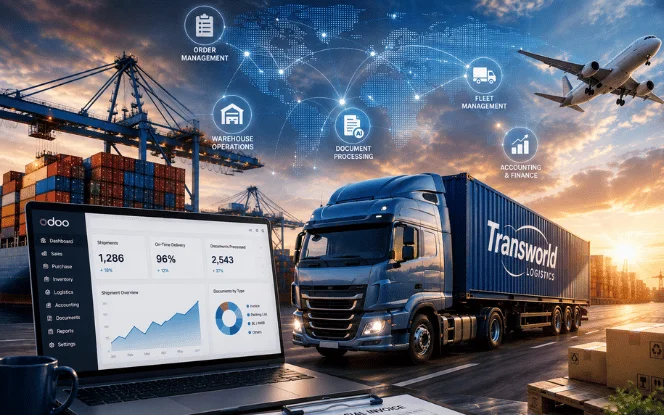
View more case studiesAI-assisted document processing placed in front of the ERP for fleet, warehouse, accounting and shipment workflows. Invoices and bills of lading are extracted, validated against operational records and reviewed before approved data moves into the ERP.
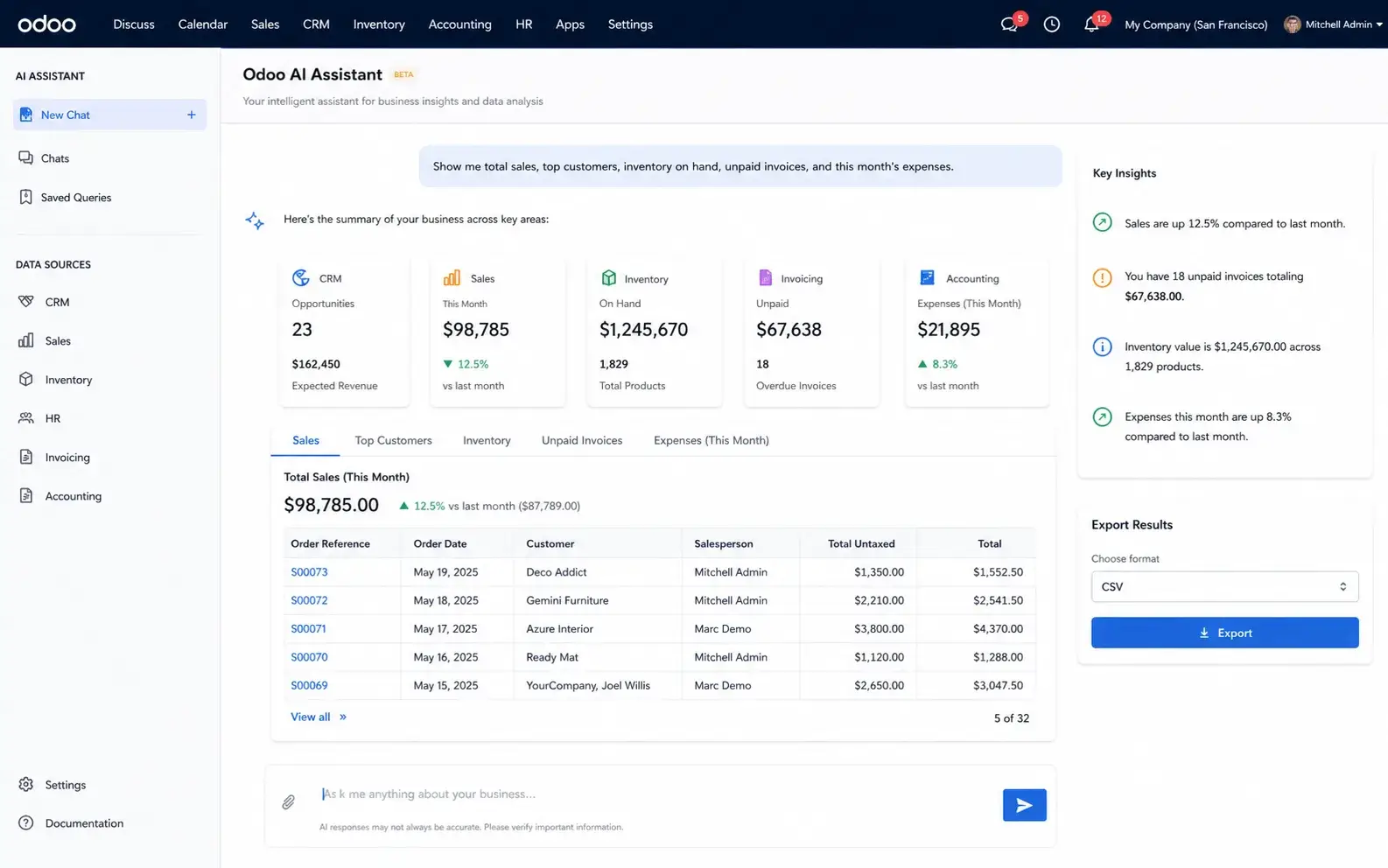
An assistant built directly around the existing Odoo environment so employees get current ERP information in plain English. It uses Odoo's native ORM and role permissions, so existing access controls stay in place.
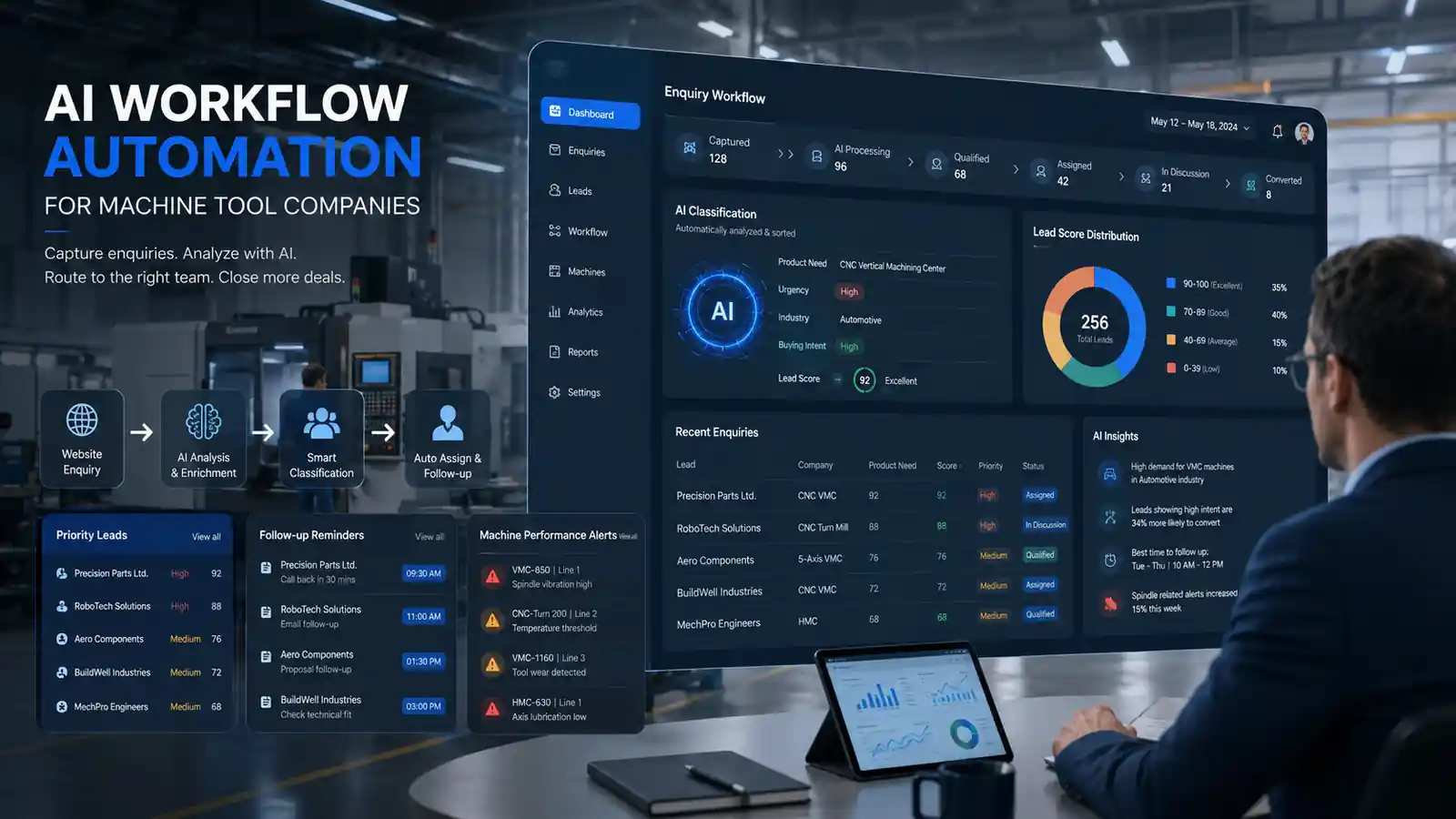
One integration chain connecting website enquiries, sales workflows, machine information and management reporting. GPT-4o, Python, LangChain, PostgreSQL, pgvector and n8n run inside daily business workflows rather than as a separate chatbot.
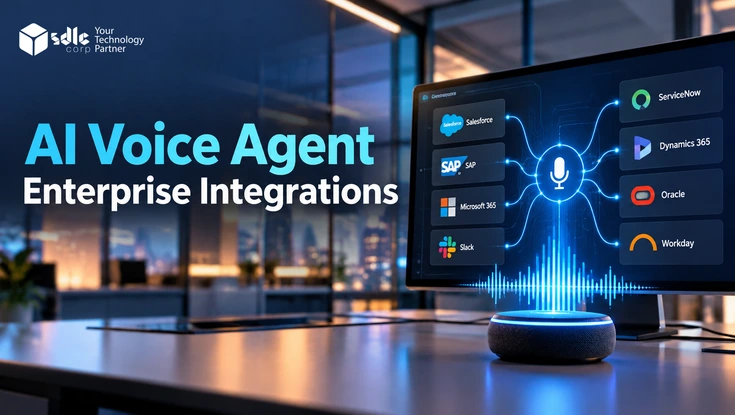
A voice agent connected to the CRM, ERP and ServiceNow through authenticated REST API connectors. It verifies the caller in the CRM, fetches live order status from the ERP and creates prioritised IT tickets in ServiceNow for unresolved issues.
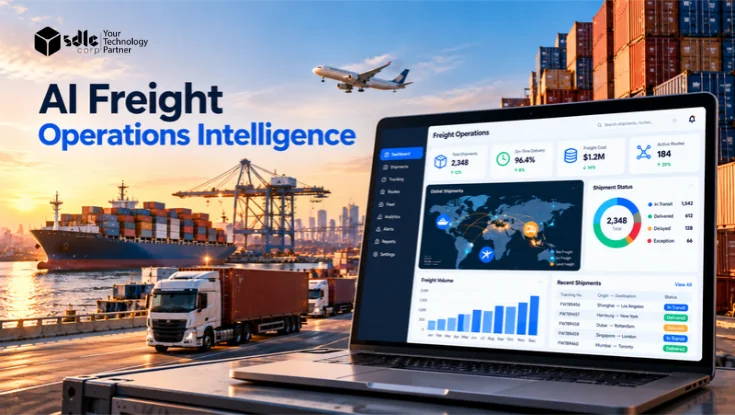
Freight invoice emails are read from monitored mailboxes, extracted with Azure Document Intelligence and mapped to charge codes with GPT reasoning and vector search. Approved cost lines are then posted to existing shipments through Oracle Transportation Management APIs.
Founders, CEOs, and operating leaders share what it's like to build with SDLC Corp.
Eric Leist
CEO, Edgerton Strategies

Doug Schmidt
CEO, Roofaid USA

Reyzal Razmi
All Star Influencers

They've quickly understood our business context, moved fast, and brought recommendations rather than questions.
What stood out was their ability to translate our broad operational challenges into clear system features without overcomplicating the solution.
SDLC CORP's Odoo Developers delivered custom modules that fit our business like a glove. Efficient, responsive, and highly capable.
The predictive shipping models they implemented have saved us both time and cost while improving our accuracy and customer satisfaction.
Their data-driven methodology and exceptional command of artificial intelligence made a significant impact on our business operations.
The predictive shipping models they implemented have saved us both time and cost while improving our accuracy and customer satisfaction.
SDLC CORP's Odoo Developers delivered custom modules that fit our business like a glove. Efficient, responsive, and highly capable.
What stood out was their ability to translate our broad operational challenges into clear system features without overcomplicating the solution.
They've quickly understood our business context, moved fast, and brought recommendations rather than questions.
Cost depends on the number of systems, data quality, approval rules, security requirements and rollout scope. Figures are taken from Clutch and GoodFirms.
| Measure | Figure | What it covers |
|---|---|---|
| Project size | $10,000 to $49,999 | Most common project size. The minimum is $10,000. |
| Hourly rate | $25 to $49 | Average rate per hour. |
| Timelines | 9 to 34 weeks | Delivered AI, ERP and platform projects, from the shortest to the longest. |
Already have AI in production but struggling with reliability or integration? We review the whole operating workflow, not only the model, and then fix what is failing. If the use case itself is still unclear, define it first through AI consulting.
AI sits beside the core process. Staff copy and paste results, and business data is duplicated.
Our fixConnect it to the system of record.
APIs break, retries are missing and downstream writes fail.
Our fixHarden the APIs, retries and write handling.
AI bypasses permissions, with no validation layer and no human approval.
Our fixAdd permissions, validation and approval steps.
Edge cases fail, nothing monitors production, and model changes break workflows.
Our fixAdd exception paths, monitoring and change checks.
No one clearly owns the system, and support responsibility is unclear.
Our fixDefine ownership, documentation and escalation.
Responses are too slow and costs are difficult to attribute.
Our fixTrace latency and cost to each workflow.
For AI integration, work is judged by whether the business process finished, not by whether the model responded.
Our teams work across AI engineering and the ERP, CRM, data and business platforms AI connects to, including Odoo, Salesforce and Oracle NetSuite.
We build and operate our own products, including DAN for document processing, Pulastya AI voice agents and 100+ ERP marketplace connectors.
Certified to ISO 9001:2015 for quality management and ISO/IEC 27001:2022 for information security.
Clients keep 100% ownership of the source code and IP developed for their engagement, as set out in the project agreement.
Consulting decides what is worth doing, development builds it, implementation connects it and workflow automation runs the rule-based steps. Most programs combine several. See AI consulting, AI development and workflow automation.
| Aspect | AI Consulting | AI Development | AI Integration and Implementation | Workflow Automation |
|---|---|---|---|---|
| Choose it when | The use case, roadmap or priorities still have to be decided. | The main requirement is to build a new AI capability or application. | The main requirement is to connect an AI capability to existing systems and make it work in production. | The process follows known rules. |
| Question it answers | What should we build, and where should AI be used? | What should it do? | How does it connect, and how is it deployed and operated? | Which steps follow fixed rules? |
| What you get | A roadmap and a view of which use cases have value. | A model or application that performs the task. | A business process that completes end to end. | Steps that run the same way every time. |
| Typical work | Use case selection, AI roadmap, value assessment. | Custom AI applications, predictive models, AI products, intelligent features, computer vision, custom automation. | API, ERP and CRM integration, workflow integration, validation, deployment, enterprise rollout, production monitoring. | Moving files, updating fields, notifications, fixed approvals, system synchronization. |
Background reading on connecting AI to the systems that already run the business.
GuideHow AI connects with ERP, CRM, data, identity and workflow systems while maintaining permissions, validation and ownership.
Read article
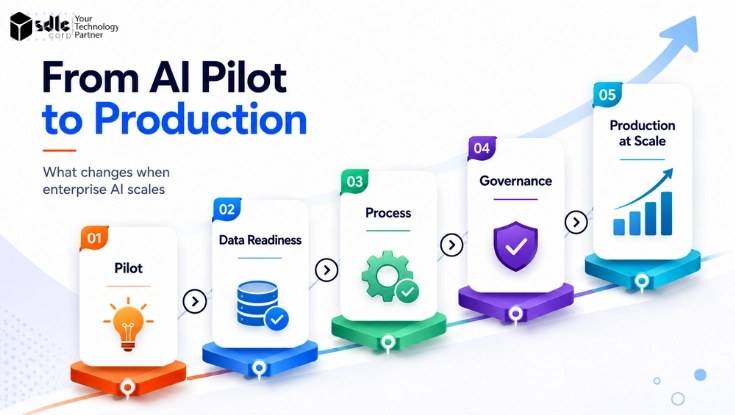
StrategyWhat has to be true before a working pilot can be trusted as a production system.
Read article
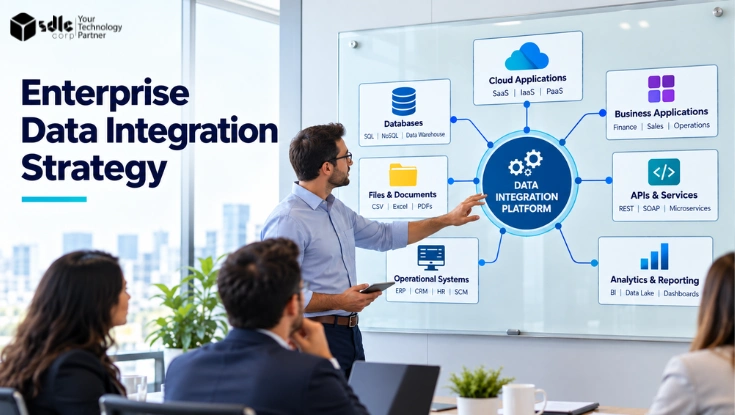
DataHow to give AI applications controlled access to approved operational data.
Read articleAnswers on integration, deployment, systems of record, failure behavior, cost and timelines.
AI integration services connect AI capabilities to existing software, data and business workflows, such as ERP, CRM, APIs, databases and custom applications.
AI implementation services take an approved AI capability into a working production environment, including integration, validation, deployment, monitoring and handoff.
Yes. AI can connect to ERP systems such as Odoo, SAP, Oracle and Microsoft Dynamics through APIs, native frameworks or controlled integration services. The ERP normally stays the authoritative system, so business transactions remain controlled.
Yes. AI can classify enquiries, summarize records, analyze leads and prepare CRM updates, including in Salesforce through supported APIs. Because the CRM remains the authoritative customer record, updates follow your rules.
Yes, when the legacy system offers a workable integration path such as an API, middleware, a database service or a file-based interface.
Yes. Commercial and open models can be connected through an application service layer that manages prompts, authentication, validation, business rules and downstream workflows.
Yes. AI can work with Odoo through its native ORM and role-based permissions, so users get answers from current ERP records without bypassing existing access controls.
Through validation, business rules, confidence thresholds, permission checks and human approval before any AI result changes an authoritative system.
Cost depends on the number of systems, data quality, approval rules, security requirements and rollout scope, so projects most commonly range from $10,000 to $49,999. A scoped estimate follows an assessment of your systems.
Most projects take 9 to 34 weeks, depending on the same factors as cost. An assessment of your systems then confirms the timeline.
Move AI out of isolated prototypes and into the ERP, CRM, data and applications your teams already use. Tell us the system and the workflow, and our AI integration team will scope the work.
Tell us which systems and workflows are involved. We will advise on architecture, scope, timeline and delivery approach.
Ready to Innovate?

United States:
2457 Kane Lane, Batavia, Illinois
60510

United Kingdom:
30 Charter Avenue, Coventry
CV4 8GE Post code: CV4 8GF United Kingdom

United Arab Emirates:
Unit No: 729, DMCC Business Centre Level No 1, Jewellery & Gemplex 3 Dubai, United Arab Emirates

India:
715, Astralis, Supernova, Sector 94 Noida, Delhi NCR India. 201301

Qatar:
B-ring road zone 25, Bin Dirham Plaza building 113, Street 220, 5th floor office 510 Doha, Qatar

© 2026 SDLC Corp. All Rights Reserved.