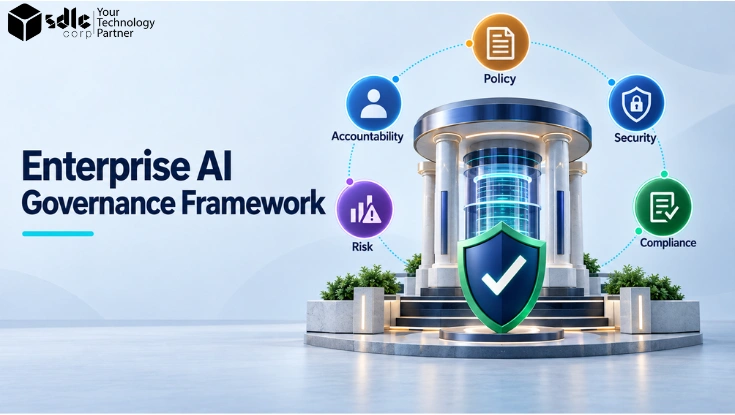
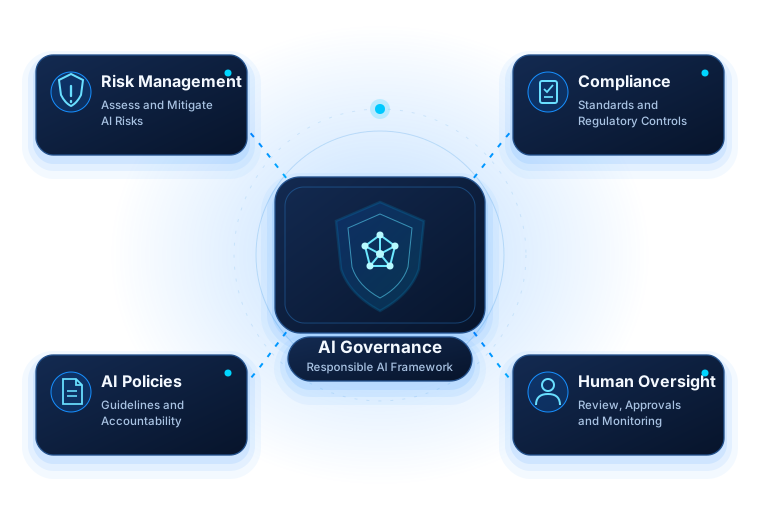


























AI governance framework diagram showing risk management, compliance, AI policies and human oversight connected to a central AI governance engine
From Policy To Governed AI

AI Governance Consulting
Services

AI governance consulting services from SDLC Corp turn AI policy into controls your teams actually use. We set up your AI inventory, risk tiers, decision rights and lifecycle gates, then the evidence, oversight and monitoring that keep them working, built around NIST AI RMF, ISO/IEC 42001 and the EU AI Act.

Proven AI Delivery

50+Enterprise Clients
200+Team Members
98%On Time Delivery
10+ Yearsof Experience

Trusted by Fortune Global 500 leaders, governments & top universities across 30+ countries

Powered by leading cloud & AI platforms

AWS
Google Cloud
Microsoft Azure
NVIDIA
OpenAI
Anthropic
Gemini
Grok
Perplexity
Google AI
AWS
Google Cloud
Microsoft Azure
NVIDIA
OpenAI
Anthropic
Gemini
Grok
Perplexity
Google AI

Recognized by leading industry reviewers

Awards & industry recognition

Top AI Development Company by Selected FirmsTop IT Consulting, SI & Managed Services Company by ITRateTop Web Development Company by Selected FirmsTop Service Provider 2025 by RightFirmsTop App Development Company by AppDevelopmentCompaniesTop Software Development Company by Selected FirmsBest Support Company 2025 by SoftwareSuggestTop AI App Developers by C2C Reviews
Services

AI Governance Consulting
Services We Deliver

Our AI governance consulting services give business, technology, risk and compliance teams clear rules for how AI is approved, operated, changed and retired.

Structure

AI Governance Framework Design

The policies, controls and evidence requirements that apply across your AI portfolio, from inventory and risk tiers to lifecycle gates, exceptions and monitoring.

Authority

AI Governance Operating Model

Who makes governance decisions and how they move: decision rights, forums, delegated authority, escalation paths and evidence ownership.

Rules

AI Policy Development

Practical rules for how AI is selected, built, procured, tested, deployed and used, specific enough for delivery teams to apply. See how to manage AI usage policies.

Proportion

AI Risk Classification and Management

Classify AI use cases by business, legal, operational, security and user impact, and apply more control where impact is higher.

Models

AI Model Governance

Requirements for model selection, evaluation, approval, version changes, performance review and retirement.

Principles

Responsible AI Governance

Turn accountability, transparency, human oversight, privacy and fairness into operational requirements, not statements of intent.

Risk

How We Run
AI Risk Classification

Not every AI system needs the same controls. We classify each system by its potential impact, then match the evidence, approval and review it requires to that tier.

AI risk tiers, what each covers, the controls it requires and the matching EU AI Act category
Impact levelWhat it coversRequired controlsEU AI Act category
Low impactAI used for limited internal assistance, where outputs are easily reviewed and errors have limited consequences.Lightweight intake and periodic review.Minimal or limited risk.
Moderate impactAI affecting operational workflows, customer interactions or important business processes.Defined evidence, a named owner and monitoring in production.Limited risk, or high-risk if the use case is listed in Annex III.
Higher impactAI influencing significant financial, legal, safety, employment, access or other consequential decisions.Strongest evidence, human approval, frequent re-review and executive visibility.High-risk (Annex III areas such as employment, credit and essential services). Prohibited practices are never deployed.
Lifecycle

AI Lifecycle
Governance

Eight gates follow an AI system from intake to retirement, so governance does not stop at the approval to build.

  1. Intake

    Record the proposed use case, business owner, intended users and initial risk information.

  2. Classification

    Assign an appropriate governance tier and identify required reviewers.

  3. Design Review

    Confirm architecture, data use, security, human oversight and evaluation requirements.

  4. Build and Validate

    Generate the required technical and operational evidence.

  5. Pre-Deployment Approval

    Review whether defined acceptance criteria have been met.

  6. Production Monitoring

    Track quality, changes, incidents and relevant operational signals.

  7. Change Review

    Re-evaluate the system when material changes occur.

  8. Retirement

    Document shutdown, data handling and replacement requirements when the system leaves service.

Most governance programs stop at pre-deployment approval. The ones that hold up under audit also cover monitoring, change review and retirement.

Authority

Governance
Decision Rights

AI governance works only when someone has the authority to decide. We assign who may approve, reject, escalate, grant exceptions and stop an AI system.

The rule

One accountable owner per decision

Each important governance decision has exactly one clearly accountable owner, not a committee that shares the blame. The other roles advise, review or escalate.

  • Business Owner

    Accountable

    Owns the business outcome and accepts responsibility for how the AI is used.

  • Technical Owner

    Implementation

    Owns implementation, integration, technical operation and remediation.

  • Data Owner

    Data

    Approves appropriate use of business data.

  • Security

    Security

    Reviews security architecture, access and technical exposure.

  • Risk or Compliance

    Assurance

    Reviews requirements relevant to higher-impact use cases.

  • AI Governance Function

    Standards

    Maintains governance standards, coordinates review and manages exceptions.

  • Executive Oversight

    Escalation

    Handles major exceptions or decisions beyond delegated authority.

Agents

Governance for
Agentic AI

Agents may take actions rather than only generate information, so the controls have to exist before the action happens, not after.

Generative AI

Produces information

A person reads the output and decides what to do with it.

AI agent

Takes actions

It calls tools and changes systems, so permissions, limits and traces matter.

Access

Tool Permissions

Define exactly which applications, APIs and functions an agent can access.

Limits

Action Boundaries

State which actions are automatic and which require approval.

Identity

Identity

Ensure tool calls are tied to an appropriate user, service or agent identity.

Evidence

Execution Traces

Record important agent steps and tool usage.

Recovery

Reversibility

Design important workflows so incorrect actions can be stopped or corrected where possible.

Escalation

Handover

Define the situations where the agent must transfer control to a person.

To build agentic systems, see our Agentic AI Development Services.

Readiness

AI Regulatory
Readiness

Requirements differ by industry, jurisdiction and use case. We build capabilities that carry across frameworks, instead of designing around one regulation alone.

  • Voluntary US framework

    NIST AI Risk Management Framework

    What it asks for

    Organizes AI risk work into four functions: Govern, Map, Measure and Manage.

    NIST AI RMF

    How our work maps to it

    The decision rights (Govern), inventory and risk tiers (Map), and the evidence and monitoring gates (Measure, Manage).

  • Certifiable management system standard

    ISO/IEC 42001

    What it asks for

    Sets requirements for an AI management system: policy, roles, risk treatment, controls and continual improvement.

    ISO/IEC 42001

    How our work maps to it

    The operating model, documented ownership and audit trail an auditor will ask to see.

  • EU regulation (2024/1689)

    EU AI Act

    What it asks for

    Takes a risk-based approach: prohibited practices, strict duties for high-risk systems and transparency duties for others.

    EU AI Act text

    How our work maps to it

    The risk classification, human approval and technical evidence required for higher-impact systems.

Current status of AI regulations and frameworks, with sources
ReferenceStatusSource
EU AI ActHigh-risk rules now apply from 2 Dec 2027 (Annex III) and 2 Aug 2028 (Annex I).Gibson Dunn
ISO/IEC 23894Guidance on AI-specific risk management.ISO
NIST AI 600-1Generative AI profile for the NIST AI RMF.NIST

Legal and compliance teams should determine the specific regulatory obligations that apply to your organization. This is not legal advice.

Industries

AI Governance
by Industry

The same control system applies in every sector. High impact looks different in each one, so we set risk tiers around how the industry uses AI.

Banking · Insurance · Payments

Financial Services

Govern model-driven recommendations, customer workflows, fraud systems and other high-impact AI applications with defined ownership and review controls.

Highest impact: Fraud systems, recommendations and customer workflows
Health · Life Sciences

Healthcare

Create clear oversight for AI used in administrative, operational and clinical-support contexts.

Highest impact: Clinical-support contexts
Public Sector · Agencies

Government

Establish AI inventories, accountable owners, procurement controls, review gates and transparent operating processes.

Highest impact: Personal data, vendor risk and human oversight
Industrial · IoT

Manufacturing

Govern predictive, vision and autonomous systems across production and operational environments.

Highest impact: Autonomous systems on the production floor
Supply Chain

Logistics

Manage AI used across document processing, operational decisions, service and automation workflows.

Highest impact: Operational decisions and automation
HR · Finance · IT · Customer Service

Enterprise Operations

Apply consistent governance across HR, finance, IT, customer service, sales and internal productivity applications.

Highest impact: HR and customer-facing decisions
Proof

Governance
in Production

Evidence, decision rights and review triggers working inside real AI workflows.

3 entries · scroll to reveal
01 / 03 Case Study
Assurio AI Assurance Adaptive & Autonomous Systems

Evidence-Backed Governance with Human Acceptance Authority

System baselines, TEVV evidence and acceptance decisions stay linked, and any change triggers reassessment.

  • TEVV evidence
  • Human acceptance
  • Change impact analysis
View Assurio Case Study ↗
Assurio AI assurance command hub showing adaptive AI validation, TEVV evidence review, human accountability and acceptance decisions.
4Evaluation Environments
LinkedDecisions Tied to Evidence
HumanAcceptance Authority
ChangeTriggers Re-review
02 / 03 Case Study
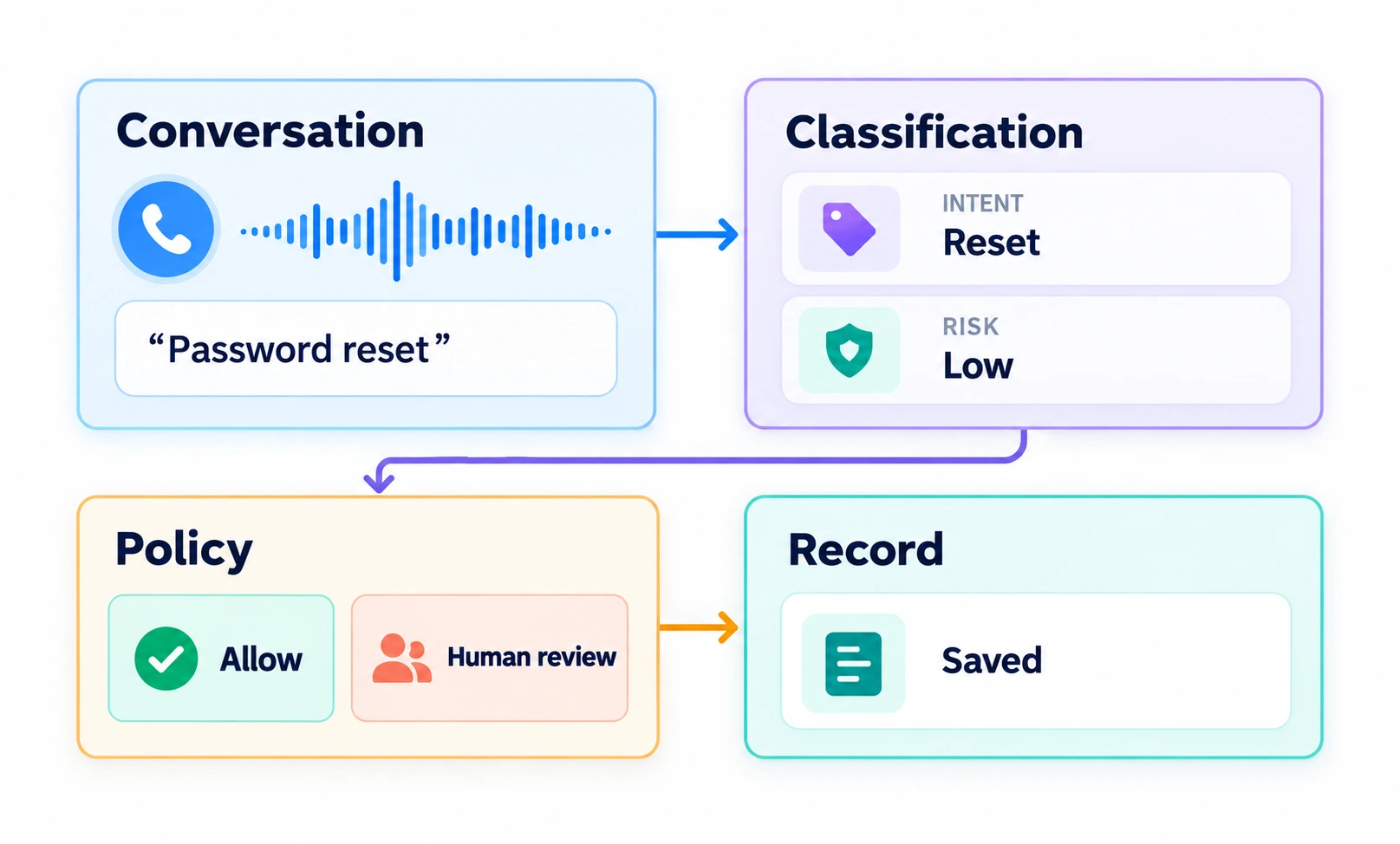
Pulastya AI Risk-Aware Voice Agent

Policy Rules Decide, the Model Does Not

Fixed policy rules, not the language model, decide when a call escalates to a person. Every action is logged.

  • Risk tiers
  • Human handoff
  • Full audit trail
View Pulastya Case Study ↗
Pulastya AI architecture showing conversation, classification, policy and record layers for risk-aware escalation
3Risk Tiers
1Policy Engine
2Languages
LoggedEvery Action
03 / 03 Case Study
Human-Reviewed Document AI SDLC Corp

Data AI Ninja

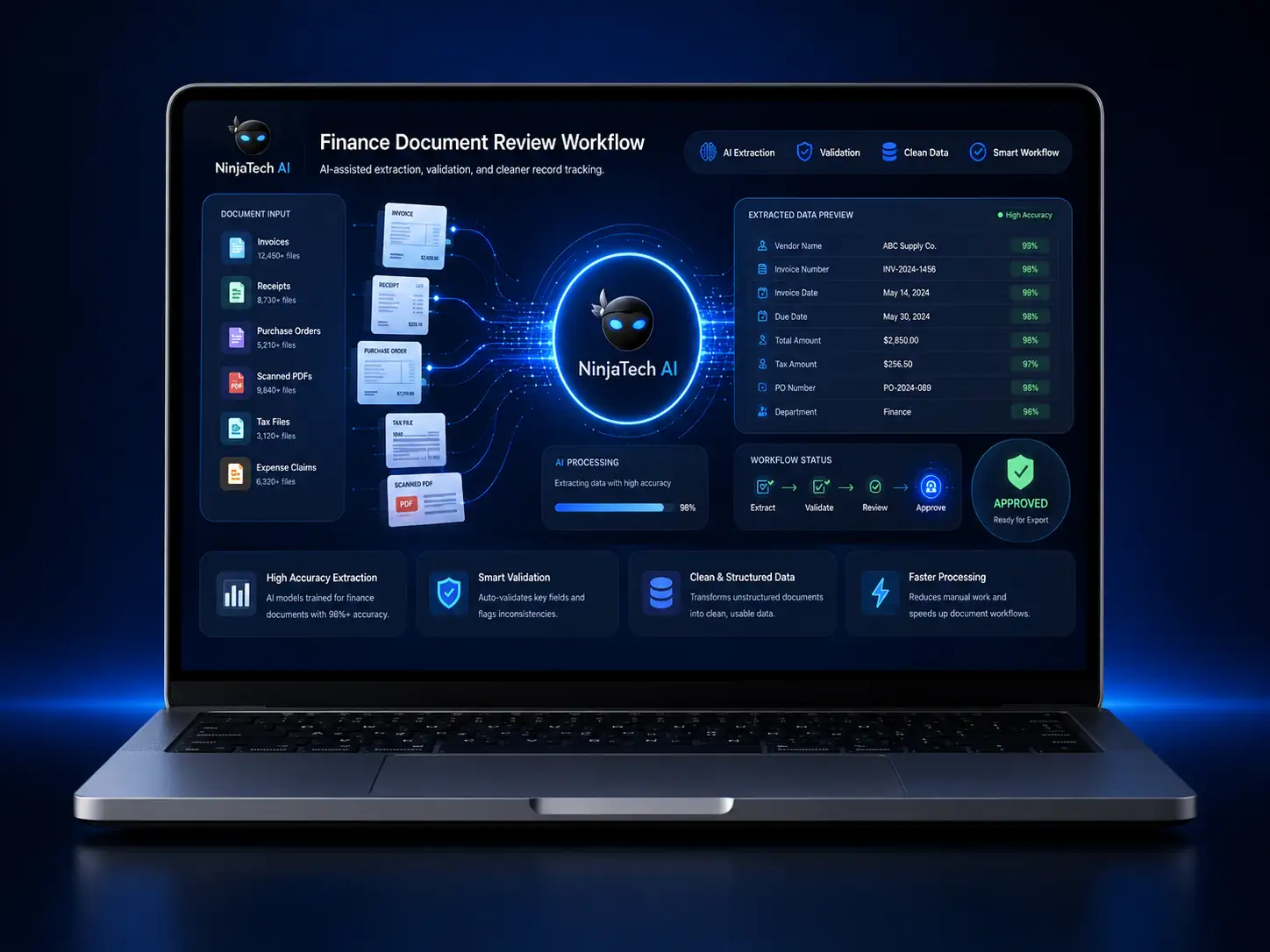
AI document extraction with human verification and confidence scoring. Approval control stays with the finance team.

  • Confidence scoring
  • Human verification
  • Audit tracking
View Data AI Ninja Case Study ↗
Data AI Ninja AI document extraction dashboard with confidence scoring and human verification
60%Faster Document Processing
80%Fewer Manual Entry Errors
12Finance Staff
2 WeeksSetup Time

Assurio and Pulastya figures describe the published scenarios and system setup. They are not audited customer results.

Client Stories

What Clients Say
About SDLC Corp

Founders, CEOs and operating leaders share what it is like to build with SDLC Corp.

Client story

Eric Leist

CEO, Edgerton Strategies

Client story

Doug Schmidt

CEO, Roofaid USA

Client story

Reyzal Razmi

All Star Influencers

What clients say
01 / 03 Clutch · Verified · Jul 2026 · 5.0 / 5GoodFirms · Verified · Nov 2025 · 5.0 / 5GoodFirms · Verified · Oct 2025 · 5.0 / 5
They've quickly understood our business context, moved fast, and brought recommendations rather than questions.
Their AI consulting expertise completely transformed how we manage and predict our logistics flow. The predictive shipping models they implemented have saved us both time and cost while improving our accuracy and customer satisfaction.
SDLC Corp delivered cutting-edge AI development services for our supply chain optimization project in the United States. Their data-driven methodology and exceptional command of artificial intelligence made a significant impact on our business operations.
Process

Our AI
Governance Process

Six stages that take governance from assessment to day-to-day operation.

  1. Stage 01

    Discover

    Understand the AI portfolio, current policies, organizational structure, existing controls and governance concerns.

    OutputGovernance gap summary

  2. Stage 02

    Inventory

    Create or improve the inventory of AI systems, models, vendors and important use cases.

    OutputAI system inventory

  3. Stage 03

    Classify

    Define risk tiers and classify representative systems.

    OutputRisk tier definitions and classified systems

  4. Stage 04

    Design

    Develop governance controls, decision rights, policies, evidence requirements and operating processes.

    OutputControls, decision-rights matrix and policy set

  5. Stage 05

    Operationalize

    Create practical templates, review forums, handoffs and governance workflows that teams can use.

    OutputTemplates, review forums and workflows

  6. Stage 06

    Improve

    Measure governance effectiveness and refine controls as the AI portfolio changes.

    OutputEffectiveness measures and review cycle

Remediation

Improve Existing
AI Governance

Already have an AI policy but struggle to apply it consistently? We review the operating system around the policy.

Common Governance Problems

Signs a governance program is not operating

  • No complete AI inventory
  • Unclear ownership and decision rights
  • No risk tiers, so every use case follows a different process
  • Governance committees without approval authority
  • Inconsistent evidence
  • No exception process
  • Model changes and third-party AI are not tracked
  • No production monitoring or re-review triggers
  • Policy exists but delivery teams do not use it

Governance works when delivery teams can follow it inside their normal workflow.

Deciding where to apply AI first? See our AI consulting services, or the full range of AI services from SDLC Corp.

Why SDLC Corp

Why Choose SDLC Corp
for AI Governance

Governance designed by people who have to live with it downstream.

Both Sides

Governance and Engineering Together

Governance recommendations are informed by teams that also design and operate production AI systems.

Specific

Practical Control Design

Translate broad principles into specific controls, evidence and decision requirements.

Workable

Delivery-Aware Operating Model

Design governance that can operate alongside real product, engineering, security and business teams.

  • SOC 2 Type IIReport on request
  • ISO 27001Certified
  • ISO 9001Certified

Certificate details and compliance documents are in the SDLC Corp Trust Center.

Resources

AI Governance
Resources

The published frameworks and guidance behind our approach.

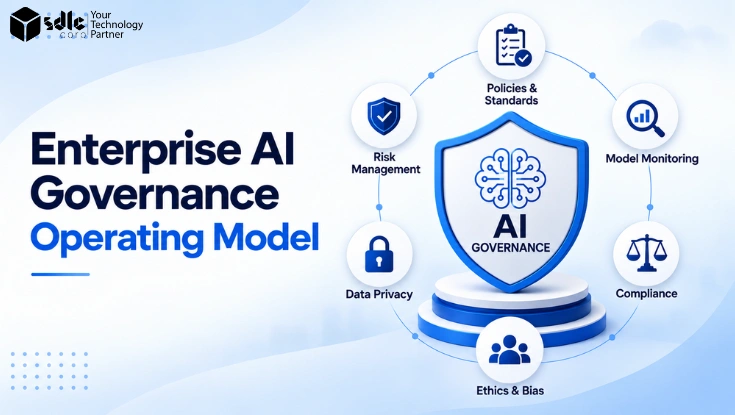
Enterprise AI governance operating model with controls for policies, risk, privacy, ethics, compliance and model monitoring Operating Model
Aug 2026Governance

AI Governance Operating Model

How decision rights, governance forums, delegated authority and escalation turn policy into day-to-day governance.

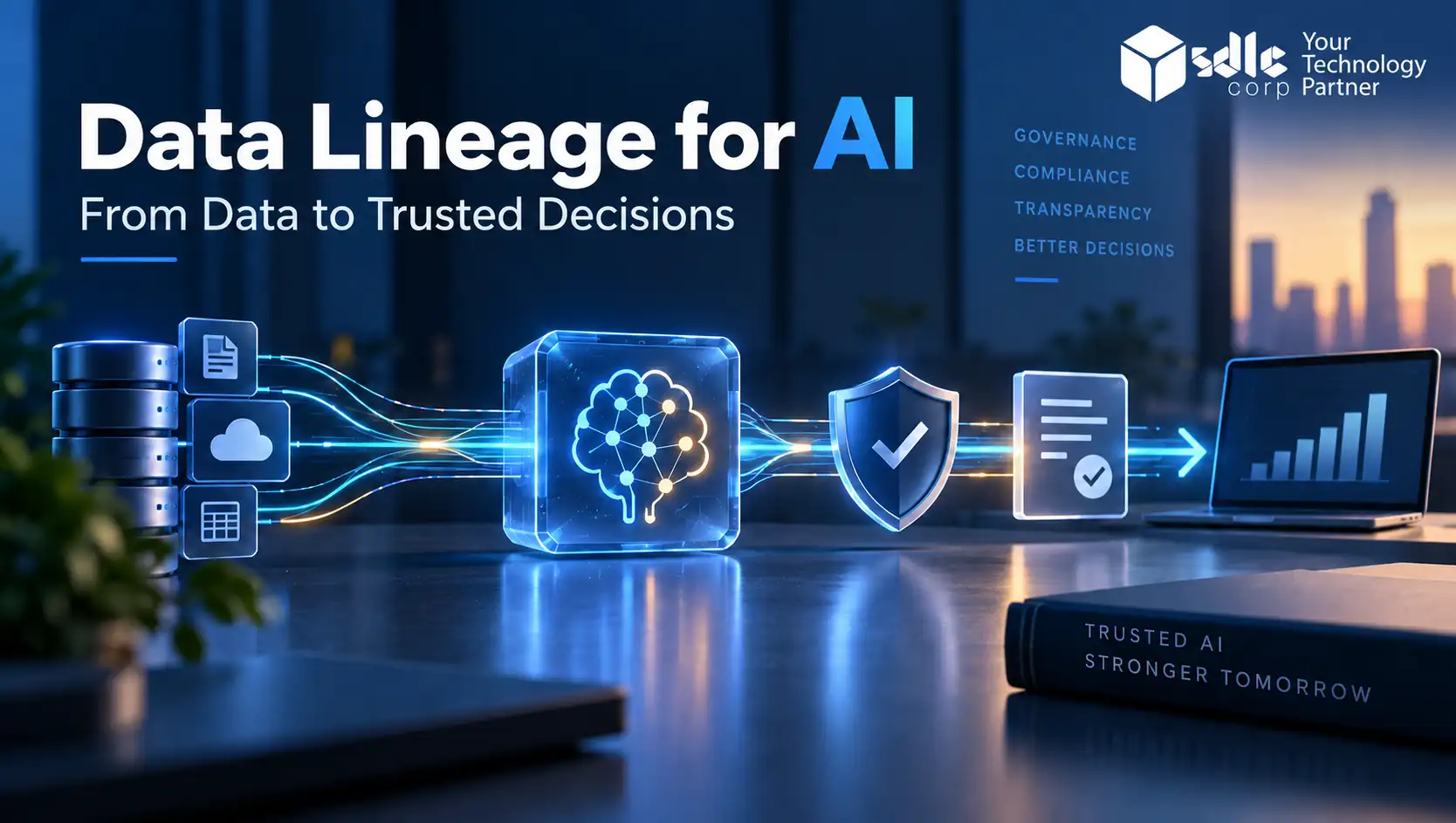
Data lineage for AI showing sources flowing through AI processing, governance, compliance and validation Lineage
Aug 2026Governance

Data Lineage for AI Governance

How source-to-decision traceability supports investigations, impact analysis and governance evidence.

Get Started

Build Practical
AI Governance

Create an AI governance system your business, technology and risk teams can actually operate.

From inventory and risk classification to decision rights, policies, lifecycle controls, evidence standards and production monitoring, we help turn governance requirements into repeatable organizational processes.

Let's Talk About Your Project

Get expert guidance on architecture, scope, timelines, and delivery approach so you can move forward with confidence.

What happens next?

FAQ

AI Governance Consulting
FAQs

Straight answers on governance services, frameworks, operating models, risk tiers and how this work differs from AI consulting.

AI governance consulting services help organizations define how AI systems are inventoried, classified, approved, operated, changed, monitored and retired across the full AI lifecycle.

Typical work includes governance frameworks, AI policies, risk classification, operating models, model governance, human oversight, evidence requirements and monitoring processes.

An AI governance framework defines the rules and controls that apply across an organization's AI portfolio.

It can cover AI inventory, risk tiers, lifecycle gates, evidence standards, model and vendor controls, exceptions, monitoring and retirement.

An AI governance operating model defines how governance decisions are made in practice.

It establishes decision rights, reviewers, forums, delegated authority, escalation paths, evidence ownership and governance workflows.

Risk classification should consider the intended use, affected users, potential consequence of errors, data sensitivity, autonomy, scale, reversibility and existing human oversight.

The classification should determine the strength of required controls, so low-impact internal tools do not follow the same review process as systems influencing consequential decisions or taking autonomous actions.

Yes. If you already have AI principles or policies, the engagement can focus on inventory, risk classification, decision rights, lifecycle gates, evidence, review processes, exceptions and production monitoring.

This is the most common starting point: the policy usually exists, and what is missing is the operating system around it.

AI consulting focuses primarily on where and how AI can create business value.

AI governance consulting focuses on the policies, controls, ownership, evidence and oversight required to manage AI responsibly across its lifecycle. A generative AI consulting engagement may identify governance requirements for one initiative; this work builds the structure across all of them.