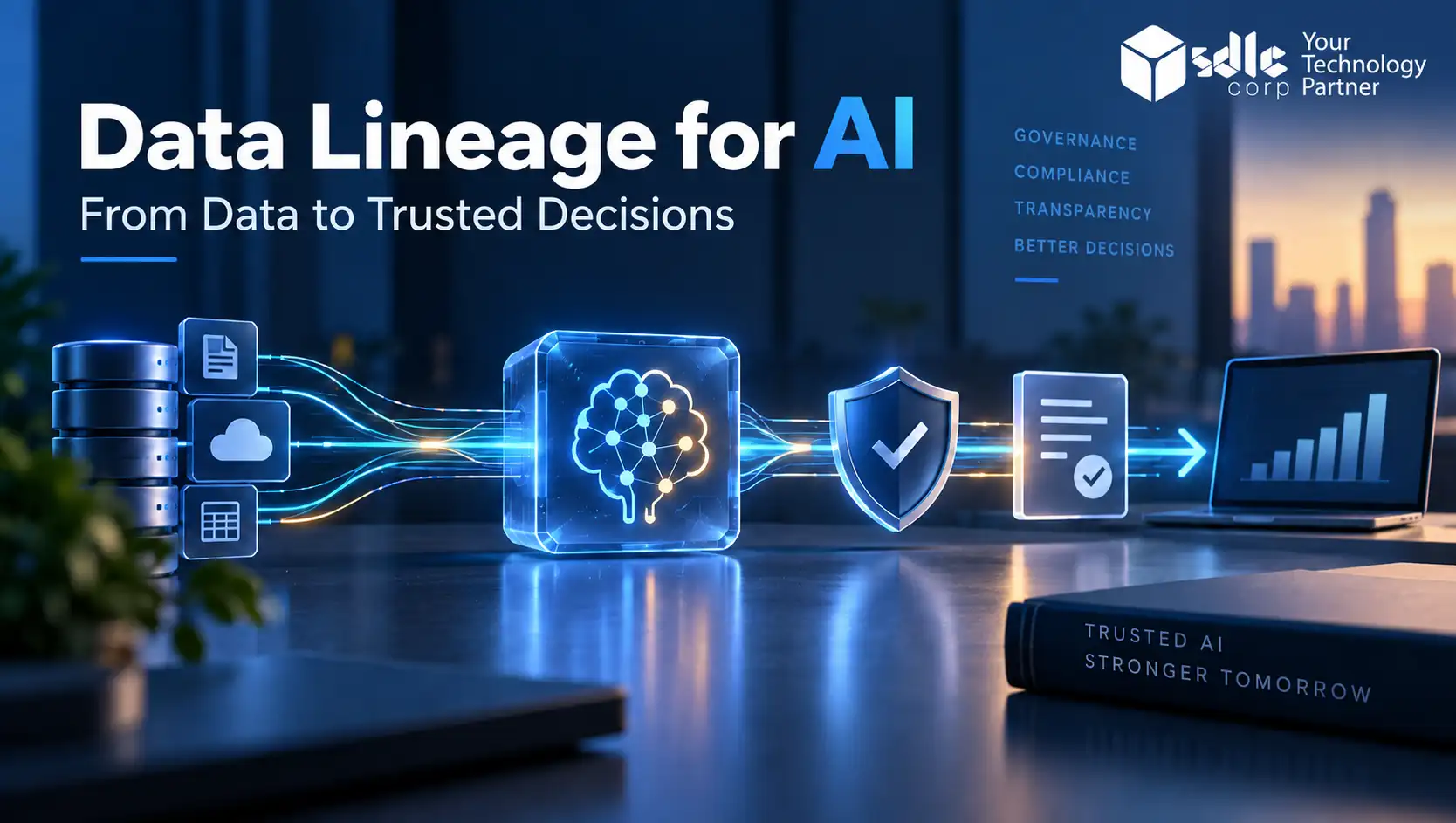
AI governance breaks down when teams cannot trace a business outcome back to the source data, transformations, model inputs, and approvals that shaped it. Data lineage for AI creates that source to decision path.
Risk, compliance, and delivery teams can then verify what changed, who approved it, and where remediation must happen.
Complementing lineage, Metadata Management and Data Catalogs for Enterprise AI help teams discover and describe business terms and datasets.
Lineage provides the evidentiary trail that ties those catalog entries to transformations, approvals, and the model or retrieval usage behind a decision.
- Best Fit Regulators, auditors, or business owners need to trace model outputs back to source data and change history.
- Trace First Business terms, datasets, pipeline steps, model or retrieval usage, and decision outputs that must stay connected.
- Reader Outcome A practical evidence pattern for impact analysis, approvals, and audit ready traceability.
ISO/IEC 42001:2023 is an international AI management system standard, not a regulation. It provides a structured governance framework and highlights traceability, transparency, and reliability.
GDPR Article 30 requires records of processing activities. GDPR Article 22 governs certain solely automated decisions with legal or similarly significant effects.
The compliance framing in this guide is grounded in named requirements and standards. EU AI Act Article 12 requires high risk AI systems to support automatic event logging for appropriate traceability.
Start with the control question: can you explain how a governed business term became a dataset? Can you then show how it moved through transformations and where a model, retrieval layer, or decision workflow consumed it?
If not, governance reviews turn into manual reconstruction exercises and incident response slows down because no one can prove which upstream change influenced the output.
Use lineage as an operational control rather than a passive metadata feature. The goal is not to draw every dependency in the estate. The goal is to preserve a trustworthy chain of evidence from source to decision.
Owners can then assess impact, approve changes, and answer audit questions without rebuilding context from scratch.
How Lineage Differs From Catalogs, Glossaries, And Stewardship
Data lineage documents the technical ancestry and lifecycle of data. It shows where data came from, how it changed, which models or processes consumed it, and where derived artifacts were published.
That narrow, provenance focused view is distinct from other metadata responsibilities but complements them in practical governance and compliance work. Treat lineage as traceable evidence rather than informal notes.
- Record ID and immutable reference (URI or hash)
- Source dataset(s) with version or snapshot identifier
- Extraction timestamp and responsible process or agent
- Transformation steps (script name, parameters, code commit hash)
- Models, pipelines, or services that consumed the data (names and versions)
- Downstream artifacts and publication destinations
- Validation results or quality checks and their timestamps
- Access controls, retention policy, and approval/sign off records
Recommendation: store lineage records as auditable evidence. Use append only storage or signed records, include timestamps and immutable identifiers, and index the records for audits, investigations, and regulatory requests.
Specifically:
- Catalogs index and describe data assets so people can discover and access them. Lineage adds the connective tissue that shows how those assets are produced and related over time, enabling impact analysis and root cause investigations.
- Glossaries define standard business and technical terms to ensure semantic consistency. Lineage does not define meaning; it shows how data labeled by those terms flows through systems, helping validate whether a dataset truly matches a glossary definition in practice.
- Stewardship and policies assign ownership, controls, and compliance rules. Lineage provides the evidence stewards need to enforce policies, demonstrate provenance for audits, and trace responsibility when remediation is required.
Lineage vs catalog vs glossary vs stewardship
The four practices work together, but they answer different governance questions. Use this comparison to keep ownership and evidence responsibilities clear.
| Governance practice | Primary question | Core records | Main governance use |
|---|---|---|---|
| Data lineage | Where did this data or decision come from, and what changed it? | Source IDs, versions, transformations, timestamps, model or retrieval usage, downstream outputs, approvals | Traceability, impact analysis, root cause investigation, audit reconstruction |
| Data catalog | What data assets exist, where are they, and how can people discover them? | Asset names, schemas, locations, owners, classifications, access details, operational metadata | Discovery, inventory, access enablement, asset search |
| Business glossary | What does this business term mean, and which definition is authoritative? | Canonical terms, definitions, synonyms, domains, policies, linked data assets | Semantic consistency, shared vocabulary, policy interpretation |
| Data stewardship | Who is accountable for the data, control, issue, or exception? | Owners, stewards, responsibilities, issue queues, approvals, exceptions, remediation status | Accountability, policy enforcement, issue resolution, control ownership |
In short, lineage is a provenance and dependency layer: technical, time aware, and evidence driven. It should be integrated with catalogs, glossaries, and stewardship processes to support explainability, compliance, and operational decision making.
Lineage answers where data came from, how it changed, which assets and models consumed it, and which business decision it influenced. Catalog discovery, glossary management, and stewardship workflows remain separate metadata management responsibilities.
Treat lineage records as verifiable evidence: collect and retain a compact evidence record for each lineage event.
At minimum, an evidence record should include:
- Source identifier, original system, dataset, or file path
- Version or snapshot, immutable id or content hash and schema snapshot
- Timestamp, ingest or transformation time
- Transformation details, pipeline/job name, code or SQL reference, and version
- Responsible agent, user, service, or process identifier
- Consumers, models, reports, or services that used the output (with versions)
- Decision or event link, business decision ID, ticket, or metric influenced
- Access and validation status, ACLs, validation results, and checksums
- Retention and compliance tags, retention period and applicable compliance labels
- Audit reference, log IDs or storage location for full provenance artifacts
Put simply, lineage documents provenance and the sequence of technical transformations that produce a data artifact or model output. It captures sources, transformation steps, versions, timestamps, and downstream consumers.
Teams can then trace a result back to its origins for reproducibility, impact analysis, or incident investigation. By contrast, a data catalog focuses on discovery, schemas, and operational metadata. A glossary defines consistent business terms and semantics.
Stewardship covers the people, policies, and processes that govern data use.
These functions are complementary: lineage provides the evidentiary trail that catalogs surface, glossaries standardize, and stewards enforce. Integrating lineage with catalog entries and glossary terms makes it practical to locate affected assets and assign remediation tasks.
Keeping responsibilities distinct also helps organizations scale governance without conflating discovery, semantics, and technical provenance.
Lineage Turns AI Governance Into Traceable Evidence
Lineage boundary: Data lineage traces how a source, transformation, model input, and decision are connected over time.
It does not replace catalog discovery, policy ownership, or quality control operations; it provides the evidence those practices use for impact analysis and audit reconstruction.


Lineage for AI must bridge both business and technical views. Business owners need to know which metric, policy, or decision a system influences.
Engineers need to know which tables, pipelines, features, prompts, or retrieval indexes carried the data into that decision. Governance fails when those two views are stored separately and never reconciled during change review.
Treat lineage records as evidence packages, not diagrams. A useful record ties a governed term to a dataset and captures the transformation or feature step that changed it.
It also records the owner, timestamp, and model or workflow context where the data was used. That structure makes incident triage faster because teams can move from a suspect output to the exact upstream asset and approval trail.
Lineage also sets the boundary between cataloging and accountability. Catalog tools may tell you what exists. Lineage tells you how a value moved, what logic touched it, and which approval state allowed it into production.
That distinction matters when a regulator, auditor, or business sponsor asks for proof instead of descriptions.
- Connect business terms, datasets, pipelines, model inputs, and decision outputs in one traceable chain.
- Capture owners, timestamps, versions, and approval states alongside technical dependencies.
- Use lineage records during change review, not only after incidents or audits.
- Preserve source to decision evidence where risk, compliance, and delivery teams can all inspect it.
Good lineage proves how a decision was produced, not just where the data was stored.
Use Enterprise Data Governance Framework to define stewardship rules, issue escalation, and control ownership for the lineage evidence described here.
What Data Lineage Must Cover For Enterprise AI

For enterprise governance, data lineage for AI should define five lineage categories up front: business lineage, technical lineage, feature lineage, model lineage and decision lineage. Business lineage maps datasets and predictions to business concepts, owners and policies. Technical lineage records tables, pipelines, code commits, parameters and data schemas.
Feature lineage shows the transformation chain that produced model features and associated quality checks.
Model lineage documents training inputs, code and hyperparameters, training data version, validation runs, performance metrics and deployed model identifiers. Decision lineage captures the runtime mapping from model output to business action, including thresholds, post processing, human overrides and downstream system records.
Each category answers different governance questions and requires distinct capture methods.
Standardize metadata fields for each lineage type so records are composable. For example, use unique identifiers for datasets, features, and models. Include version and commit references, capture owner, steward, and approval state, and record the purpose or permitted use.
Standardization reduces manual enrichment and speeds impact analysis when changes occur.
- Business lineage: business term, owner, permitted use.
- Technical lineage: tables, pipelines, code commit, schema.
- Feature lineage: transform steps, versioned feature store IDs.
- Model lineage: training data snapshot, code, hyperparameters.
Capture lineage across categories with standardized fields so records can be joined for audit and impact queries.
For the field level controls required to operationalize this work, review Enterprise Data Quality Framework for AI.
Follow Data From Source To Decision

Walk a single example end to end. Start with a customer transactions table in the payments system that feeds a cleaning pipeline.
The pipeline produces a normalized transaction dataset, which a feature engineering job joins with customer risk scores and computes a day rolling average. Those features are stored in a versioned feature store with explicit IDs and checksums.
A model training job pulls the versioned features and a labeled set derived from historical fraud investigations. Model lineage records include the dataset snapshot identifier, code repository commit, dependency libraries and a training run ID.
The candidate model is validated against holdout data, manual reviews and performance gates; approvals are recorded with reviewer identities and timestamps.
At runtime, the deployed model returns a score consumed by a decision service that applies a calibrated threshold and an escalation workflow for borderline cases.
Decision lineage captures the model ID, threshold value, post processing logic, which human reviewer handled overrides and the final action logged to downstream systems. That complete chain enables traceability from a specific action back to the originating record and decision rationale.
- Source table to cleaning pipeline to normalized dataset.
- Feature job to versioned feature store entry with ID.
- Training job to dataset snapshot, commit, run ID.
- Decision service to threshold, human override, action log.
A single record walk demonstrates how source records connect to feature IDs, model versions and final decisions.
Connect Business Meaning To Technical Assets
Business lineage creates a mapping layer that ties technical artifacts to business terms and owners. For example, tag dataset identifiers with the business concept 'customer_churn_score' and record the product owner, intended use and any constraints.
This mapping lets nontechnical reviewers ask questions in business language and retrieve the correct technical evidence.
Maintain a minimal set of canonical business terms and link them to datasets, features and models in a metadata store or catalog. Enrich technical lineage with human readable descriptions, examples of expected behavior and the primary contact.
Where terminology differs across teams, maintain crosswalks so the same concept resolves to the correct artifacts during audits.
Use the business to technical mapping during onboarding and change review. When a dataset or pipeline change is proposed, the mapping lets reviewers identify affected product areas, downstream models and decisions quickly.
That reduces false positives in impact analysis and focuses stakeholder reviews on changes with actual business exposure.
- Map technical assets to canonical business terms.
- Record product owner, permitted use and contact details.
- Maintain crosswalks for variant team terminology.
- Use mappings to scope change reviews and audits.
Business to technical mapping makes lineage queries meaningful to nontechnical stakeholders.
Use Lineage For Impact Analysis
Trace the blast radius before changing an asset
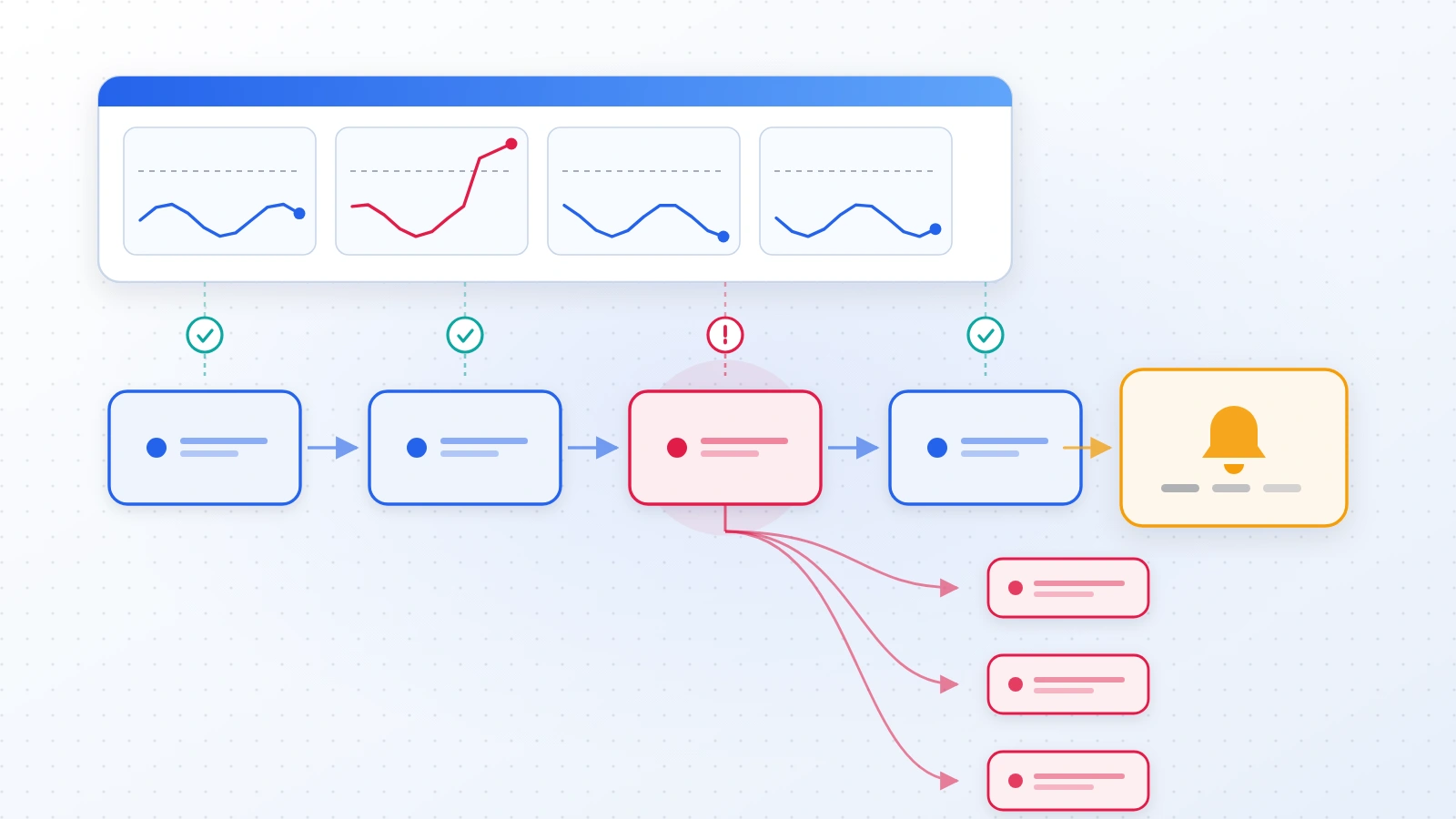
Impact analysis answers who and what is affected by a proposed change upstream. Effective impact analysis requires traversable lineage graphs that include dataset consumers, feature dependencies, model inputs and downstream decision services.
Queryable lineage lets teams estimate the scope of tests, approvals and rollback plans before change is applied.
Implement an impact analysis flow that starts with a change signal, for example, a schema change in a source table or an updated feature calculation. The flow automatically enumerates upstream and downstream artifacts and flags owners for notification.
It also prioritizes high risk consumers, such as recently retrained models or production decision services with high business value.
Operationalize the flow with runbooks and SLAs. Define who must approve changes for different risk categories, what validation suites to run, and when to schedule canary runs or phased rollouts.
Keep impact analysis records as part of lineage so reviewers can prove which checks ran and who authorized the change during post mortems or audits.
- Start impact analysis from a change signal or schema diff.
- Automatically enumerate downstream models and services.
- Prioritize consumers by business criticality and recent retrain.
- Log approvals, tests and rollout steps as lineage evidence.
Make impact analysis an automated first step in any upstream change to reduce risk and manual review time.
Create Audit Ready Evidence
Audit ready evidence needs consistent, queryable records for version, owner, approval, purpose, source and monitoring history. Capture immutable identifiers for datasets, features and model artifacts, and store links to code commits, training logs and validation reports.
Evidence should be easy to export in a reviewer friendly format while preserving machine readable records for automated checks.
Record approvals and reviewer identities for model promotion, performance gate passes and exceptions. Include a succinct purpose statement for each model and permitted uses for datasets to show intent.
Retain monitoring records such as data drift metrics, alert timestamps and remediation actions so auditors can trace observed issues to response steps.
Balance retention with operational cost and privacy constraints. Define retention windows for different artifact classes, with shorter retention for ephemeral training logs and longer retention for production model versions and approval records.
Make retention policy decisions explicit in ownership documentation rather than leaving them implicit.
| Evidence class | Planning retention figure | How to use the figure |
|---|---|---|
| High risk AI runtime logs | At least 6 months where the EU AI Act applies | Use this as a regulatory floor only for in scope high risk AI logs; keep longer when sector law, contracts, investigations, or risk policy require it. |
| Model validation and promotion approvals | 24 months after supersession | Illustrative enterprise target for preserving review decisions, test results, exceptions, and sign off evidence after a model version is replaced. |
| Production source to decision lineage | 36 months after model or workflow retirement | Illustrative target for material production decisions where historical impact analysis and audit reconstruction may be required. |
| Ephemeral debug and temporary pipeline traces | 30 to 90 days | Keep short lived operational traces only as long as needed for troubleshooting when they are not part of the formal audit record. |
The EU AI Act Article 12 requires high risk AI systems to technically allow automatic event recording over the system lifetime. The logging must support traceability appropriate to the intended purpose.
Article 19 requires providers to keep controlled automatically generated logs for at least six months, subject to applicable law. Article 26(6) applies the same minimum to deployer controlled logs.
Lineage field requirements by regulation
No major regulation defines one universal data lineage schema. The table below maps official recordkeeping, accountability, and audit control obligations to the lineage evidence fields an enterprise should capture when the rule applies.
Treat it as an implementation mapping and confirm sector, jurisdiction, role, and retention requirements with legal or compliance owners.
| Regulation / scope | Lineage evidence fields to capture | Recordkeeping / retention note | Why the fields matter |
|---|---|---|---|
| EU AI Act, Article 12 (Record keeping) High risk AI systems, where applicable | System and model identifier; period of use; event timestamp; relevant input reference; reference database where required; matched input where required; human verifier identity where required; system version; change records; approval records; technical documentation links. | Article 12 requires automatic event logging that supports appropriate traceability. Article 19 requires providers to keep controlled logs for at least six months, subject to applicable law; Article 26(6) applies the same minimum to deployer controlled logs. | Supports traceability, post market monitoring, investigation of risky behavior or substantial modification, and evidence that system operation can be reconstructed. |
| GDPR, Articles 30 and 22 Personal data processing; automated decisions where applicable | Article 30 mapping: controller or processor owner; processing purpose; data subject and personal data categories; recipients; transfers; erasure period; security control reference. Article 22 mapping: decision ID; automated processing context; human intervention or contestation record where applicable. | Article 30 requires records of processing activities. Article 22 governs certain decisions based solely on automated processing that produce legal or similarly significant effects, with safeguards in applicable cases. GDPR does not set one universal lineage retention period. | Helps demonstrate processing accountability, trace personal data movement, support transparency, and preserve evidence around significant automated decisions. |
| ISO/IEC 42001:2023, AI management systems International standard; not legislation | AI system or use case identifier; accountable owner; governance objective; risk and impact record; data and system dependencies; change or approval record; monitoring evidence; incident or corrective action reference; controlled documented information link. | ISO/IEC 42001 specifies requirements for establishing, implementing, maintaining, and continually improving an AI management system. Use lineage as supporting documented evidence according to the organization’s AIMS scope and control design. | Supports structured AI governance and risk management while strengthening traceability, transparency, reliability, accountability, monitoring, and continual improvement. |
| HIPAA Security Rule Systems that contain or use electronic protected health information (ePHI) | System or application ID; user or service identity; access or action timestamp; activity or change event; affected ePHI system or asset; integrity check or validation result; security control or policy reference; responsible owner; remediation or assessment record where applicable. | The Security Rule requires audit controls that record and examine activity in systems containing or using ePHI. Required Security Rule documentation must generally be retained for six years from creation or from when it last was in effect, whichever is later. | Provides a reviewable audit trail for access and system activity, supports integrity checks, and preserves evidence of required security actions, assessments, and procedures. |
- Store immutable IDs and links to commits and training logs.
- Record approvals with reviewer identity and timestamp.
- Keep monitoring history: drift metrics and remediation actions.
- Define explicit retention windows per artifact class.
Treat lineage records as evidence: immutable identifiers, approvals and monitoring history form the audit trail.
For compliance oriented lineage, map evidence to the exact obligation that applies. Use Article 12 for EU AI Act record keeping and Articles 30 and 22 for GDPR accountability and automated decisions. Use ISO/IEC 42001:2023 for AI management system governance.
For an external governance baseline, use the NIST AI Risk Management Framework. Its core lifecycle functions also provide guidance on traceable evidence, risk review, and lifecycle controls.
Capture Lineage Across Changing Systems
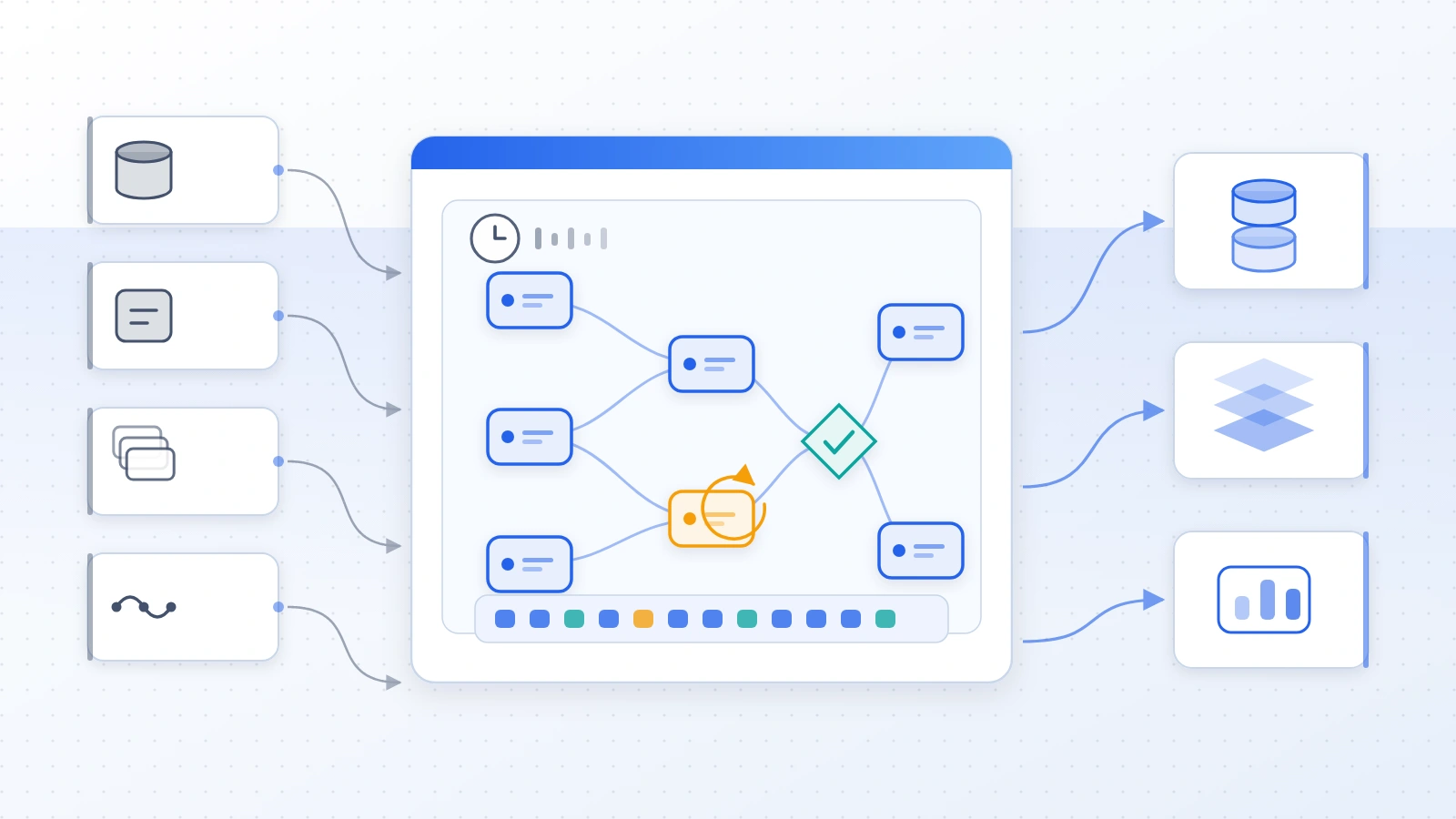
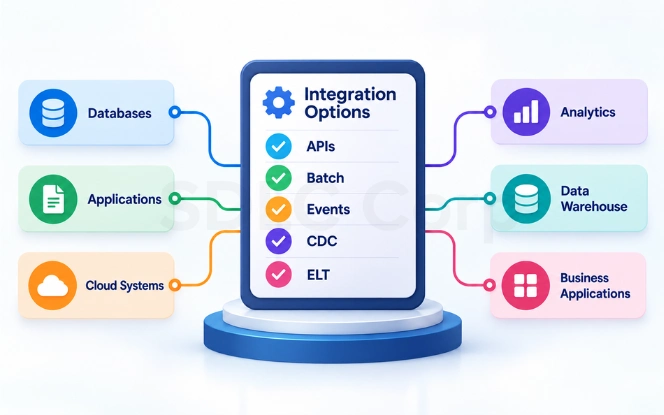
Modern stacks mix batch and streaming, managed services and in house code. Capture lineage using a hybrid approach: automated extraction where feasible, lightweight manual enrichment for business meaning, and APIs to link externally managed artifacts.
For interoperable technical capture, use the OpenLineage specification as a reference model. It standardizes lineage events around datasets, jobs, and runs, with extensible facets for additional metadata.
Prioritize automation on high volume pipelines and manual steps where human context is required, for example labeling rules or policy exemptions.
Use event driven capture for runtime decision lineage so production actions are recorded with minimal latency. For batch processes, capture pre and post change snapshots and checksums.
Where services do not expose native lineage metadata, use deployment hooks or CI artifacts to create references to deployed models and code commits.
Provide simple APIs and templates for manual enrichment so owners supply consistent business context. For example, require a short purpose statement, owner and permitted uses when registering a feature or model.
That reduces variability in metadata and improves the quality of automated impact queries and audit exports.
- Automate lineage extraction for high volume pipelines.
- Use APIs and CI hooks to capture external artifact links.
- Record runtime decision events with timestamps and IDs.
- Provide templates for manual business metadata enrichment.
Combine automation, CI hooks and manual templates to capture lineage across heterogeneous systems.
Monitor Lineage Quality And Gaps
Lineage is useful only if it is accurate and current. Monitor quality metrics such as percentage of artifacts with owners, share of features with documented transforms, and proportion of production models with complete training snapshots.
Surface gaps in dashboards and route exceptions to owners for remediation with defined SLAs.
| Lineage metric | Target | Acceptable gap |
|---|---|---|
| Production models with end to end source to decision lineage | ≥95% coverage | <5% of in scope production models incomplete |
| High risk or regulated production models | ≥99% coverage | <1% incomplete, with every exception explicitly approved |
| Critical evidence fields: source, owner, version, approval, decision link | ≥98% field completeness | <2% missing critical fields across in scope records |
| Unresolved critical lineage defects | <1% of in scope assets | No unowned critical gaps; each open defect has an owner and remediation date |
Use these figures as service level objectives for lineage quality. Measure them by risk tier instead of averaging the entire estate. A 95% enterprise wide score can still hide a serious gap in a small number of high impact models.
Common gap types include stale relationships when artifacts are refactored and missing owners for legacy datasets. They also include undocumented transforms in ad hoc notebooks and untracked decision logic in downstream services.
Detect these gaps with periodic scans and targeted queries that compare expected relationships against observed metadata.
Close gaps through governance cycles that combine automated repair where possible and manual review where required. For example, map orphaned datasets to owners using recent commit logs or query patterns, then require owners to confirm or reassign responsibility.
Track remediation tasks in the lineage system to produce evidence of continuous improvement.
- Measure owners coverage and documented transforms percentage.
- Detect stale relationships with periodic relationship scans.
- Flag orphaned datasets and route to likely owners.
- Track remediation tasks and SLA compliance in lineage records.
Treat lineage quality as an operational metric with defined SLAs and remediation workflows.
Audit Evidence Trace Example
| Evidence layer | Minimum lineage fields | Why it matters |
|---|---|---|
| Source record | System, table, field, owner, refresh time | Shows where the input originated and who owns correction. |
| Transformation | Rule, job, version, timestamp, test result | Explains how the value changed before model or workflow use. |
| Model or retrieval step | Feature, prompt context, index, model version | Connects upstream data to the AI decision surface. |
| Decision output | User, workflow, output ID, approval state | Creates an auditable path from source to business action. |
Frequently Asked Questions
The minimum evidence is source system, field name, transformation rule, owner, refresh time, model or retrieval step, output ID and approval state. That chain lets reviewers trace a decision from source data to downstream action.
AI lineage must include the model, prompt, retrieval index, feature or policy step that consumed the data. Standard lineage often stops at reporting tables, which is not enough to explain AI behavior or audit a decision.
Ownership is shared. Data owners maintain source definitions, engineering teams maintain pipeline traces, model owners document consumption, and governance teams define the evidence required for review and exceptions.
Capture lineage during ingestion, transformation, retrieval, model execution and decision handoff. Waiting until an audit creates gaps because runtime context, versions and approval details may no longer be recoverable.
Yes, when it connects inputs, transformations, model use and decisions in a reviewable record. It does not guarantee compliance by itself, but it gives risk, legal and business owners the evidence needed to verify controls.