
Home Case Studies Orange VR Soccer Game

VR Soccer Game Case Study for Orange

SDLC Corp built a VR soccer game for Orange to demonstrate real-time 5G performance through immersive gameplay, low-latency interaction, and a more engaging live experience.

<20ms Latency
5G Powered
360° Immersive
Live Experience
VR soccer game for Orange showing immersive gameplay and real-time 5G experience
5G · VR · Live Experience
Client Overview

Orange
Leading Telecom, Bold Vision

Orange is Jordan's leading telecommunications operator, serving millions of subscribers across mobile, broadband, and enterprise services. Orange launched 5G across Amman and Irbid, making it the first operator in Jordan to do so. The challenge was simple: network speed is invisible. Orange needed a bold, public-facing way to show what 5G could actually do not through advertising, but through a game development company-powered live activation that audiences could step into, play, and walk away talking about.
Client
Orange S.A.
Industry
Telecom / 5G
Location
Jordan, MENA
Solution
VR Soccer Game
Tech
5G Powered
Type
Brand Activation

Orange VR soccer game, built for the Jordan market — 5G case study overview
Business Challenge

Challenges in Demonstrating 5G Performance

5G performance is not easily visible, so Orange needed an interactive way to demonstrate it in real time.

Limited Tangibility

Users cannot see or feel network speed through an advert or a static display. To demonstrate it, you need something they can actually do.

Need for Real-Time Interaction

The game had to respond instantly to user input to reflect true 5G latency.

High User Expectations

Any delay or lag would negatively impact the perception of 5G performance.

Event-Day Capacity

The solution needed to operate reliably across high-traffic environments such as exhibitions and public activations.

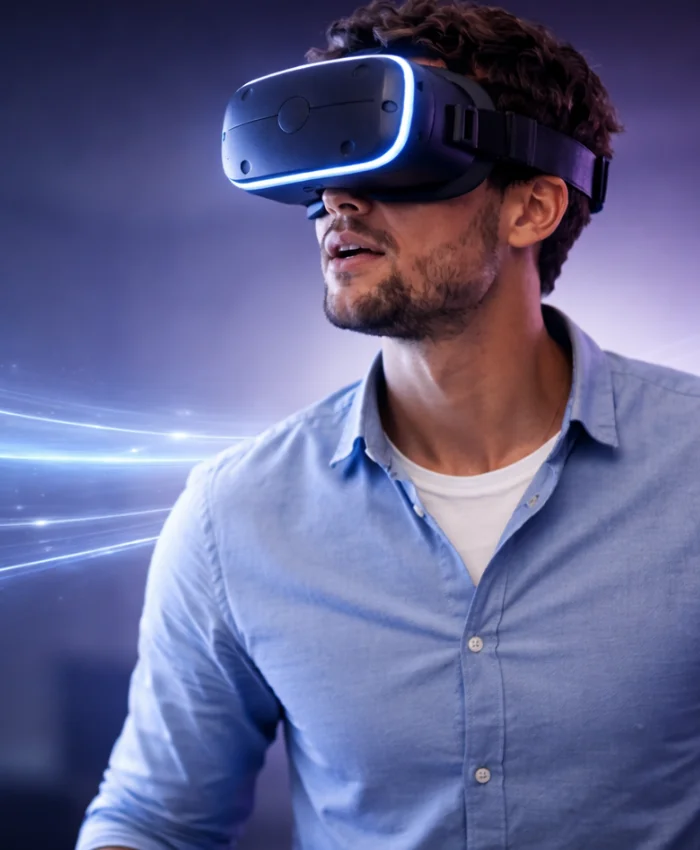
5G network performance shown through VR soccer gameplay
5G
immersive VR soccer game experience demonstrating real-time 5G performance
5G Powered
<20ms Response
5G Network
Our Solution

A 5G-Powered VR Soccer Experience

SDLC Corp developed a VR soccer game for Orange to demonstrate real-time 5G performance through immersive gameplay. The experience was designed to be simple, fast, and instantly engaging.

Instead of explaining network speed through technical specifications, the goal was to let users experience it directly. Every interaction from ball kicks to goalkeeper reactions was built to respond instantly, making 5G performance visible and tangible. [Orange Jordan 5G launch ↗]

1

VR Soccer Game Concept

Designed as a fast-paced penalty shootout format familiar to all users, requiring no prior VR experience and optimized for high user participation in live environments.

2

Response Time in Play

Engineered to leverage ultra-low latency, ensuring every kick, save, and interaction responds in real time with sub-20ms performance, clearly demonstrating 5G responsiveness.

3

360° Virtual Environment

A fully immersive stadium environment with spatial audio, dynamic lighting, and realistic animations, designed to create a lifelike football experience.
Why 5G Mattered

How 5G Enabled Real-Time VR Game Performance

Every design and build decision was made to make 5G speed the point of the game. The game did not simply run on the network it proved the network through live gameplay that players could feel in their hands.

Fast Response

The game responded in under 20 milliseconds fast enough that players felt the speed without needing it explained.

Stable Connectivity

Reliable 5G performance reduced the risk of lag, frame drops, and disconnects during live demos, keeping play smooth even with queues of players waiting.

Multi-Session Ready

The setup supported repeated user sessions efficiently, making it work for brand events where dozens of players queue in sequence over several hours.

Measurable Network Performance

The game turned network speed into a visible, playable experience event visitors could feel the difference without needing a technical explanation.

<20ms Low Latency
Smooth Live Gameplay
5G Powered Experience
Key Features

What the VR Soccer Game Delivered

Six core capabilities that made the Orange 5G VR soccer game technically reliable and engaging.

01 · Immersion

VR Gameplay in Action

Full 360° stadium environment with high-fidelity visual rendering, crowd audio, and spatial effects making every kick register with immediate visual and audio feedback.

360° Stadium World
02 · Performance

Responsiveness

Sub-20ms input-to-reaction across the full game goalkeeper AI, ball physics, and crowd all reacted in true 5G time, frame rates stayed stable under live event conditions.

<20ms Response
03 · Network

Frame-Stable Gameplay

Low latency performance and minimal frame drops the game ran smoothly on Orange 5G, even during peak event footfall with multiple VR sessions.

Consistent Frame Rate
04 · Branding

Orange Brand Identity Throughout

Orange 5G identity integrated throughout menus, stadium branding, and overlays made the network speed visible in every interaction.

Full Brand Integration
05 · Deployment

Event-Ready Deployment

Optimized for rapid kiosk-mode setup staff could onboard a new player every 90 seconds keeping event queues moving throughout the activation.

90-Second Onboarding
06 · Social

Shareable Score Moments

Built-in score reveal and celebration sequences designed to drive organic social sharing, amplifying Orange 5G launch narrative beyond the event floor.

Social-First Design
Technologies Used

Built on the Right Stack

Every technology choice was made to maximize immersion, minimize latency, and ensure smooth performance for a live VR soccer game on Orange 5G.

Game Engine
VR Device
Meta Quest Pro HTC Vive PCVR
Network
Orange 5G Sub-20ms Real-Time
Backend
Node.js Cloud Hosted Live API
Rendering
360° Spatial Audio Motion Capture AI Optimization
QA
Latency Testing Event Stress Test
Development Process

From Brief to Live Experience

The project moved through a structured delivery process covering planning, design, build, testing, and final deployment for a live VR soccer activation.

4 Delivery Phases
12 Weeks Timeline
Live Event Deployment
01
Phase 1

Discovery

We aligned business goals, event context, user flow, and technical feasibility before moving into experience planning and execution.

Weeks 1–2
02
Phase 2

UX & Game Design

Gameplay structure, stadium environment, interaction flow, and brand integration were shaped to create a simple and engaging VR game.

Weeks 3–5
03
Phase 3

Development & Optimization

The game was built, refined, and optimized for stable performance so it could handle repeated live sessions more smoothly.

Weeks 6–10
04
Phase 4

Testing & Deployment

Final QA, pre-launch testing, and event readiness preparation helped ensure the solution was ready for live public use.

Weeks 11–12

Structured Delivery for a Live Activation

Each phase was planned to reduce execution risk and support a smoother rollout from concept approval to event-day deployment.

4 Phases
12 Weeks
5G launch context — Orange Jordan
"We are proud to be in the lead of the digital development in Jordan. This game-changing technology will allow us all to discover new opportunities and can be utilised to promote economic growth, job creation, and enhance the quality of life in Jordan."
PM
Philippe Mansour
CEO, Orange Jordan — Official 5G Launch Statement, Amman, July 2023
Source: Orange Newsroom ↗
Project lead statement
Orange came to us with a clear brief: make 5G speed something a non-technical audience can actually feel. We built the VR soccer experience around that constraint. Building for live-event volume with over a thousand participants across a multi-day activation is a different engineering problem from a controlled demo. Latency budget, rendering pipeline, session management every call was made with a thousand-person queue in mind.
AY
Ankit Yadav
Co-Founder & CSO, SDLC Corp — Project Lead, Orange 5G VR Activation, Jordan
LinkedIn post by Ankit Yadav ↗