






NLP and OCR
Logistics: Document Processing
Natural language processing and OCR read invoices, bills of lading and customs forms. Then the extracted fields flow into your ERP for review.
Logistics Software Development ServicesAI as a service from SDLC Corp gives your products production-ready AI models through secure, managed APIs. We handle hosting, scaling, monitoring and model routing in our cloud or yours. As a result, your team ships AI features sooner, without hiring a model serving team.

Proven AI Delivery
Our 400+ AI specialists are part of SDLC Corp's 1,200+ engineering team. Together, they have completed 300+ AI deployments and 120+ enterprise AI integrations.
Trusted by Fortune Global 500 leaders, governments & top universities across 30+ countries







Powered by leading cloud & AI platforms
Awards & industry recognition


Our AI as a service work covers the full serving layer behind your application. Also, each service runs on infrastructure you approve.
Inference
We run model requests on managed endpoints that scale with demand. For example, a support tool can classify tickets at peak volume without your team sizing GPUs.
Hosting
We host commercial, open and custom models on AWS, Azure, Google Cloud or your own servers. Serving then runs on vLLM, Hugging Face TGI or NVIDIA NIM, chosen by workload.
Generative AI
We deploy large language models for drafting, summarization and search behind one secure API. For a fully custom build, see our generative AI development services.
Routing
Each request goes to the model that fits its cost, speed and quality needs. As a result, simple tasks use smaller models, while complex reasoning goes to GPT, Claude or Gemini.
Integration
We expose AI through REST APIs with authentication, rate limits and structured JSON outputs. For deeper CRM or ERP workflows, our AI integration and implementation services connect the rest.
Operations
We track availability, latency, errors, usage and cost for every endpoint. When quality drifts, alerts reach the team early, and retraining pipelines sit with our MLOps services.
Teams use AI as a service for logistics, finance, retail, manufacturing and SaaS products. Each use case below runs behind an API your software already calls.
NLP and OCR
Natural language processing and OCR read invoices, bills of lading and customs forms. Then the extracted fields flow into your ERP for review.
Logistics Software Development ServicesMachine Learning
Machine learning models score transactions and flag unusual patterns through a prediction API. Analysts then review the flagged cases instead of every record.
Fintech Software Development CompanyLanguage Models
Language models power product search, recommendations and support chat. Because the models are managed, peak season traffic needs no new infrastructure.
E-Commerce and Retail DevelopmentComputer Vision
Computer vision models check images from the production line for defects. Results return in real time, so operators can stop faulty parts early.
Custom Manufacturing Software DevelopmentProduct AI
Product teams add summaries, assistants or classification to their app through one endpoint. Meanwhile, model upgrades happen behind the API without app releases.
Knowledge AI
Chatbots answer staff questions from approved internal documents. In addition, each answer can cite its source, so staff can check it quickly.

AI as a service sits between ready-made software and a full custom build. This table shows where each model fits and how it is usually priced.
| Model | What You Get | Your Control | Typical Pricing | Best Fit |
|---|---|---|---|---|
| AI as a Service | Managed AI models behind your own APIs | High: you choose models, data rules and hosting | Usage-based or managed service fee | Adding AI to existing products and workflows |
| SaaS with AI features | A finished app with AI built in | Low: the vendor sets the features | Per-seat subscription | Standard tasks with an off-the-shelf tool |
| MLaaS (for example, SageMaker or Vertex AI) | A platform to train and deploy your own models | High, but your team runs it | Compute hours and storage | Teams with in-house data scientists |
| Custom AI development | A new application built through AI development services | Full control of the product | Project-based | Unique workflows or a new AI product |
Private AI as a service keeps models and data inside environments you control. In addition, security controls apply from the first request.
Deployment
We deploy in your private cloud, on customer-managed servers or in a hybrid setup. Then network controls keep traffic inside approved boundaries.
Data
Prompts and outputs stay in the regions you choose. Retention and logging follow your policy, and EU personal data handling follows GDPR.
Access
Every endpoint uses authentication, role-based access and encryption in transit and at rest. Meanwhile, secrets sit in managed vaults, and audit logs record each call.
Governance
Model risk reviews follow the NIST AI Risk Management Framework. As a result, bias, safety and quality checks run before and after launch.
Security, Privacy and Responsible AI
Applicability depends on geography, industry, the data processed, the deployment model, the use case and your own legal and regulatory obligations. Policies and certificates are in our Trust Center.
These projects show managed AI running in production. In each one, real users reach the AI through APIs and monitored workflows.
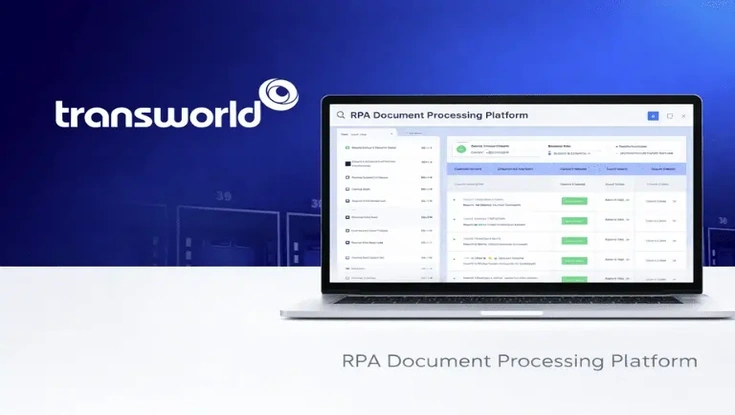
View More Case StudiesAn AI pipeline with OCR, field detection and human review now processes 2,000+ invoices a day into the ERP.
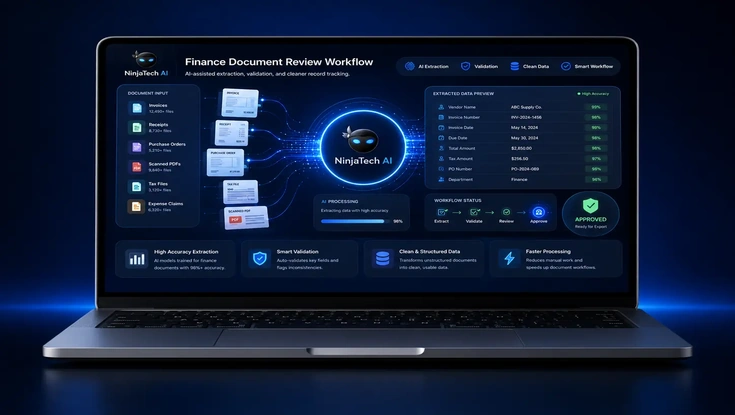
A finance team moved invoices, receipts and scanned PDFs from manual entry to AI extraction with human review.
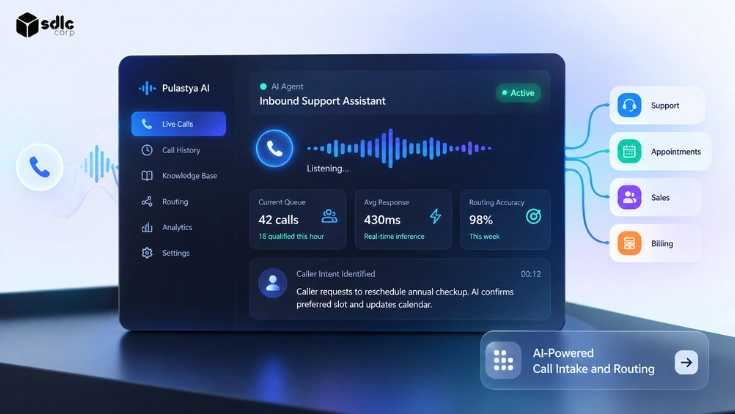
A service business connected its existing Twilio numbers to Pulastya AI. The voice agent answers routine calls and passes complex ones to staff with context.
AI as a service pricing depends on the model, request volume, hosting and support level. Most engagements follow three stages, so you can start small and then scale.
| Stage | What You Get | Timeline | Typical Cost |
|---|---|---|---|
| Stage 01Assessment | We review your use case, data and volumes, then recommend models and hosting. You get an architecture, a cost estimate and a rollout plan. For strategy-first work, see our AI consulting services. | 2 to 4 weeks | $5,000 to $20,000Fixed fee |
| Stage 02Pilot | We deploy one use case on a managed endpoint and test it with real traffic. We then measure quality, latency and cost against agreed targets. | 4 to 8 weeks | $25,000 to $50,000Fixed fee |
| Stage 03Managed Service | We run, monitor and improve the service in production. After launch, ongoing cost follows request volume, hosting and the support level you choose. | Ongoing | $5,000 to $25,000 per monthPlus model and hosting usage |
Model and hosting usage is billed separately. For example, a RAG assistant at 500 requests a day runs about $1,050 to $3,100 a month. Your final estimate depends on the model, request volume, integrations and support level.
Choosing an AI as a service provider comes down to flexibility, control and operations. In short, here is how we handle each one.
Flexibility
We work with OpenAI, Claude, Gemini, Llama and Mistral models. Because your apps call our API layer, you can switch models without rewriting code.
Control
Services run in managed cloud, private cloud, hybrid or your own infrastructure on AWS, Azure or Google Cloud. As a result, you decide where your data lives.
Integration
We connect AI services to your web apps, CRM, ERP and internal tools through stable APIs. Also, the engineers who build the service support the integration.
Operations
Our team monitors uptime, latency, cost and quality after launch. Kubernetes, Docker and FastAPI run the serving stack, and every alert has a clear owner.
Assurance
Controls follow our SOC 2, ISO 27001 and ISO 9001 certified framework. In addition, our AI governance practices align with ISO/IEC 42001.
Founders and CEOs share how our AI chatbots, automations and AI features perform after launch. Each written review below is verified on Clutch.
Eric Leist
CEO, Edgerton Strategies

Doug Schmidt
CEO, Roofaid USA

Reyzal Razmi
All Star Influencers

They've quickly understood our business context, moved fast, and brought recommendations rather than questions.
What stood out most was their ability to understand the problem before writing code. Rather than offering a generic software solution, they spent time with stakeholders, mapped real workflows, and built the platform around the district's operational needs.
Treatment acceptance increased by approximately 15-20%, supported by AI-assisted dental imaging and clearer treatment explanations.
The AI features improved access to reports and business insights, helping our team make decisions faster.
Start Your AI Project
Share your use case, and our AI team will suggest models, hosting and a pilot plan for your product.
5.0 on Clutch from 20 verified reviews
Discuss Your AI ProjectPractical guides for teams planning managed AI in production.
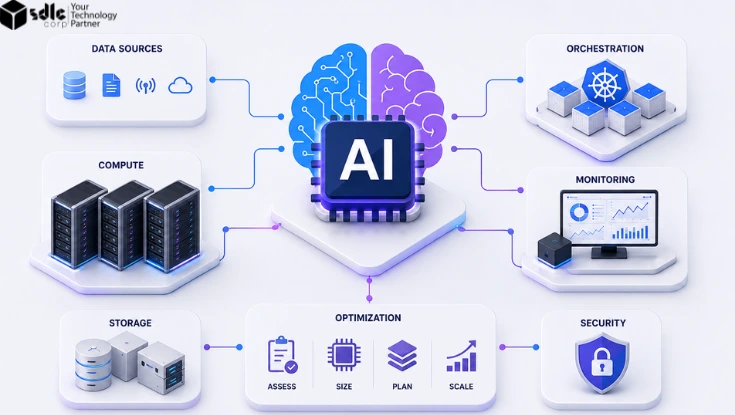
InfrastructureHow to size GPUs, clusters and budgets for production AI workloads.
Read Article
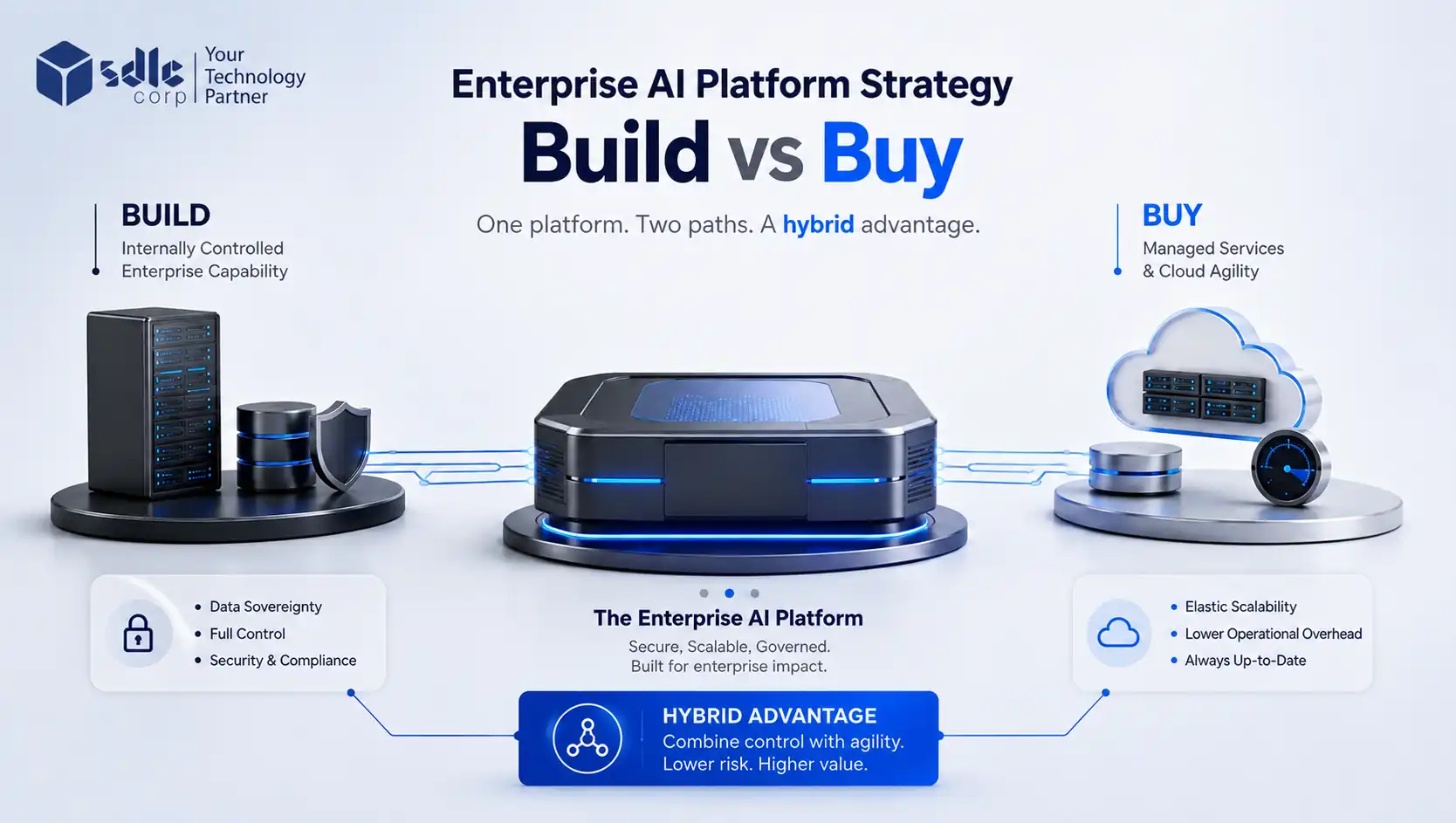
StrategyHow to choose build, buy or a managed hybrid for each AI capability.
Read Article
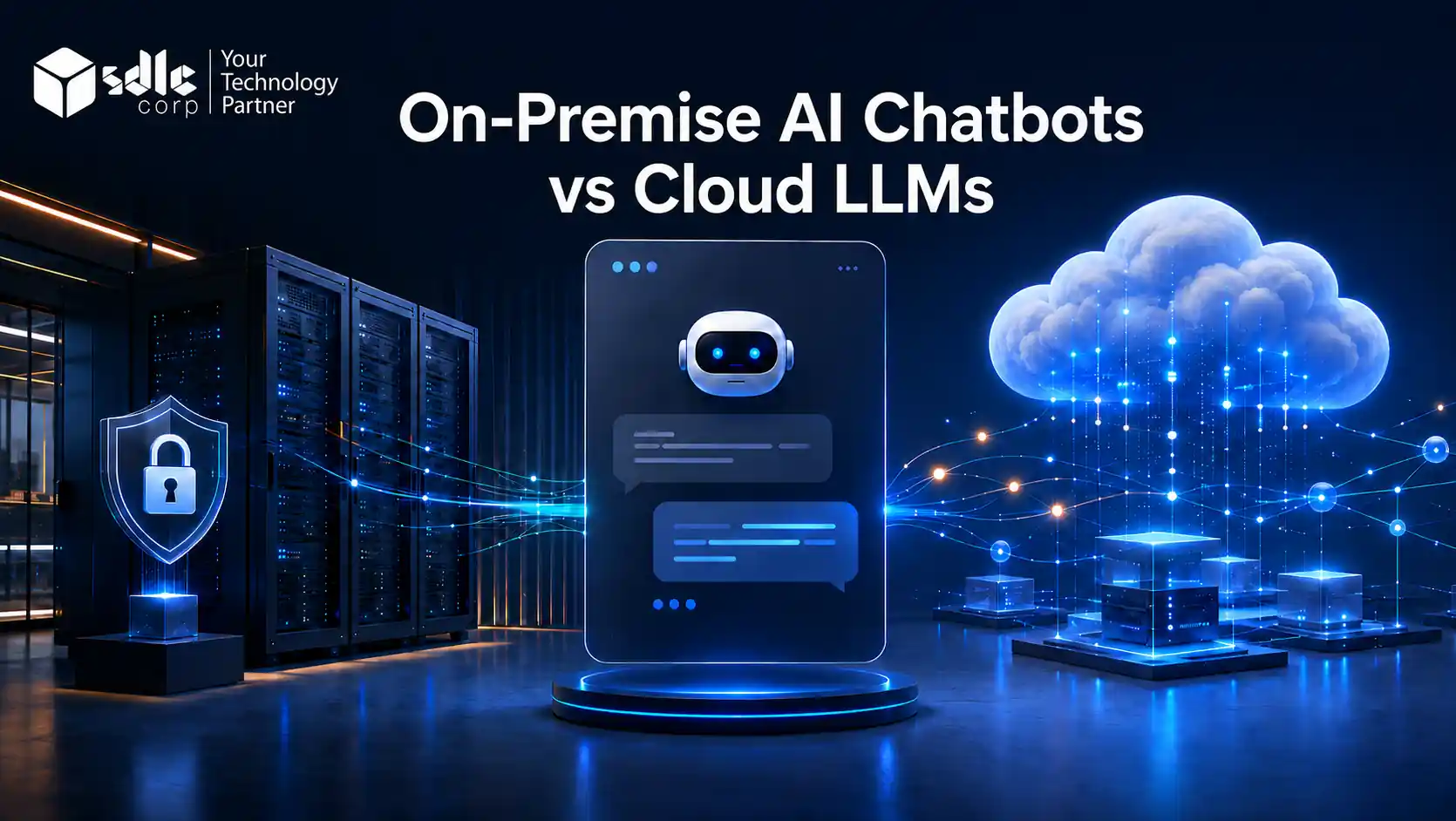
DeploymentWhen private hosting beats a cloud model API, and when it does not.
Read ArticleAnswers on how AI as a service works, what it costs and how private deployment keeps your data under your control.
AI as a service (AIaaS), or artificial intelligence as a service, gives you ready-to-use AI models through secure APIs. The provider hosts, scales and monitors the models. As a result, your applications use AI without your team running GPUs, model servers or serving pipelines. It suits teams that want AI features in production quickly.
AI as a service works in four steps. First, your application sends a request to a secure API. Next, the service checks access and passes the request to the right model. The model runtime then generates a result. Finally, the response returns with logs for latency, cost and quality, so every call is monitored.
A common example is document extraction through an API. For instance, Data AI Ninja exposes extraction through scoped REST APIs and returns structured JSON to the calling system. Other examples include support chatbots, fraud scoring and visual defect detection, each served from a managed model endpoint.
The main benefits are faster launch, lower upfront cost and scaling on demand. You also avoid hiring a full model serving team. However, the downsides include vendor lock-in, data privacy questions and limits on customization. A model routing layer, private deployment and clear data rules reduce each of these risks.
SaaS gives you a finished application, while AIaaS gives you AI capabilities to build into your own software. For example, a SaaS help desk includes a fixed chatbot. With AIaaS, you call language models through an API and design the experience yourself. In short, AIaaS offers more control, and SaaS offers faster setup for standard tasks.
AI as a service cost depends on the model, request volume, hosting and support level. An assessment usually costs $5,000 to $20,000, and a pilot costs $25,000 to $50,000. After launch, a managed service runs about $5,000 to $25,000 per month. Model and hosting usage is billed separately, so the assessment gives you a full estimate first.
An assessment takes 2 to 4 weeks, and a pilot on a managed endpoint takes 4 to 8 weeks. After the pilot, the service moves into production with ongoing monitoring. However, private deployments and ERP integration add time for security reviews and testing. The assessment gives you a timeline for your exact scope.
A direct model API gives you one model and leaves hosting, security and monitoring to your team. AIaaS adds a managed layer around the models. That layer handles routing between models, access control, logging, cost tracking and fallbacks. As a result, you can change models or providers without changing your application code.
Yes. AIaaS can run in a private cloud, on customer-managed infrastructure or in a hybrid setup. Open models such as Llama and Mistral suit fully private hosting. In addition, commercial models can sit behind a private API layer with network and data controls. The right choice depends on your data rules, model needs and budget.
Not if the service has a routing layer. Your applications call one stable API, and the layer decides which model handles each request. You can therefore use commercial, open and custom models together, and switch providers as prices or quality change. Custom models also stay deployable on infrastructure you control.
Choose an AI as a service provider on five points: model flexibility, deployment options, integration skills, production monitoring and security. Ask how they avoid lock-in and where your data will live. Also ask for case studies with measured results. A short assessment is a low-risk way to test the fit.