Custom Marketplace Development

Build Your Ecommerce Marketplace Platform

As an ecommerce marketplace development company, SDLC Corp builds custom multi-vendor marketplaces on Laravel with source code ownership, vendor onboarding, catalog control, split payments, payouts, and scalable B2B, B2C, C2C, or headless ecommerce workflows.

  • Full source code ownership
  • Vendor onboarding and payouts
  • Scalable marketplace growth
GoodFirms 4.9 rating badge for SDLC Corp
AppFutura 4.9 rating badge for SDLC Corp
Clutch 5.0 rating badge for SDLC Corp
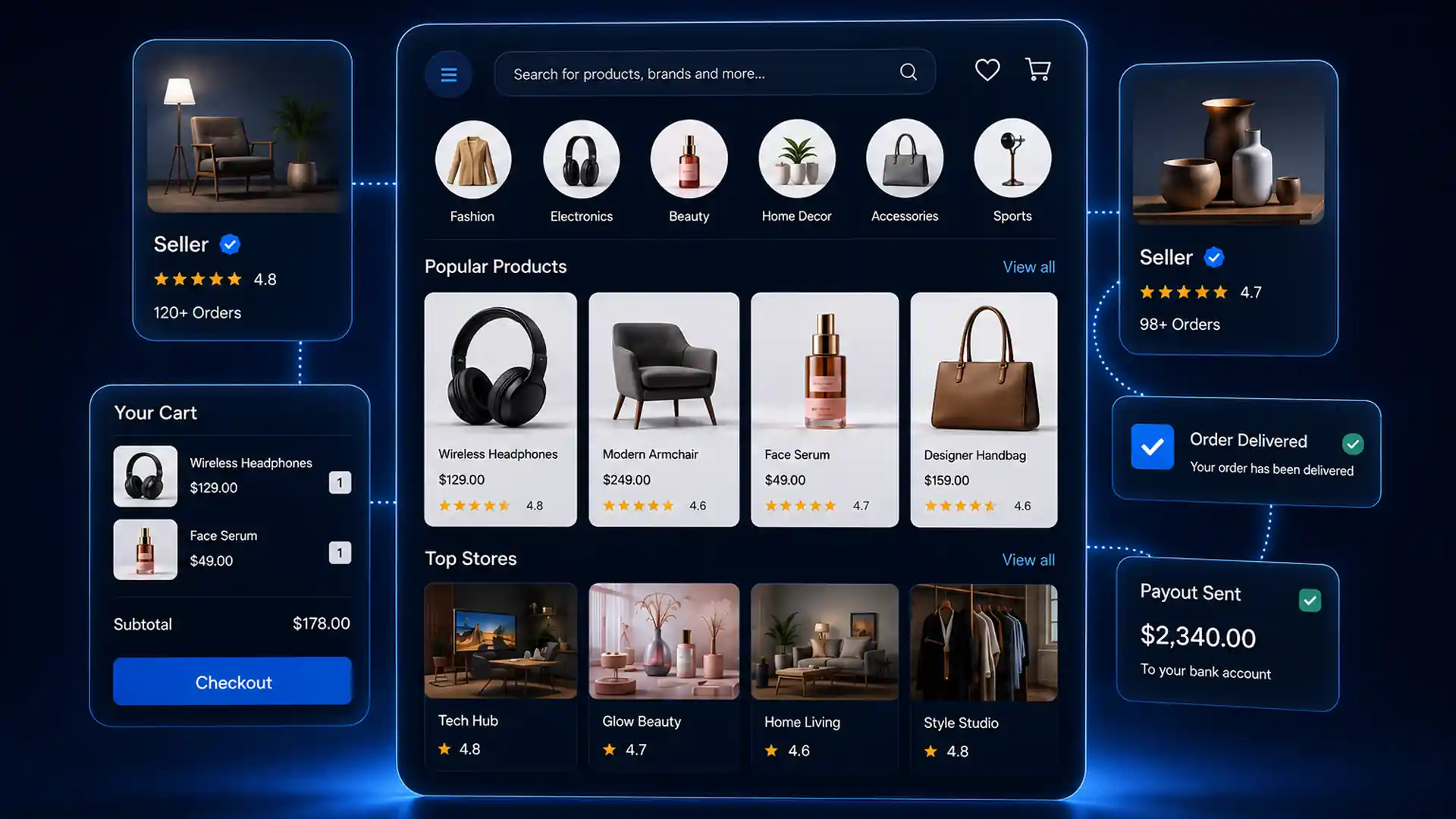
Custom ecommerce marketplace platform interface with vendor, catalog, payment, and order management dashboard
Zilch company logo
MAIR company logo
CETU company logo
Arbor Financial Group company logo
KISS USA company logo
Vendor onboarding
Ecommerce marketplace platform interface showing product browsing and checkout experience
Secure checkout

Why SDLC Corp

Why Choose Our Ecommerce Marketplace Development Company?

We specialize in Laravel ecommerce marketplace development , not white-label platforms with monthly license fees or rigid SaaS tools that cap what you can build. Every marketplace we deliver is 100% yours: full source code, full database, and full infrastructure control from day one.

Full Ownership

Own your codebase, database, infrastructure, and roadmap without vendor lock-in.

Built to Scale

Laravel architecture built for vendors, catalogs, orders, payouts, and growth.

Secure by Design

Payment flows, data handling, vendor verification, and compliance are planned early.

Growth Focused

Build B2B, B2C, and headless ecommerce workflows that grow with your business.

Marketplace Development Services

End-to-End Marketplace Development Services

From sophisticated B2B procurement portals to high-velocity B2C consumer malls, we build the foundations of digital trade with each model built to specification.

B2B Marketplace

Build a B2B ecommerce marketplace platform with bulk pricing rules, RFQ workflows, Net 30/60 terms, and corporate procurement controls.

Bulk ecommerce

B2C Multi-Vendor

Launch a multivendor ecommerce app development solution with vendor storefronts, faceted discovery, split-payment checkout, and reviews at scale.

Vendor storefronts

Headless Ecommerce

Decoupled, API-first Laravel architecture with React, Next.js, or Vue for total frontend freedom on any device.

API-first build

C2C and Peer-to-Peer

Trust-based ecosystems with KYC/AML identity verification, escrow payments, and rating frameworks.

Secure transactions

Platform Migration

Move from restrictive SaaS to custom ownership with full data, vendor, and order history while protecting SEO value.

SaaS to custom

Marketplace MVP

Launch your core marketplace vision in 10 to 14 weeks to validate market fit on investor-ready foundations.

Fast launch

Choosing Your Model

Choose the Right Ecommerce Marketplace Model

Compare B2B, B2C multi-vendor, and C2C ecommerce marketplace models by buyer type, pricing logic, core features, payment flow, and best-fit use cases.

Choose B2B if

Your buyers need bulk pricing, RFQs, approvals, invoices, account-based terms, and repeat ordering.

Choose B2C if

You need vendor storefronts, product discovery, fast checkout, customer reviews, and marketplace commissions.

Choose C2C if

Users list, buy, sell, rent, or trade products with identity checks, ratings, messaging, and escrow.

Dimension B2B Marketplace Business-to-business B2C Multi-Vendor Marketplace Vendor-to-consumer C2C Marketplace Consumer-to-consumer
Users Manufacturers, suppliers, distributors, wholesalers, and business buyers Brands, vendors, retailers, and online shoppers Individual sellers and buyers trading products or services
Pricing Bulk pricing, RFQs, negotiated rates, contract pricing, and account-based terms Fixed pricing, offers, coupons, discounts, and marketplace commissions Seller-defined pricing, bidding, listing fees, or platform commissions
Core Features RFQs, approvals, invoices, credit terms, bulk ordering, buyer accounts, and ERP integration Vendor storefronts, catalog moderation, search, reviews, checkout, and split payments KYC, listing moderation, messaging, escrow, ratings, reviews, and dispute handling
Payment Flow Invoices, purchase orders, bank transfers, payment terms, and business credit Instant checkout with cards, wallets, refunds, commissions, and vendor payouts Escrow or hold-and-release payments with buyer and seller protection
Best Fit Wholesale, procurement, manufacturing, supplier portals, and distribution networks Retail brands, online malls, D2C aggregators, and product marketplaces Resale, rentals, local services, communities, and peer-to-peer ecommerce platforms

Core Capabilities

Ecommerce Marketplace Core Capabilities We Build

We build the operational foundation of scalable multi-vendor ecommerce marketplaces, including vendor onboarding, catalog control, payments, payouts, search, tax, compliance, reporting, and admin workflows from the start.

Ecommerce marketplace dashboard showing vendor onboarding, catalog management, payments, search, tax, and admin controls
Marketplace Operating Layer One connected layer for vendors, catalog, payments, payouts, search, tax, compliance, and admin control.

Vendor Onboarding and KYC

Seller Setup

Get sellers live faster with application flows, identity verification, approval rules, and self-service vendor dashboards.

  • Vendor application, review, approval, and rejection workflows
  • KYC and AML checks through Sumsub, Entrust Onfido, or custom APIs
  • Vendor dashboards for products, orders, payouts, analytics, and profile updates

Catalog Management and Moderation

Product Control

Govern large product catalogs with approval queues, bulk imports, moderation rules, and vendor correction workflows.

  • Central catalog governance with admin approval queues
  • Bulk uploads through CSV, ERP sync, or direct APIs
  • Product types, variants, moderation flags, and vendor correction requests

Payments, Escrow, and Vendor Payouts

Money Flow

Manage buyer checkout, commissions, refunds, escrow logic, split payments, and scheduled vendor payouts.

  • Escrow-protected payments with configurable release controls
  • Split payments across multiple vendors in a single checkout
  • Stripe Connect, Adyen for Platforms, or custom payment rails

Search, Discovery, and Merchandising

Buyer Journey

Help buyers navigate large catalogs with fast search, faceted filters, product ranking, merchandising rules, and recommendation logic.

  • Meilisearch or Elasticsearch for fast product discovery
  • Faceted filters and attribute-based browsing
  • AI-assisted ranking, recommendations, and A/B testing support

Tax, Compliance, and Reporting

Compliance Layer

Support regional ecommerce operations with tax logic, invoice workflows, audit logs, consent management, and vendor reporting.

  • VAT, GST, and sales tax logic across supported regions
  • Marketplace facilitator tax workflows and vendor reports where applicable
  • Consent records, audit logs, privacy controls, and data-erasure workflows

Our Tech Stack

Technology Stack for Ecommerce Marketplace Development

We use proven technologies for ecommerce marketplace development, including frontend frameworks, backend systems, ecommerce platforms, databases, search tools, payment gateways, cloud hosting, and DevOps tools.

React

Next.js

Vue.js

TypeScript

Tailwind CSS

Bootstrap

Laravel

PHP

Node.js

Express.js

GraphQL

REST APIs

Bagisto

Shopify

Magento

WooCommerce

OpenCart

PrestaShop

MySQL

PostgreSQL

MongoDB

Redis

Meilisearch

Elasticsearch

Stripe

PayPal

Adyen

AWS

Azure

Docker

GitHub Actions

NGINX

Case Studies

Ecommerce and Marketplace Case Studies Built by SDLC Corp

Explore ecommerce projects and marketplace-ready operations where SDLC Corp helped brands improve shopping journeys, product workflows, integrations, admin control, and scalable online retail systems.

Health and Beauty Ecommerce

Beauty Ecommerce App Built for Product Discovery and Conversion

A US health and beauty retailer needed a smoother ecommerce app experience with faster product discovery, clearer browsing, secure checkout, and a more reliable purchase journey.

  • Product catalog and category experience improved for buyers
  • Checkout journey structured to reduce friction and improve conversions
  • Admin control added for managing products, content, and app workflows
+68%
Conversion rate lift
2
Mobile platforms
4
Compliance frameworks
View Case Study
Beauty ecommerce app case study showing product discovery and checkout screens by SDLC Corp
Footwear Ecommerce and ERP

ERP-Connected Ecommerce Workflow for Apex Shoes

Apex Shoes needed stronger ecommerce operations with catalog management, inventory visibility, order fulfillment, payments, and customer records unified inside Odoo ERP.

  • Product, pricing, and stock data connected with ERP workflows
  • B2B and B2C ecommerce operations aligned in one Odoo system
  • Inventory visibility improved for retail, wholesale, and operations teams
+22%
Revenue growth
99.2%
Stock accuracy
97%
On-time fulfillment
View Case Study
Apex Shoes ecommerce ERP case study showing inventory and order management dashboard by SDLC Corp
Food Ordering Ecommerce

Fast Food Ecommerce App Built for Deals, Delivery, and Checkout

A fast food brand needed a customer-friendly ordering app with menu browsing, combo deals, coupon codes, secure checkout, delivery flow, and a smoother buying journey.

  • Ordering flow structured around meal categories, deals, and offers
  • Coupon and promotion journeys planned to improve customer conversion
  • Delivery and checkout experience built for faster online ordering
-62%
App bounce rate
+47%
Conversion rate lift
8
UX challenges addressed
View Case Study
Fast food ecommerce app case study showing ordering, deals, delivery, and checkout flow by SDLC Corp

Trust and compliance

Security and Compliance Built In

We build marketplaces with secure payments, vendor checks, data protection, and launch testing from the start.

PCI DSS Payment Flows

Tokenised payment handling for split checkout, commissions, refunds, and vendor payouts.

Secure payments

Vendor KYC and AML

Seller verification workflows to support safer onboarding before marketplace transactions begin.

Seller verification

GDPR-Ready Data Controls

Consent, audit logs, data access rules, and erasure workflows for buyer and vendor records.

Privacy controls

OWASP and Load Testing

Security review and traffic testing to prepare the marketplace for a stable launch.

Go-live tested

Our Process

Ecommerce Marketplace Development Process: From Discovery to Launch

We follow a structured five-step process to plan, design, build, integrate, test, and launch scalable ecommerce marketplace platforms.

01
Weeks 1–2

Discovery and Scope Planning

We define your marketplace model, vendor and buyer workflows, feature requirements, integrations, and delivery scope before development begins.

02
Weeks 2–4

Architecture and UI/UX Design

We plan the platform architecture, data structure, user journeys, admin workflows, vendor dashboards, and marketplace interface.

03
Weeks 4–20

Core Platform Development

We build the marketplace in agile sprints with module delivery, working demos, code reviews, and regular progress checkpoints.

04
Parallel Sprints

Integrations and Workflow Automation

We connect payments, tax tools, ERP systems, catalog workflows, vendor approvals, notifications, and other ecommerce integrations.

05
Final Sprint

QA, Launch, and Support

We complete quality assurance, performance checks, launch support, rollout monitoring, and post-launch optimization.

Cost & Timeline

Ecommerce Marketplace Development Cost and Timeline

Marketplace development cost depends on platform complexity, vendor workflows, payment logic, integrations, compliance needs, and whether mobile apps are required. These ranges help you estimate the right budget for your launch stage.

MVP Marketplace

For startup validation and first launches

$25,000–$45,000
10–14 weeks
  • Core vendor, catalog, product approval, and checkout flows
  • Stripe Connect or similar split-payment setup
  • Single buyer journey for either a B2B or B2C launch
  • Full source-code ownership from day one
Scope an MVP

Enterprise B2B Marketplace

For complex and multi-region operations

$100,000–$200,000+
24–36 weeks
  • AI-driven search, personalization, and recommendation logic
  • Multi-region tax, currency, role, and compliance setup
  • Headless API architecture with web and mobile app support
  • Deep SAP, Oracle, Odoo, or custom ERP integration
Talk to an Architect

Note: Every estimate depends on final scope, integrations, design complexity, third-party tools, and rollout requirements. Custom marketplace projects include source-code ownership, milestone-based delivery, and a fixed-scope proposal before development starts. There are no recurring license fees for the custom platform itself. Your main post-launch costs are hosting, maintenance, third-party tools, and optional support.

Marketplace Development Partner

Build a Scalable Ecommerce Marketplace With SDLC Corp

Turn your marketplace idea into a secure, vendor-ready platform with seller onboarding, catalog approval, split payments, payouts, order management, search, reporting, and admin control built for growth.

Start Your Marketplace Project

Insights

Ecommerce Marketplace Insights and Guides

Explore ecommerce and marketplace development guides covering growth, SEO, ecommerce trends, customer experience, and scalable online store strategy.

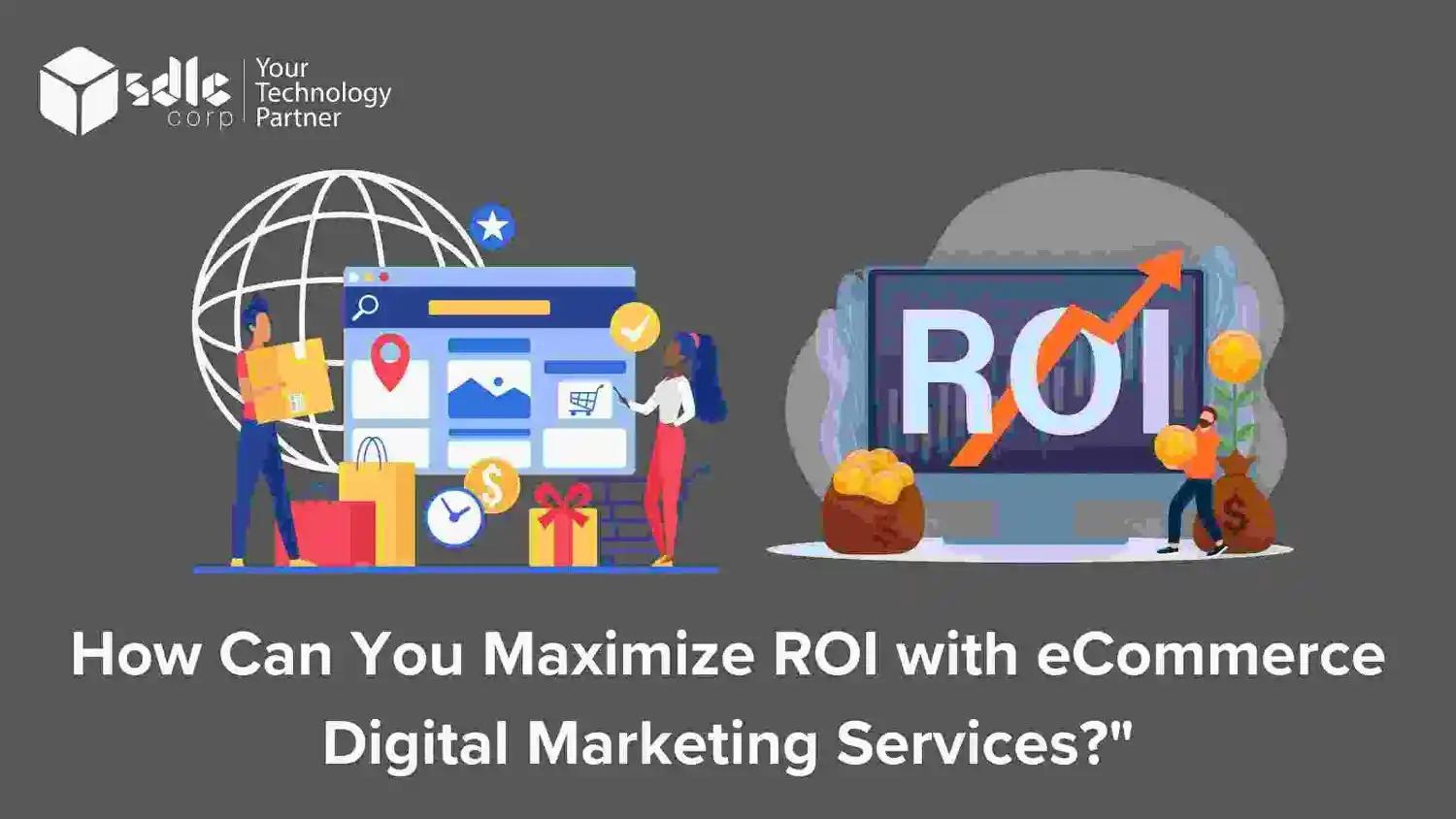
Ecommerce digital marketing ROI guide for improving online sales performance
Ecommerce Growth 7 min read

How to Maximize ROI with Ecommerce Digital Marketing Services

Read Guide
Ecommerce SEO tips guide for increasing online store traffic and sales
Ecommerce SEO 6 min read

Top Ecommerce SEO Tips for Growing Online Sales

Read Guide
Ecommerce industry trends guide showing how online retail is evolving
Ecommerce Trends 5 min read

How the Ecommerce Industry Is Evolving: Key Trends to Watch

Read Article

Client Feedback

What Clients Say About Our Ecommerce Marketplace Development

Verified client feedback shows how SDLC Corp supports ecommerce platforms, ordering workflows, admin panels, and scalable product development.

“They developed a web-based platform for users and an admin panel that lets me manage the entire business. Good work, SDLC Corp. Keep up the good work.”

Saumya CEO, Rang-e-Zindagi

“We are a multi-service aggregator with 30k+ customers a month. Our complete technology stack has been built and managed by SDLC Corp since our inception.”

Rahul Kumar Owner, Washingguns

“During the pandemic, I decided to build my online presence. First, I got my website developed by SDLC Corp, and now they are developing a mobile app for my business.”

Abhishek Chauhan Founder & CEO, Full House Bakery

FAQs

Ecommerce Marketplace Development FAQs

Clear answers about marketplace features, development cost, launch timeline, vendor workflows, payments, technology, and post-launch support.

What is the difference between an ecommerce store and a marketplace?

An ecommerce store usually sells products from one business to customers. A marketplace connects multiple vendors, sellers, or service providers with buyers on one platform. Marketplace development needs vendor onboarding, product approval, commission setup, split payments, payouts, order management, search, analytics, and admin controls.

What features should an ecommerce marketplace include?

A strong ecommerce marketplace should include vendor onboarding, seller dashboards, catalog management, product approval, buyer checkout, split payments, payout workflows, order management, search filters, reviews, tax settings, admin permissions, reporting, and security controls.

How much does ecommerce marketplace development cost?

Ecommerce marketplace development typically costs $25,000 to $45,000 for an MVP marketplace, $50,000 to $100,000 for a full-featured platform, and $100,000 to $200,000+ for an enterprise or B2B marketplace. The final cost depends on vendor workflows, payment logic, integrations, mobile apps, compliance needs, and platform complexity.

How long does it take to build an ecommerce marketplace?

An MVP marketplace usually takes 10 to 14 weeks. A full-featured marketplace with vendor dashboards, payment workflows, integrations, and advanced admin controls usually takes 16 to 24 weeks. Enterprise or complex B2B marketplaces can take 24 to 36 weeks depending on scope, integrations, compliance, and rollout requirements.

Should I choose a custom marketplace or a SaaS marketplace platform?

A SaaS marketplace platform can work for a quick launch with standard features. A custom marketplace is better when you need unique vendor workflows, custom checkout, specific payment logic, advanced integrations, stronger control over the codebase, and long-term scalability without recurring license restrictions.

Can you build both B2B and B2C marketplaces?

Yes. We build B2B, B2C, C2C, service, rental, product, and multi-vendor marketplaces. The platform can support different pricing rules, vendor approval flows, buyer groups, product catalogs, payment methods, commission models, and admin permissions based on your business model.

What payment and payout systems can you integrate?

We can integrate payment gateways, split payments, refunds, wallet flows, invoicing, tax tools, commission rules, and vendor payout workflows. The final payment setup depends on your operating country, marketplace model, payout rules, compliance needs, and preferred payment provider.

Can you build a headless marketplace with React or Next.js?

Yes. We can build a headless marketplace with a backend API and separate frontend experiences using React, Next.js, Vue, or other modern frontend frameworks. This approach helps improve flexibility, performance, and future scalability across web and mobile interfaces.

Can you migrate or rebuild an existing marketplace?

Yes. We can migrate or rebuild an existing marketplace from a SaaS platform, legacy system, custom codebase, or outdated ecommerce setup. The migration plan can include data transfer, vendor account mapping, product catalog cleanup, order history, payment setup, integrations, SEO URL handling, and staged launch support.

What support is available after marketplace launch?

Post-launch support can include bug fixes, performance monitoring, security updates, vendor onboarding assistance, feature improvements, infrastructure support, and ongoing optimization. Your main post-launch costs are usually hosting, maintenance, and optional support based on the platform size and roadmap.

Let’s Talk About Your Product

Get expert guidance on scope, architecture, timelines, and delivery approach so you can move forward with confidence.

What happens next?