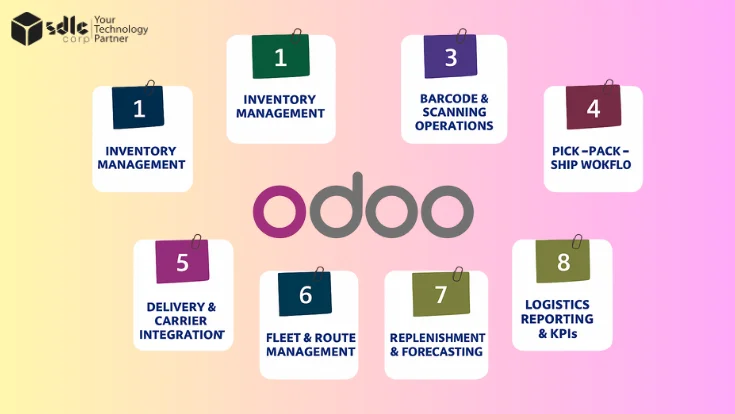
Introduction
In the modern landscape of global commerce, the ability to manage complex supply chains efficiently determines market leadership. Companies are no longer just moving goods; they are managing vast networks of data, assets, and timelines. Consequently, fragmented software solutions often lead to data silos and operational bottlenecks. To combat this, forward-thinking enterprises are adopting Odoo for Logistics. This comprehensive ERP solution integrates every facet of the supply chain from warehousing to final delivery into a unified platform, ensuring that businesses can scale rapidly while maintaining precision and cost control. For organizations seeking robust implementation and tailored enterprise solutions, partnering with an experienced Odoo development company ensures seamless deployment and long-term operational excellence.
1. Optimizing Warehouse Management with Odoo for Logistics

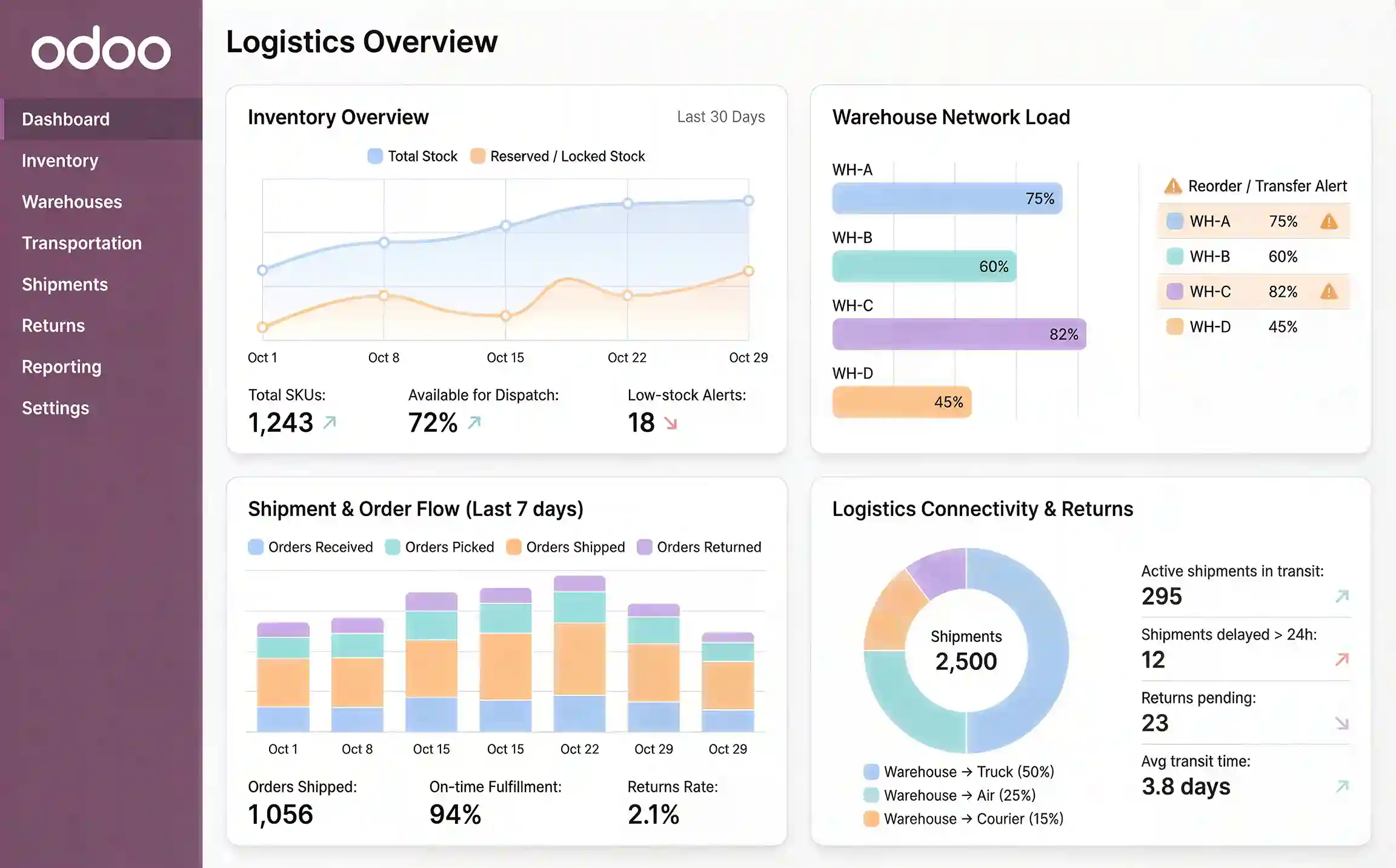
The heart of any logistics operation is the warehouse. Odoo for Logistics revolutionizes inventory management by utilizing a unique double-entry stock system. This approach allows for total traceability of every stock move, not just as a quantity change, but as a transaction between locations.
Read More : Construction Project Tackling with Odoo CRM
- Multi-Location Management: Control stock across various distinct physical locations or virtual zones effortlessly.
- Cross-Docking: Minimize storage costs by unloading materials from incoming trucks and loading them directly into outbound vehicles.
- Smart Put-away Strategies: Automatically suggest the best storage locations based on product characteristics and turnover rates.
Furthermore, this granular level of control significantly reduces stock discrepancies. By maintaining accurate real-time data, warehouse managers can eliminate the need for complete shutdowns during physical inventory counts.
2. Mastering Fleet Operations via Odoo for Logistics

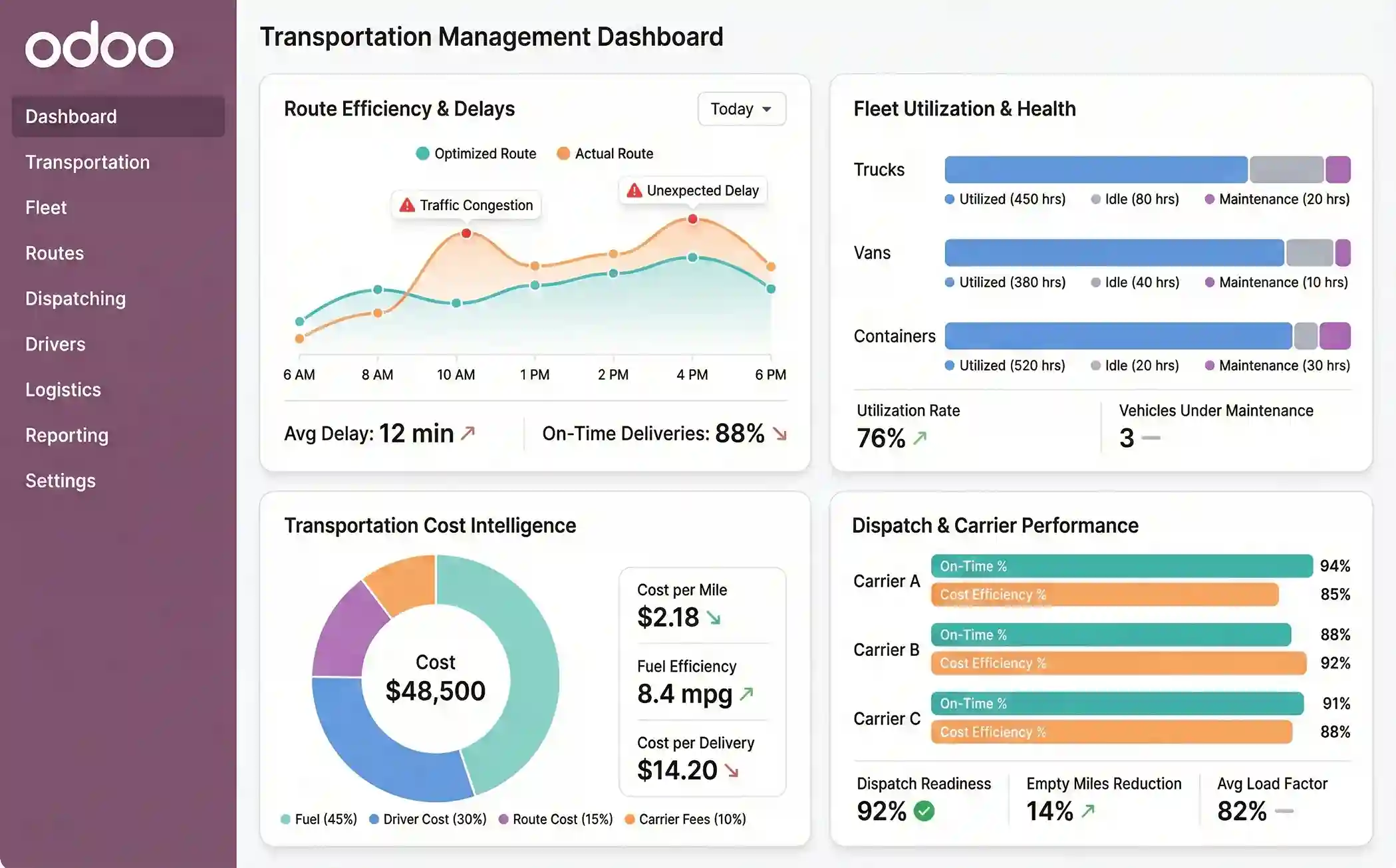
Transportation costs often represent the largest expense in supply chain management. Odoo for Logistics addresses this by providing a dedicated fleet module that acts as a central hub for all vehicle-related data. From fuel logs to leasing contracts, every detail is tracked meticulously.
- Fuel Consumption Monitoring: Identify high-consuming vehicles or inefficient driving patterns to cut costs.
- Contract Management: Receive automated alerts for lease expirations and insurance renewals to avoid penalties.
- Vehicle Services: Log all repairs and schedule preventative maintenance to maximize fleet uptime.
In addition, the integration with accounting ensures that all fleet-related expenses are automatically reflected in the company’s financial reports, providing a clear picture of the total cost of ownership.
3. Orchestrating Seamless Procurement and Supply Chains

A robust logistics strategy requires a steady flow of materials. The procurement capabilities within Odoo for Logistics automate the purchasing process, ensuring that stock levels never dip below critical thresholds. This module connects directly with sales and inventory to forecast needs accurately.
Explore More : How To Manage Assets Effectively With Odoo ERP
- Automated RFQs: Trigger Requests for Quotation to established vendors automatically based on inventory rules.
- Vendor Performance Tracking: Evaluate suppliers based on delivery delays and negotiated discounts.
- Blanket Orders: Manage long-term agreements to secure stable pricing and supply continuity.
Consequently, procurement teams can shift their focus from administrative data entry to strategic vendor negotiation. This proactive management mitigates the risks of supply chain disruptions.
4. Enhancing Order Fulfillment and Customer Delivery

Speed and accuracy in delivery are paramount for customer satisfaction. Odoo for Logistics streamlines the order-to-cash cycle, ensuring that once a sale is made, the logistics engine immediately begins processing.
- Automatic Delivery Scheduling: The system instantly reserves stock and schedules the shipment upon order confirmation.
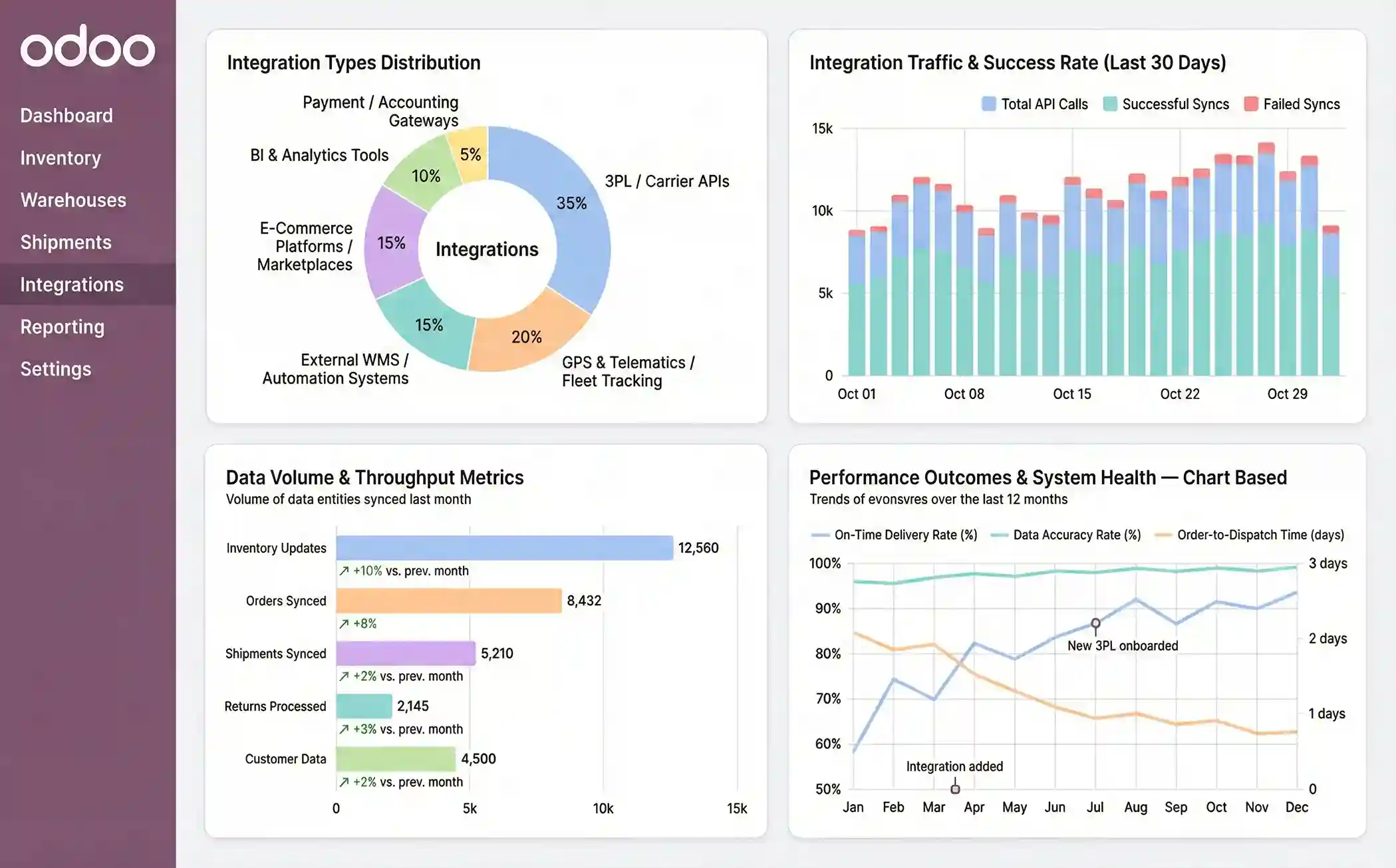
- Shipping Connector Integration: seamless API connections with carriers like FedEx, UPS, and DHL allow for one-click label printing.
- Customer Communication: Automated emails keep clients informed at every stage, from packing to dispatch.
Moreover, this integration ensures that the sales team always has visibility into stock availability, preventing the sale of out-of-stock items and preserving client trust.
5. Harnessing IoT and Barcode Tech in Odoo for Logistics

Manual data entry is prone to human error, which can be disastrous in logistics. Odoo for Logistics supports seamless integration with hardware peripherals, including barcode scanners, scales, and IoT devices.
- Mobile Operations: Warehouse staff can process receipts, picking, and packing directly from mobile devices or rugged scanners.
- IoT Box Integration: Connect industrial scales and cameras directly to the database for automated weight verification and quality checks.
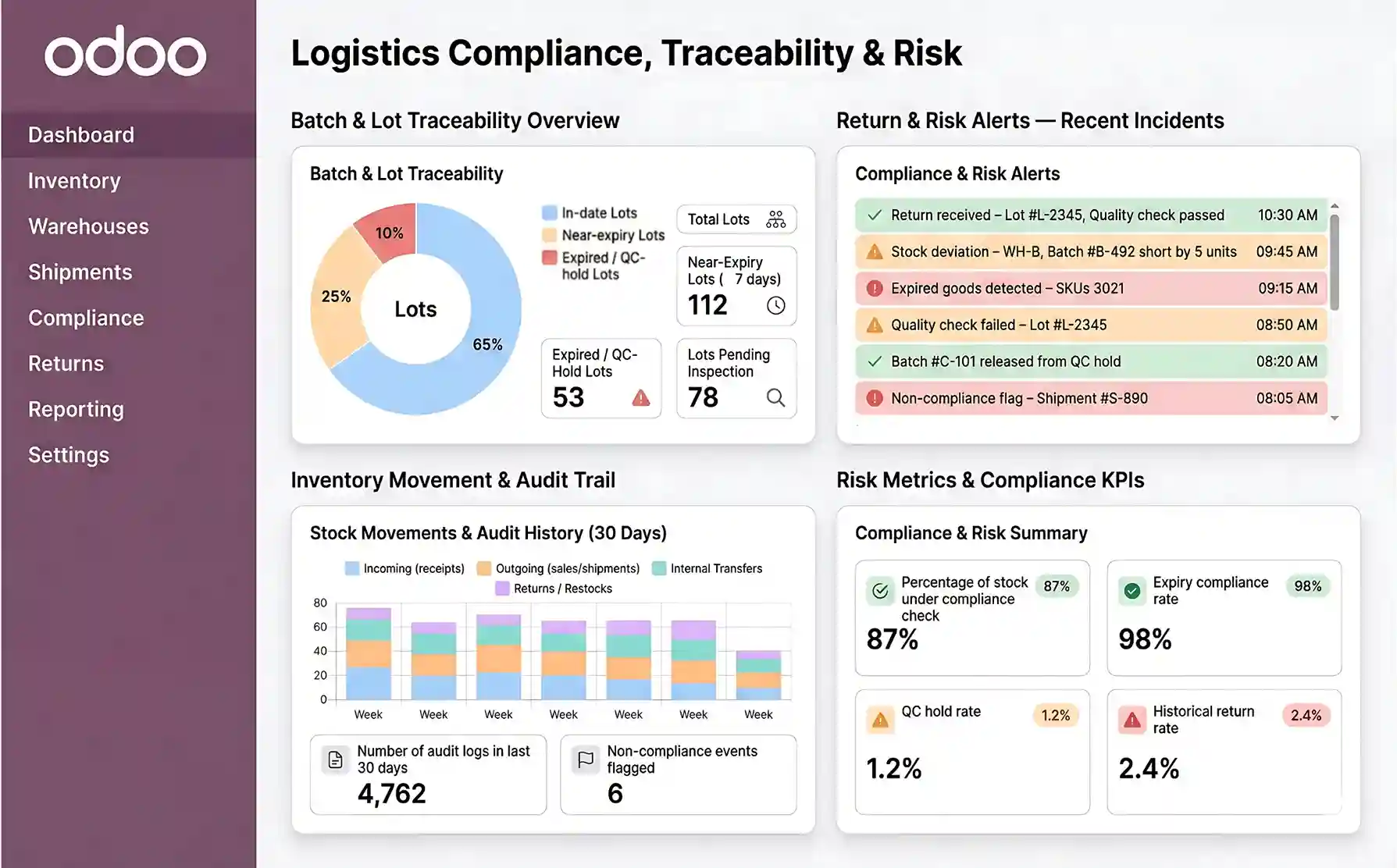
- Batch and Serial Tracking: Scan products to instantly retrieve their entire history and expiration dates.
By adopting these technologies, businesses can achieve near-perfect inventory accuracy. The immediate synchronization of data means the back office sees exactly what is happening on the warehouse floor in real-time.
6. Empowering Decisions with Advanced Logistics Analytics

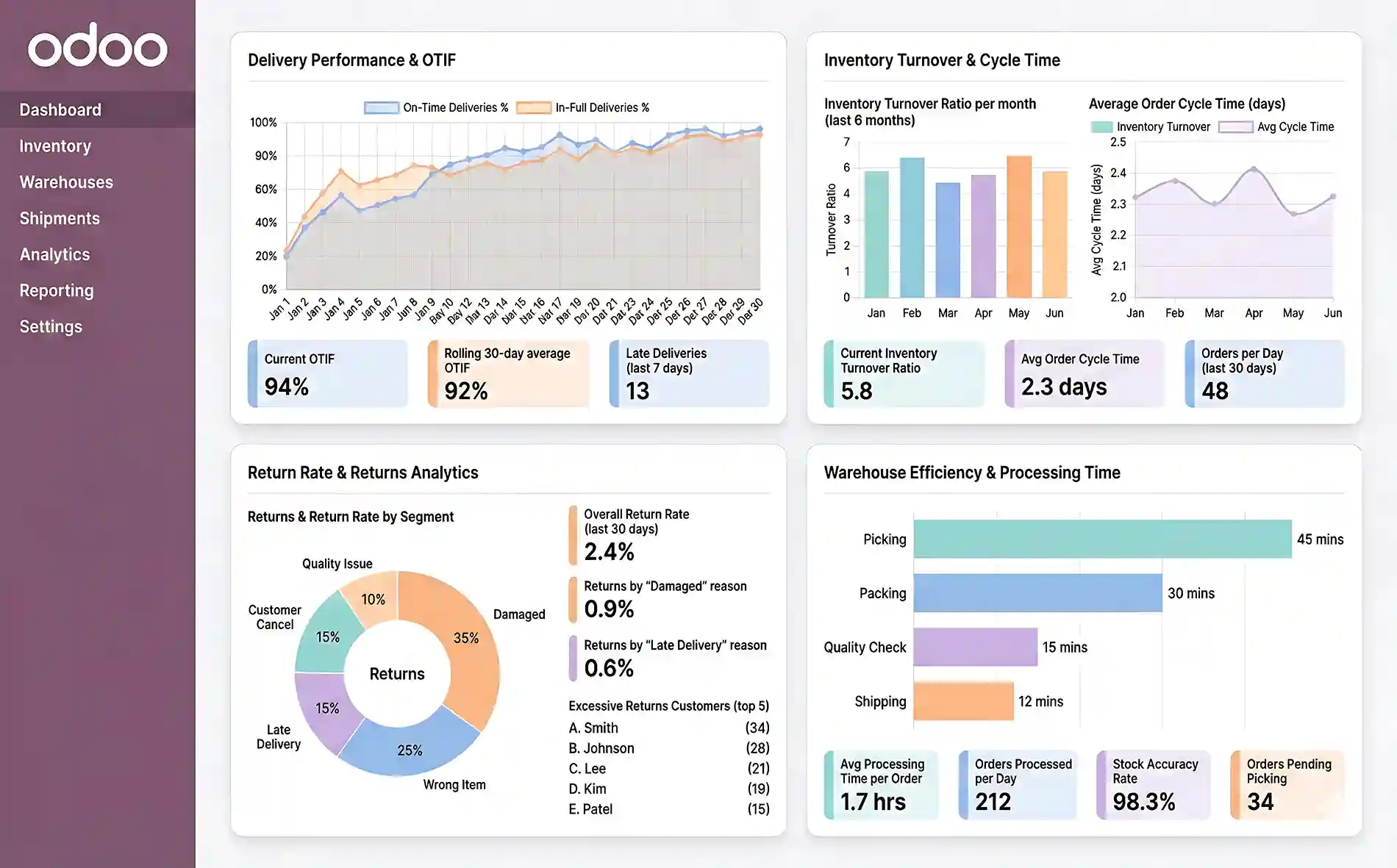
Data without analysis is merely noise. Odoo for Logistics transforms raw operational data into actionable intelligence through its dynamic reporting engine. Leaders can customize dashboards to monitor the KPIs that matter most to their specific goals.
Know About : How Can Odoo ERP Streamline Warehouse Operations
- Inventory Turnover Reports: Identify slow-moving stock to free up capital and storage space.
- Forecasted Inventory: Use historical data to predict future stock needs and avoid shortages.
- Delivery Analysis: Heat maps and trend lines reveal bottlenecks in the shipping process.
Ultimately, this data-driven approach allows for continuous improvement. Managers can pinpoint inefficiencies, test solutions, and measure results with precision.
7. Facilitating Global Scalability and Multi-Company Growth

As logistics companies expand, they often face the challenge of managing multiple entities. Odoo for Logistics is inherently designed for scalability, supporting multi-company, multi-currency, and multi-language operations within a single database.
- Inter-Company Rules: Automate transactions between different branches or subsidiaries seamlessly.
- Global Compliance: Adapt to different tax rules and accounting standards across various countries.
- Unified View: Executives gain a consolidated view of global operations while local managers access only what they need.
Therefore, expanding into new territories becomes a matter of configuration rather than a costly software overhaul. The system grows alongside the business, supporting expansion rather than hindering it.
Conclusion
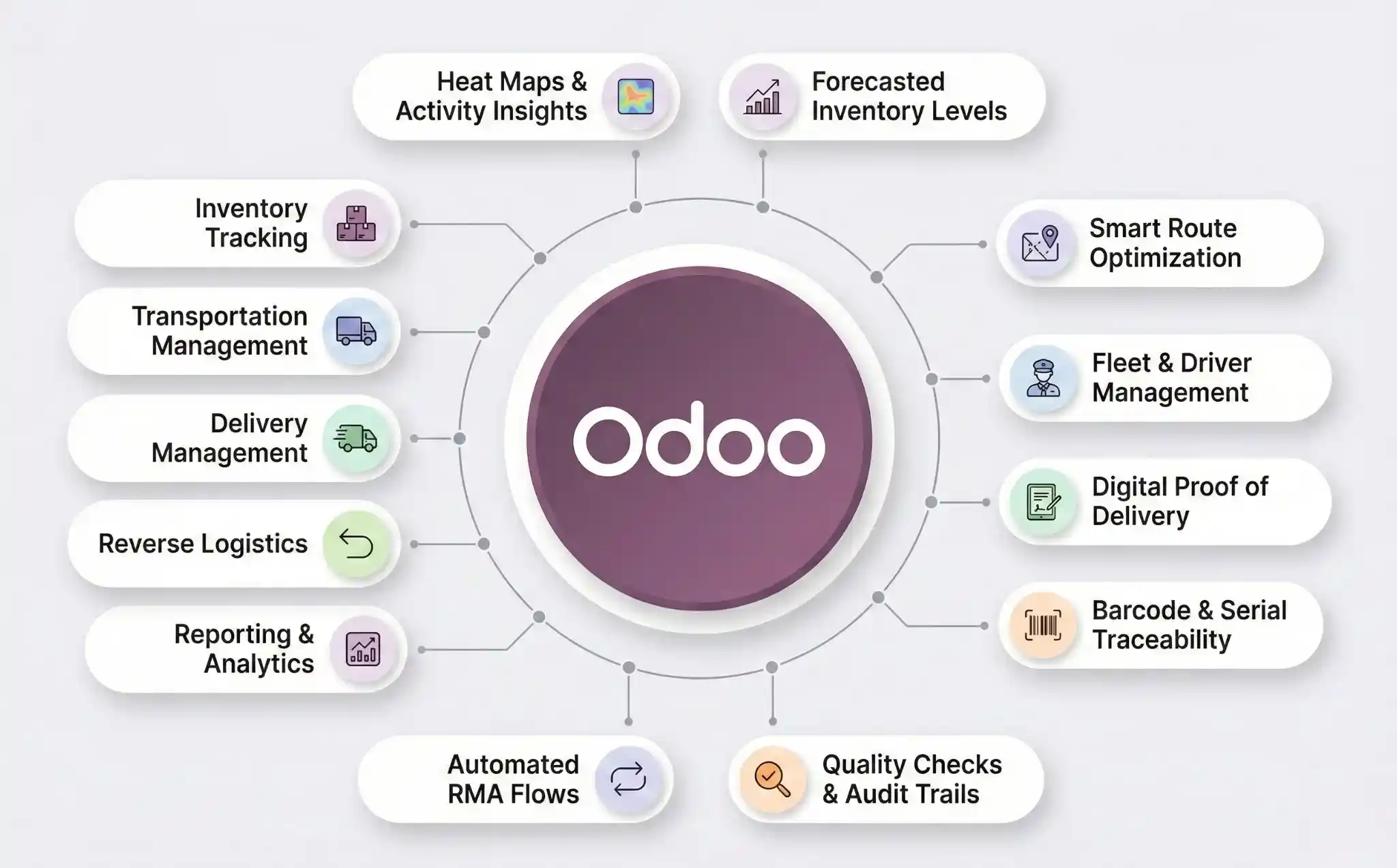
In conclusion, the implementation of Odoo for Logistics serves as a catalyst for modernization. By consolidating warehousing, fleet management, procurement, fulfillment, and analytics into one ecosystem, organizations can eliminate inefficiencies and respond faster to market demands. In an industry where margins are tight and speed is critical, the strategic advantage provided by Odoo is undeniable. For enterprises seeking guided implementation and long-term optimization, partnering with expert Odoo consulting services ensures seamless alignment, smarter workflows, and measurable improvements. Ultimately, Odoo transforms logistics from a cost center into a powerful competitive asset.
c
1. How does Odoo for Logistics handle perishable goods?
Odoo includes robust FEFO (First Expired, First Out) removal strategies. The system tracks expiration dates and batch numbers, ensuring that goods closest to their expiration date are picked and shipped first to minimize waste.
2. Is the fleet module integrated with GPS tracking hardware?
Yes, Odoo for Logistics can integrate with various third-party GPS tracking providers. This allows for real-time location data to be displayed directly within the fleet dashboard for better route monitoring.
3. Can I manage drop-shipping with Odoo?
Absolutely. Odoo supports automated drop-shipping routes. When a customer orders a product, the system can automatically generate a purchase order to your vendor, instructing them to ship directly to the customer, bypassing your warehouse entirely.
4. Is Odoo scalable for large logistics enterprises?
Yes, Odoo is highly scalable. Its modular architecture allows it to handle high volumes of transactions and data, making it suitable for everything from small distributors to large, multi-national logistics corporations.
5. How customizable are the logistics reports?
The reporting in Odoo is extremely flexible. Users can create custom filters, group data by various categories (date, product, partner), and visualize the results in pivot tables, graphs, or lists without needing any coding knowledge.