Getting a gambling licence in Sweden means applying to Spelinspektionen — the Swedish Gambling Authority — under the Gambling Act (2018:1138) that re-regulated Sweden's gambling market in January 2019. Sweden operates one of Europe's strictest national gambling frameworks: an 18% GGR tax, mandatory integration with Spelpaus.se (the national self-exclusion register), deposit limits enforced as hard caps, tight advertising restrictions including a ban on bonus offers to Swedish players, and active enforcement against unlicensed operators through payment blocking and IP restrictions. For operators who can meet these standards, Sweden is a well-regulated, high-trust market with strong player spend and near-universal broadband penetration.
Part of our gambling licence cluster: This is the Sweden-specific guide. For the full European jurisdiction comparison, see our Europe gambling licence guide. For a broader overview of all major jurisdictions, see our gambling licence overview guide. For sports betting law context, see our Sweden sports betting regulations guide.
Sweden gambling legal framework — the Gambling Act 2018:1138
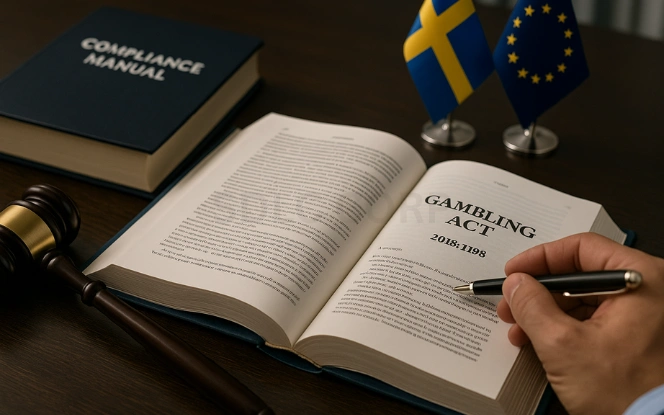
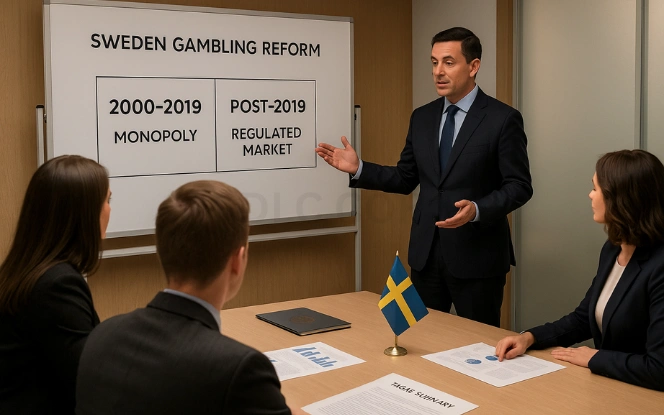
Sweden's current gambling framework replaced a state monopoly model with a licensed competitive market in January 2019. The Gambling Act (Spellagen 2018:1138) is the primary legislation governing all gambling activities in Sweden.
- Why Sweden re-regulated: Before 2019, most online gambling consumed by Swedish players was provided by operators licensed in Malta, Gibraltar, or other offshore jurisdictions — outside Swedish consumer protection standards and without contributing Swedish tax. The re-regulation brought these operators inside a Swedish framework, imposing Swedish consumer protection standards and channelling revenue into the regulated market.
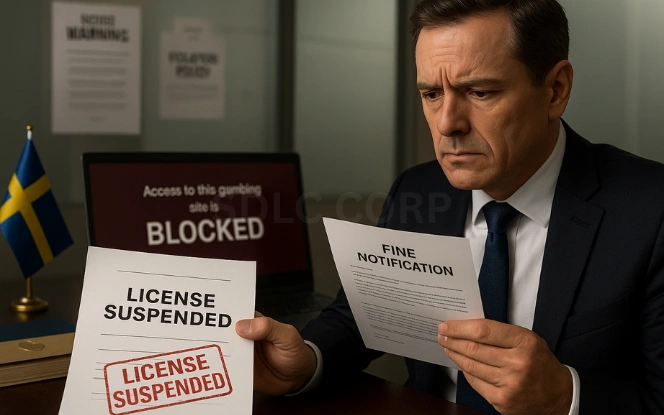
- Channelisation and enforcement: Spelinspektionen monitors unlicensed operators actively. Payment service providers are obligated to block transactions to unlicensed gambling operators identified by Spelinspektionen. Swedish banks and payment processors cooperate with these blocking orders. ISP-level blocking has also been used. Operators targeting Swedish players without a Swedish licence face both payment blocking and significant reputational risk.
- Jurisdiction: Any operator — regardless of where incorporated — that actively markets to or acquires players in Sweden requires a Swedish gambling licence. The test is the market served, not the company's location.
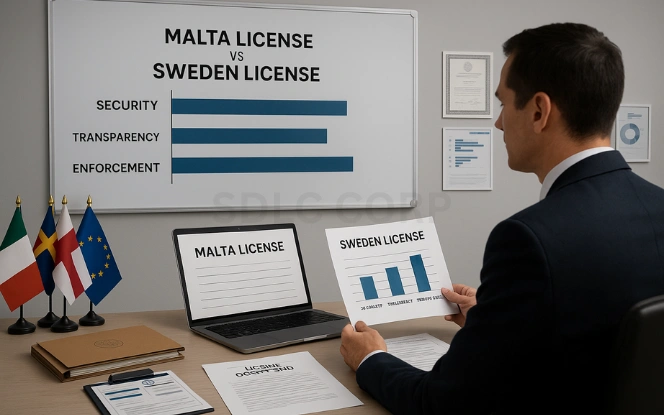
- Post-licence obligations: Sweden's licence conditions are substantially more demanding than most EU national licences — the combination of the bonus ban, Spelpaus integration, hard deposit caps, and advertising restrictions creates a higher operational compliance burden than Malta MGA, for example.
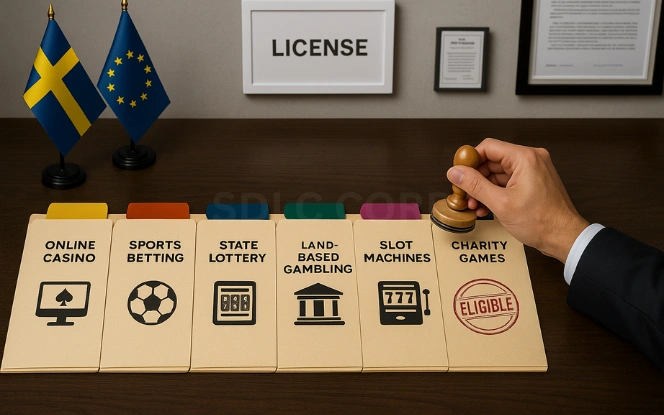
Types of Swedish gambling licences
Key requirements for a Spelinspektionen gambling licence
Corporate structure
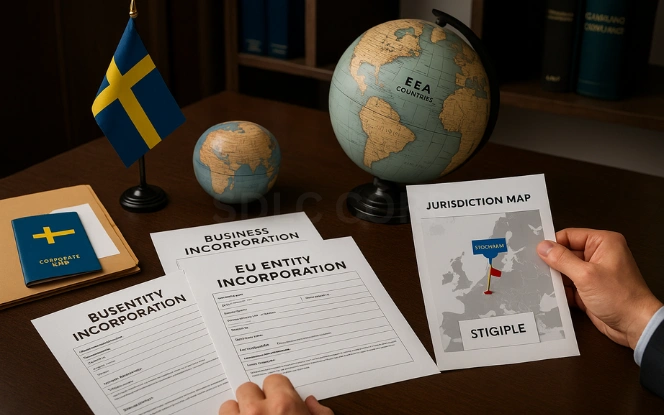
Applicants must be registered within the EU, EEA, or in a country with which Sweden has adequate information-sharing agreements. A Swedish branch is not strictly required, but the operating entity must be structured so that Swedish authorities can access records and enforce compliance. In practice, most successful applicants use an EU-incorporated entity (Malta S.A., UK Ltd, or equivalent).
Spelpaus.se — mandatory self-exclusion integration
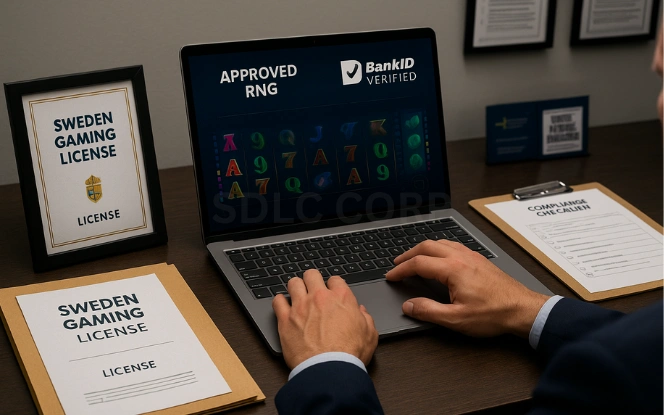
Spelpaus.se is Sweden's national self-exclusion register, operated by Spelinspektionen. Integration is a hard licence condition — operators must check all new account registrations against Spelpaus in real time before activating the account. Players registered on Spelpaus must be blocked from creating accounts or depositing. Periodic re-checks of existing accounts are required. Unlike GAMSTOP (UK) which is operated by an industry body, Spelpaus is operated directly by the regulator — non-compliance is treated as a direct regulatory breach, not an industry self-regulatory failure.
Deposit limit — hard cap
Swedish gambling law imposes a hard weekly deposit cap — operators must enforce this as a hard technical limit, not a soft advisory. Players cannot increase the limit above the statutory maximum. This is one of Sweden's most distinctive regulatory features and affects product design: bonus structures built around high-volume depositors do not function in the Swedish market.
Bonus restrictions
Bonus offers to Swedish players are severely restricted. Welcome bonuses (free spins, matched deposits) are prohibited under Spelinspektionen rules for online casino. This is one of the most significant operational differences between Sweden and other EU markets — a standard European casino acquisition funnel cannot be applied to Swedish player acquisition.
Advertising restrictions
Swedish gambling advertising must be moderate (måttfull) — not aggressive, not targeted at vulnerable persons, and must include mandatory responsible gambling messaging. Celebrity endorsements, urgency-based messaging, and advertising that appeals to minors are all prohibited. Spelinspektionen actively enforces advertising standards with substantial fines — several major operators have been sanctioned for non-compliant Swedish advertising.
How to get a Sweden gambling licence — step by step
Spelinspektionen application fees and ongoing costs
| Cost item | Amount | Notes |
|---|---|---|
| Application fee — commercial online gambling | SEK 300,000 (~€26,000) | Non-refundable application fee payable at submission. Confirms Spelinspektionen will process the application. |
| Annual supervision fee | SEK 150,000–500,000+/yr | Annual fee based on GGR scale. Larger operators pay higher supervision fees. Paid annually throughout the 5-year licence term. |
| GGR tax (gambling tax) | 18% of GGR | Paid to Skatteverket (Swedish Tax Agency) on gross gaming revenue from Swedish players. Remitted monthly. The dominant ongoing financial obligation. |
| RNG and platform certification | SEK 100,000–300,000 | Testing by an approved test laboratory (BMM, eCOGRA, GLI, NMi). Required before licence issuance. Annual re-testing for material platform changes. |
| Legal advisory (Year 1) | SEK 200,000–600,000 | Swedish gaming attorney for application preparation, Swedish translation requirements, ongoing compliance advisory. Higher than other markets due to language requirements. |
| Spelpaus integration | SEK 50,000–150,000 | Technical integration with Spelinspektionen's self-exclusion API. Ongoing API fees and maintenance. |
| Total Year 1 all-in | SEK 800,000–2,000,000+ | ~€70,000–€175,000. Excludes GGR tax which depends on revenue scale. |
18% GGR tax in context: Sweden's 18% GGR tax is lower than the UK (21% RGD) but higher than Malta (5%), Curaçao (0%), and Panama (0%). For a Swedish-licensed operator generating €10M GGR annually, the gambling tax alone is €1.8M — before supervision fees, licensing costs, and platform operating expenses. Model unit economics carefully before committing to the Swedish market, particularly given the bonus ban which limits player acquisition tools available in other markets.
Ongoing compliance for Sweden-licensed gambling operators
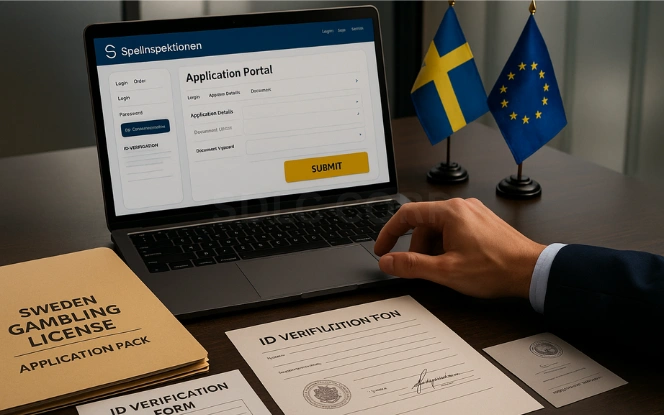
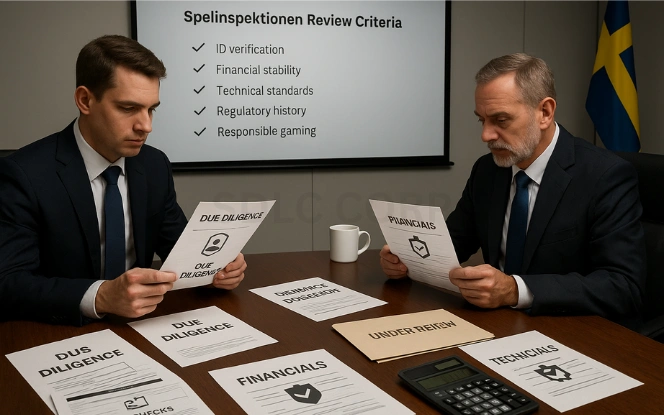
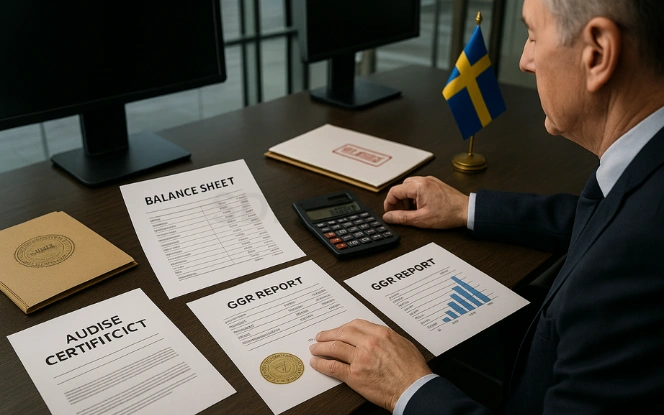
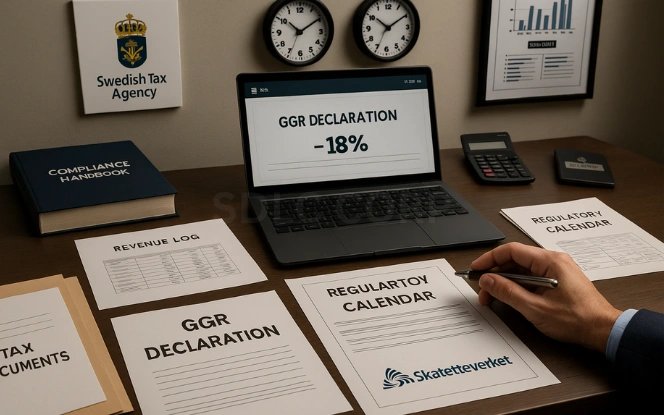
- Monthly GGR tax reporting: Tax returns filed with Skatteverket monthly based on audited gross gaming revenue from Swedish players. Skatteverket and Spelinspektionen share data — underdeclared GGR is detectable.
- Spelpaus ongoing compliance: Re-check all existing Swedish player accounts against the Spelpaus register periodically. Process self-exclusion removals correctly (players can de-register from Spelpaus after a minimum exclusion period). Maintain audit logs of all Spelpaus checks for regulatory inspection.
- AML monitoring: Ongoing transaction monitoring, suspicious activity reporting, and customer due diligence under Swedish AML law (Lag om åtgärder mot penningtvätt och finansiering av terrorism). Swedish AML obligations follow EU AML directive standards.
- Advertising compliance: All Swedish-facing advertising must be pre-reviewed against the måttfull standard. Spelinspektionen's market surveillance team monitors online and broadcast advertising actively. Fines for non-compliant advertising start at SEK 5 million and increase with severity and GGR scale.
- Annual licence renewal preparation: Spelinspektionen conducts compliance assessments before 5-year renewal. Operators with compliance incidents during the term face more intensive renewal scrutiny. Maintain documentation of all compliance activities throughout the licence term.
- Real-time technical monitoring: Platforms must support Spelinspektionen's real-time access to gambling data, transaction logs, and player activity information. This is a technical licence condition requiring an ongoing secure data connection to Spelinspektionen's systems.
Penalties for non-compliance with Swedish gambling law
- Operating without a licence: Criminal offence under the Gambling Act. Payment blocking by Swedish banks and payment processors — Spelinspektionen issues blocking orders to all PSPs operating in Sweden. ISP blocking. Reputational damage in the Swedish market. Permanent ineligibility for future licensing.
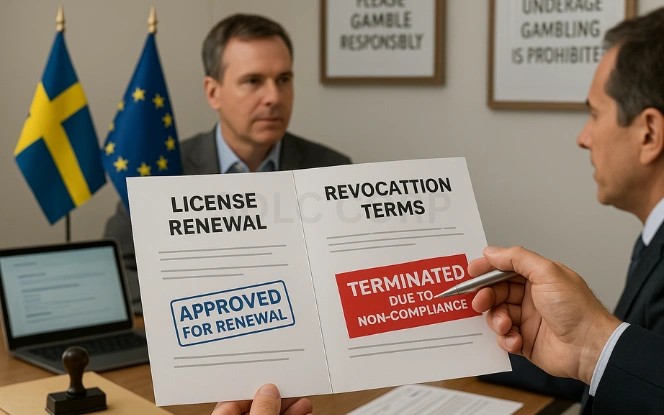
- Licence conditions breach: Spelinspektionen can impose fines of up to 10% of annual turnover for licence condition breaches. Repeated or serious breaches can result in licence revocation. Several operators have received multi-million SEK fines for Spelpaus non-compliance, advertising violations, and AML failures.
- Advertising violations: Fines starting at SEK 5 million, increasing based on GGR and severity. Sweden's advertising enforcement is active — Spelinspektionen regularly publishes enforcement notices naming operators and the violation.
- Tax non-compliance: Skatteverket applies standard Swedish tax penalty framework — interest, surcharges, and criminal prosecution for deliberate tax evasion.
Recent developments in Swedish gambling regulation
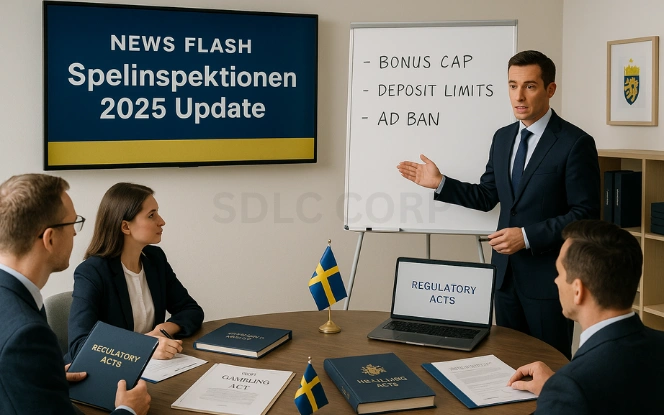
- Tightening bonus restrictions: The prohibition on bonus offers has been maintained and Spelinspektionen has clarified its interpretation — loyalty programmes, VIP schemes, and indirect bonus structures that functionally operate as bonuses are caught by the restriction, not just explicit welcome bonuses.
- Expanded monitoring powers: Spelinspektionen's surveillance capabilities have expanded — the regulator monitors unlicensed operators' payment flows more actively and issues payment blocking orders more rapidly than in the early years of the re-regulated market.
- Consumer protection review: Sweden's government has reviewed whether the deposit cap and self-exclusion framework are sufficiently effective and has signalled potential tightening of requirements. Operators should build compliance architecture that can accommodate stricter requirements without full platform rebuilds.
- GDPR enforcement: The Swedish Data Protection Authority (IMY) has increased scrutiny of gambling operators' player data handling — cookie consent, data retention periods, and marketing consent are active enforcement areas.
Why operators choose Sweden
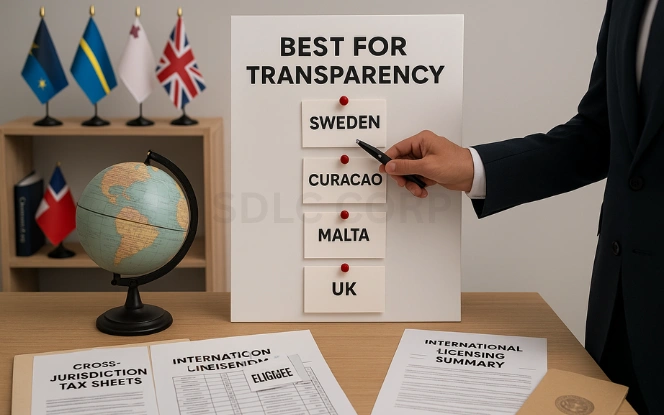
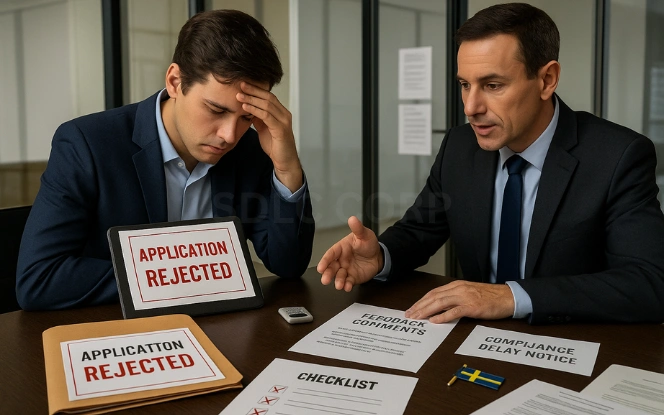
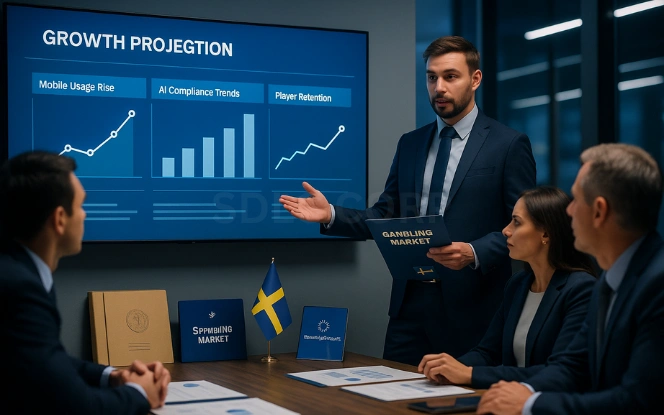
Despite its demanding compliance framework, Sweden offers genuine commercial value for operators who can meet the requirements: a high-income population with strong internet penetration and established online gambling habits, a well-regulated market with strong player trust in licensed operators (Swedish players actively check the Spelinspektionen authorised list), and a licence that signals credibility to payment processors, affiliates, and B2B partners across Scandinavia.
FAQ — Sweden gambling licence (Spelinspektionen)
How do I get a gambling licence in Sweden?
Apply to Spelinspektionen (the Swedish Gambling Authority) through their online licensing portal under the Gambling Act 2018:1138. Choose the correct category (commercial online gambling, betting, or both), prepare complete documentation in Swedish or with certified translations, pay the SEK 300,000 application fee, and pass Spelinspektionen's review of business, financial, and technical compliance. Timeline: 3–6 months for well-prepared applications. For the full European jurisdiction comparison, see our Europe gambling licence guide.
How much does a Sweden gambling licence cost?
Application fee: SEK 300,000 (~€26,000). Annual supervision fee: SEK 150,000–500,000+. Total Year 1 all-in including legal advisory, RNG certification, Spelpaus integration, and compliance setup: approximately SEK 800,000–2,000,000+ (~€70,000–€175,000). The dominant ongoing cost is the 18% GGR tax — for an operator generating €10M GGR from Swedish players, that is €1.8M in gambling tax annually, paid monthly to Skatteverket.
What is Spelpaus.se and is integration mandatory?
Spelpaus.se is Sweden's national self-exclusion register, operated directly by Spelinspektionen. Integration is a hard licence condition — operators must check all new account registrations against Spelpaus in real time and block any matched accounts. Unlike GAMSTOP (UK), Spelpaus is operated by the regulator itself, making non-compliance a direct regulatory breach. Periodic re-checks of existing accounts are required. Spelpaus integration must be tested and confirmed live before the licence goes into effect.
Are bonuses allowed under a Sweden gambling licence?
No — bonus offers to Swedish players are prohibited under Spelinspektionen's rules for commercial online gambling. Welcome bonuses, free spins, matched deposit offers, and any promotional structure that functions as a bonus are not permitted. This is one of Sweden's most significant operational differences from other EU markets. Player acquisition strategies that rely on bonus-led funnels cannot be applied to Swedish players — operators must compete on product quality, odds/RTP, and brand trust instead.
What happens if I serve Swedish players without a Swedish licence?
Operating gambling services to Swedish players without a Spelinspektionen licence is a criminal offence under the Gambling Act. Practical consequences include: payment blocking orders issued to all Swedish PSPs (stopping deposits and withdrawals), potential ISP blocking, and permanent ineligibility for future Swedish licensing. Spelinspektionen publishes a list of unlicensed operators and coordinates with Swedish financial institutions to enforce payment blocking. The channelisation rate into the licensed market is high — Swedish players are increasingly aware of the licensed list.