


Volatility is the “feel” of a casino game how often payouts happen and how big they are. Some slots pay small wins frequently, while others stay quiet longer and hit with bigger wins. This swing pattern (variance) controls how fast your balance moves in online and land-based play. When you combine volatility with return to player (RTP) and house edge, you can choose slots with intent steady play or bigger-hit potential without pretending you can beat the math.
Volatility in Casino Games Explained
Volatility measures risk vs reward in a game’s payout pattern. It mainly tells you:
Payout frequency: how often wins happen
Average win size: how big wins usually are
Volatility levels usually feel like this:
High volatility: fewer wins, bigger hits when they land
Low volatility: more frequent wins, smaller payouts
Medium volatility: balanced payout frequency and win size
That’s why two players can play similar-looking slots and walk away with completely different sessions. Volatility controls dry spells, streaks, and how intense the swings feel.
Read More: online slots vs traditional slot machines
The Core Game Mechanics Behind Volatility
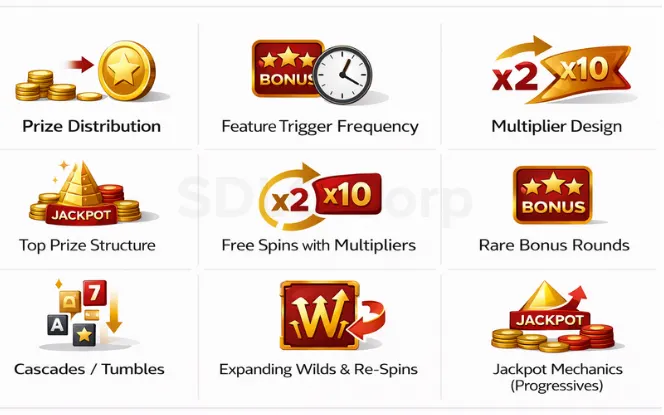
- Prize distribution: Is value spread across many small wins, or packed into rare big outcomes?
- Feature trigger frequency: How often do bonus rounds and free spins activate?
- Multiplier design: Are multipliers common and small, or rare and massive?
- Top prize structure: Does a large chunk of RTP sit behind a few high-end hits?
Slot machine features that often increase volatility
Many slot machine features make games exciting because they increase upside but they usually raise volatility too:
Free spins with multipliers increase potential payouts but do not trigger often.
Bonus rounds with rare triggers offer high rewards but appear infrequently.
Cascades or tumbles with multipliers can build large wins in bursts rather than steady payouts.
Expanding wilds and re-spins usually depend on uncommon events, making wins less frequent.
Jackpot mechanics, especially progressives, trade regular payouts for the chance of a very large win.
Volatility vs Return to Player (RTP) vs House Edge
Volatility, RTP, and house edge describe different sides of a game. RTP and house edge show the long-term math, while volatility explains how wins feel during a single session.
| Term | What it shows | Short-term effect | Long-term effect |
|---|---|---|---|
| RTP | How much a game pays back over time | No | Yes |
| House Edge | How much the casino keeps over time | No | Yes |
| Volatility | How wins are spread out | Yes | No |
Risk vs Reward: Why Players Chase Big Wins

Volatility is the practical engine behind risk vs reward:
Higher volatility increases risk: longer losing stretches and fewer payout events
Higher volatility increases reward: a higher chance of a standout payout when a hit lands
Jackpot-heavy games raise the ceiling: bigger potential wins usually come with lower hit frequency
Progressive jackpot games are typically more volatile: more value sits behind rare, high-end outcomes
Volatility Levels in Slot Machines
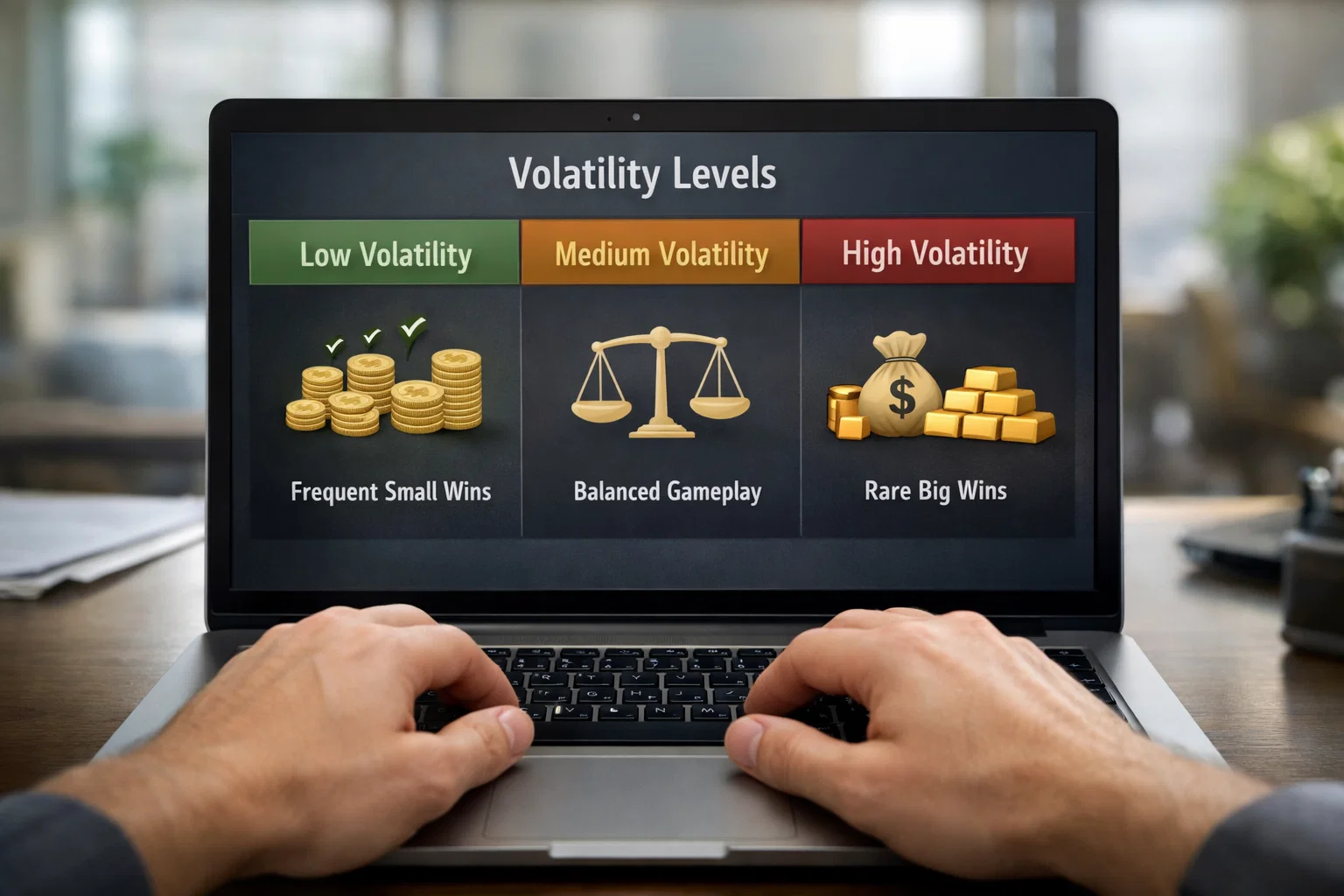
| Volatility Level | How Wins Happen | Best For | What to Keep in Mind |
|---|---|---|---|
| High | Rare wins, very large payouts | Players chasing big jackpots | Long dry spells and high risk |
| Medium | Mix of small and mid-sized wins | Most players | Easier to manage bankroll |
| Low | Frequent wins, smaller payouts | Longer, relaxed sessions | Frequent wins can still lose money |
What Impacts Slot Payouts in Real Play
Volatility, like RTP, is a long-run measure. It’s calculated across thousands (often millions) of spins, not a short session. That’s why short play can mislead you about slot payouts and overall casino payouts a game can feel unusually generous or unusually harsh just due to variance.
In a single session:
Low volatility slots can still run cold in short sessions due to normal variance.
High volatility slots can hit early and feel hot even when long-run odds haven’t changed.
Bankroll Management by Volatility
Good bankroll management is the difference between “I had a plan” and “I chased losses.” It won’t change odds, but it controls damage and keeps play intentional.
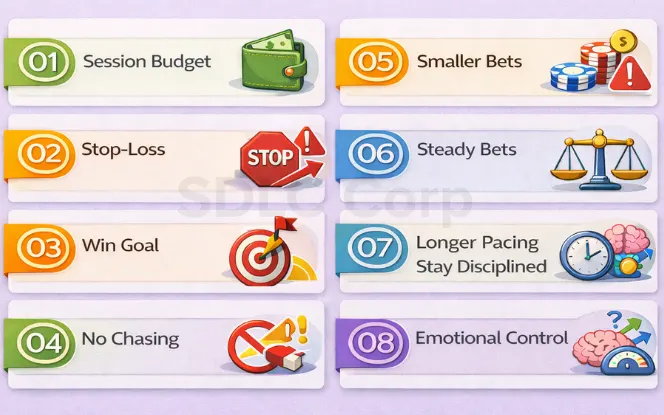
A simple structure that works across casino games:
- Set a session budget (money you can lose)
- Set a stop-loss (quit point)
- Set a win goal (also a quit point)
- Never increase stakes to recover losses
Then adapt based on volatility:
- High volatility: smaller base bet, strict stop-loss, accept long gaps
- Medium volatility: steady bets, session blocks, avoid emotional switching
- Low volatility: longer pacing, avoid mistaking frequent wins for profit
Slots Strategies That Match Volatility

Most “winning slot systems” are marketing. Real slots strategies are planning frameworks that align your play with the game’s volatility.
Strategy 1: Play Longer (low volatility)
- Pick low volatility titles
- Use a stable bet size
- Focus on time-on-device and steady pacing
- Avoid chasing bonus triggers with sudden stake jumps
Strategy 2: Balanced Excitement (medium volatility)
- Pick medium volatility
- Divide bankroll into session blocks
- Stop at a win target or time limit
- Switch games only for a clear reason (not frustration)
Strategy 3: Chase Upside (high volatility)
- Pick high volatility or jackpot-driven games
- Flat bet to reduce emotional spirals
- Predetermine your spin/time cap
- Accept that many sessions won’t deliver big hits
Gambling and Psychology: Why Volatility Feels So Strong

Volatility amplifies emotion. Frequent small wins create constant reinforcement. Rare big wins create intense peaks that stick in memory.
This is where gambling and psychology matters, because volatility interacts with cognitive biases, like:
- “It must hit soon” thinking (gambler’s fallacy)
- Chasing losses after a cold streak
- Overvaluing near-misses
- Remembering big wins more than the full session cost
Volatility Beyond Slots: Table Games Online
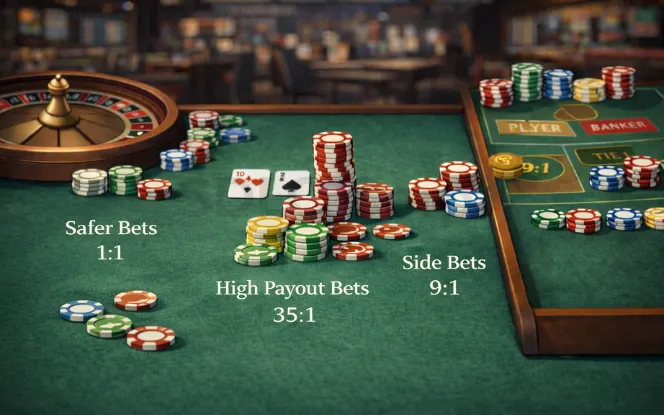
Volatility isn’t only for slots. Many table games online also swing differently based on how the game is built and how you bet:
Rules: small rule changes can shift how often wins land
Bet types: safer bets pay more steadily; high-payout bets hit less often
Payout structure: bigger payout ratios usually mean lower hit frequency
Side bets: often increase volatility because wins are rarer but larger
Session feel: some setups create steady results, others create long dry spells with occasional spikes

Conclusion
Volatility shapes how a game feels steady small wins or rare big spikes while RTP and house edge describe the long-run math. Choose volatility based on your goal and use basic bankroll management to avoid chasing and stay in control. For teams building online slots and casino products, SDLC Corp helps model payout curves, tune feature frequency, and align RTP, volatility, and compliance for stable, high-retention gameplay.
FAQs
Does higher volatility mean higher return to player (RTP)?
No. RTP is long-run return. Volatility is how that return is distributed across wins.
Is high volatility bad for a small bankroll?
Usually yes. High volatility increases the chance of long droughts that drain bankroll quickly.
Do game algorithms change based on the player?
In regulated environments, outcomes are driven by fixed probabilities (RNG + game rules). Your session can vary wildly, but the underlying math is designed to stay consistent.
How do jackpots change risk vs reward?
Jackpots raise the reward ceiling, but they often concentrate value into rare outcomes, which increases volatility.
How do I choose the right volatility level for my gameplay style?
Volatility decides how often wins land and how big they feel. If you want frequent small wins, choose low volatility. If you can handle longer dry spells for bigger payouts, choose high volatility.
Can SDLC Corp help tune slot volatility without breaking RTP targets?
Yes. Volatility tuning is about adjusting prize distribution, feature trigger rates, and multiplier design while keeping RTP and compliance constraints aligned—so the game feels right and performs consistently.
What does SDLC Corp do for RNG and fairness compliance?
SDLC Corp can support RNG documentation, technical audit readiness, and implementation practices that help teams meet certification and regulatory expectations.


