



Poker Game Development Company

SDLC Corp is a poker game development company for operators launching a standalone platform or adding poker to an existing casino. Our custom poker software development covers the player app, multiplayer engine and operator dashboard. You receive the source code for the agreed custom build.

  • Standalone or casino-integrated poker
  • Source code for the agreed custom build
20+Years of team experience
500+iGaming platforms delivered
120+Game, backend, and QA specialists
GoodFirms review platform badge
Trustpilot review platform badge
Clutch review platform badge
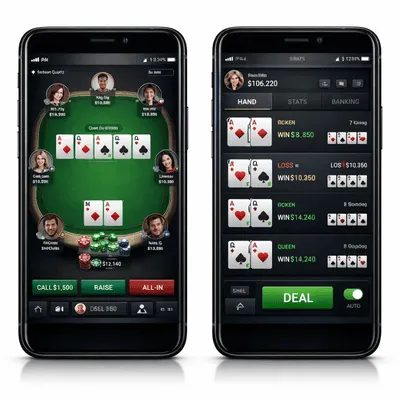
Poker Amaze mobile poker app showing Texas Hold’em and multiplayer tables
Poker Amaze · Mobile game screens
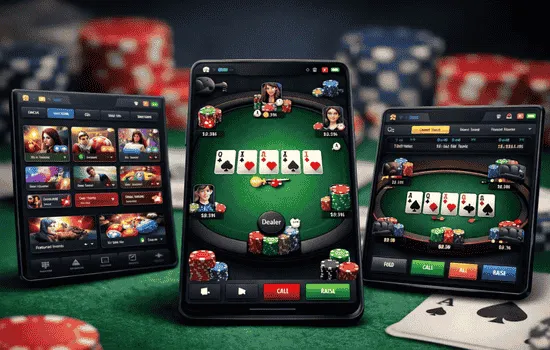
Custom poker software interface on a tablet and smartphone, with cards and chips on green felt

Custom Poker Software Development for Operators

Launch a standalone poker platform with its own player accounts and balances, or add poker to your existing casino using its account and payment systems. Both routes can include the player app, game engine, and operator dashboard.

  • Custom code and deployment documentation
  • Custom rules engine and multiplayer architecture
  • Scoped reporting and fair play controls

Poker Game Development Portfolio

Explore three poker projects. Select a project to see the game screens, features, and technology behind the build.

Mobile poker and tournaments

Poker Amaze

A multiplayer poker game with Texas Hold’em cash tables and tournaments, built with React Native, RabbitMQ, and Blender.

  • Multiplayer tables: Real-time play across mobile, tablet, and desktop, with session recovery after a disconnect.
  • Player experience: Quick access to game variants, social play, VIP rewards, and in-game events.
  • Platform controls: Compliance-ready controls and architecture designed to scale.

Reported adoption in 2025
1M
Downloads
50,000
Daily active users
500,000
Monthly active users
Discuss a Similar Poker Project
Poker game screens showing the lobby, live table and tournament view
Live tables and tournaments

World of Poker

World of Poker combines live multiplayer tables with Hold’em and Omaha tournaments. The build used Unity and Node.js.

  • Texas Hold’em and Omaha tables
  • Tournaments with multiple levels and buy-in options
  • Daily chip rewards
  • Built with Unity, Node.js, and Android Studio
Discuss a Similar Poker Project
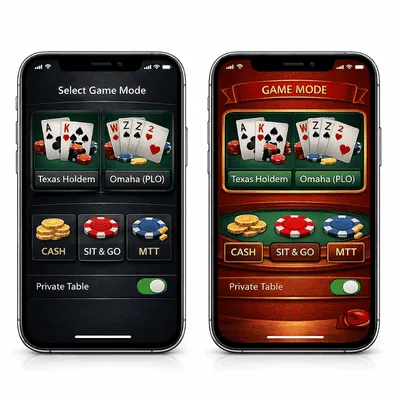
World of Poker app showing a live table and game mode menu
Cash games and Sit & Go

Governance of Poker

Governance of Poker includes cash games, Sit & Go tournaments and player customization. The build used Unreal Engine and Python.

  • Play Texas Hold'em in various formats: Cash games, Sit & Go tournaments, and multiplayer modes.
  • Customize your character and showcase your personality at the poker tables.
  • Social features allow you to chat with other players and make friends.
  • Regular updates with new content, events, and challenges.
  • Cross-platform support, play on PC, mobile, or tablet.
  • Built with Unreal Engine, Python, and Photoshop
Discuss a Similar Poker Project
Governance of Poker app showing table play and the points poker menu

Poker Platform Walkthrough

See the player and operator workflows we can cover in a demo.
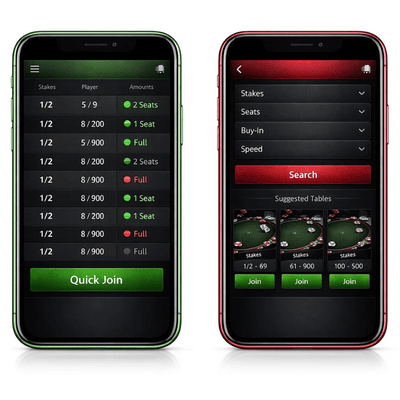
Poker lobby filters for stakes, seats and buy-in amounts

Player lobby

Players filter tables by stakes, available seats, and buy-in before joining.
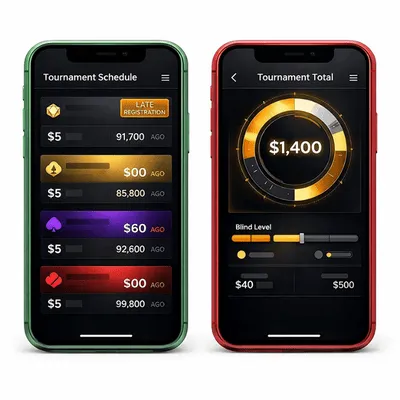
Poker tournament schedule and blind level controls

Tournament setup

Operators configure the schedule and blind levels for a tournament.
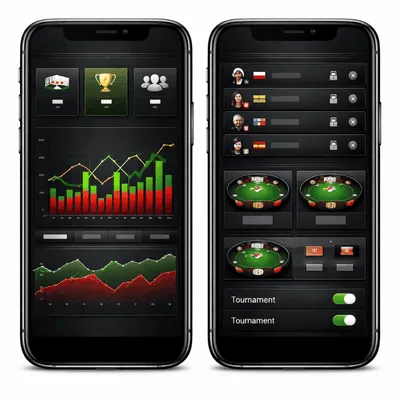
Poker back-office dashboard with analytics charts and table controls

Operator dashboard

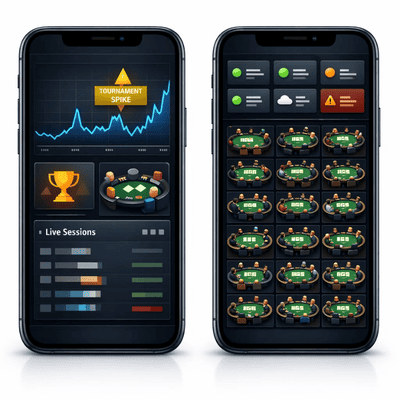
Staff review table activity and reports from the back office.
Poker Game Development Services

Our poker game development services cover standalone platforms, native apps and integrations for existing casinos. If your priority is a faster branded launch, explore white label poker software.

2D and 3D Poker Games

Design table layouts, chip movements and animations for a 2D or 3D experience. Review seat positions, betting controls and hand history in the prototype before production.

Cross-Platform Poker App Development Services

Build a shared player experience across supported devices. Test table controls, layouts, and reconnect behavior on each target device.

Native Poker App Development for iOS and Android

Build dedicated iOS and Android apps when the project calls for platform-specific UI, notifications, or release workflows.

Custom Poker Platform Development

Our custom poker software development covers the game engine, player clients and operator tools. Before development starts, we agree which repositories, build instructions and deployment access you receive at handover and identify any third-party dependencies.

Web Poker Game Development

Launch browser-based poker tables that players can open directly from your website or casino lobby.

Poker Game Integrity and RNG Integration

Define the shuffle and dealing requirements early so your team can prepare test evidence for independent review.

Video Poker Game App Development

We build video poker game apps with electronic card dealing, configurable payout tables, variant rule sets (Jacks or Better, Deuces Wild, Double Bonus), and single or multi-hand play. Available for web, iOS, Android, and desktop.

Hand Review and Dispute Investigation

Trace a disputed hand from its recorded actions to settlement. That record helps operators investigate player reports and reproduce disputed outcomes.

Poker Game Development Features

Choose the table formats, tournament rules, player tools and operator controls needed for your first release. We map each feature to a workflow your team can test before launch.

Poker Variants and Game Formats

Choose a ruleset such as Texas Hold’em or Omaha, then decide how players will use it: cash tables, Sit & Go, or multi-table tournaments. Explore Texas Hold’em game development for a dedicated build.

  • Texas Hold'em
  • Omaha
  • Seven-Card Stud
  • Five-Card Draw
  • Razz
  • Pineapple
  • Caribbean Stud
  • Triple Draw Lowball

Poker App Development for Web, Mobile and Desktop

Choose the release platforms based on how players will access the game and how your team will distribute it.

  • iOS and Android

    Native apps with device-specific controls and release requirements.

  • Mobile and desktop web

    Browser access from your site or existing casino lobby.

  • Desktop apps

    A dedicated client where your distribution model calls for one.

  • Console feasibility

    Review platform requirements during discovery.

Poker platform planning

Poker Development Cost and Timeline

Indicative build costs depend on the game variants, concurrent players, release platforms, and integrations.

Poker MVP

$10k to $25k+

One core variant, basic multiplayer and lobby, a limited chip or wallet flow and essential operator controls.

Typical timeline: 6 to 10 weeks for the limited scope shown here

Multi-Variant Poker Platform

$25k to $75k+

Multiple variants with tournament operations, wallet workflows, chat and reporting for the agreed operator roles.

Typical timeline: 3 to 5 months

Advanced Poker Platform

$75k to $150k+

Larger concurrent player volumes, real-money wallet flows, reconciliation, audit evidence and configurable risk controls.

Typical timeline: 5 to 9+ months

Compare Custom Build, White Label and Hiring Options

Swipe or scroll to see all columns.

Business needBest fitWhere to go next
Own the agreed custom code and control the rules and backend roadmap.Custom poker softwareContinue with this custom build service
Faster branded launch with less custom engineering at the start.White label poker setupWhite label poker software
Poker software buy-or-rent guide
Bitcoin, stablecoin, multicurrency cashier, blockchain confirmations, and crypto wallet ledger flows.Crypto poker platformCrypto poker software
Extra poker engineers for an existing roadmap, sprint team, or module level delivery.Dedicated poker developersHire poker developers

What Your Estimate Covers

A browser-first Hold’em MVP can cover the lobby, cash tables, chip accounting, and an operator panel. Scope real-money payments, native apps, and multi-table tournaments separately.

Confirm hosting, third-party fees, licensing, independent testing, and post-launch support separately.

See the poker app development cost breakdown for budget drivers and what each tier includes.

Platform architecture

Custom Poker Platform Architecture

The game engine controls live table state. The integration plan defines which system owns player accounts and balances, and where operations staff review exceptions.

Server Authoritative Gameplay

The server controls table state, player actions, side pots, hand ranking, timeouts, reconnects, and game event logs so gameplay stays consistent across devices.

Poker Wallet Integration

Connect poker to your existing casino accounts so players keep one balance. Share your account and wallet API documentation, settlement rules, and sandbox access so we can agree ownership, transaction flows, and how to reconcile exceptions.

See the casino integration project for settlement, rollback, and reconciliation across a provider catalogue that included poker.

Risk and Audit Visibility

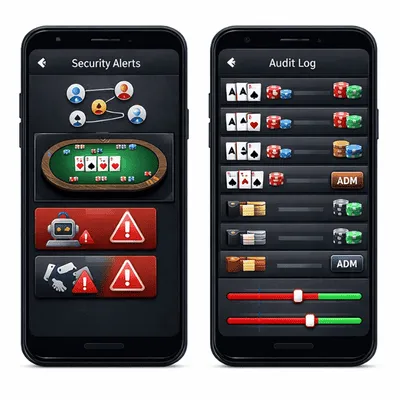
Admin roles, hand histories, transaction reports, player flags, device signals, and audit logs help operators investigate disputes and suspicious behavior.

Fair play and risk controls

Poker Game Integrity, RNG and Anti-Collusion

Agree the evidence an operator or independent test lab will need for the target market. The scope can cover RNG testing preparation, hand replay, flag review, audit exports and responsible gaming controls.

RNG and Game Integrity Planning

Before development starts, agree what the reviewer needs to inspect. That can include the shuffle rules, a replayable hand history, the tested build version and the audit export.

Read our poker network fraud detection case study for an example of collusion and chip-dumping detection.

Suspicious Play Signals

Track patterns such as repeated table pairing, unusual folding behavior, chip dumping, shared devices, account clusters, and timing anomalies.

Responsible Gaming and Market Controls

Add deposit limits, cooling-off tools, self-exclusion, KYC and AML support, region controls, admin approvals, and compliance exports where the launch market requires them.

Project deliverables

Custom Poker Software Development Deliverables

Handover includes the source code for the agreed custom build, deployment documentation, and any support coverage defined in the project scope.

Player, Operator and Deployment Deliverables

Swipe or scroll to see all columns.

DeliverableWhat it includesWhy it matters
Player appLobby, tables, profiles, wallet or chips, chat, tournaments, notifications, and account settings.Creates the player experience across web and mobile.
Game engineVariant rules, betting rounds, side pots, all-in logic, hand ranking, timers, and reconnect behavior.Controls fair and stable gameplay.
Admin panelRole-based access for tournament operations, suspicious-hand review, ledger tracking, reporting, and audit logs.Gives operators control over daily operations.
Wallet and reportingLedger events, transaction history, approvals, settlement reports, refunds, and reconciliation views.Reduces payment disputes and improves financial visibility.
Source code handoverAgreed repositories, build and deployment instructions, environment configuration, a third-party dependency list, and agreed support coverage and incident ownership.Your team can build the agreed release and verify deployment in an environment it controls.

Get a Scoped Poker Build Estimate

Share your launch markets, first-release variants, and target platforms. We’ll use those requirements to outline the build, milestones, and estimate.

Discuss Your Custom Poker Build

Poker Platform Technology Stack

The stack depends on your release targets and expected table traffic. Socket.IO can carry live table updates, Redis can store short-lived session state, and Docker can package the backend for deployment.

Programming Languages

  • Python
  • JavaScript
  • C++

Databases

  • PostgreSQL
  • MongoDB
  • Redis

Front-End Development

  • React.js
  • Unity UI Toolkit
  • Flutter

Integration Tools

  • Firebase
  • Socket.IO
  • RESTful APIs / GraphQL

Development Frameworks

  • Unity
  • Unreal Engine
  • Node.js + Express

Cloud Infrastructure

  • AWS
  • Azure PlayFab
  • Google Cloud Platform

DevOps and CI/CD Tools

  • Git
  • Jenkins
  • Docker

Security Protocols

  • OAuth 2.0
  • SSL/TLS Encryption
  • JWT

Testing Standards for Poker Game Development

Agree the acceptance criteria before development. For example, when a player reconnects mid-hand, verify that the table restores the correct seat, current hand state, and remaining action time.

Player Requirements and Game Formats

Confirm the launch variant, table stakes and session formats. Prioritize the lobby filters, seating flow and table controls players need to enter and complete a game.

Jurisdiction-Specific Compliance Planning

Poker software must meet local gaming regulations and licensing requirements. The UK Gambling Commission's remote gambling technical standards provide guidance on game fairness, security, and player protection.

Poker Monetization and Rake Models

Define rake, caps and tournament entry fees early. Agree how fees, refunds and payouts will appear in the player history and operator reports.

Poker Player Experience and Usability

Design player journeys around clear lobby navigation, readable tables, accessible controls, and responsive interactions. Validate usability and latency on each supported device.

Robust Testing and Quality Assurance

Test game rules, betting rounds, side pots, reconnect behavior, tournament flows, and supported devices. Run load and security tests against agreed acceptance criteria before release.

Player Data and Audit Controls

Protect player information with encryption, role-based access, transaction records, and risk monitoring. Plan independent testing or certification according to the operator's jurisdiction and project scope.

Poker wallet integration acceptance checks
  • Link the player account and confirm the opening balance.
  • Reconcile buy-ins, payouts, fees, and refunds against the casino ledger.
  • Retry a timed-out request and confirm the balance changes only once.
  • Match operator reports to their transaction references.

Our Poker Software Development Process

The project moves from discovery and prototype approval to implementation, acceptance testing and deployment. Each stage gives your team an artifact to review or a workflow to test.

Requirement Analysis

Approve the release scope and acceptance criteria. The brief covers game rules, launch markets, concurrent tables, and operator roles.

Design & Prototyping

Approve a playable-flow prototype for the lobby, table, tournaments, and operator screens on the target devices.

Poker Game Engine Development

Review a playable release with the engine, lobby, and operator tools. Verify a completed hand and its audit trail before adding another variant.

Testing & Quality Assurance

Review the acceptance evidence for hand outcomes, tournament settlement, and reconnects before approving launch.

Deployment & Maintenance

Receive deployment and operating documentation with the release. We deploy to the agreed environments after acceptance testing. If support is in scope, the plan identifies who receives incidents, what hours are covered and how fixes are released.

Why Operators Choose SDLC Corp

See Poker Amaze in the portfolio for an example of the player experience and the wallet acceptance checklist for how we scope integration tests.

Poker-Specific Game Design

Split pots, all-ins and dropped connections can change how a hand settles. That’s why we turn these edge cases into acceptance tests before release.

Architecture for Live Table Traffic

Plan for peak table traffic, dropped connections and tournament start times. We agree how the team will monitor table latency, reconnect rates and settlement errors before launch.

Regional Support

We collaborate remotely with poker operators across markets. Project communication, delivery coverage, and support arrangements are agreed during discovery.

Poker Platform Scoping

Bring your launch markets, expected concurrent tables and wallet documentation to the first call so we can identify integration dependencies early.

For iOS and Android, we review touch interactions, device coverage and distribution requirements before defining the release test plan.

Poker Development Client Reviews

These GoodFirms reviews describe how the team handled delivery and change requests on poker projects.

Jaymal Soni highlighted the coordination between design and development, clear communication and quick adjustments. He reported that the finished poker game met his expectations for functionality and appearance. Read Jaymal Soni’s review on GoodFirms

Jaymal Soni

Verified GoodFirms review · Nov 2025

Janet Hughes highlighted the team’s delivery of multiplayer gameplay and integrated payments for a poker game built from scratch. She also noted that the team responded quickly when adjustments were needed. Read Janet Hughes’s review on GoodFirms

Janet Hughes

Verified GoodFirms review · Nov 2025

Discuss Your Custom Poker Software Build

Share your launch markets, game formats, and target devices. We’ll use them to set the scope for your demo.

What to check in the demo

  • Watch a player reconnect mid-hand.
  • Trace a tournament payout in the operator dashboard.
  • Review the code, deployment documentation, and support included in handover.

Poker Game Development Services FAQs

What do your poker game development services include?

We scope the player app, game engine, tournaments, operator tools and integrations around your launch. For a custom build, the handover includes the agreed source code and deployment documentation.

Can you build poker apps for web, iOS and Android?

Yes. We build web, iOS and Android poker apps for new platforms and scope client apps against your existing APIs when you already have a poker backend.

How do you support fair play and fraud review?

We scope shuffle and RNG test evidence, hand histories and suspicious-play reviews. During discovery, we agree who carries out independent testing and what evidence they need.

Which poker variants and tournament formats can you build?

We scope Texas Hold’em, Omaha, Stud, Razz, HORSE and Short Deck as needed. Depending on the release, we can include Sit & Go and multi-table tournaments.

How much does poker game development cost?

The indicative USD planning ranges are $10k–$25k+ for an MVP, $25k–$75k+ for a multi-variant platform and $75k–$150k+ for an advanced platform. Typical timelines are 6–10 weeks, 3–5 months and 5–9+ months respectively, subject to scope and integration dependencies.

Can you integrate poker with our existing casino wallet?

Yes. Poker can use your casino’s existing accounts and balance. We confirm the API scope and test the integration in a sandbox before launch.

Can you build a real-money poker platform?

We can scope cashier, payment, identity verification, withdrawals, ledger reports and responsible gaming controls around your target markets. Discuss licensing, provider availability and independent testing requirements before agreeing the release scope.

What support is available after launch?

We can scope post-launch support around your operating hours and priorities, including issue triage, monitoring, security updates, and release support. We agree coverage and response expectations during discovery.

Poker Development Resources

Scope the build, plan the budget, or compare software providers.

Plan the build

Step-by-Step Guide to Poker App Development

Define launch features, choose platforms, and map the work from design through QA.

Read the development guide

Estimate the cost

How Much Does It Cost to Develop a Poker Game App?

Compare budget ranges for a basic MVP, a multi-feature app, and an advanced platform.

Read the cost breakdown

Compare providers

Top Online Poker Software Providers

Shortlist providers and compare the platform features and delivery models they offer.

Read the provider comparison

Let’s Talk About Your Project

Get expert guidance on scope, architecture, timelines, and delivery approach so you can move forward with confidence.

What happens next?