
Introduction
Casino apps collect a steady stream of player data. That includes session length, game choices, deposits, withdrawals, and response to offers. Predictive analytics turns that activity into signals teams can use. Instead of reacting after a player loses interest, operators can spot patterns earlier and improve the experience while the session is still live.
Used well, predictive analytics makes casino apps more relevant, more stable, and more secure. It can improve game discovery, reduce wasted offers, support faster service, and strengthen fraud checks. The goal is not to collect more data for its own sake. The goal is to make better product decisions at the right time.

What Predictive Analytics Means in Casino Apps
Predictive analytics uses past and live data to estimate what may happen next. In a casino app, that might mean predicting which game a player may try next, when a player may stop returning, or which account may need a security review.
The models behind it may use statistics, machine learning, or simple rules built on event data. From a product view, the result is straightforward: teams get a clearer view of player intent, risk, and next-best actions. That makes predictive analytics useful in product design, loyalty, support, fraud checks, and responsible gambling tools.
How Predictive Analytics Improves Player Experience
The best use cases do not feel intrusive. They feel helpful. A well-designed casino app uses predictive analytics to remove friction, surface relevant options, and step in early when there are signs of risk or confusion.
Personalized Game Discovery
Recommendation systems can use a player’s favorite game types, betting ranges, play times, and feature use to surface better options. That helps users find games faster and avoids the frustration of generic catalog browsing.
This works best when recommendations follow clear behavior signals, not broad guesses. A player who comes back to low-volatility slots should not be pushed toward unrelated high-risk formats. Relevance matters more than volume, and careful testing usually works better than blanket recommendations.
Better Bonus Timing and Offer Relevance
Promotions work better when they match real behavior. Predictive models can help decide when an offer may be useful, what format makes sense, and whether a player responds to incentives at all. That leads to better timing, less bonus fatigue, and fewer irrelevant messages.
This does not mean every player should see constant offers. In many cases, better bonus strategy is about restraint. A targeted offer that fits player timing and preference usually creates a better experience than sending the same promotion to everyone.
Early Churn Detection and Retention
Churn is rarely random. It usually appears as a pattern first: shorter sessions, longer gaps between visits, lower deposit activity, or less time on favorite games. Predictive analytics can spot those signals earlier than manual review and give teams time to respond.
The best retention programs do not rely on guesswork. They use clear churn signals, test the response, and measure whether the action helped. That could mean a reminder about unfinished play, a better recommendation, or a light loyalty message instead of an aggressive incentive.
Faster Support and Payment Journey Fixes
Analytics can also improve moments that are easy to miss, such as payment friction, onboarding confusion, or repeated help requests. If the system sees that players leave a deposit flow at the same step or open support after a failed payment, teams can fix the problem before it becomes a retention issue.
Used this way, predictive analytics supports product quality as much as marketing. It helps operators find friction, set better priorities, and shorten the path between a player problem and a product fix.
Fraud Detection and Responsible Gambling

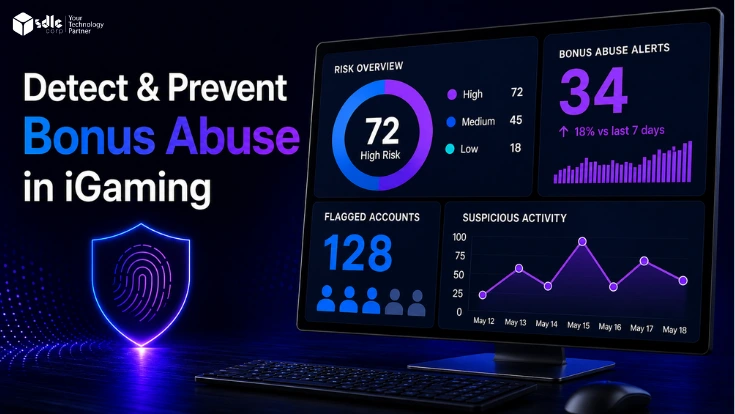
Casino apps also use predictive models to flag unusual transactions, location changes, bonus abuse, or behavior that looks very different from a normal account pattern. That protects revenue, but it also protects real users from account misuse and payment disruption.
The same data practices can support safer gambling tools when they are used with proper safeguards. Research has shown that AI models can predict self-reported problem gambling from account-based player data, and recent work on online gambling personalization highlights the need to balance engagement goals with responsible-gambling protections. For a related look at platform safety priorities, see our guide to casino security and fraud prevention.
What Operators Need to Get Right
Results depend on setup quality. Reliable predictive analytics needs clean event tracking, privacy-aware data handling, clear decision rules, and regular testing. Teams also need to measure whether recommendations, promotions, or risk triggers improve the product rather than simply add noise.
Architecture matters here. Recommendation logic, event pipelines, experiments, cashier data, and support workflows should work as one system instead of living in separate dashboards. For operators planning these capabilities at platform level, the analytics layer should sit inside broader online casino software architecture rather than being added as an isolated feature.
Where Predictive Analytics Is Heading
Predictive analytics in casino apps is moving toward faster decisions, better testing, and stronger governance. Real-time models can already shape recommendations and promotions. The next step is more controlled personalization that accounts for player value, risk, context, and compliance at the same time.
The operators that benefit most will treat analytics as a decision system, not just a reporting tool. That means using predictive models to improve relevance, reduce friction, protect players, and learn from measured outcomes instead of assumptions.
Conclusion
Predictive analytics can make casino apps more useful when it is applied with discipline. It helps players find relevant games, reduces avoidable friction, improves support, and strengthens security. For operators, it creates a better way to manage personalization, retention, and risk.
The strongest implementations stay focused on player value. When predictive analytics is tied to product quality, clear testing, and responsible safeguards, it becomes a practical tool for building better casino experiences instead of just another marketing layer. For teams looking to put these capabilities into production, it can be valuable to hire casino game developer support with experience in scalable, data-driven casino platforms.
FAQs
What is predictive analytics in a casino app?
Predictive analytics uses player and platform data to estimate what may happen next. In casino apps, it is often used for recommendations, churn detection, fraud checks, support improvements, and responsible gambling triggers.
How does predictive analytics improve player experience?
It improves relevance and reduces friction. Apps can surface better game suggestions, time offers more carefully, spot payment issues, and respond faster when behavior suggests confusion or drop-off risk.
Can predictive analytics help with retention?
Yes. Churn usually appears as a pattern before a player leaves completely. Predictive models can identify changes in session frequency, spending, or game preference so teams can test a measured response earlier.
Does predictive analytics also support fraud prevention?
Yes. Operators can use it to flag unusual deposits, withdrawals, device changes, bonus abuse, or account behavior that falls outside normal patterns. That helps protect both revenue and legitimate users.
What should operators get right before implementing it?
The basics matter most: clean event data, privacy-aware handling of sensitive information, explainable rules, strong testing, and a clear link between model outputs and product action.