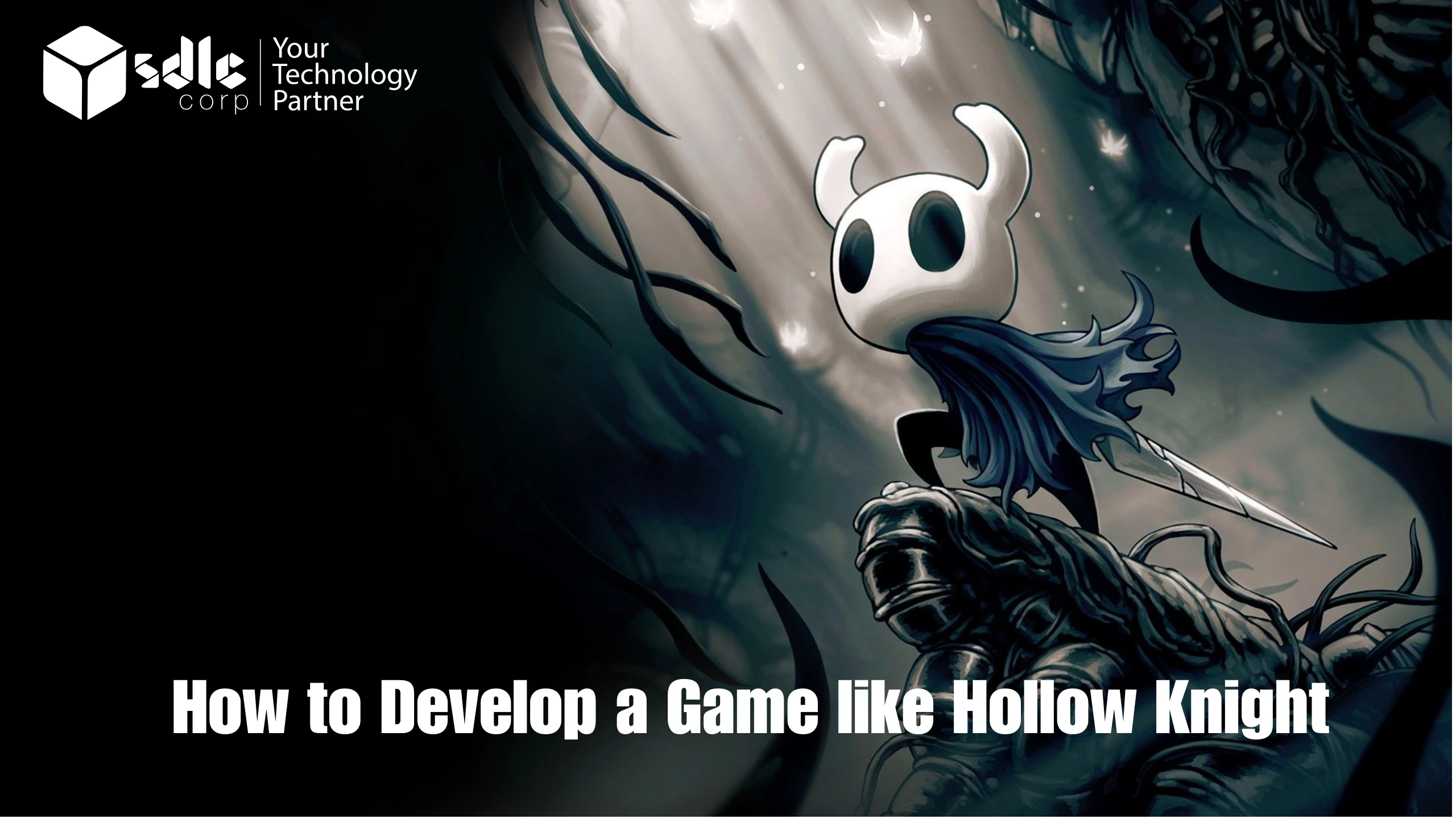
To develop a game like Hollow Knight you are building a 2D Metroidvania — a genre defined by interconnected world exploration, ability-gated progression, precise platforming and combat, and layered environmental storytelling. Hollow Knight, developed by Team Cherry over four years with a team of three people using Unity, sold over 5 million copies and became one of the most critically acclaimed indie games ever made. It demonstrated that a small, focused team with a clear artistic vision can compete commercially with much larger studios. This guide covers the core design principles, technical architecture, art approach, and realistic costs for building a Hollow Knight-inspired title.
How this differs from our other game guides: Our Minecraft guide covers a voxel sandbox with procedural terrain. Our Omori guide covers a psychological RPG with turn-based combat. Hollow Knight is a 2D action-platformer Metroidvania — a genre with specific design requirements: hand-crafted interconnected maps, precise hitbox-based combat, ability unlocks that gate map traversal, and a progression system built around exploration and discovery rather than explicit quest markers.
What makes Hollow Knight technically and creatively distinct
Hollow Knight's success came from exceptionally tight execution of a specific design philosophy rather than technical novelty. Understanding that philosophy is the prerequisite for building something inspired by it.
- The Metroidvania structure — ability-gated exploration: The map is one large interconnected world, but large sections are inaccessible until the player acquires specific movement abilities (double jump, dash, wall climbing). This creates a non-linear progression loop: explore, hit a barrier, find the ability that unlocks it, return to earlier areas with new capabilities. Designing this requires careful ability dependency mapping — which areas are unlocked by which abilities, and ensuring players always have a reachable direction to progress.
- Precise hitbox-based combat: Hollow Knight's combat is responsive, readable, and punishing. Enemy attacks have clear telegraphs; the player's nail (sword) has a precise hitbox; death means losing accumulated Geo (currency) at the point of death, recoverable by defeating your Shade. This "Souls-lite" death mechanic creates meaningful stakes without permanent loss. Every enemy has a defined attack pattern that can be learned — the difficulty comes from execution, not randomness.
- Hand-drawn art at commercial quality: Team Cherry's art direction — ink-washed bugs in a decaying underground kingdom — is consistent across every asset. Every enemy, NPC, background, and UI element reads as part of the same visual world. Achieving this as a small team requires a single art director with veto authority over every asset, not a committee. The consistency is what makes the world feel inhabited rather than assembled.
- Environmental storytelling over explicit narrative: Hollow Knight tells its story almost entirely through the environment, NPC dialogue fragments, item descriptions, and the implied history of the world. There are no cutscenes explaining the plot. Players who explore deeply piece together the lore; players who rush through still have a complete experience. This requires writing and world-building at a level of depth most games don't attempt — but it scales economically because it does not require expensive cinematics.
- The Charm system — build depth without bloat: Players equip passive ability Charms in limited notch slots. Charms modify gameplay in meaningful ways (longer nail range, healing on hit, faster attacks). The notch economy forces trade-offs without being overwhelming. This is a model of meaningful customisation depth that does not require hundreds of skill tree nodes — a practical template for small teams.
Key features to develop in a Hollow Knight-like Metroidvania
Hand-crafted rooms connected into a large continuous world without loading screens between adjacent areas. The map must be designed with the full ability dependency graph in mind — every section's accessibility gated correctly. Players discover map rooms by exploring; the in-game map fills in as they move through areas. Requires a map data structure that tracks room discovery, ability gates, and fast travel nodes (Stagways/benches in Hollow Knight's case).
The player character has an attack with a defined hitbox (melee range, timing window). Enemies have distinct attack patterns with readable telegraphs. Hit detection must be frame-accurate — a combat system where hits feel "off" by even a few frames destroys the feel of the game. Unity's Physics2D with precise collider shapes is the standard approach. Knockback, i-frames (invincibility frames after being hit), and health management are the core feedback systems.
Abilities acquired through the game that expand traversal options — double jump, dash, wall jump, swim. Each ability must feel physically satisfying to use (responsive, with clear visual and audio feedback) and must open new areas when acquired. The ability unlock sequence must be playtested extensively — players should always feel forward momentum, never completely stuck without a clear next direction.
A set of equippable passive modifiers (Charms) each occupying a number of notch slots. Players have a limited total notch count, forcing trade-offs between different Charms. Charms can be equipped only at rest points. The system requires a Charm inventory, notch accounting, and a modifier architecture where Charms inject values or behaviour changes into the core gameplay systems without hard-coding combinations.
On death the player leaves a Shade at the death location containing their accumulated Geo. The Shade must be defeated to recover it. Dying again before recovering the Shade destroys the Geo permanently. The Shade also functions as a weak enemy. This mechanic requires persistent world state (the Shade exists in the world until removed), session-spanning death location tracking, and a special enemy spawn system at the recorded coordinates.
Geo (currency) is collected from enemies and the world. Spent at merchants for maps, items, and Charms. The economy must be calibrated so key items are accessible without grinding while still making resource management meaningful. A simple ledger tracking current Geo, total earned, and total spent is sufficient — the complexity is in the merchant inventory design and pricing relative to typical farming rates per area.
Technology stack for developing a Hollow Knight-like game
Step-by-step process to develop a Hollow Knight-like Metroidvania
Cost to develop a game like Hollow Knight
Hollow Knight is one of the most cost-efficient commercial successes in game development history — a three-person team built a 40-hour game over four years. For a team hiring external developers and artists, the cost picture is different but still more accessible than action or multiplayer genres.
| Component | Indie MVP | Commercial release | Notes |
|---|---|---|---|
| Core systems (movement, combat, map) | $15k–$40k | $40k–$100k | Player controller, hitbox system, room/world structure, save system, Charm system. 2–4 months. |
| Level design and world building | $10k–$30k | $30k–$100k | Room layout, ability gate placement, enemy placement, secrets. Scales with world size. |
| 2D art and animation | $20k–$60k | $60k–$200k | Character sprites, enemy designs, tilesets, backgrounds, UI. The largest cost driver. Hand-drawn style is more expensive than pixel art. |
| Enemy and boss design | $10k–$25k | $25k–$80k | Enemy AI behaviour trees, boss phase systems, attack pattern design. Scales with enemy count. |
| Music and audio | $5k–$20k | $20k–$60k | Original composed OST, ambient sounds, combat SFX. Hollow Knight's music is a major part of its identity — budget accordingly. |
| Writing and world building | $3k–$10k | $10k–$30k | NPC dialogue, item descriptions, lore tablets. Hollow Knight's writing is sparse but deep — every line carries weight. |
| QA and polish | $5k–$15k | $15k–$40k | Bug testing, hit-stop tuning, audio mixing, platform certification if targeting console. |
| Total — Indie MVP | $60k–$200k | — | 3–5 areas, 15–20 enemy types, 3–5 bosses, 8–12 hours of content. PC only. |
| Total — commercial release | — | $150k–$500k | Full Metroidvania world, 40+ enemy types, 10+ bosses, 15–30 hours, PC + console. |
The real cost of a Hollow Knight-like game is time, not tools. Unity is free. The tools are cheap. The investment is the designer's time to build a world that rewards exploration, and the artist's time to make it look and feel alive. Budget time generously — Team Cherry's original estimate was 18 months; they shipped four years later, and the extra time is visible in every room. See our Unity game development services for a scoped estimate.
Game development services we deliver










FAQ — Developing a game like Hollow Knight
How much does it cost to develop a game like Hollow Knight?
An indie MVP Metroidvania with 3–5 areas, 15–20 enemy types, and 8–12 hours of content costs approximately $60,000–$200,000. A full commercial release matching Hollow Knight's scope — full world, 40+ enemy types, 10+ bosses, 15–30 hours — costs $150,000–$500,000. The largest cost driver is art production: hand-drawn character sprites, tilesets, and background paintings require significantly more budget than pixel art. Team Cherry built the original Hollow Knight themselves over four years, keeping costs minimal at the expense of time.
How long does it take to develop a Hollow Knight-like game?
A focused indie MVP takes 12–18 months with a team of 3–5. A full commercial Metroidvania comparable to Hollow Knight's scope takes 2–4 years. The primary time driver is content production — every room, enemy, boss, and NPC requires individual design, art, implementation, and playtesting. World design and balance iteration also take longer than most developers budget for. Team Cherry's original Kickstarter projected 18 months; the final game shipped four years after the campaign.
What game engine is best for a Hollow Knight-like game?
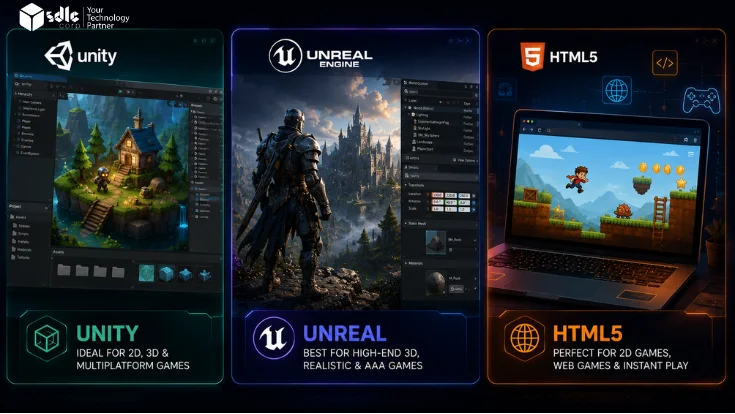
Unity with C# — Hollow Knight itself was built in Unity, and Unity's 2D physics, Tilemap system, and Animator state machines are well-suited to this genre. Unity 2022 LTS is the recommended version for production projects. Godot 4 is a strong alternative: open source, MIT licence, excellent built-in 2D support, and lighter than Unity. Either engine is a valid choice — the decision should be based on your team's existing experience rather than the engine's theoretical capabilities.
What is the hardest part of building a Metroidvania like Hollow Knight?
World design and ability dependency mapping. The entire Metroidvania genre depends on the player always having a clear direction to progress — areas accessible with current abilities, barriers that clearly communicate what is needed to pass them, and a reward structure that makes backtracking with new abilities feel like discovery rather than a chore. Getting this right requires designing the entire world's ability dependency graph before building any levels, and extensive playtesting with players who don't know the intended path.
How do you monetise a Hollow Knight-like indie game?
Premium purchase ($10–$20 on Steam) is the standard model for this genre. Hollow Knight launched at $14.99 and has sold over 5 million copies. DLC expansion packs (Grimm Troupe, Lifeblood, Godmaster) add post-launch revenue. Hollow Knight set a notable precedent by releasing its largest DLC content for free — a goodwill gesture that drove significant word-of-mouth. Console porting (Switch, PlayStation, Xbox) adds substantial revenue with relatively low marginal cost once the PC version is complete.