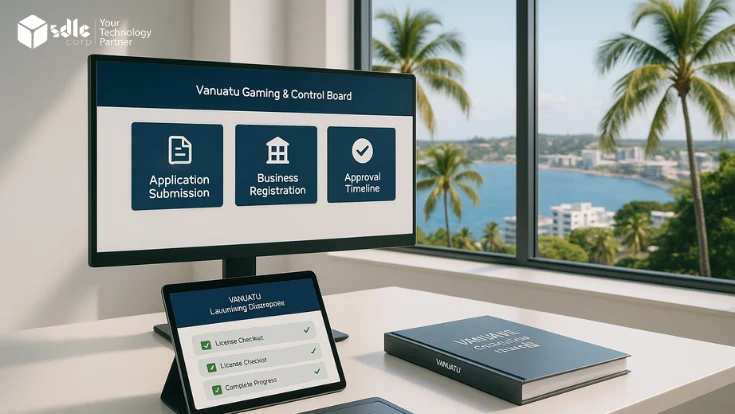
Vanuatu is an offshore option for online gambling operators that want a faster, lower-cost way to launch.
It is not a shortcut into markets that need local approval. You still need legal advice for every country you plan to target.
This guide covers what the license is, who it suits, what you need to apply, what it costs, and where the real risks sit.
Why operators choose Vanuatu
Operators usually look at Vanuatu for four reasons:
- Lower setup cost than many top-tier licensing hubs
- A faster route to launch than stricter jurisdictions
- Coverage for casino, live casino, sportsbook, poker, bingo, keno, lottery, crash, and similar products
- Support for both fiat and crypto models
Vanuatu is best seen as an offshore base, not as a universal passport into every market.
Who this license is best for
This route suits startups and offshore operators that already know how they will handle payments, player checks, reporting, and target markets.
It is a weaker fit for brands that need the strongest banking access, the best jurisdiction signal, or fast entry into tightly regulated local markets.
What the license covers
The current Vanuatu Interactive Gaming License is aimed at B2C operators.
It can cover a wide range of online gambling products, but the final scope depends on the file you submit, the products you offer, the domains you use, and the markets you plan to serve.
Core requirements
Get the basics right before you apply:
- A Vanuatu company with local presence
- Due diligence on owners and key people
- Source-of-wealth and source-of-funds support
- A business plan that explains products, payments, markets, and controls
- AML/CFT and safer-gambling policies
- Domain ownership and platform details
How to apply
1. Form the Vanuatu company
The license is expected to sit in a local entity, so company setup comes first.
2. Build the owner and compliance file
Gather KYC, funding proof, policy documents, and the business plan. This step is often the real bottleneck.
If you are tightening your controls, this guide to KYC compliance in gambling apps is closely related and worth reviewing.
3. Lock the products, domains, and platform stack
Make sure the products, domains, payments setup, and platform story all match. A vague file slows review.
4. Submit the forms and evidence
Send the application with the required supporting documents. Clean files move faster than broad ones.
5. Reply quickly to follow-up questions
Be ready to answer questions on ownership, funding, markets, controls, or technology.
6. Set up post-license controls before launch
Reporting, records, audits, and player controls should be ready before you scale traffic.
Costs and budget planning
The headline fee is only part of the budget. The bigger cost choices often sit in company setup, legal review, policy work, payments, and ongoing compliance.
| Cost item | Typical figure |
|---|---|
| Application fee | About €5,000 |
| Annual license fee | About €10,000 |
| Gaming tax | 1% of gross gaming revenue |
| Other costs | Company formation, legal support, compliance setup, platform and PSP work |
Use the fee table as a starting point, then build a real operating budget around it.
Documents to prepare
Have these ready before filing:
- Company records
- ID and proof of address for owners and key people
- Source-of-wealth and source-of-funds evidence
- Business plan and financial model
- AML/CFT and safer-gambling policies
- Software, platform, and provider agreements
- Domain ownership proof
- Regulator forms for directors, controllers, and managers
Ongoing compliance after approval
Approval is only the start. Operators need to keep up with age controls, approved games and systems, records, reports, audits, and wider AML/KYC duties.
That is why this license fits teams that can run compliance as an ongoing operating function, not a one-off filing task.
For a broader view, see regulatory compliance challenges in the iGaming industry.
Tax, banking, and payment reality
Vanuatu is often sold on tax efficiency, but the harder issue is banking and payments.
Banks and PSPs may be cautious with offshore gambling structures, especially when the target-market story is weak.
Before you apply, map out acquiring, wallets, fraud checks, KYC, and reporting.
Main risks to weigh
- You still need local advice for each market you target
- Some banks and PSPs may be harder to secure
- The license does not carry the same signal as Malta or the Isle of Man
- If your controls are weak, the speed advantage disappears
Vanuatu vs other offshore options
| Jurisdiction | Best for | Trade-off |
|---|---|---|
| Vanuatu | Offshore operators that want speed and lower cost | Weaker prestige and possible PSP friction |
| Curaçao | Broad offshore use and familiar market presence | Regulatory changes and variable partner acceptance |
| Malta | Operators that need stronger European credibility | Higher cost, longer process, heavier compliance |
| Isle of Man | Well-funded operators seeking strong reputation | Higher barrier to entry and slower setup |
Many competing pages stop at “fast” and “low tax.” That is not enough.
A stronger page explains fit: where Vanuatu works, where it does not, and what must be ready before launch.
If you are comparing broader license routes, this Curaçao vs Malta comparison is one of the few internal links that adds context without pulling the page off topic.
Should you choose Vanuatu?
Choose Vanuatu when you want an offshore B2C route, have a clear market plan, and can support the file with strong ownership, compliance, and payments evidence.
Do not choose it just because it looks cheaper on a table. Cost matters, but market access, banking, and trust matter more over time.
FAQs
How long does a Vanuatu gambling license usually take?
A complete file can move relatively quickly, often around one month, but timing depends on how complete the application is and how fast you answer follow-up questions.
Do I need a Vanuatu company to apply?
Yes. The interactive gaming license is expected to be held by a Vanuatu company with local presence.
Can a Vanuatu license support crypto casinos?
Yes. The current framework supports both fiat and crypto models, but crypto does not reduce your AML, KYC, or reporting duties.
Is Vanuatu suitable for regulated European markets?
Not on its own. Vanuatu is an offshore license, not a replacement for local approval in markets that require country-specific authorization.
What matters most after approval?
Ongoing controls matter most: reporting, records, audit readiness, age checks, approved games and systems, and the broader compliance setup behind them.