Introduction
1. Starting an Online Casino in Brazil - Key Considerations
Market dynamics: Brazil is mobile-first, so a fast cashier and simple navigation matter. Also, Portuguese-first casino lobbies usually convert better than mixed-language menus. For themes, Carnival, Amazon, and Rio-style visuals often feel local, so they fit slots and live tables well.
Legal compliance: To start an online casino nationally, you need prior authorization under Brazil’s federal framework and the SPA rule set. Also, the technical ordinance sets minimum technical and security requirements for the systems you run, so plan your documentation and controls early.
Payment methods: Your cashier should center on PIX and bank transfers (TED), because the Ministry of Finance allows PIX, TED, debit, and prepaid cards for deposits. At the same time, you must block cash, boletos, cryptoassets, and other deposit methods that reduce traceability. So, enforce “same-account funding” checks and make webhooks idempotent to prevent duplicate wallet credits.
Software setup: A casino stack must handle identity, wallet, games, and reporting as one controlled flow. So, design round IDs, wallet transaction IDs, and external payment IDs to link every bet, win, deposit, and withdrawal. Next, add step-up checks on withdrawals and high-risk patterns, because that reduces fraud without blocking normal users.
Technical infrastructure: Plan your reporting and evidence like a product, not an afterthought. SIGAP uses batch submissions and validation concepts such as XML and XSD, so your pipeline should generate files consistently and store validation results. Also, keep audit-grade logs for admin actions, KYC outcomes, and every wallet movement, because those records become your proof during reviews.

2. Why Brazil?

Brazil is a “fast payments” country, and that changes online casino behavior. So, if deposits feel instant, users expect withdrawals to feel just as clean. PIX is a big reason for that expectation, and the Central Bank reported PIX value at about R$ 26.4 trillion in 2024. The addressable audience is also large and connected. DataReportal reports 185 million internet users in Brazil at the end of 2025, with 86.9% penetration. It also reports 217 million mobile connections, which shows how mobile-first the market is.
On the online casino side, growth projections support planning. One market outlook estimates Brazil’s online casino revenue at USD 225.9 million in 2024, rising to USD 378.9 million by 2030. So, the upside is real, but only if your operations stay stable.
Regulation is another reason Brazil matters right now. The Ministry of Finance stated that January 1, 2025 marked the start of the fully regulated market, with operators authorized through the SPA process. That pushes buyers toward brands that run with clear controls and audit-ready records.
Finally, Brazil’s payment rules reward traceability, which fits a clean online casino stack. The Ministry of Finance’s published rules allow deposits via PIX, TED, debit, and prepaid, while blocking cash, boletos, and crypto assets. So, when your cashier enforces “same-account funding” plus idempotent callbacks, you reduce disputes and speed up growth.
3. Is Online Gambling Legal in Brazil?
Online gambling can be legal in Brazil, but only under SPA authorization from the Ministry of Finance, which also covers online casino-style games defined by RNG outcomes. Since January 1, 2025, only SPA-authorized entities can operate nationally, and authorized sites must follow “.bet.br” channel rules. Your systems must meet Portaria SPA/MF nº 722/2024, so plan RNG integrity, round traceability, access control, and audit logs from day one. To stay safe, confirm your authorization route, lock your domain plan, and map the proof you will keep.
4. Online Casino Licensing in Brazil
If you want to run an online casino in Brazil, you need prior authorization under the federal “quota fixa” framework. Licensing is not optional. If you want the full step-by-step process, see our how to get a gambling license in Brazil guide. Law 14,790/2023 places this under the Ministry of Finance, so your launch plan should start with the authorization route and the proof you will submit.
The SPA Portaria 827/2024 explains eligibility and key terms: you need a Brazilian legal entity with headquarters and management in Brazil, and a foreign branch cannot qualify. The authorization runs for 5 years, costs R$ 30 million, and allows up to 3 brands. Also, Portaria 722/2024 requires technical and security controls, so your stack must support KYC, secure access, audit logs, and SIGAP reporting using structured submissions (XML/XSD).
| Step | What you do in Brazil |
|---|---|
| 1. Set up an eligible legal entity | Form a Brazilian legal entity with headquarters and management in Brazil. A foreign company branch does not qualify. |
| 2. File the SPA authorization request | Submit the authorization request to the Secretariat of Prizes and Bets (SPA) with the required legal and operational documents. The approval includes an authorization fee and a cap on the number of brands under one authorization. |
| 3. Prepare technical and security evidence | Align your systems with Portaria SPA/MF nº 722/2024. Keep evidence for KYC/identity checks, secure access, audit logs, and game-system integrity for readiness reviews. |
| 4. Set up reporting and channel readiness | Prepare SIGAP batch reporting with XML/XSD validation and required API test flows. Also, align your domains with “.bet.br” channel rules before go-live. |
5. Steps to Launch a Successful Online Casino in Brazil
Start with a step plan that matches how regulators and payment partners will review you. So, each step below includes what to build and what proof to keep.

Step 1 Lock the authorization path and your legal entity.
First, define the exact online casino scope you will offer, including game types and wallet rules. Next, set clean governance with named owners for compliance delivery and technical evidence. Also, prepare a document pack early: ownership chart, policies, control descriptions, and a system overview that matches how you actually operate.
Step 2 Set the channel plan before heavy build work.
Choose your brand name, domains, and user journeys up front, because late changes break tracking and payments. Next, plan redirects, TLS, and cookie consent in a single approach, so you do not patch it later. Also, make Portuguese the default language and write clear terms for deposits, withdrawals, limits, and disputes.
Step 3 Build the cashier and ledger first, not last.
Design a simple payment state machine: created → pending → confirmed → credited → reversed for deposits. Then, enforce idempotency on every callback, so retries never create double credits. Also, run daily reconciliation with three numbers: payment records, wallet entries, and bank settlement totals. If those do not match, stop and fix the gap before you scale.
Step 4 Embed KYC, AML, and fraud controls into core flows.
Start with staged checks at signup, and then step up on risk triggers like first withdrawal or device changes. Next, route risk events into case management with clear reason codes and time-stamped decisions. Also, log rule versions for every decision, because you need to explain “why” months later.
Step 5 Integrate casino games with round-level traceability.
Every game round must produce IDs that link stake, outcome, and wallet movement. So, treat round_id as a first-class object, not a log detail. Also, control RNG and game math changes with approvals and versioning, because silent config edits cause disputes. Finally, monitor RTP drift and error rates per game, so you catch misconfigurations early.
Step 6 Ship reporting and audit evidence before go-live.
Build a reporting pipeline that can export consistent files on a schedule, with validation and retry handling. Next, keep immutable logs for admin actions, wallet movements, KYC outcomes, and game rounds. Also, set clear retention rules and access controls, because data leaks create real liability. Before launch, run two drills: duplicate payment callbacks and payout queue backlog, then fix what fails.
Also Check : Casino Game Development
6. Choosing Casino Software
Choosing casino software is a control decision, not a UI decision. So, start by listing what your system must enforce in Brazil: identity checks, deposit and withdrawal rules, and audit-ready logs. If the software cannot support those controls cleanly, you will patch it later and pay more.
Types of Casino Software Providers
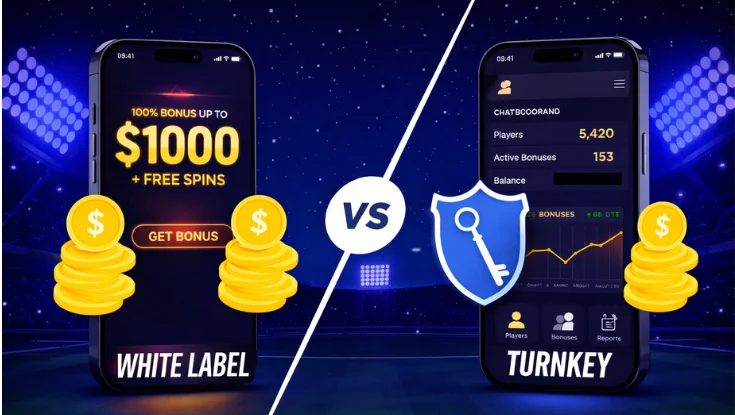
Generally, types of Casino software providers fall into four main models: white-label, turnkey, custom, and API-based.
- White-label providers: They deliver ready-made, rebrandable casinos and handle hosting, updates, and basic compliance modules.
- Turnkey solutions: Additionally, they provide complete platforms with licenses, game libraries, operator dashboards, payment and KYC integrations.
- Custom providers: Custom development builds tailored platforms from the ground up, using microservices, containerization, and bespoke game engines.
- API-based providers: They expose RESTful or WebSocket game and service APIs, plus SDKs and scalable cloud endpoints.
Each model fits different operator needs, so choose based on speed to market, control, and technical requirements.
7. Game Preferences in the Brazilian Casino Market
Brazilians play online casino games in two clear modes: quick sessions and social tables. So, your lobby should make both paths easy. Research summaries often show roulette and blackjack as consistent favorites, while slots remain a high-volume choice for daily play.
Slots usually do the “repeat play” work. They load fast, they fit small screens, and players understand them instantly. That shows up in search behavior too, where slots lead interest in Brazil, including locally famous titles.

Table games stay strong because they feel skill-based and familiar. Roulette tends to lead table interest, and blackjack follows close behind, especially when rules feel standard and limits are clear. Also, live tables keep growing because players want real-time interaction, not only animations.
Live dealer succeeds when you localize the experience. Portuguese-speaking dealers and Portuguese-first tables reduce friction and keep users longer. That is why some live studios now stream from Brazil and push local language as the default.
Also Read : Timeframe for Developing a Fully Functional Casino App
8. Payment Methods & Taxation
Payments in Brazil are built around traceability. So, your online casino cashier should use rails that clearly show where funds came from and where they went. The rules allow deposits through PIX, TED, debit cards, and prepaid cards, and they require the money to come from the player’s registered account. At the same time, they block deposits via cash, boletos, cryptoassets, and other methods that hide origin.
Next, design the payment flow like a controlled ledger system. Do not allow play until the transfer is settled, because “pending” money increases dispute risk. Also, make every callback idempotent, store an external_payment_id, and reconcile daily across three totals: PSP payment records, wallet ledger entries, and bank settlement. This setup keeps balances correct and makes audits easier.
Taxation has two main angles: the operator side and the player side. On the operator side, the contribution is calculated over GGR (gross gaming revenue), which is the total collected minus prizes paid. Also, the rate rises from 12% to 13% in 2026, 14% in 2027, and 15% in 2028, with the increase allocated to areas like social security and health.
On the player side, net prizes are taxed at 15% IRPF under the federal framework. Also, updated guidance describes an annual approach tied to the first annual IRPF bracket, with calculation in March and payment by the end of April when tax is due. So, your reporting must track yearly net results per player and generate a clear statement from your records.
9. How Much Does it Cost to open a Casino in Brazil?
The real cost has two layers. First, you have mandatory regulatory cash commitments you must show to get authorized. Next, you have ongoing duties and operating expenses that scale with volume. So, the “minimum” number is not the full budget, but it sets your floor.
At a minimum, plan around three required amounts. The authorization fee is R$ 30 million for 5 years, and it can cover up to three commercial names under one authorization. You also must prove a minimum paid-in share capital of R$ 30 million and a financial reserve of at least R$ 5 million. That means your baseline cash commitment is about R$ 65 million, although the capital and reserve are not “spent” like a fee.
| Cost item | What it is | Amount / Rate | When it hits |
|---|---|---|---|
| Authorization fee | One-time non-refundable license fee (5-year term, up to 3 commercial brands) | BRL 30,000,000 | Upfront |
| Minimum paid-in share capital | Fully paid-in capital required in local currency before license approval | BRL 30,000,000 | Before approval |
| Financial reserve | Regulatory guarantee fund to protect player balances | BRL 5,000,000 | Before approval + maintained |
| Federal levy on Gross Gaming Revenue (GGR) | Variable tax on GGR approved by Congress (13% in 2026, 14% in 2027, 15% in 2028) | 13–15% of GGR (variable) | Ongoing |
After that baseline, your biggest running costs usually come from four places: payment fees per transaction, identity checks per user, fraud/AML case handling, and round-level reporting plus audit logs. Also, keep extra working capital for payout float, because fast withdrawals drive trust in Brazil, and slow payouts kill repeat deposits.
10. RV / Online Casino in Brazil
Brazil’s online casino and betting market is now one of the fastest-growing sectors in the world. The regulated market only fully launched in January 2025, but it has already delivered strong financial returns and rapid growth supported by leading casino software providers in Brazil
Market Revenue Trends
In 2025, Brazil’s regulated online betting and gaming market recorded:
R$37 billion in gross gaming revenue (GGR).
R$9.95 billion in tax revenue.
This figure reflects the total value of wagers minus player payouts. It is the main revenue metric operators and regulators use to measure market size.
Online casinos form a significant share of this growth. In fact, projections show the Brazilian online casino segment is expected to continue steady expansion through 2030, driven by rising mobile penetration, instant payment systems, and clearer regulatory enforcement.
Real Use Cases & Trends
- Rapid Market Adoption
Brazil’s total regulated GGR jumped from around R$17.4 billion in H1 2025 to R$37 billion for the full year. This suggests strong user engagement and repeat volume, major drivers of RV for platforms. Tax and Government Revenue Growth
Tax income climbed from roughly R$91 million in 2024 to nearly R$10 billion in 2025 due to regulation. This steep rise shows the scale of formalised wagering and the economic value created by regulated operators.Market Projection Signals
Reports predict online betting overall could grow further, with projections expecting GGR to continue rising toward 2030.

11. Conclusion
Starting an online casino in Brazil is a compliance and operations job, not a quick launch. So, you need the right authorization path, clean governance, and a system that can enforce rules in real time.
Focus on the basics that decide success. Build a cashier and ledger that stay correct, add strong identity and risk controls, and keep audit-ready logs for every money move and game round. If you get these right, scaling becomes repeatable and safer.
Quick checklist
✔️ Confirm SPA authorization path and Brazil-eligible legal entity
✔️ Lock brand, domains, and “.bet.br” channel plan early
✔️ Build a mobile-first cashier with Portuguese as default
✔️ Use only PIX/TED/debit/prepaid and block cash/boletos/crypto
✔️ Enforce same-account funding and idempotent payment callbacks
✔️ Reconcile daily: PSP records ↔ wallet ledger ↔ bank settlement
✔️ Implement KYC step-ups + fraud/AML controls inside core flows
✔️ Keep audit-ready logs + SIGAP reporting with validation evidence
FAQ's
What do you need to start an online casino in Brazil?
You need authorization, a Brazil-based entity, and systems for KYC, payments, and audit-ready logs.
What payment methods should an online casino use in Brazil?
PIX is the core rail, so your cashier must support instant deposits and controlled withdrawals.
How long does it take to launch an online casino in Brazil?
It depends on authorization and readiness, but most launches run in phases from setup to go-live.
How should KYC work for an online casino in Brazil?
Use staged checks at signup, then step-up verification on withdrawals and high-risk triggers.
How do you reduce fraud without blocking real players?
Use device and velocity rules, then send only flagged cases to manual review.
How do you measure ROI for an online casino in Brazil?
Track acquisition cost vs lifetime value, then improve payout speed and retention to raise LTV.