Introduction
What Is the Kahnawake Gaming License?
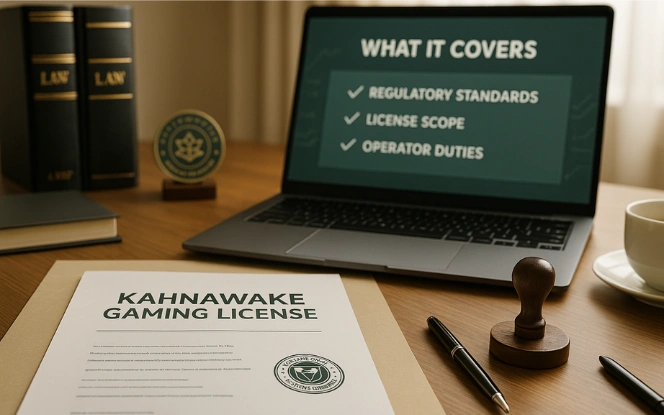
The Kahnawake Gaming License is an online gambling license issued in the Mohawk Territory of Kahnawake in Quebec, Canada. It is one of the few long-running North America–based licensing frameworks for online gambling operations.
The license can support online casinos, poker rooms, and sportsbooks. It is not a federal Canadian license, but it is widely recognized in international gaming circles because of its regulatory consistency and long operating history.
The Role of the Kahnawake Gambling Commission
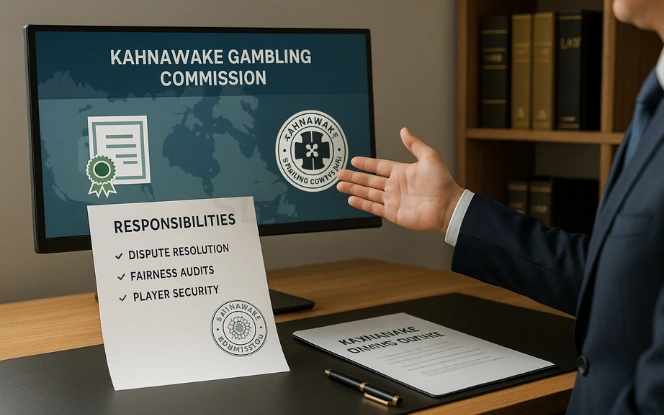
The Kahnawake Gambling Commission (KGC) oversees and regulates all gaming operations based in the territory. It ensures that licensed entities operate fairly, transparently, and in accordance with strict Kahnawake gaming regulations.
The Commission monitors everything from player protection policies to the financial solvency of operators. It also handles complaints and disputes. This ensures accountability and helps protect both operators and players.
Why Choose Kahnawake for a Gaming License?
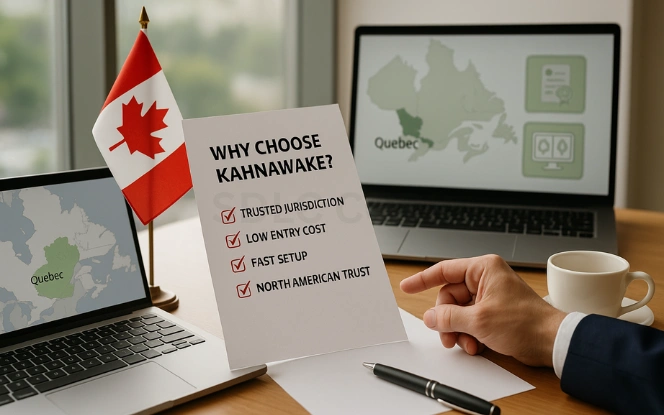
Several reasons make the Kahnawake jurisdiction attractive for online gaming businesses:
- Reputation: It’s one of the oldest online gaming jurisdictions in the world.
- Regulatory stability: The rules are clear and well-documented.
- Efficient licensing: The application process is streamlined compared to many European jurisdictions.
- Tax advantages: The cost of maintaining the license and the tax obligations are lower than in many other regions.
Kahnawake is usually the right fit for operators who want a practical licensing route with credible oversight, relatively efficient approval, and stronger relevance to North American operations than many offshore alternatives.
Online Casino License Canada: Where Kahnawake Fits In
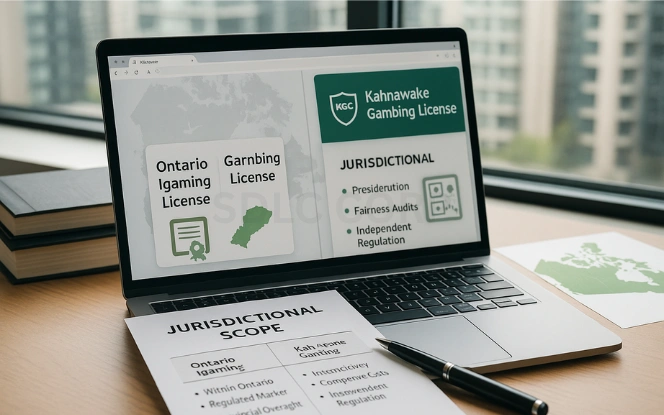
Canada does not operate under one unified national online gambling framework. Provinces control gambling within their own borders, which means Kahnawake occupies a separate and unusual position within the broader Canadian landscape.
While it is not a substitute for every provincial approval, the Kahnawake license is often used by operators serving international marketsand by businesses that need a more flexible framework than a province-specific Canadian license would provide.
Types of Licenses Offered
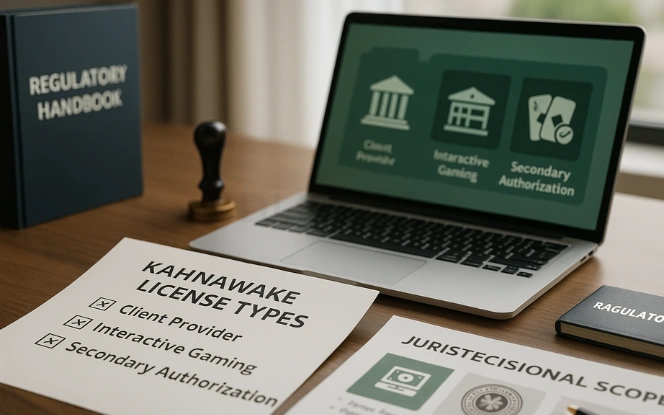
The KGC offers several types of gaming licenses:
- Client Provider Authorization: For online casino and poker operators.
- Interactive Gaming License (IGL): This is currently held only by Mohawk Internet Technologies, which provides hosting for authorized operators.
- Secondary Client Provider Authorization: For companies related to an existing licensee.
Most applicants aim for the Client Provider Authorization, which allows full operation of gaming sites under the Kahnawake framework.
How to Apply for a Kahnawake License
To apply for a Kahnawake license, follow these core steps:
1. Pre-Application Review
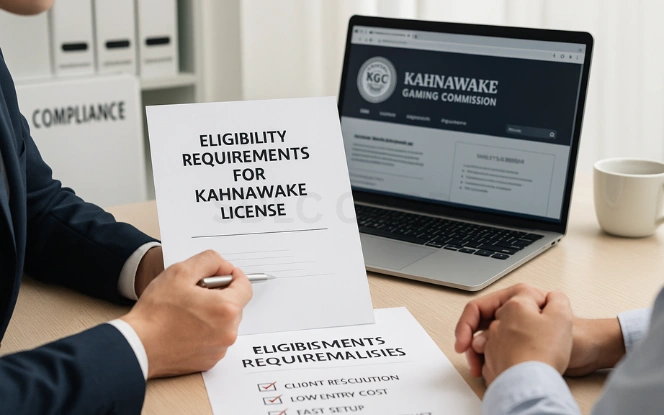
This step ensures you understand the requirements. It’s advisable to consult with legal or licensing experts familiar with Kahnawake gaming regulations.
2. Prepare Documentation

You must submit:
- Business plan
- Corporate documents
- Software details
- Security protocols
- Financial records
- Personal disclosures for directors and shareholders
The Commission performs due diligence on all key personnel.
3. Pay Application Fees

There are fees for submitting your application, as well as annual license fees. These costs are relatively modest compared to other jurisdictions.
4. Technical Testing

Your gaming systems must be hosted at Mohawk Internet Technologies. They will undergo testing to ensure compliance with fairness and security standards.
Ongoing Compliance Obligations
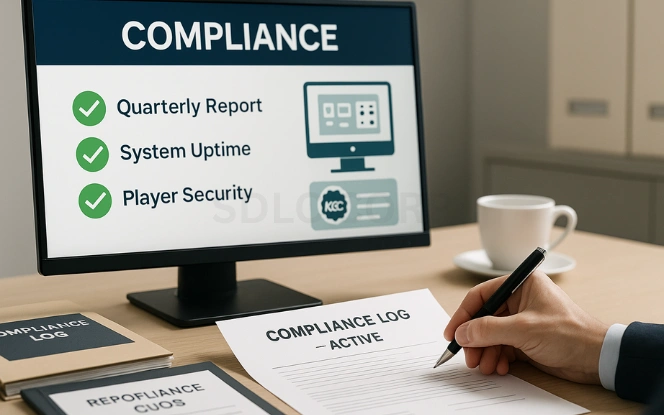
Once licensed, operators must treat compliance as an ongoing operational requirement rather than a one-time approval step
Financial reporting: Submit required reports on schedule.
Approved hosting: Continue using the mandated hosting framework.
Operational change reporting: Notify the Commission about material ownership or business changes.
Security and player protection: Maintain secure systems and protect player data.
Dispute handling:Resolve complaints in line with Kahnawake rules and procedures.
Failure to maintain these obligations can lead to suspension or revocation of the license.
Offshore Gaming Licenses and Global Competition
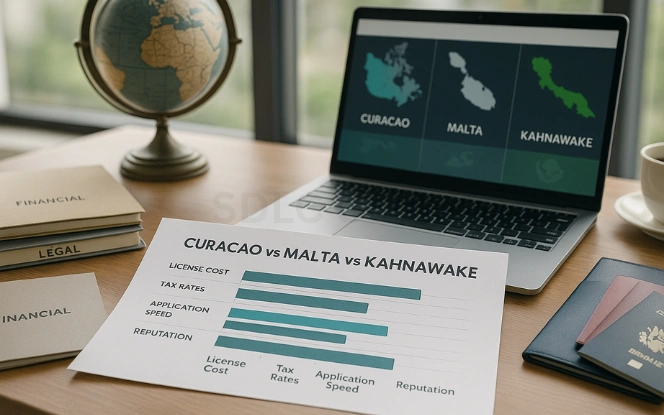
Many operators compare Kahnawake with jurisdictions such as Curaçao, Malta, and Gibraltar when choosing a base for their online casino software platform where to license.
Compared to these, the Kahnawake Gaming License offers:
- Faster processing times
- Closer proximity to North American markets
- Strong player protection policies
- A credible but less bureaucratic regulatory environment
Kahnawake is usually most attractive to businesses that want faster approval than higher-compliance European jurisdictions, stronger North American relevance, and a more credible framework than lighter-touch offshore options.
Related: Isle of Man gaming license and Curaçao iGaming licensing process (B2C/B2B)
Hosting Requirements

One unique feature of the Kahnawake license is its hosting requirement. All gaming operations must be hosted at Mohawk Internet Technologies (MIT), a secure data center within the territory.
This centralization allows the Kahnawake Gambling Commission to monitor operations more effectively. MIT offers infrastructure tailored to online gaming, including compliance auditing and cyber-security.
Tax Considerations

One of the advantages of choosing Kahnawake is the favorable tax treatment. While not a tax haven, the jurisdiction does not impose a corporate income tax on gaming operators, provided they do not conduct business with residents of Quebec or elsewhere in Canada unless permitted.
This makes Kahnawake especially appealing to startups and businesses targeting global players.
Limitations of the Kahnawake License
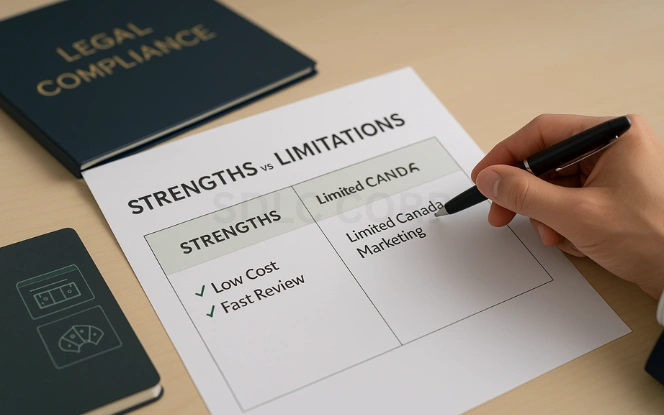
While the license offers many benefits, there are some limitations to consider:
- Restricted marketing: You cannot actively market your services in most parts of Canada without additional provincial permissions.
- Regulatory perception: Some jurisdictions may not fully accept the license as equivalent to their own.
- Hosting requirement: Operators must use a specific hosting provider.
These limitations are often outweighed by the license’s flexibility and cost-effectiveness.
Updates and Regulatory Changes
Recent updates have focused on stronger AML controls, stricter background checks, and enhanced responsible-gambling expectations.The Kahnawake Gambling Commission periodically updates its rules, and staying informed is essential for compliance.|
Recent regulatory updates have focused on:
- Enhanced anti-money laundering controls
- Stricter background checks for applicants
- Player protection measures, especially around responsible gambling
Operators should regularly review the official KGC documentation to stay compliant with evolving standards.
Case Studies and Examples

Kahnawake has historically been used by many early-stage and mid-sized operators that want to establish a live regulated operation before expanding into more market-specific licensing regimes.
It is often used as a practical early-stage framework for businesses that later add jurisdiction-specific licenses as they scale.
How Kahnawake Supports Responsible Gambling
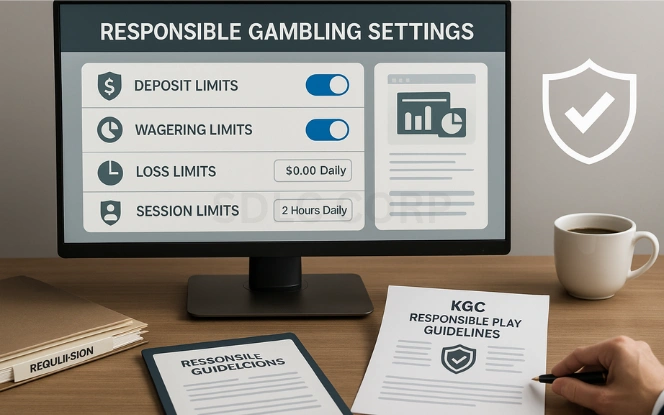
The KGC has incorporated responsible gambling as part of its core regulatory framework. Licensees must:
- Offer self-exclusion tools
- Promote responsible gambling resources
- Prevent underage gambling
- Train staff to recognize gambling-related harm
These measures build trust with users and align with global best practices.
Future Outlook

As gambling regulation becomes stricter globally, jurisdictions like Kahnawake are likely to face greater scrutiny. Operators building sports betting platforms should monitor these developments closely, but long-established frameworks with stable oversight may remain attractive to operators that need a practical balance of credibility, cost, and operational flexibility.
Kahnawake’s long history and North America–adjacent positioning should continue to matter for operators evaluating licensing options in that part of the market.
Conclusion
The Kahnawake Gaming License remains a practical and respected licensing option for online gambling. Operators planning to build under this license can explore SDLC Corp’s iGaming software development and casino game development services. Operators, especially those that value a long-running framework with stronger North American relevance than many offshore alternatives.
It is not the right fit for every operator, but for businesses that want a credible, efficient, and comparatively flexible licensing route, Kahnawake remains a serious jurisdiction to evaluate.
FAQs:
What Is the Kahnawake Gaming License?
It is an online gambling license issued in the Mohawk Territory of Kahnawake in Quebec, Canada, allowing approved operators to run online gambling services under the oversight of the Kahnawake Gambling Commission.
How Do I Apply for a Kahnawake Gaming License?
Applicants must submit business documents, financial information, software and security details, and personal disclosures for directors and shareholders. Hosting must also be handled through Mohawk Internet Technologies.
Is the Kahnawake License Recognized Internationally?
Yes. While it is not a substitute for every local market approval, it is widely respected in international gaming circles because of its long history and consistent regulation.
What Are the Main Benefits of a Kahnawake License?
The license allows operations from qualifying jurisdictions. Operators must ensure their target markets permit access under the Kahnawake framework. Local market approvals may still apply depending on where players are based.
Can I Use the Kahnawake License to Operate in Canada?
The license can support international operations, but it does not automatically grant full local marketing rights across Canadian provinces. Additional provincial permissions may still be required depending on where and how you operate.