Introduction
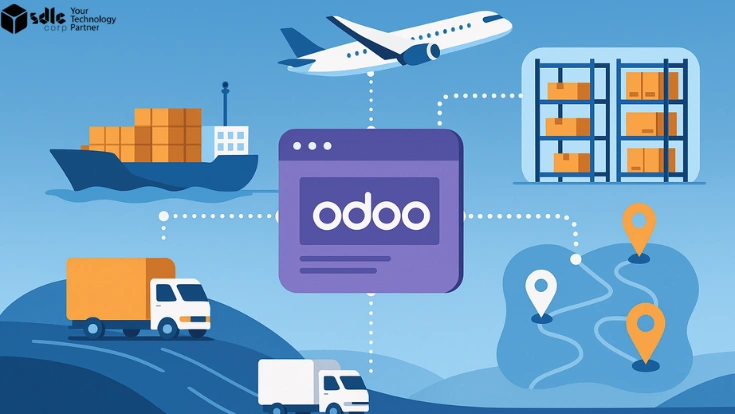
Odoo for Transportation and Shipping helps logistics providers manage dispatch, fleet, billing, and inventory from a single ERP platform. Many transportation companies rely on disconnected systems that reduce visibility and slow operations. Odoo eliminates these silos through a centralized Odoo Logistics Management System. As a result, businesses gain real-time insight, better delivery control, and predictable operational costs while maintaining operational consistency.
To understand how this approach fits broader logistics workflows, many businesses explore Odoo ERP solutions for transportation and logistics operations.
Key Challenges Faced by Transportation Companies
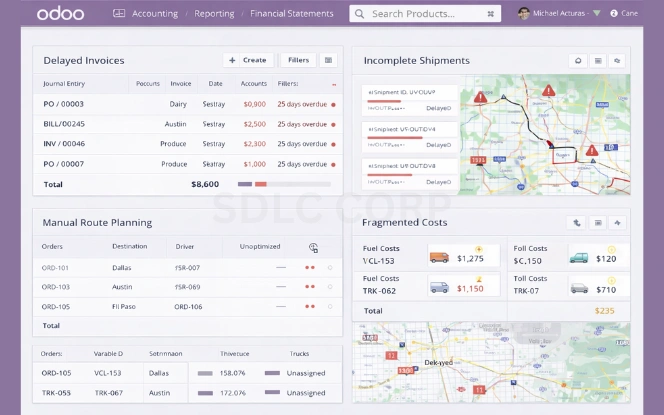
Many Odoo ERP for Transportation Companies implementations begin after repeated operational failures. These issues often grow slowly but create long-term inefficiencies.
Common challenges include:
- Fragmented logistics and accounting systems
- Manual route planning and vehicle allocation
- Delayed invoicing due to shipment confirmation gaps
- Limited insight into fleet and delivery costs
- Compliance reporting challenges across regions
Without a unified Odoo ERP for Logistics Industry, these problems restrict visibility and delay decisions. Over time, margins decline and growth slows. Centralized ERP adoption becomes essential to regain operational balance.
A deeper look into common ERP challenges in transportation and logistics environments helps clarify why system unification matters.
How Odoo Optimizes Transportation & Shipping Operations
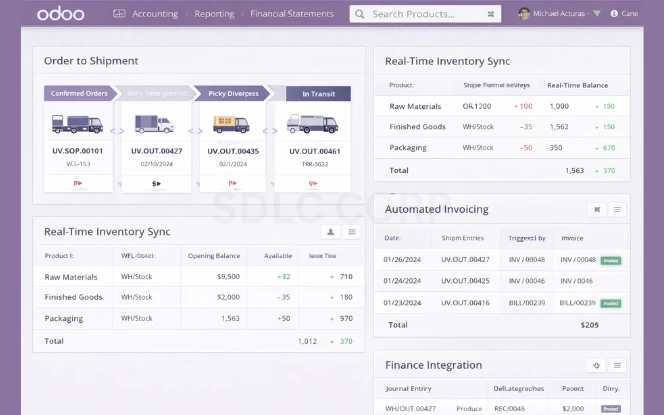
Odoo connects logistics, finance, inventory, and fleet data into a single operational workflow. This integration removes manual handoffs and improves coordination across teams. Through Odoo Shipping and Delivery Management, transportation businesses streamline daily execution.
Key operational capabilities include:
- Automatic shipment generation from confirmed orders
- Real-time synchronization of inventory and delivery execution
- Invoice triggers linked to shipment milestones
- Shared data access for operations and finance teams
As a result, logistics operations become faster, more accurate, and easier to scale without adding complexity.
This model aligns closely with end-to-end logistics workflow automation using Odoo ERP
Fleet and Route Management with Odoo
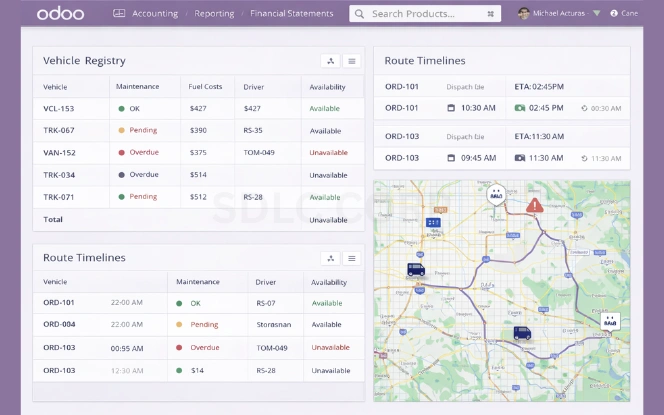
Efficient fleet control is essential for on-time delivery and cost control. Odoo Fleet and Route Management provides structured oversight across vehicles, drivers, and routes. Fleet data remains centralized and continuously updated.
Core fleet capabilities include:
- Centralized vehicle records with full maintenance history
- Fuel and repair cost tracking per vehicle
- Driver scheduling based on availability and load capacity
- Route planning aligned with delivery timelines
With reliable fleet data, logistics managers reduce downtime, improve asset utilization, and maintain consistent delivery performance.
Many operators apply these principles through fleet and route optimization strategies built on Odoo ERP.
Real-Time Visibility and Performance Tracking
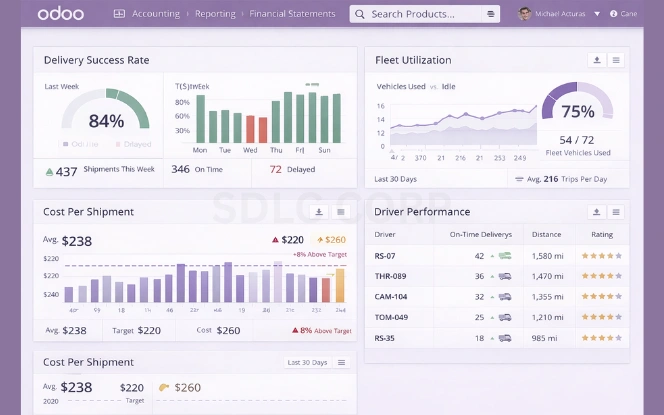
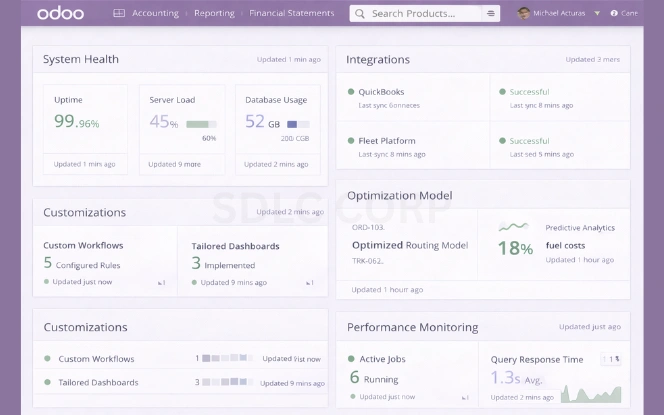
Using the Odoo Logistics Management System, decision-makers gain access to real-time dashboards that reflect actual operational activity. This visibility supports faster and more accurate decisions.
Performance insights include:
- Delivery performance by route and region
- Fleet utilization and idle capacity
- Cost per shipment and delivery margin
- Driver performance and route adherence
With shared, real-time data, teams move from reactive problem-solving to proactive operational improvement.
This approach mirrors how organizations use real-time logistics dashboards and reporting within Odoo.
Accurate Billing and Cost Control
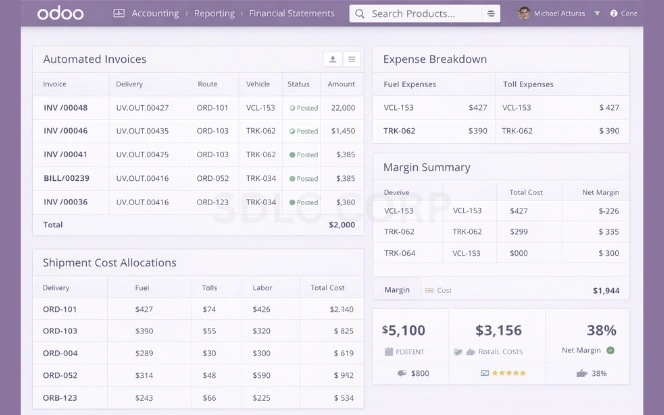
Financial accuracy depends on strong alignment between operations and billing. Odoo Shipping and Delivery Management ensures that invoicing reflects real delivery outcomes.
Financial controls include:
- Automated invoice creation after delivery confirmation
- Allocation of fuel, tolls, and labor costs per shipment
- Profitability tracking by customer and route
- Real-time monitoring of receivables and cash flow
As a result, transportation companies reduce billing disputes, improve cash flow predictability, and strengthen customer trust.
Integration with Logistics and Tracking Systems
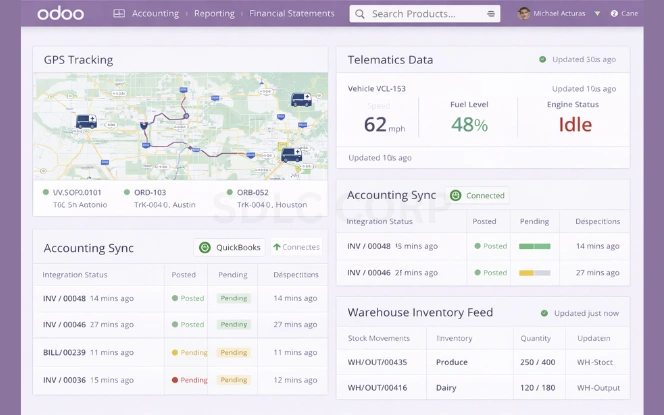
Odoo integrates seamlessly with existing logistics and operational tools. These integrations ensure continuity without duplicating work.
Supported integrations include:
- GPS and telematics platforms
- Accounting and financial systems
- Carrier and shipment tracking APIs
- Warehouse and inventory systems
This connectivity strengthens the overall value of Odoo ERP for Logistics Industry implementations and keeps operations synchronized.
Scaling Transportation Operations with Odoo

As logistics operations grow, Odoo for Transportation and Shipping scales without disruption. The platform adapts to higher volumes and broader networks.
Businesses can:
- Add vehicles, routes, and warehouses smoothly
- Support multi-location and multi-company logistics models
- Automate high-volume shipment processing
This flexibility allows both regional and global transport companies to scale while maintaining operational stability.
Why Choose SDLC Corp for Odoo Implementation
SDLC Corp specializes in Odoo ERP for Transportation Companies with a strong focus on operational alignment and long-term system reliability.
Key strengths include:
- Industry-specific logistics ERP expertise
- Secure system integration and customization
- Scalable architecture aligned with business growth
- Optional AI Development Services for predictive routing and analytics
This approach ensures stable performance, controlled growth, and measurable operational value.
Conclusion
Odoo for Transportation and Shipping provides a unified ERP foundation for efficient logistics operations. By combining fleet control, delivery management, billing automation, and real-time insights, Odoo enables transportation companies to operate with clarity and control. When implemented correctly, it supports both daily execution and long-term growth. With SDLC Corp as an implementation partner, businesses gain the expertise required to turn ERP adoption into sustained operational improvement.
FAQs
What Is Odoo for Transportation and Shipping Used For?
Odoo for Transportation and Shipping is used to manage fleet operations, dispatch workflows, deliveries, billing, and reporting within one ERP system. It helps logistics businesses reduce manual work, improve visibility, and maintain operational control across transportation processes.
How Does an Odoo Logistics Management System Improve Efficiency?
An Odoo Logistics Management System centralizes logistics data into a single platform. It connects orders, shipments, fleet activity, and billing in real time. As a result, teams avoid data silos, reduce delays, and make faster operational decisions.
Is Odoo ERP Suitable for Transportation Companies of All Sizes?
Yes, Odoo ERP for Transportation Companies supports both small fleets and large multi-location logistics networks. Its modular structure allows businesses to start with core features and expand as operations grow without disrupting workflows.
How Does Odoo Support Fleet and Route Planning?
Odoo Fleet and Route Management enables transportation teams to manage vehicle records, maintenance schedules, driver assignments, and route planning. This structured approach helps reduce downtime, control fuel costs, and improve on-time delivery performance.
Can Odoo Handle Shipping and Delivery Management Efficiently?
Odoo Shipping and Delivery Management automates shipment creation, delivery tracking, and invoicing based on delivery milestones. This alignment improves billing accuracy, reduces disputes, and ensures smoother coordination between operations and finance teams.
Does Odoo ERP Integrate With Existing Logistics Systems?
Yes, Odoo ERP for Logistics Industry implementations integrate with GPS platforms, telematics systems, accounting tools, carrier APIs, and warehouse software. These integrations ensure consistent data flow and minimize manual reconciliation.
Why Is Odoo ERP a Long-Term Solution for Logistics Businesses?
Odoo ERP provides scalability, real-time visibility, and operational consistency. Transportation companies benefit from centralized data, improved cost control, and the flexibility to adapt as logistics demands evolve over time.