Introduction
AI in energy has become vital for modern power systems that must deliver reliability, sustainability, and efficiency. Advanced algorithms now process massive datasets in real time, enabling smarter energy generation and distribution. As a result, utilities and providers achieve stronger performance and greater resilience.
In renewable energy, machine learning predicts wind variations, forecasts solar radiation, and improves battery storage management. Smart grid AI balances supply and demand, prevents outages, and connects clean energy with existing systems. Predictive analytics ensures renewable resources stay competitive without sacrificing stability.
At the same time, AI in oil and gas boosts drilling precision, strengthens pipeline safety, and increases equipment reliability. Robotics and computer vision take over hazardous inspections, reducing human risk. Predictive maintenance identifies issues before they escalate, cutting downtime and limiting environmental impact. This article highlights how AI fuels innovation across renewable energy, smart grids, and oil and gas. It shows why artificial intelligence has become the foundation for efficient, resilient, and sustainable energy operations. To explore more, visit AI Development Services

1. The Landscape of AI in Energy
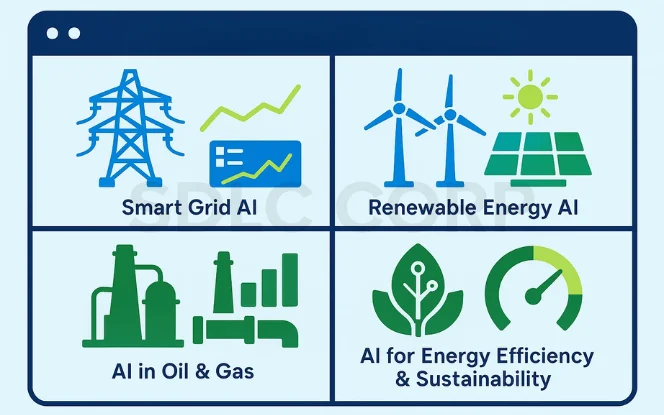
AI in energy spans a wide range of technologies that collectively improve efficiency, reliability, and sustainability. These tools are not confined to a single sector. Instead, they form a connected ecosystem where smart grid AI, renewable energy AI, and AI in oil and gas work together to strengthen operational performance.
Core AI Technologies in Energy
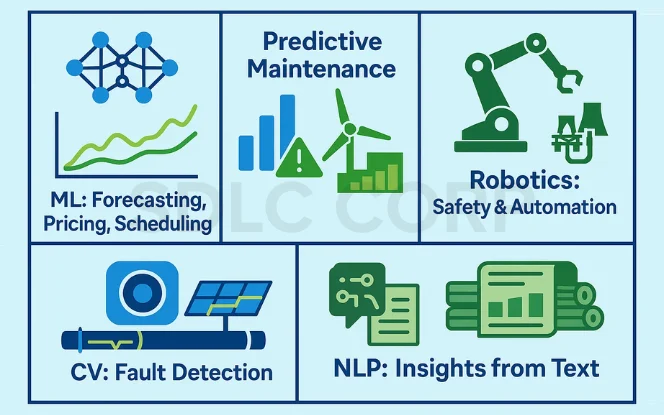
- Machine Learning (ML): Enhances demand forecasting, dynamic pricing, and renewable scheduling. Supervised models predict load patterns, while deep learning interprets sensor-heavy environments such as smart grids.
- Predictive Analytics: Powers predictive maintenance by spotting failure trends in turbines, substations, and drilling rigs. As a result, downtime decreases and repair costs are minimized.
- Robotics: Plays a vital role in high-risk inspections at nuclear plants and offshore rigs. Robots not only improve worker safety but also automate repetitive tasks.
- Computer Vision (CV): Identifies cracks in solar panels, corrosion in pipelines, and irregularities in industrial equipment.
- Natural Language Processing (NLP): Analyzes operator logs, trading reports, and customer feedback to deliver actionable insights.
Table: AI Technologies and Energy Applications
| AI Technology | Applications in Energy |
|---|---|
| ML | Renewable forecasting, smart grid management, dynamic pricing |
| Predictive Analytics | Predictive maintenance, asset optimization, trading risk evaluation |
| Robotics | Offshore drilling, nuclear inspections, automated equipment repair |
Cross-Sector RelevanceAI in energy unites renewable technologies with oil and gas applications. For instance, ML models predict wind speeds for turbines, while robotics perform safer inspections on offshore platforms. These innovations lower risks, improve asset performance, and promote sustainable growth across both traditional and renewable sectors.
Learn More: Generative AI for Energy 2. AI in Traditional Energy SectorsAI in Oil & Gas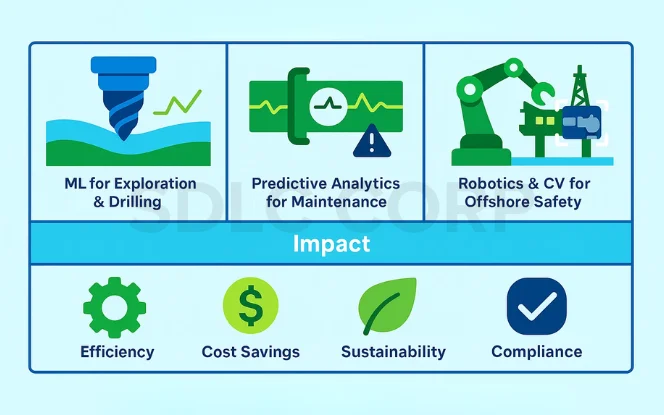 AI is transforming oil and gas by modernizing exploration, drilling, and equipment maintenance.
Exploration & Drilling Optimization
Predictive Maintenance in Pipelines & Rigs
Robotics & CV for Offshore Safety
Impact: AI in oil and gas improves efficiency, cuts costs, and supports sustainability while reinforcing compliance with safety and environmental rules. AI in Nuclear Power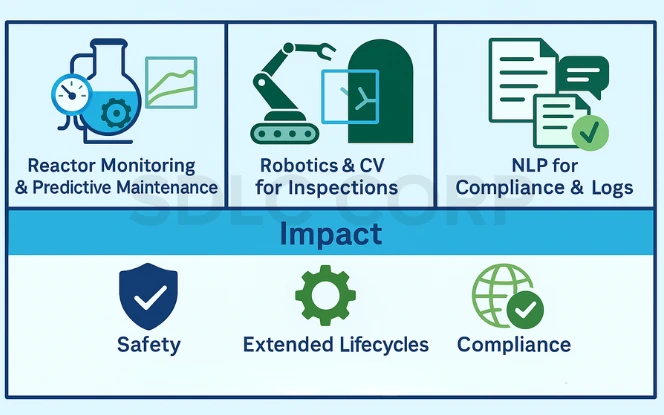 In nuclear power, AI strengthens safety, precision, and predictive operations.
Reactor Monitoring & Predictive Maintenance
Robotics in Hazardous Inspections
NLP for Compliance & Logs
Impact: AI enables nuclear facilities to enhance safety, extend asset lifecycles, and maintain compliance with global regulations. 3. AI in Power Generation & Smart Grids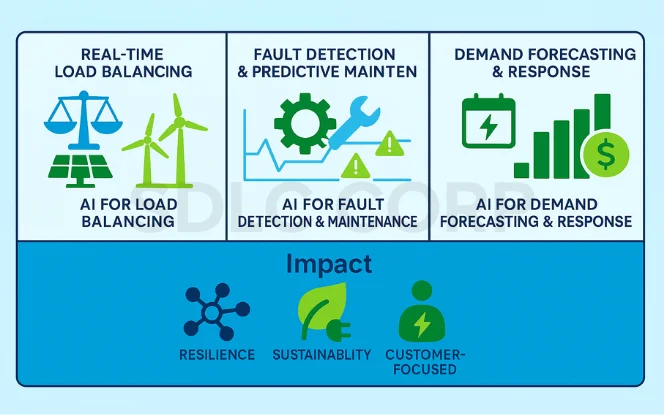 Smart grid AI is reshaping how electricity is produced, delivered, and consumed. It enables grids to balance supply and demand in real time, detect faults instantly, and integrate renewable sources more efficiently.
Real-Time Load Balancing
Fault Detection & Predictive Asset Maintenance
Demand Forecasting & Response
Impact: AI in power generation creates a self-adjusting grid where renewable technologies, predictive analytics, and automation work together. As a result, grids grow more resilient, sustainable, and customer-focused. 4. AI for Renewable Energy Optimization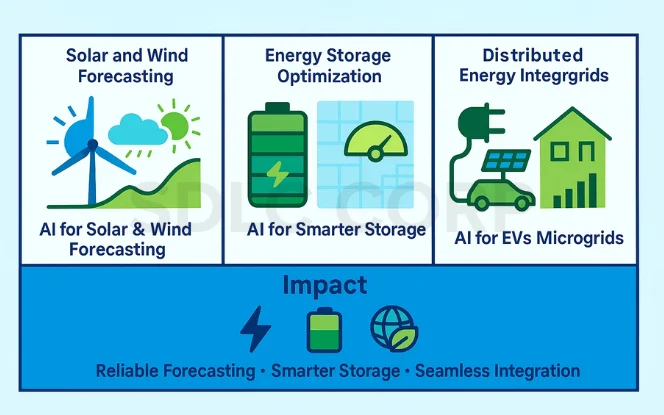 Renewable energy AI tackles one of the sector’s biggest challenges: the variability of solar and wind generation. It delivers reliable forecasting, smarter energy storage, and seamless integration of distributed resources. As a result, utilities can expand renewable adoption without reducing stability.
Solar and Wind Forecasting with AI
Energy Storage Optimization
Distributed Energy Integration (EVs & Microgrids)
Case Study: Google DeepMind & Wind FarmsGoogle DeepMind applied AI to forecast wind output 36 hours in advance. As a result, the market value of wind energy rose by 20% as production was better matched to demand. This case illustrates how predictive analytics enhances both profitability and sustainability in renewable operations.
Read Also : Generative AI for Agriculture 5. Smart Energy Management in Buildings & Industry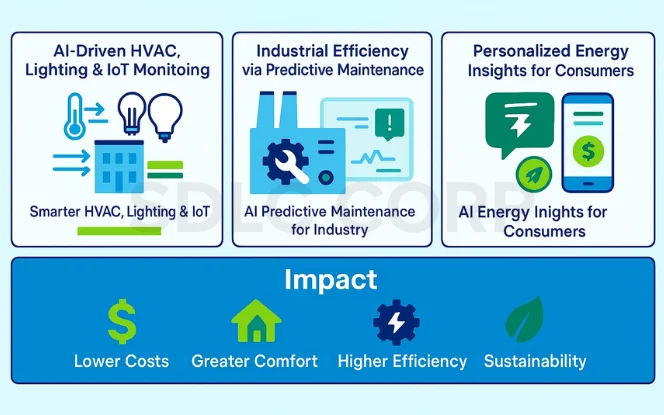 AI in energy goes beyond power generation by optimizing how buildings and industries consume electricity. With IoT, robotics, and predictive analytics, smarter energy management is now possible at every level.
AI-Driven HVAC, Lighting & IoT Monitoring
Industrial Efficiency via Predictive Maintenance
Personalized Energy Insights for Consumers
Impact: AI in buildings and industries lowers costs, boosts comfort, and enhances energy efficiency. As a result, both businesses and households move closer to long-term sustainability goals. 6. AI in Energy Trading & Markets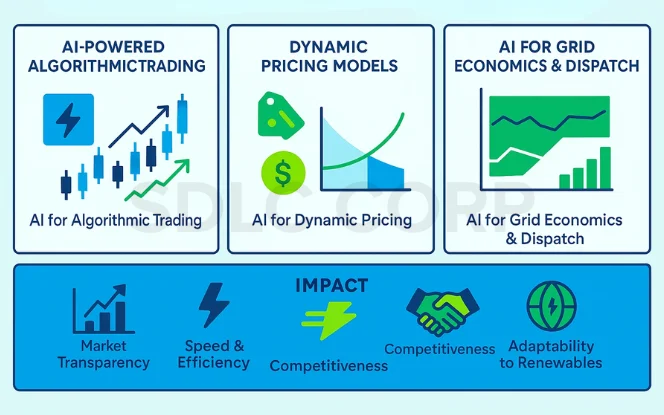 AI is transforming energy markets by delivering greater efficiency, speed, and accuracy in financial operations. Algorithmic trading and dynamic pricing models empower smarter decisions in a volatile sector.
AI-Powered Algorithmic Trading
Dynamic Pricing Models
AI for Grid Economics & Real-Time Dispatch
Impact: AI in trading supports markets that are transparent, competitive, and adaptive to the shift from fossil fuels to renewables.
Check Out : AI for Agriculture 7. Case Studies: Real-World Applications of AI in Energy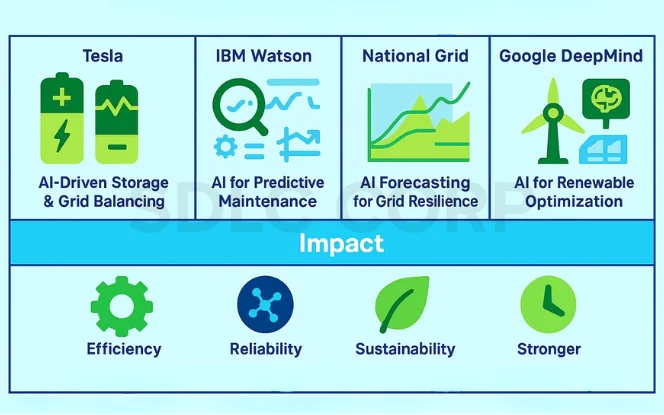 AI in energy is already being applied by global leaders to address challenges in forecasting, storage, and grid operations. These case studies show how renewable energy AI, smart grid AI, and predictive analytics deliver tangible improvements.
Tesla – Energy Storage & Grid Services
IBM Watson – Predictive Analytics in Utilities
National Grid – Smart Grid AI Forecasting
Google DeepMind – Renewable Energy Optimization
Impact: These examples confirm that AI in energy strengthens efficiency, reliability, and sustainability across diverse applications. 8. Benefits of AI in the Energy Industry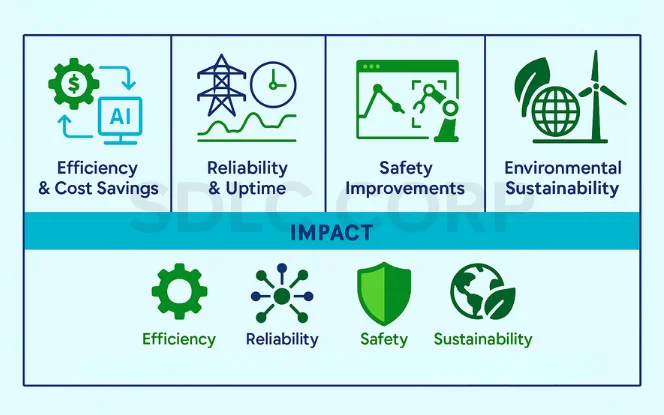 AI in energy delivers wide-ranging advantages that extend far beyond cost reduction. It ensures that grids, utilities, and industries function more safely, reliably, and sustainably.
Efficiency & Cost Savings
Reliability & Uptime
Safety Improvements
Environmental Sustainability
Impact: By enhancing efficiency, reliability, safety, and sustainability, AI establishes the groundwork for the future of global energy systems.
Read More : Blockchain Developers and Their Contributions to Sustainable Energy 9. Challenges & Limitations of AI in Energy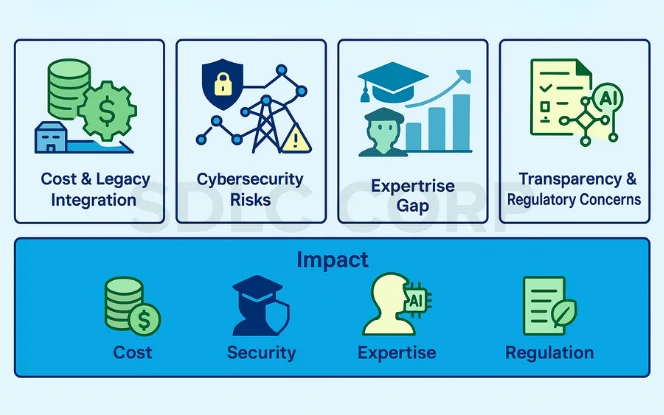 Although promising, AI in energy still encounters serious adoption barriers. These obstacles include financial, technical, and security concerns.
Cost & Legacy Integration
Cybersecurity Risks
Expertise Gap
Transparency & Regulatory Concerns
Impact: Addressing these challenges is vital for AI in energy to achieve secure, scalable, and sustainable adoption.
Explore More : AI for Environmental Management 10. Future Outlook: AI and the Energy Transition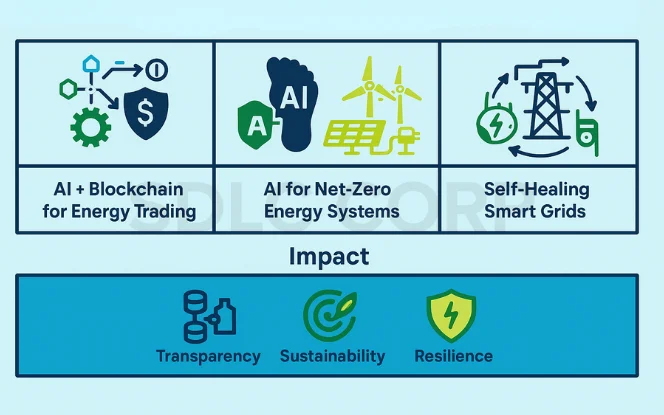 AI will remain at the heart of the global shift toward decarbonization. Alongside blockchain, advanced storage, and self-healing grids, it opens new opportunities for energy innovation.
AI + Blockchain for Energy Trading
AI for Net-Zero Energy Systems
Self-Healing Smart Grids
Impact: The future of AI in energy blends resilience, sustainability, and transparency, creating a strong foundation for the worldwide energy transition.
Learn About : How Blockchain Developers Support Renewable Energy Credits Systems?  ConclusionAI in energy has become essential, serving as the foundation of modern power systems. From renewable forecasting in solar and wind to oil and gas applications in drilling and pipeline safety, artificial intelligence drives progress in efficiency, safety, and innovation. Solutions such as the Enterprise AI Development Solution provide companies with expertise in ML, NLP, CV, and predictive analytics. In turn, both renewable and conventional sectors achieve clear, measurable results. Organizations that embrace smart grid AI today reduce costs while aligning with net-zero goals. Ultimately, investing in AI is a strategic move toward building an energy ecosystem that is sustainable, reliable, and ready for the future. FAQs |