
How to Create a Slot Machine Game in 2026 — Complete Guide
This complete guide covers how to create a slot machine game in 2026 — from business model and game math to tech stack, QA, compliance, and launch.
- Whether you are building for social or real-money markets, the process starts with business model and math, not art.
- Start with game math before you design the art.
- Pick a tech stack that matches your platform and budget.
- Plan backend, LiveOps, and compliance early.
- Budget for QA, launch support, and long-term updates.
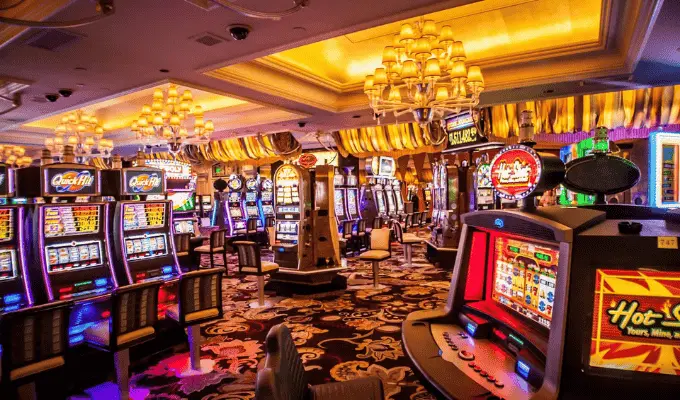
Slot games remain one of the strongest-performing formats across social and real-money products. In 2026, success depends on more than reels and symbols.
You need solid game math, a reliable RNG approach, a practical tech stack, scalable backend services, and a UI that works smoothly on every device. This guide explains what to plan before production begins.
For a practical example of scope, delivery, and outcomes, see our slot game case study.
Choose Your Slot Business Model
Before design or coding, decide how the product will work and how players will pay.
A) Social Slot
Most common approach
- Uses virtual coins; monetizes via IAP, ads, subscriptions
- Faster approvals, broader reach
- Requires fraud controls, economy tuning, and LiveOps
B) Real-Money Slot (RMG)
Regulated environment
- Strong regulation requirements
- Needs RNG certification, jurisdiction rules, KYC/AML
- Includes operator/platform integration
Recommendation: Many teams start with a social slot to validate core gameplay, content cadence, and retention before taking on the extra cost and compliance work required for real-money launches.
Need a Slot Build Estimate?
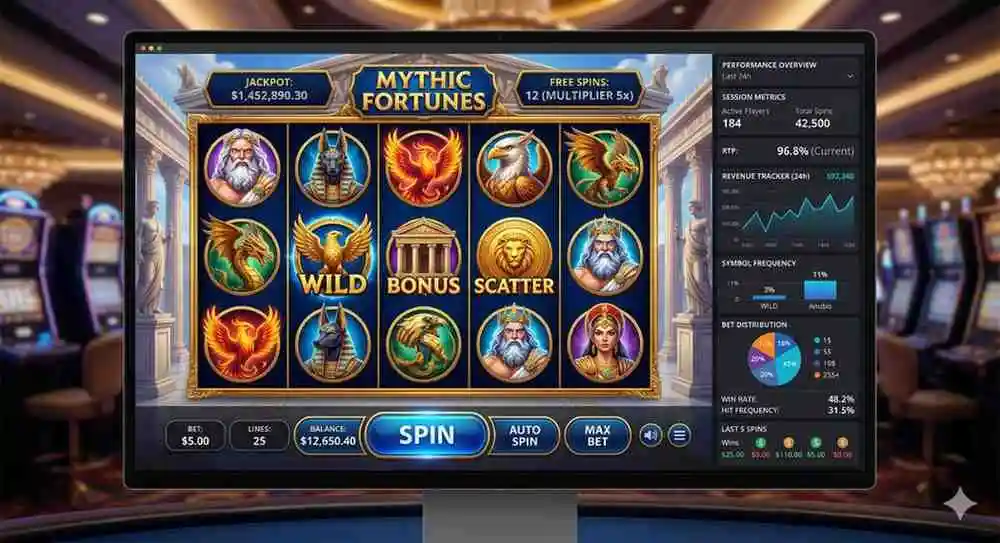
Core Parts of a Slot Machine Game
Every modern slot (social or real-money) includes:
Gameplay Components
Core Elements:
- Reels (3–6 reels, typically 5)
- Symbols (low/mid/high, wild, scatter)
- Paylines or ways-to-win
- Paytable (symbol values + bonus rules)
Special Features:
- Bonus features (free spins, multipliers)
- Win presentation (VFX/SFX)
- Big win moments
- Near-miss mechanics
Product Components
- Economy system (coins, sinks, bundles)
- LiveOps (events, quests, seasonal)
- Crash reporting + monitoring
- Analytics events + dashboards
- Fraud detection
- Admin panel for tuning
Slot Game Math (RTP, Volatility, Hit Rate)
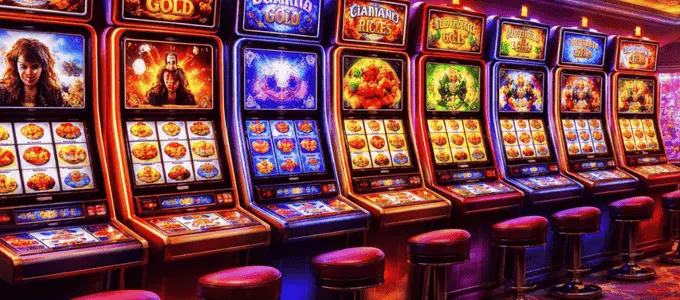
A slot machine game feels good because the math is right, whereas a game with poor RTP calibration loses players quickly regardless of art quality. Art improves the experience, but math controls the pace, tension, and reward pattern.
RTP
Return to Player
Long term expected payout percentage. Example: 96% RTP returns ~96 coins per 100 wagered.
Volatility
Variance
Low: frequent small wins
High: fewer wins, bigger spikes
Hit Rate
Win Frequency
How often any win occurs. Typical range: 25–35%
Practical Approach (Simple Framework)
- Choose RTP target (e.g., 92–96 for social; RMG depends on jurisdiction)
- Decide volatility style (casual = lower, core casino = medium)
- Build symbol distribution + paytable + bonus probability
- Simulate millions+ spins and verify: actual RTP, hit frequency, bonus frequency, payout curve
Related reading: Volatility and risk design affect player behavior as much as theme and visuals.
Read our guide to volatility and risk management in slot game design.
UI/UX Design for Slot Machine Games
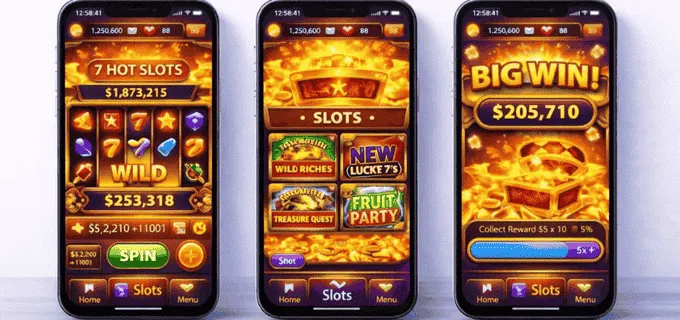
Great slot UI should feel polished, stay readable on small screens, and support monetization without looking cluttered.
Best-Practice UI Rules
- Keep the spin button dominant, thumb-friendly (mobile)
- Provide instant clarity: bet size, balance, win amount
- Use micro-animations (button press, reel start/stop)
- Present big moments well: big win, mega win, bonus entry
- Maintain readable contrast (dark backgrounds + bright UI accents)
UX Elements Players Expect in 2026
- Quick bet change + "hold to spin"
- Skip animations option
- Accessibility: color contrast
- Turbo / Auto spin (with safe limits)
- Clear bonus explanations
- Readable typography
Design Tip
Lock the core math, bonus triggers, and onboarding flow before polishing animation and reward presentation. That usually leads to cleaner iteration later in production.
Technology Stack for Slot Games
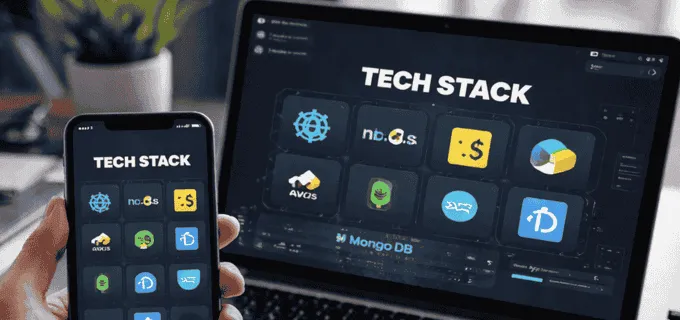
Option A: Unity
Best for mobile-first products, rich animation, and faster iteration on gameplay and UI.
Option B: Web / HTML5
Best for instant play, browser access, and cross-platform distribution. It still needs a solid backend, caching, and anti-abuse controls.
Option C: Unreal
Unreal is best for premium 3D visuals and highly differentiated experiences, although it carries a higher development cost and longer iteration cycle. It is less common for standard slot production because it adds cost and complexity.
Practical stack recommendation
Start with a client stack that fits your launch channel. For most slot products, Unity or HTML5 is easier to maintain than an overbuilt 3D stack.
Backend & LiveOps Architecture for Slot Games
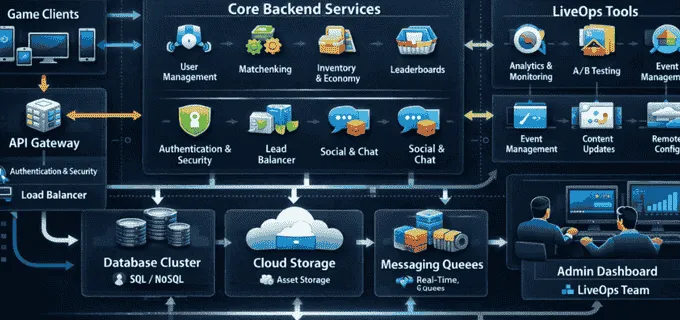
A slot game without LiveOps support rarely performs well for long. Plan the backend before content production begins.
Must-Have Backend Services
- Player profile + inventory
- Session validation, anti-tamper
- Offers/store
- A/B testing
- Wallet/balance (virtual or real)
- Config service (events, bonuses)
- Leaderboards
- Telemetry + analytics
LiveOps That Drives Revenue in 2026
- Daily missions / streaks
- Limited-time events (collect, spin goals)
- Seasonal passes (soft version works well for social casino)
- Offer personalization based on spend/behavior
Define the event taxonomy before launch so session length, bonus usage, and offer performance are easy to measure later.
Optimize animation timing, memory use, and asset sizes early if the game needs to run well on lower-end mobile devices.
RNG, Fairness & Certification
Social Casino
You still need fairness and consistency—especially to avoid:
- Exploit loops
- Economy imbalance
- Legal risk from "misleading odds"
Real-Money (RMG)
You’ll typically need:
- Certified RNG approach (depends on jurisdiction)
- Auditable logs
- Secure outcome generation
- Compliance-ready reporting
In regulated environments, outcomes must come from a verifiable math model and a secure RNG approach. The logic should be consistent, testable, and documented from the start — since retroactive math documentation is not accepted by most certification labs.
Compliance & Platform Constraints for Slot Machine Games
Define platform and compliance constraints before production locks the design.
Constraints to Define Early
- Jurisdiction rules (RMG)
- Store policies (Apple/Google)
- Ad network policies
- Age gating and disclosures
Even for Social Casino, You Should:
- Avoid misleading odds messaging
- Apply clear responsible gameplay UX
- Implement anti-fraud + anti-abuse
Document regional rules, app-store policies, age gating, disclosure needs, and payout flows early so design and engineering stay aligned.
QA Checklist for Slot Machine Game Development
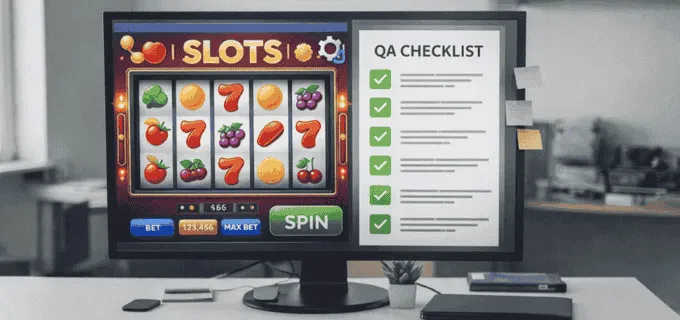
Before you create a slot machine game that is ready for distribution or certification, QA must cover bonus states, payout edges, and event tracking — since these are the areas where slots break most predictably.
- Reel stop logic never desyncs from outcome
- Paytable is correct for all symbols
- Bonus triggers match probability rules
- Multipliers stack correctly
- Auto-spin respects limits and interrupts correctly
- Economy: bet sizing + affordability checks
- Store offers deliver correctly (and restore purchases)
- Analytics events fire correctly (spin_start, spin_result, bonus_start, bonus_end, big_win, purchase)
- Performance: stable FPS, no memory spikes
- Anti-cheat: tamper detection, request signing
- Crash logs + monitoring enabled
How Much Does It Cost to Create a Slot Machine Game?
The cost to create a slot machine game depends on five variables: business model (social vs real-money), game complexity, art and animation scope, backend and LiveOps depth, and compliance or certification requirements. A social slot MVP and a certified real-money product are different scope categories with very different budgets.
| Scope | Type | Typical range | What drives the cost |
|---|---|---|---|
| Basic social slot MVP | Social / casual | $15,000 – $35,000 | Simple math model, stock art, minimal backend, no compliance |
| Mid-scope branded slot | Social / soft-launch | $35,000 – $80,000 | Custom art, bonus features, basic analytics, LiveOps hooks |
| Real-money slot with compliance | RMG / regulated | $80,000 – $200,000+ | RNG certification, lab testing, back-office integration, regulatory reporting |
| Multi-theme feature-rich product | RMG or premium social | $200,000 – $500,000+ | Multiple themes, full LiveOps, advanced math, own studio pipeline |
Ranges are estimates. Actual cost depends on team location, asset reuse, platform, and compliance jurisdiction.
The four factors that move the budget most:
1. Business model — A social slot has no RNG certification or regulatory overhead. A real-money slot adds lab testing, compliance documentation, and jurisdiction approval, which typically adds 4–10+ weeks and $30,000–$80,000 to the base build cost.
2. Art and animation scope — Stock symbol sets and template UI cost the least. Original character art, frame-by-frame animations, and cinematic intro sequences add substantially to both time and cost — since art is often 30–50% of a social slot budget.
3. Backend and LiveOps — A standalone social slot needs minimal backend. A slot with tournaments, seasonal events, player progression, and analytics requires a full LiveOps infrastructure, which typically adds $15,000–$40,000 to mid-scope builds.
4. Certification and compliance — Social games rarely require external testing. Real-money slot certification by a lab such as GLI, BMM, or iTech Labs adds $5,000–$20,000+ per jurisdiction, plus the time to resolve any math or logic failures during testing.
| Slot Type | Scope | Cost Range |
|---|---|---|
| Basic Social Slot | 1 theme, simple bonus, minimal backend | $15k – $35k |
| Mid-Level Slot | Multiple features, economy, offers, analytics | $35k – $80k |
| Advanced Social Casino Slot | LiveOps, A/B testing, personalization | $80k – $150k+ |
| RMG Slot | Certification + compliance + operator integration | $120k – $300k+ |
Scoping Tip
A useful estimate should explain scope and trade-offs — for example, key cost drivers and the impact of choices such as platform, bonus complexity, backend depth, and launch market.
Timeline: How Long Does It Take?

A realistic timeline for a quality slot build looks like this:
Week 1–2
Discovery, math plan, UX wireframes, tech plan
Week 3–6
Core gameplay + reels + base UI + payout logic
Week 7–10
Bonus features, economy, store, analytics
Week 11–12+
QA hardening, LiveOps hooks, optimization
RMG Additional Time
Add 4–10+ weeks for certification + compliance (depending on scope/jurisdiction)
Common Mistakes to Avoid
Starting with art before math
Weak win presentation
No LiveOps plan
No anti-abuse controls
No analytics event strategy
Conclusion
When you create a slot machine game in 2026, balancing math, design, engineering, QA, and LiveOps from the start separates a shippable product from one that needs expensive rework. When RTP, pacing, bonus logic, backend support, and analytics are planned together, the game is easier to launch and easier to improve after release.
For the next step, you can review our slot game development service page or see a practical slot game case study.
FAQs
How do I create a slot machine game from scratch?
To create a slot machine game, start with the business model, player flow, and math model. Then choose a client stack such as Unity or HTML5, define reels, symbols, bonus features, and event tracking, and build the backend services needed for offers, analytics, and updates. Real-money products also need extra work for certification, compliance, and payment-related flows.
What is the best platform to build a slot game?
Unity is a strong choice for mobile-first slot games because it supports rich animation, fast iteration, and cross-platform delivery. HTML5, however, works well for browser-based distribution and instant play. The best platform depends on your launch channel, content pipeline, and backend requirements.
How much does slot game development cost?
The cost to create a slot machine game ranges from $15,000–$35,000 for a basic social slot MVP to $200,000+ for a real-money product with full backend, LiveOps, and compliance certification. The four biggest cost drivers are business model (social vs real-money), art and animation scope, backend and LiveOps depth, and regulatory certification requirements. A simple social slot and a certified real-money slot are different scope categories — treat them as separate budgets. For a scope-specific estimate, contact SDLC Corp’s slot game team.
Which programming language is used for slot games?
Common slot game programming languages include C# for Unity and JavaScript or TypeScript for HTML5-based games. The right choice depends primarily on the platform, animation needs, and how the game will integrate with backend services and LiveOps tools.
Can I monetize a social slot game without real-money betting?
Yes. Social slot games — which you can create a slot machine game concept around without a gambling licence — often use in-app purchases, rewarded ads, battle passes, and virtual currency systems instead of real-money betting. That model works well when the economy, rewards, and content cadence are designed to keep players engaged.
Do I need a license to publish a slot machine app?
If the game includes real-money betting or payouts, you will generally need a license in the target jurisdiction and may also need certification from approved testing labs. Social slot games, however, often do not require gambling licenses, but they still need to follow app-store rules, privacy laws, and consumer protection standards.
How do I ensure fairness in my slot game?
Use a reliable RNG implementation and document how outcomes are produced, since documentation is required by most certification labs. For real-money slot products, labs such as GLI or iTech Labs may need to verify the math model and game logic. Even social products benefit from consistent, well-tested outcome logic because fairness problems damage trust quickly.
What features should I include to make my slot game engaging?
Strong retention in any slot machine game, in particular, comes from a clear core loop, satisfying win feedback, bonus features, progression systems, regular content updates, and a UI that stays readable on small screens. Features should support the core game rather than overwhelm it.