Custom Casino Game Development
We build custom casino games across slot, table, and multiplayer formats with support for gameplay systems, interface design, and multi-device delivery.

SDLC Corp is a leading casino game development company for licensed operators, iGaming platforms, and casino brands entering regulated markets. We build slot, table, multiplayer, live casino, and custom casino games for web and mobile. We also handle game design, RNG setup, QA, and launch support.



We build custom casino games across the formats operators use to grow their game portfolio and keep players engaged.
We support slot-focused gameplay systems, bonus logic, and scalable delivery. For specialized reel logic, paylines, RTP balancing, jackpot mechanics, and bonus systems, explore our Slot Game Development Company page.
We build blackjack, baccarat, roulette, poker-style casino games, keno, and other table games with stable game flow and configurable house edge. Variants also include Spanish 21, Punto Banco, Chemin de Fer, European and American roulette, Omaha, and Caribbean Stud.
Dedicated pages: Card & Table Games · Baccarat · Poker
We build multiplayer casino games with tournaments, rooms, leaderboards, and real-time game features. These games are made for smooth play, repeat use, and stronger player retention.
Front-end interfaces for live casino experiences, including timers, betting panels, event states, and live-session UI behavior.
We build crash games, multiplier games, instant-game features, progression systems, and personalization features that help improve repeat play. When needed, we can also support provably fair logic and player-verifiable outcomes.

Our casino game development company builds custom games with predictable round flows, simulation-backed math models, and RNG setup. These are also aligned with common testing and regulatory workflows.
Talk to Casino Game Experts
Explore a casino game development case study covering gameplay scope, UX improvements, performance optimization, and delivery execution across web and mobile platforms.
Faster game access, fair and auditable gameplay, consistent cross-device performance, and clearer operator reporting.

We develop casino games with the gameplay, interface, and system features required for stable performance, player engagement, and multi-platform delivery. Feature scope varies based on game type, platform, and integration requirements.

Paytable and Win Logic: Evaluates symbol combinations, applies paytable rules, and validates payouts on every round.
Bonus Features and Trigger Systems: Supports bonus flows such as free spins, respins, and pick-style sequences based on in-game triggers.
Progressive Jackpot Support: Handles contribution tracking, eligibility logic, and jackpot triggers across eligible game types.
Provably Fair: Supports cryptographic seed generation, hash checks, and player-verifiable outcomes for crash and instant game formats.
Responsive Game UI: Adaptive layouts, touch controls, and consistent visual behavior across screen sizes and devices.
Analytics Hooks: Round history, session data, and gameplay event capture for operator and compliance reporting.
Read expert insights on casino game mechanics, RTP design, volatility modeling, and gameplay systems used in modern casino game development.
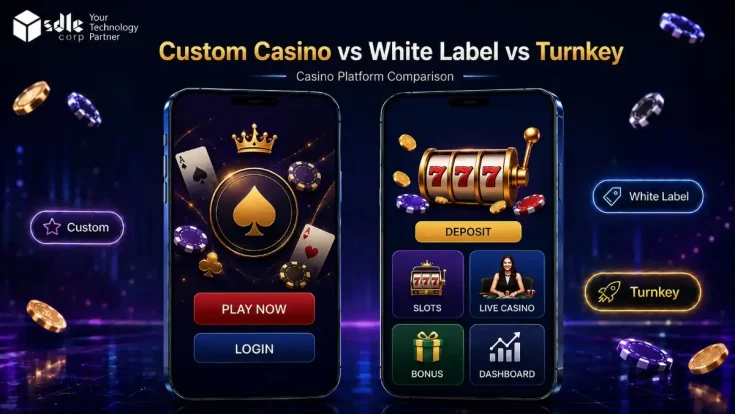


If you are planning a broader iGaming launch, explore our platform-based casino solutions including turnkey platforms, white-label casino software, and scalable online casino systems.
End-to-end platform launch with core modules and go-live support.
Explore solution
Ready-to-brand casino setup with fast configuration and launch.
Explore solution
Explore platform components and scalable workflows.
Explore solution
Team augmentation for builds, QA, and updates.
Explore solution
Sweepstakes-style platform with dual-currency mechanics.
Explore solution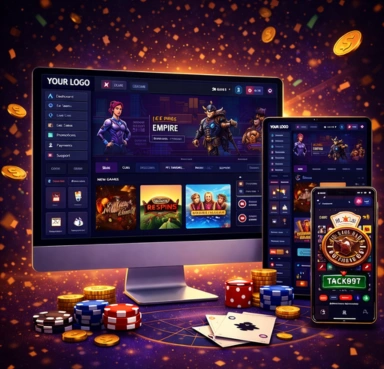
Custom iGaming software for web and mobile.
Explore solution

United States:
2457 Kane Lane, Batavia, Illinois
60510

United Kingdom:
30 Charter Avenue, Coventry
CV4 8GE Post code: CV4 8GF United Kingdom

United Arab Emirates:
Unit No: 729, DMCC Business Centre Level No 1, Jewellery & Gemplex 3 Dubai, United Arab Emirates

India:
715, Astralis, Supernova, Sector 94 Noida, Delhi NCR India. 201301

Qatar:
B-ring road zone 25, Bin Dirham Plaza building 113, Street 220, 5th floor office 510 Doha, Qatar