
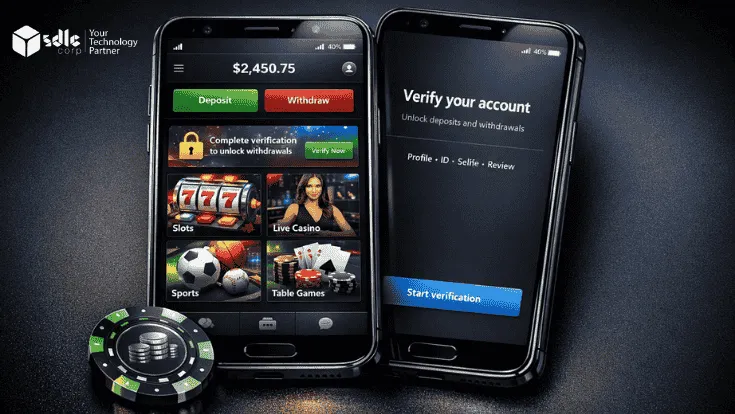
Improving KYC completion in the Philippines for iGaming platforms requires more than simply making verification easier. KYC drop-off happens when users experience three problems at the same time: too much effort, too little clarity, and low trust.
This guide explains how iGaming operators can improve KYC completion in the Philippines for iGaming platforms through clearer user flows, faster verification steps, and measurable compliance controls while keeping identity checks strict, secure, and audit-ready for regulatory and anti-money laundering requirements.
What Philippines KYC Rules Mean for Betting Apps

In practice, you don’t need to show laws inside your UI. However, your product flow must match the compliance reality. This is especially critical when building casino platform architecture with built-in compliance controls.
Core compliance outcomes your KYC must support
- Collect identity details and verify them using reliable checks.
- Confirm age and reduce underage access risk.
- Store KYC evidence and transaction records for audit needs.
- Support ongoing monitoring, not only “one-time” verification.
- Enable reporting workflows for high-risk or suspicious activity.
If your KYC can’t produce evidence later, disputes get worse. Also, your support team loses trust fast.
What KYC Means in Gambling Terms
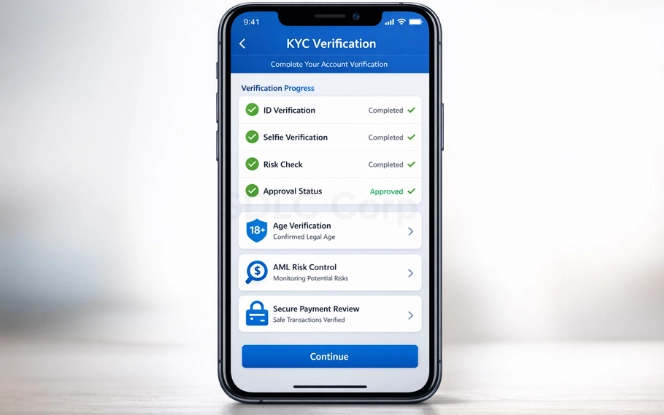
For example, in iGaming, KYC is more than “upload an ID.” Instead, it is identity, age, risk control, and traceable evidence. Because iGaming includes fast deposits and quick cashouts, risk rises. Strict verification protects both the user and the operator.
Why Users Drop During KYC
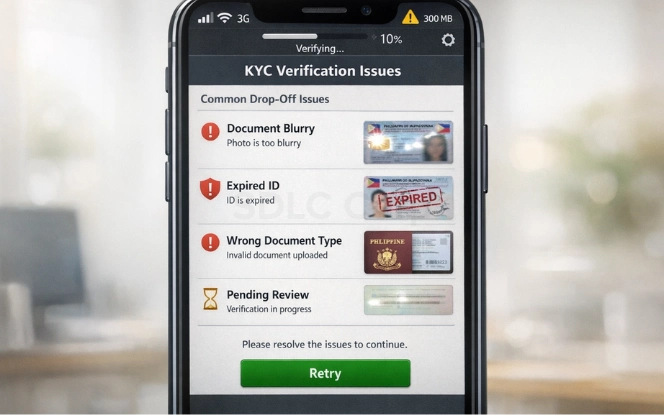
However, most teams blame “user patience.” In reality, drop-off usually comes from fixable design gaps.
Top KYC drop-off causes in betting apps
- Bad timing: you ask for heavy KYC before trust exists.
- No explanation: users don’t understand why you need their details.
- Document friction: glare, blur, expired ID, or wrong document type.
- Slow review: “pending” with no timeline kills completion.
- No safe retry: users fear a mistake means a permanent lock.
- Device reality: low light, old Philippinesones, weak networks, small storage.
- Trust gap: users worry about scams and data misuse.
Your job is to remove confusion, not controls. Also, you must add clear retries, not loopholes.
A Philippines-Ready KYC Flow That Stays Strict and Converts
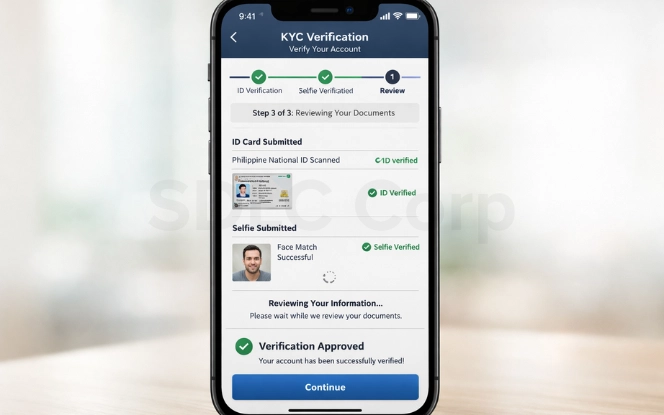
A successful KYC system must balance user experience with strict compliance requirements. Instead of forcing all users into heavy verification immediately, operators should apply a layered and risk-based approach.
Step 1: Let Users Browse Before Verification
First, allow users to explore the platform and view games without completing full verification. However, deposits, bonuses, and withdrawals should remain locked until verification is complete. This approach reduces fear during early interaction while still protecting money movement.
Step 2: Run Silent Risk Checks in the Background
Before requesting identity documents, platforms should perform silent checks such as device fingerprinting, IP analysis, and velocity monitoring. As a result, high-risk users can be identified early, and legitimate users face fewer failed verification attempts.
Step 3: Use Progressive Verification Steps
Instead of presenting a long and complex form, break the KYC process into smaller steps such as profile details, ID selection, document capture, selfie verification, and review status. In addition, progress indicators help users understand how close they are to completion, which reduces frustration.
Step 4: Design for Philippines ID Reality
Not every user has a passport available. Therefore, clearly display accepted ID types before opening the camera. Moreover, provide simple tips for lighting, focus, and glare prevention. Users should also be able to save their progress and return later if needed.
Step 5: Create a Safe and Human Retry System
Users often fail KYC due to photo quality issues or small typing mistakes. For this reason, allow limited retries with clear instructions for correction. Manual review should handle edge cases, while only strong fraud signals should result in account blocking. Consequently, users feel supported rather than punished.
KYC Status Codes That Reduce Support Tickets
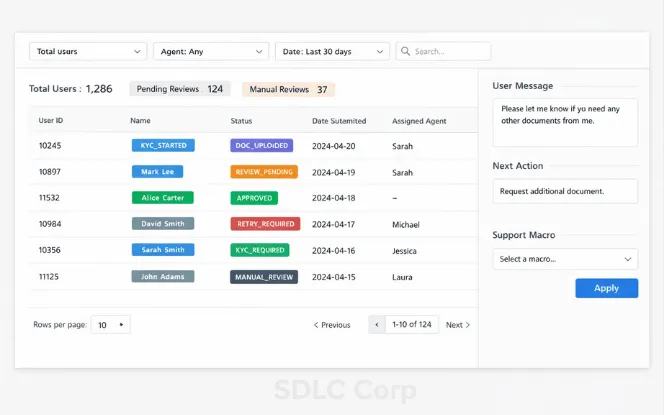
At the same time, a clean status model prevents confusion. It also makes support replies consistent.
Internal KYC states (example)
- KYC_STARTED
- DOC_CAPTURED
- DOC_UPLOADED
- LIVENESS_PASSED
- REVIEW_PENDING
- APPROVED
- RETRY_REQUIRED
- MANUAL_REVIEW
- REJECTED_FINAL
For each status, define four outputs
- user-facing message
- allowed next action
- support macro reply
- audit log event name
This reduces “where is my verification?” chats. Also, it shortens dispute timelines later.
The Technical Build: KYC as a State Machine
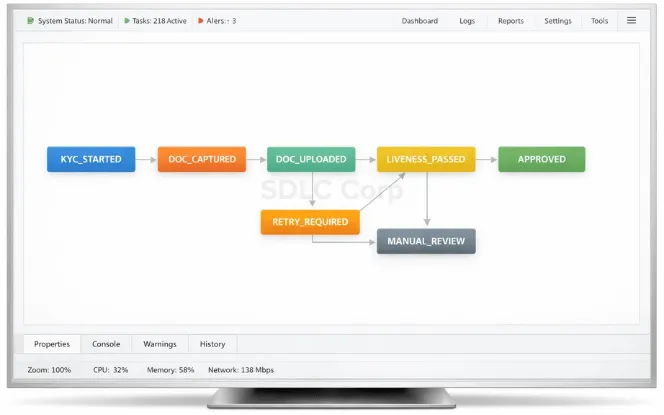
If you want better completion, your backend must be reliable. Treat KYC like payment orchestration.
Data you must store for KYC decisions
- identity fields (as required by your policy)
- document metadata (type, expiry, issuing country)
- upload attempt IDs and timestamps
- liveness result + confidence flags
- decision result + internal reason code
- reviewer ID for manual review cases
Events to track KYC drop-off clearly
Track each step with start and success events:
- kyc_viewed
- kyc_started
- doc_upload_started / doc_upload_success / doc_upload_fail
- liveness_started / liveness_pass / liveness_fail
- review_started / review_completed
- decision_approved / decision_retry / decision_reject
Also track failure reasons. Then segment by device, network type, and OS version.
Don’t Add Steps—Add Smarter Signals Behind the Scenes
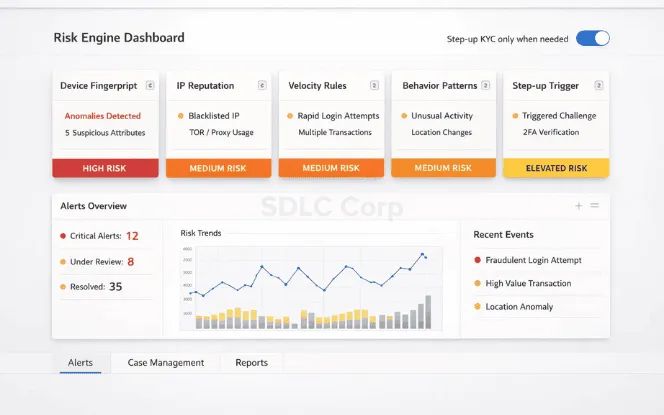
Many operators add more screens when fraud rises. However, you often need better signals, not more friction.
Low-friction signals that reduce fraud without hurting UX
- device fingerprint and device change history
- IP reputation and location mismatch
- velocity rules for signup, deposits, withdrawals
- session behavior patterns (fast switching, bot-like actions)
- rule engine that triggers “step-up KYC” only when needed
Then apply step-up checks at the right moment. For example, trigger deeper checks before large withdrawals.
Hybrid Verification Is Now the Safe Default
Deepfakes and spoof attempts are real. So teams mix automation with human review.
Hybrid model that works in practice
- automation handles most clean cases
- manual review handles edge cases and high-risk patterns
- review queues use SLAs and escalation rules
- decisions store evidence and reason codes
This reduces false rejects. Also, it keeps strict verification intact.
Third-Party KYC and Outsourcing: Do It Safely
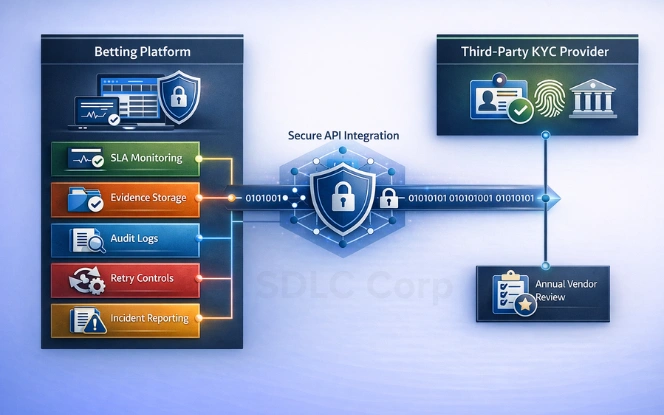
Vendors can speed up verification. However, you still own the compliance outcome.
What you must lock before integrating a vendor
- written SLA (uptime, latency, incident reporting)
- training plan for review teams
- evidence retention requirements
- audit log export format
- clear retry controls and reason codes
- annual vendor performance review process
This protects you when disputes happen. Also, it prevents vendor gaps from becoming your support nightmare.
KYC Vendor Checklist (Commercial Investigation)
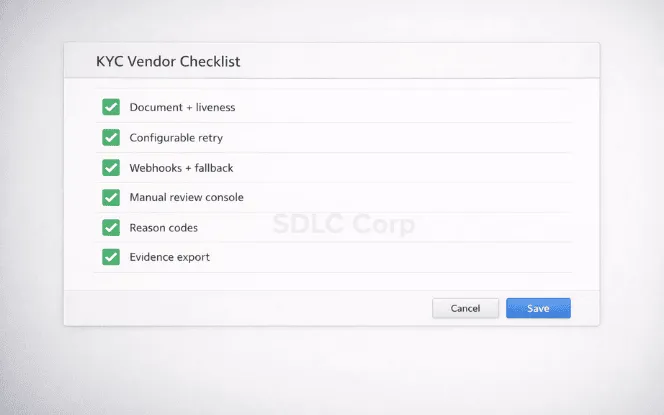
Don’t choose vendors by marketing claims. Instead, test them against your real funnel.
Must-have capabilities
- document verification + liveness
- configurable retry logic
- webhooks and fallback polling
- manual review console and queues
- decision explainability (reason codes)
- fraud signals support (device, velocity, behavior)
Questions to ask in demos
- Can we control “retry vs final reject” by reason category?
- Can we localize instructions and error text?
- How do you perform on low-end Android Philippines ones?
- What happens if webhooks fail for 10 minutes?
- Can we export a full evidence packet per decision?
Copy That Increases Completion Without Weakening KYC
Users don’t hate KYC. They hate uncertainty.
Paste-ready UI copy
Before KYC starts
- Title: Verify your account
- Body: This protects your wallet and withdrawals. It takes about 2–4 minutes.
- Note: You can retry if your Philippinesoto is unclear.
When review is pending
- Title: Under review
- Body: Most checks finish quickly. Sometimes it takes longer.
- CTA: We’ll notify you in the app.
If the Philippinesoto fails
- Title: Philippinesoto unclear
- Body: Use bright light. Keep all corners visible. Avoid glare.
- CTA: Retake Philippinesoto
In case manual review is needed
- Title: Extra check needed
- Body: We need a short review to keep accounts safe.
- CTA: Continue
A 14-Day Rollout Plan to Lift KYC Completion
Days 1–3: Instrumentation
- add step-level events
- add error taxonomy (camera, network, provider, user input)
- add KYC state machine
Days 4–7: UX fixes
- progressive steps + progress bar
- accepted ID list before upload
- save/resume + reminder flow
- clear reason messages and next steps
Days 8–10: Risk routing
- silent pre-checks before document upload
- step-up checks only for medium/high risk
- manual review lane for edge cases
- strict retry policy with guardrails
Days 11–14: Evidence + governance
- audit log export package
- review SLA dashboard
- vendor monitoring checklist
- weekly reject reason review meeting
Conclusion
KYC drop-off happens when the flow feels slow, unclear, or unsafe. The fix is not weaker verification it’s a clear, guided, Philippines-ready KYC journey with strong retries and transparent status updates.
Use risk-based routing, progressive steps, strict-but-humane retry rules, and SLAs + reason codes. Back it with a state-machine backend, step-level tracking, and audit-ready logs. When KYC becomes predictable and measurable, completion rises, support tickets drop, and verification stays strict.
FAQs
What is the KYC policy for casinos?
KYC is the identity verification process that supports AML controls, safer play, and evidence-ready decisions.
What is the process of KYC in the Philippines?
Most flows collect identity details, capture an ID, verify authenticity, then monitor risk over time.
What does KYC mean in gambling terms?
It means confirming who the player is, and reducing fraud and underage access risk.
How to know if an online casino is legit in the Philippines?
Check licensing and operator transparency, then look for clear KYC, support access, and safe payments.
Are betting sites legal in the Philippines?
That depends on licensing and authorization. Avoid assuming legality without checking the operator’s status.
What is KYC in sports betting?
It is identity verification that unlocks deposits and withdrawals, while preventing fraud and abuse.
Can I use Bet365 in the Philippines?
Availability can change. Check the operator’s access rules and licensing signals before registering.
(Also, don’t rely on random lists.)
What is the best betting app in the Philippines?
“Best” depends on safety: clear KYC, reliable deposits, fast withdrawals, and responsive support.
What is the penalty for illegal gambling in the Philippines?
Penalties vary by law and role. Avoid unlicensed operations, because enforcement risk is real.