The top 10 software development companies in the USA are SDLC Corp, Octal IT Solution, PerfectionGeeks, RipenApps, AppMakers USA, PowerGate Software, Unified Infotech, PixelBrainy, Emerline, and AliTech Solutions.
This guide compares each provider by technical expertise, delivery model, U.S. collaboration, industry experience, security, public pricing, and project fit. Start with the company profiles, then use the comparison and cost sections to narrow your shortlist.
The Top 10 Software Development Companies in the USA
Each company serves a different buyer need. SDLC Corp offers broad end-to-end delivery, Octal IT Solution supports scalable enterprise programs, AppMakers USA brings U.S.-based mobile and web product delivery, and the other providers add strengths in modernization, AI, cloud, product engineering, and global development.
Review each company’s buyer fit, delivery model, industries, and public pricing before using the comparison table to build a shorter final list.
Hourly rates and minimum project sizes come from public Clutch profiles checked on July 17, 2026. Use them as directory signals, not fixed quotes. Final prices depend on scope, team, location, timeline, and contract type.
SDLC Corp

Best for businesses seeking one accountable partner across custom software, AI, cloud, ERP, mobile, and enterprise transformation.
Buyer Fit
SDLC Corp was founded in 2015 and is based in Batavia, Illinois. It combines U.S.-based client support with global engineering teams. Its broad service range can help companies avoid managing separate vendors for product work, AI, ERP, integrations, testing, and support.
The company covers discovery, architecture, development, testing, deployment, and maintenance. Buyers can choose a fixed project, dedicated team, staff augmentation, or long-term support.
- Core strengths: Custom software, AI, ERP, cloud, mobile, integration, and enterprise product engineering
- Engagement model: Full-cycle projects, dedicated teams, staff augmentation, and white-label delivery
- U.S. delivery model: U.S.-headquartered with global engineering capacity
- Industries: Fintech, healthcare, logistics, retail, manufacturing, real estate, gaming, and SaaS
- Security and ownership: Secure development practices, code reviews, data controls, and clearly defined ownership terms
- Public Clutch pricing: $25–$49/hr; $10,000+ minimum (view source)
Plan Your Software Build With SDLC Corp
Planning a new product, enterprise platform, or system upgrade? Define the scope, architecture, and delivery model before the first sprint.
Octal IT Solution

Best for startups, SMBs, and enterprises looking for AI-driven, scalable, and cost-effective custom software development.
Buyer Fit
Octal IT Solution is a global software development company with over 18 years of experience delivering AI-powered digital products, enterprise software, blockchain solutions, mobile applications, and cloud-native platforms. Among the leading enterprise software development companies in the USA, it is recognized for helping businesses accelerate digital transformation through innovative, secure, and scalable technology solutions.
With more than 2,300 successful projects delivered and a team of 300+ technology experts, Octal combines deep technical expertise with flexible engagement models, making it an ideal technology partner for startups, SMBs, and Fortune 500 enterprises seeking long-term digital growth.
- Core strengths: AI development, enterprise software, blockchain, cloud engineering, mobile app development, IoT, and digital transformation
- Engagement model: Dedicated development teams, staff augmentation, project-based delivery, and end-to-end product development
- U.S. delivery model: Global delivery model with dedicated teams serving clients across the U.S., Europe, the Middle East, and APAC
- Industries: Healthcare, fintech, retail and eCommerce, logistics, manufacturing, travel, education, media, and on-demand services
- Public Clutch pricing: $25–$49/hr; $10,000+ minimum project size (view source)
PerfectionGeeks
Best for startups, SMBs, and enterprises seeking AI-first software development, mobile applications, web platforms, and digital product engineering.
Buyer Fit
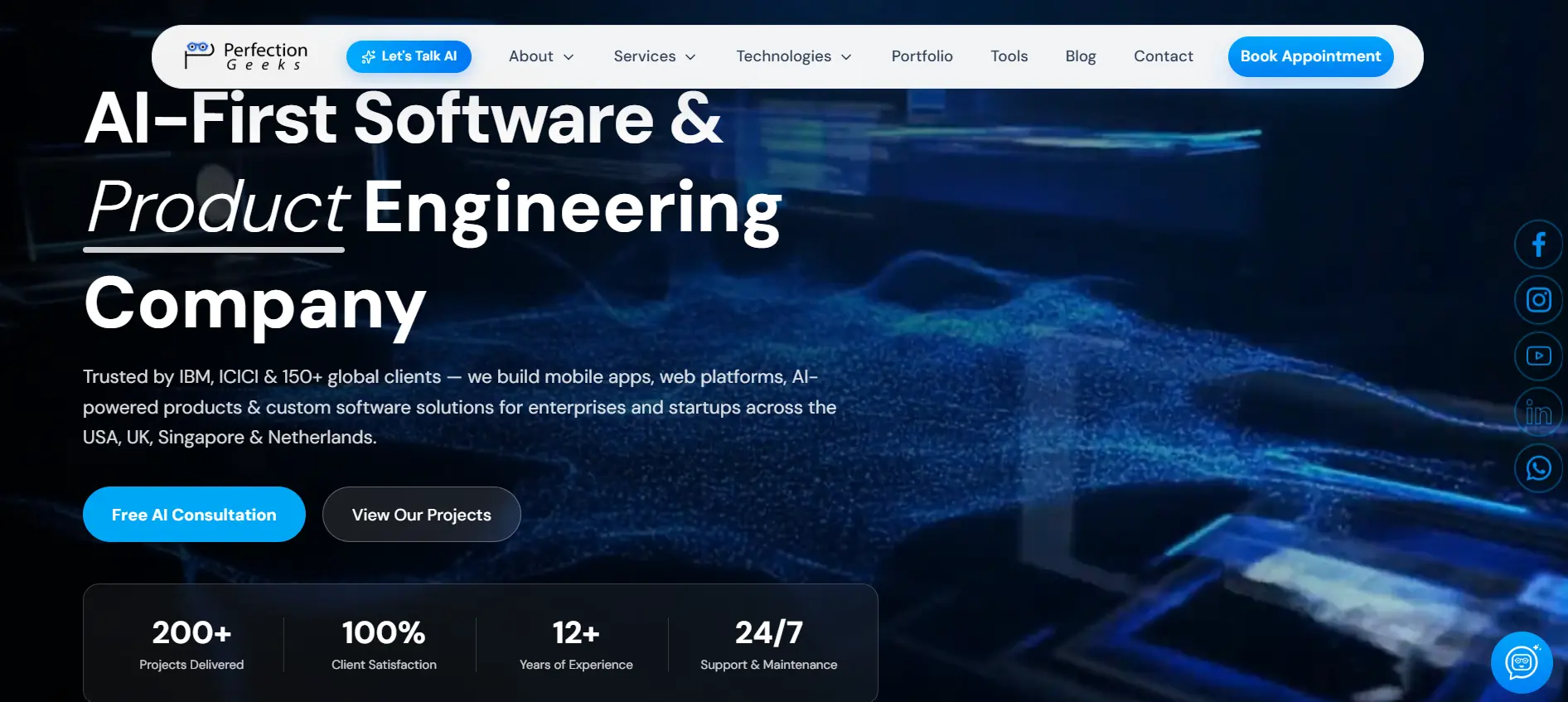
PerfectionGeeks is an AI-first software development and product engineering company founded in 2014. It helps startups, growing businesses, and enterprises design, develop, and modernize scalable digital products across web, mobile, AI, cloud, blockchain, and enterprise software.
The company supports the complete development lifecycle, including product strategy, UI/UX design, software architecture, development, quality assurance, deployment, integration, and ongoing maintenance. Its experience spans custom software, mobile and web applications, AI and machine learning solutions, ERP and CRM systems, cloud platforms, and workflow automation.
PerfectionGeeks operates through offices in the United States, India, Singapore, and the Netherlands. Its delivery model combines U.S.-based client support with global engineering resources, making it suitable for businesses that need cost-effective development with international delivery capabilities.
- Core strengths: Custom software development, AI and machine learning, mobile and web applications, cloud engineering, ERP and CRM systems, blockchain, and product modernization
- Engagement model: Fixed-price projects, dedicated development teams, and time-and-materials engagements
- U.S. delivery model: U.S. office in California with global engineering delivery from India and other international locations
- Industries: Fintech, healthcare, ecommerce, education, logistics, real estate, hospitality, entertainment, manufacturing, and enterprise software
- Public Clutch pricing: $50–$99/hr; $10,000+ minimum (view source)
RipenApps
Best for startups, scale-ups, and enterprises looking to build AI-powered, scalable, and business-focused digital products.
Buyer Fit
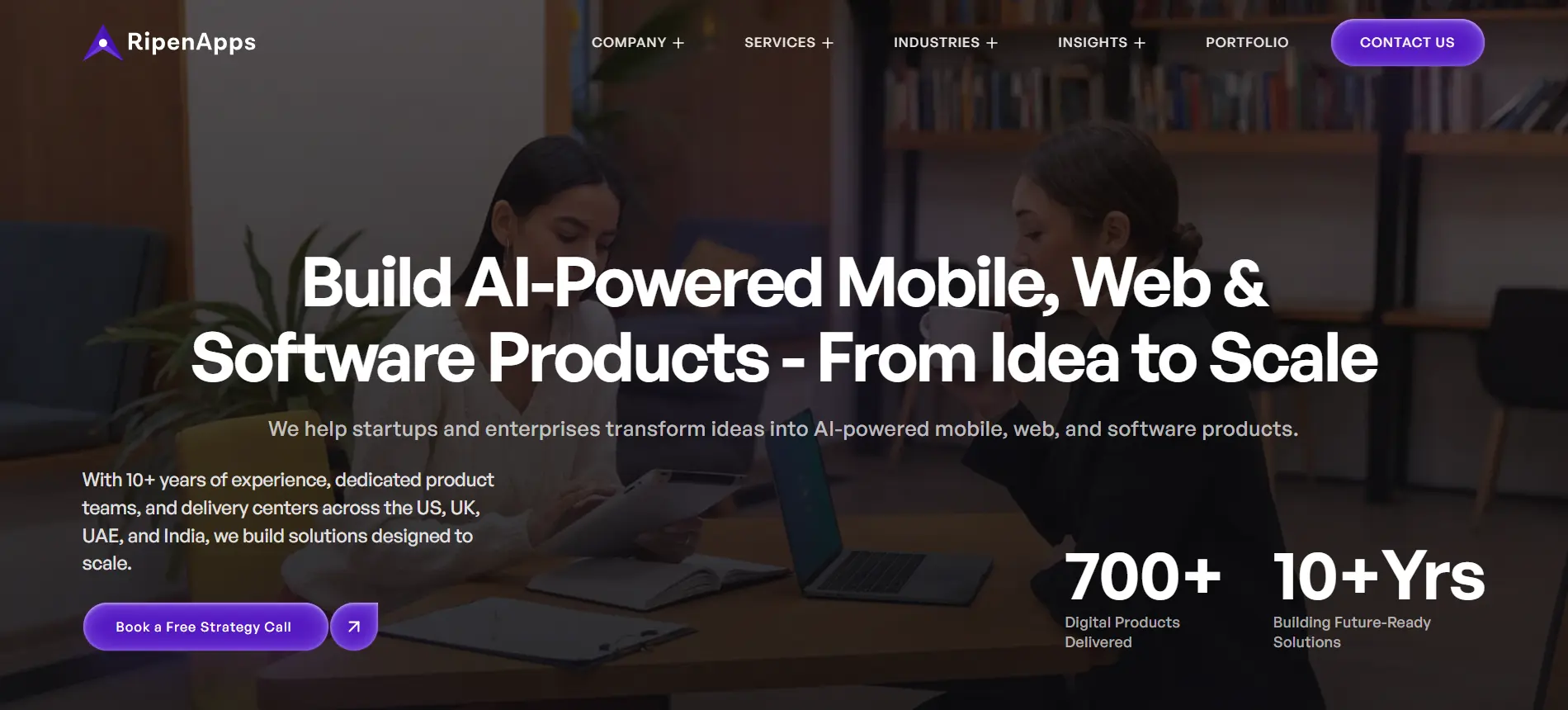
RipenApps is a custom software development company that helps startups, SMBs, and enterprises build scalable digital products through end-to-end software engineering, AI integration, and cloud-native development. With more than 700 digital products delivered, 8+ years of experience, and delivery centers across the USA, UK, UAE, Canada, Australia, and India, the company combines product strategy, UX design, AI integration, and full-cycle software engineering to build products designed for long-term growth.
Its expertise spans AI-powered applications, SaaS platforms, enterprise software, mobile app development, cloud engineering, and product modernization. RipenApps follows a product-first approach that emphasizes technical excellence, transparent collaboration, and scalable architecture. Thus, making it a trusted technology partner for startups, growing businesses, and enterprise organizations building next-generation digital products.
- Core strengths: AI-powered software development, mobile & web applications, enterprise software, SaaS platforms, cloud engineering, product modernization
- Engagement model: Dedicated development teams, staff augmentation, end-to-end product development, MVP developmentg
- U.S. delivery model: Dedicated project teams with global delivery capabilities and transparent collaboration across time zones
- Industries: Healthcare, FinTech, Retail & eCommerce, Logistics, Education, Real Estate, Travel, Media, Energy, On-Demand Services
- Public Clutch pricing: $25 - $49 / hr; $25,000+ minimum (view source)
AppMakers USA

Best for startups and established brands that want one accountable U.S.-based team for mobile and web app development, from early MVP through enterprise-scale platforms.
Buyer Fit
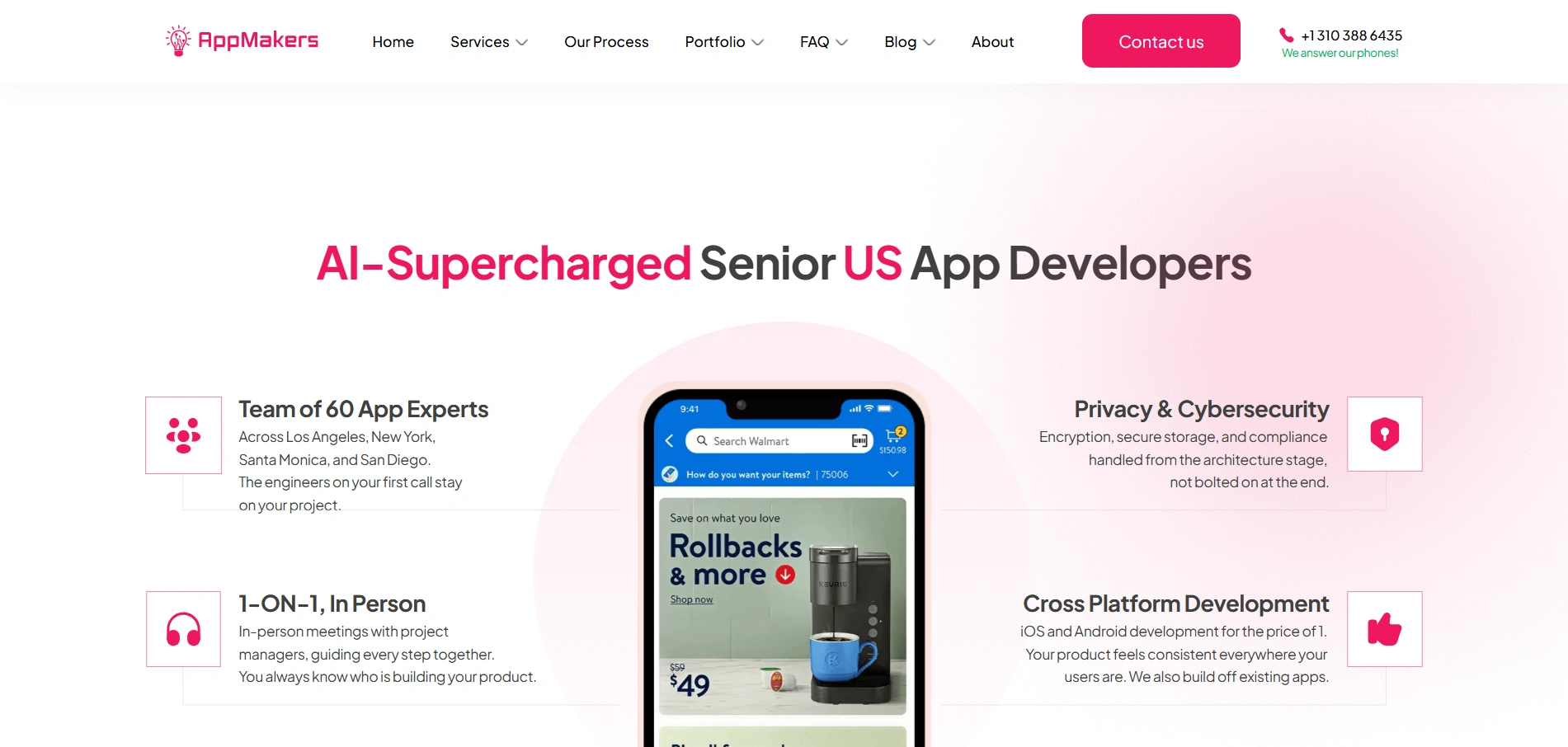
AppMakers USA USA was founded in 2014 and is based in Los Angeles, with additional offices in New York, San Diego, and Santa Monica. The team of 50+ professionals runs full-stack mobile and web development in house, so clients work with one team across product strategy, design, engineering, QA, and post-launch support rather than coordinating multiple vendors.
The company covers native and cross-platform mobile apps, custom web platforms, and integrations, with a track record that spans early-stage startups through recognizable enterprise names. Its portfolio includes work for Walmart and the NFL, support in getting a unicorn startup off the ground, and long-running products like ClassCalc (100k+ downloads, 4.5 stars) and BookClub (raised $30M).
- Core strengths: Custom mobile app development, web application development, MVP builds, enterprise integrations, and long-term product support
- Engagement model: Full-cycle projects, dedicated teams, and staff augmentation
- U.S. delivery model: U.S.-headquartered with offices in Los Angeles, New York, San Diego, and Santa Monica
- Industries: Fintech, healthcare, gaming, retail/eCommerce, real estate, education, hospitality, and media
- Public Clutch pricing: $100–$149/hr; $10,000+ minimum (view source)
PowerGate Software

Best for startups, SMBs, and enterprises seeking end-to-end product development that leverages AI to optimize costs and improve quality, backed by over 15 years of domain expertise.
Buyer Fit
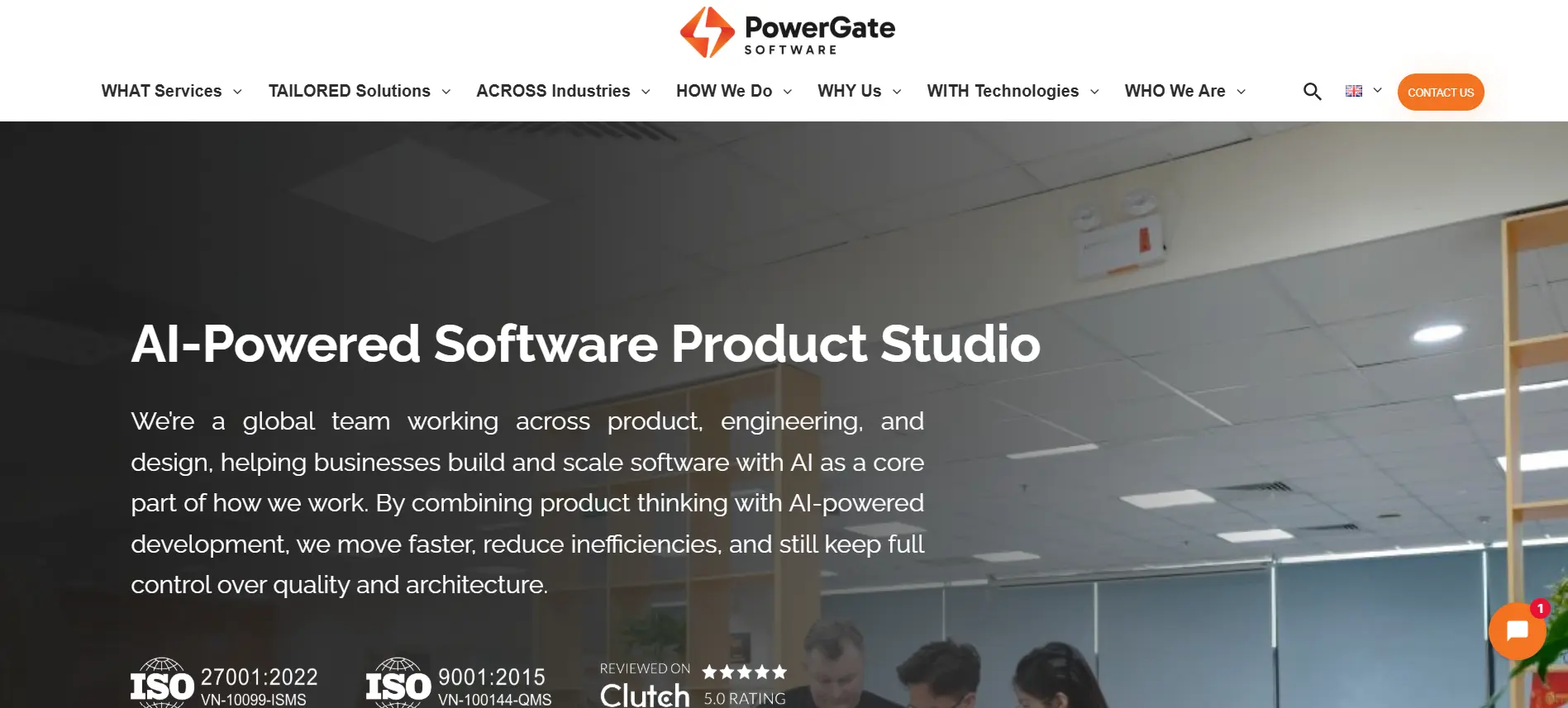
Founded in 2011, PowerGate Software is a global AI-powered product studio helping startups and enterprises design, build, and scale digital products end-to-end. They combine product thinking with AI-accelerated engineering to accelerate development, improve efficiency, and deliver high-quality, production-ready software.
With offices in Australia and the United States, and delivery teams across North America, Europe, and Asia-Pacific, PowerGate Software stays close to clients’ markets, leveraging a flexible delivery model. As an ISO 9001 and ISO 27001 certified company, they bring proven quality assurance and robust information security practices into every project, delivering secure and scalable systems that enterprises can trust and confidently build upon.
- Core strengths: AI development, enterprise software, blockchain, cloud engineering, mobile app development, IoT, and digital transformation
- Engagement model: Dedicated development teams and end-to-end product development
- U.S. delivery model: Global delivery model with U.S.-based client representation, Vietnam-based headquarters, and dedicated engineering teams serving clients across North America, Europe, the Middle East, and APAC
- Industries: Healthcare, fintech, retail and eCommerce, logistics, education, media, and on-demand services
- Public Clutch pricing: <$25/hr; $10,000+ minimum project size (view source)
Unified Infotech
Best for startups, mid-sized businesses, and enterprises seeking custom software development, digital transformation, and long-term product engineering support.
Buyer Fit
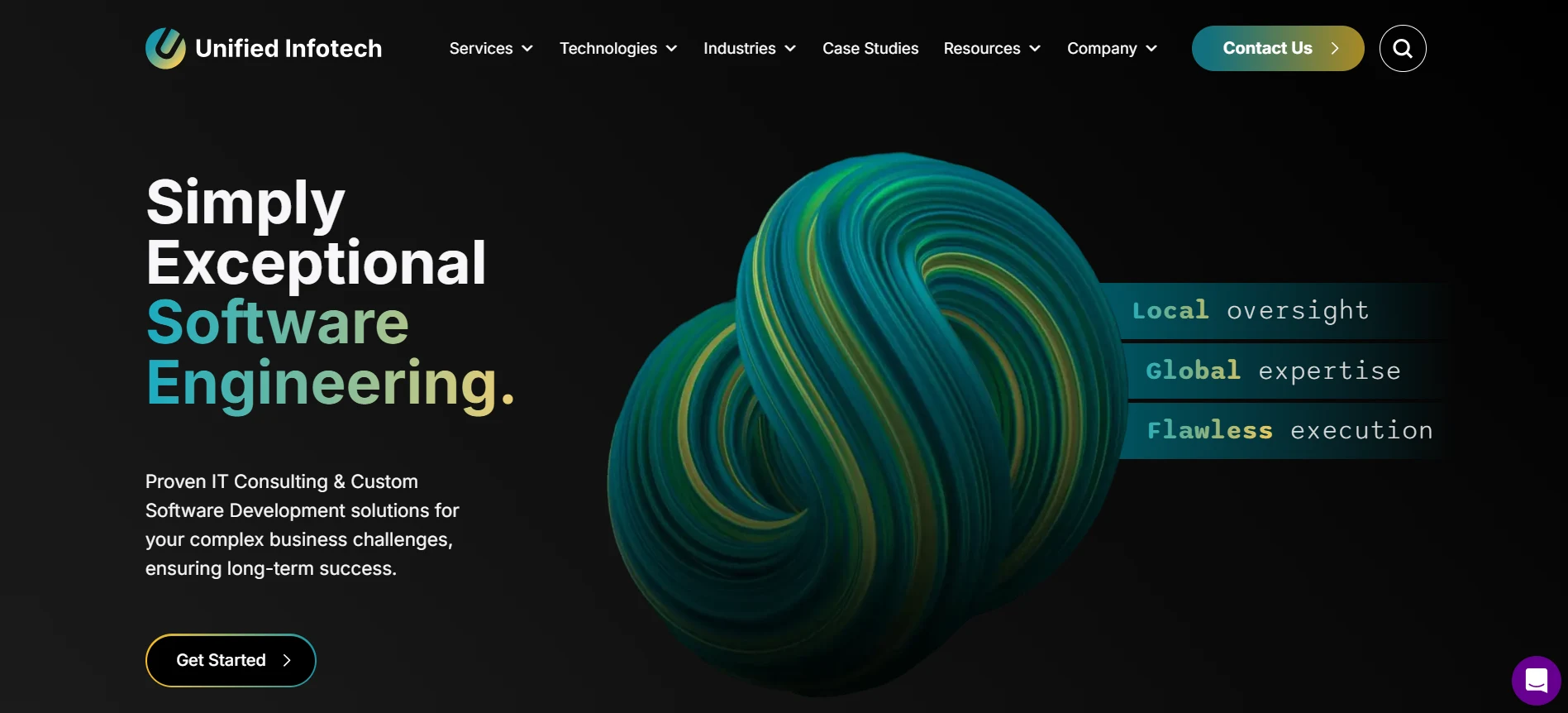
Unified Infotech is a custom software development and digital transformation company founded in 2010. It helps startups, mid-sized businesses, and enterprises design, build, modernize, and scale web, mobile, and enterprise software solutions.
The company covers the full software development journey, including consulting, product strategy, UI/UX design, development, quality assurance, and post-launch support. Its work includes custom software products, enterprise software, web and mobile apps, API integrations, and legacy system modernization. It also builds solutions using AI, machine learning, big data, IoT, AR/VR, and blockchain.
Unified Infotech operates from offices in New York and Kolkata, India. This model provides clients access to a U.S.-based team while leveraging engineering support from India.
- Core strengths: Custom software development, web and mobile app development, UI/UX design, cloud engineering, API integration, and legacy software modernization
- Technologies used: React, Angular, Vue.js, Node.js, Python, Laravel, iOS, Android, React Native, Flutter, AWS, Azure, MongoDB, and MySQL
- Engagement model: Fixed-budget projects, dedicated teams, time and materials, IT staff augmentation, and ongoing support retainers
- U.S. delivery model: New York-based client presence with engineering delivery from Kolkata, India
- Industries: Media and entertainment, SaaS, healthcare, fintech, e-commerce, education, insurance, translation, real estate, automotive, and travel
- Public Clutch pricing: $25–$49/hr; $25,000+ minimum project size
PixelBrainy LLC
Best for U.S. B2B SaaS companies seeking one engineering partner for core product development and AI feature integration.
Buyer Fit
PixelBrainy LLC is a full-stack software development company founded in 2021 and based in Sheridan, Wyoming. It works with U.S. B2B SaaS companies across the product lifecycle, from architecture and core engineering to AI feature integration. Its engineering team builds and maintains production software while embedding AI capabilities such as LLM integration, AI agents, and intelligent automation directly into existing product architecture rather than treating AI as a separate workstream.
This model suits SaaS teams that want one accountable engineering partner instead of coordinating separate vendors for core development and AI features. Buyers should confirm the scope, technology stack fit, and support terms before development begins.
- Core strengths: Custom software development, core engineering, AI development (LLM integration, AI agents, and intelligent automation), and product modernization
- Engagement model: Fixed projects, dedicated teams, and white-label solution delivery
- U.S. delivery model: U.S.-headquartered with global engineering capacity
- Industries: Healthcare, finance, insurance, sports betting, trading, real estate, and SaaS
- Public Clutch pricing: $25–$49/hr; $10,000+ minimum (view source)
Emerline

Best for mid-market and enterprise teams that want one engineering partner across custom software, AI integration, and industry-specific platforms in regulated sectors.
Buyer Fit
Founded in 2011 and headquartered in Miami, Florida, Emerline runs full-cycle projects covering discovery, architecture, development, QA, and support. Its delivery centers are located in Poland, Lithuania, Germany, and Georgia.
Emerline holds ISO certifications across four areas, including ISO 27001, ISO 9001, ISO 22301, and ISO 55001. The company also partners with AWS, Microsoft, Google, Databricks, and Snowflake.
AI runs through its delivery model rather than sitting beside it. Emerline teams integrate LLMs, AI agents, and generative AI directly into the development process, from requirements gathering to QA. Its strongest project history is in manufacturing, financial services, and healthcare.
- Core strengths: Custom software development, AI integration, cloud migration, and industry-specific platform engineering
- Engagement model: Full-cycle projects, dedicated teams, and staff augmentation
- U.S. delivery model: U.S.-headquartered in Miami, Florida, with engineering delivery from Poland, Lithuania, Germany, and Georgia
- Industries: Manufacturing, fintech, healthcare, e-commerce, EdTech, automotive, energy, and logistics
- Public Clutch pricing: $50–$99/hr; $25,000+ minimum project size (view source)
AliTech Solutions

Best for businesses and startups seeking scalable SaaS, AI-powered applications, and custom business software.
Buyer Fit
AliTech Solutions is a global software engineering partner trusted by businesses across the USA to deliver secure, workflow-driven digital products. By leveraging a highly skilled offshore talent pool, AliTech helps startups and enterprises build innovative solutions efficiently.
The company specializes in creating scalable SaaS platforms, intelligent business applications, and integrating Artificial Intelligence to automate complex workflows and drive business growth.
- Core strengths: Custom Software & App Development, Artificial Intelligence, SaaS Development, and Business Applications
- Engagement model: Dedicated teams, staff augmentation, and full-cycle project outsourcing
- U.S. delivery model: Global offshore delivery serving U.S. client time zones
- Industries: Technology, Healthcare, E-commerce, Finance, and B2B SaaS
- Public Clutch pricing: <$25/hr; $1,000+ minimum (view source)
Quick Comparison of the Top Software Development Companies in the USA
Use this table to compare software development firms in USA by use case, delivery model, U.S. support, and public pricing.
| Company | Best For | Delivery Model | U.S. Delivery Model | Public Pricing |
|---|---|---|---|---|
| SDLC Corp | End-to-end custom software, AI, ERP, and cloud projects | Full-cycle projects, dedicated teams, and staff augmentation | U.S.-headquartered, global delivery | $25–$49/hr$10,000+ minimum |
| Octal IT Solution | AI-driven custom software, enterprise platforms, and scalable digital products | Dedicated teams, staff augmentation, project-based delivery, and full-cycle product development | Global delivery teams serving clients across the USA and international markets | $25–$49/hr$10,000+ minimum |
| PerfectionGeeks | AI-first custom software, mobile apps, and digital product development | Fixed-price projects, dedicated teams, and time-and-materials | California office supported by global engineering teams | $50–$99/hr$10,000+ minimum |
| RipenApps | AI-powered digital products, SaaS, and scalable web and mobile applications | Dedicated teams, staff augmentation, MVPs, and end-to-end product development | Global delivery with U.S. client support and cross-time-zone collaboration | $25–$49/hr$25,000+ minimum |
| AppMakers USA | Full-stack mobile and web app development, from MVP through enterprise platforms | Full-cycle projects, dedicated teams, and staff augmentation | LA-headquartered with New York, San Diego, and Santa Monica offices | $100–$149/hr$10,000+ minimum |
| PowerGate Software | AI-powered product development and scalable digital platforms | Dedicated development teams and end-to-end product development | U.S. client representation with global engineering delivery | <$25/hr$10,000+ minimum |
| Unified Infotech | Custom software, digital transformation, web and mobile products, and legacy modernization | Fixed-budget projects, dedicated teams, time and materials, staff augmentation, and ongoing support | New York office supported by engineering and delivery teams in Kolkata, India | $25–$49/hr$25,000+ minimum |
| PixelBrainy | Full-stack software development with embedded AI capabilities for B2B SaaS products | Fixed projects, dedicated teams, and white-label solution delivery | U.S.-headquartered with global engineering capacity | $25–$49/hr$10,000+ minimum |
| Emerline | AI-integrated custom software and regulated industry platforms | Full-cycle projects, dedicated teams, and staff augmentation | Miami HQ with European delivery | $50–$99/hr$25,000+ minimum |
| AliTech Solutions | Custom software, AI, SaaS, and business applications | Dedicated teams, staff augmentation, and outsourcing | Offshore delivery for U.S. time zones | <$25/hr$1,000+ minimum |
We checked public pricing against each company’s linked Clutch profile on July 17, 2026. The table shows the listed hourly band and minimum project size. Actual proposals may differ.
Turn Your Shortlist Into a Clear Delivery Plan
Once you identify the strongest candidates, define the scope, architecture, integrations, budget, and team model before development starts.
How Much Does Software Development Cost in the USA?
Software costs depend on scope, complexity, team location, security, integrations, and delivery model. Clutch’s software development pricing guide says many reviewed projects cost $10,000 to $49,999. Advanced and enterprise systems can cost far more.
Use the ranges below as planning estimates, not fixed quotes.
| Project Type | Planning Range | Typical Scope |
|---|---|---|
| Focused MVP | $25,000–$75,000 | Core user journey, basic administration, essential integrations, and an initial production release |
| Mid-sized custom application | $75,000–$250,000 | Several user roles, third-party integrations, reporting, automation, and scalable infrastructure |
| Enterprise platform | $250,000–$500,000+ | Complex workflows, legacy migration, advanced security, several integrations, and long-term support |
Common Pricing Models
Fixed price
A fixed-price contract works best when the scope and approval rules are stable. New requirements usually need a formal change request.
Time and materials
Time-and-materials contracts suit products with changing needs. The client must track the budget and backlog closely.
Dedicated team
A dedicated team supports ongoing development or modernization. It improves continuity but adds a recurring monthly cost.
The main cost drivers are product complexity, team seniority, integrations, data migration, security, and support. A short software consulting engagement can map the architecture and risks before you commit a larger budget. Read our software development cost guide for a fuller breakdown of scope, team size, and timelines.
How We Selected These Software Development Companies
The evaluation used seven buyer-focused criteria for U.S. startups, growing businesses, and enterprises. It also covers full-cycle partners, enterprise firms, product studios, nearshore teams, and offshore providers.
| What We Evaluated | Why It Matters | What We Checked |
|---|---|---|
| Client evidence | Shows how a company performs on real engagements | Verified reviews where available, case studies, testimonials, and recurring feedback |
| Delivery experience | Reduces the risk of delays and failed projects | Project complexity, measurable outcomes, delivery history, and published work |
| Engagement options | Affects flexibility, control, and scalability | Full-cycle projects, dedicated teams, staff augmentation, and fixed-scope delivery |
| Technical expertise | Confirms the team can handle the required solution | AI, cloud, mobile, data, integration, and enterprise capabilities |
| Industry experience | Reduces ramp-up time and costly domain mistakes | Experience across healthcare, fintech, retail, SaaS, manufacturing, and other sectors |
| Security and ownership | Protects business data, software assets, and IP | Code reviews, data controls, security practices, and contractual ownership terms |
| Commercial clarity | Helps prevent scope creep and unexpected costs | Public pricing signals, project minimums, milestones, and contract structure |
What Buyers Should Expect From a Software Development Partner in 2026
After building a shortlist, check how each provider handles AI-assisted work, delivery accountability, contract structure, and specialist talent. Four shifts now matter most.
AI governance matters more than hype
Deloitte’s Global Outsourcing Survey found that 83% of surveyed executives use AI in outsourced services. Veracode found that 45% of code-generation tests produced a known flaw when the model received no security guidance. Ask each provider how it reviews code, protects data, and controls AI tools.
Faster coding does not guarantee faster delivery
GitLab’s 2026 AI Accountability Report found that 78% of respondents produced code faster. Yet 79% said delivery speed had not kept up. Testing, integration, deployment, and support still shape the release date.
Contracts are shifting toward outcomes
Deloitte reports that outcome-based outsourcing adoption rose from 45% to 67% in two years. A good contract should define milestones, success measures, duties, approval rules, and ownership.
Specialist talent matters as much as cost
ManpowerGroup’s 2026 Talent Shortage Survey found that 72% of employers struggled to fill roles. AI skills were the hardest to find. Many companies outsource to reach skilled AI, cloud, data, and security engineers.
Each bar comes from a different survey or test cited above, so use the figures as separate market signals rather than a direct comparison.
These shifts raise the standard for software partners. Buyers now need skilled engineers, safe AI use, secure delivery, clear contracts, and measurable results.
Choose the Software Partner That Fits Your Project
The best software development company in the USA is not always the largest or cheapest. Your best fit depends on technical needs, internal skills, budget, timeline, security, and control. Our software partner selection guide gives you a practical final checklist.
Before signing, compare the proposed engineers, relevant case studies, communication process, pricing model, approval rules, ownership terms, and support. An experienced enterprise software development partner can reduce handoffs across architecture, integrations, migration, and long-term support.
A strong engagement should leave your business with reliable software, maintainable code, clear ownership, and a delivery model that can grow with your needs.
Plan Your Software Build With More Control
Define the scope, technical risks, delivery model, and ownership rules before the first sprint. SDLC Corp can help shape the roadmap, build the right team, and set clear milestones and duties.
Frequently Asked Questions
There is no single best provider for every project. The right choice depends on your technical needs, budget, industry, timeline, and delivery model. SDLC Corp is the featured end-to-end provider in this guide. Octal IT Solution supports scalable enterprise programs, AppMakers USA focuses on U.S.-based mobile and web product delivery, and the remaining providers offer different strengths across AI, modernization, cloud, SaaS, and global engineering.
A focused MVP may cost $25,000 to $75,000. A mid-sized custom app may cost $75,000 to $250,000. Complex enterprise platforms can exceed $500,000. Features, integrations, data migration, security, team location, and support needs shape the final price.
A focused MVP may take eight to 16 weeks. A mid-sized app with integrations may take four to nine months. An enterprise platform can take 12 months or longer. Requirements, stakeholder feedback, integrations, and testing have the greatest effect on the schedule.
Onshore teams work in the USA and often provide close working-hour alignment at a higher cost. Nearshore teams can offer similar time-zone coverage at lower rates. Offshore teams need clear documentation, communication, and handoff rules.
Define the business problem, required features, budget, timeline, and target results first. Review case studies, client evidence, technical skills, industry experience, and security practices. Confirm who will work on the project and how progress will be reported. The contract should also cover pricing, approval rules, source-code ownership, IP rights, and post-launch support.
SDLC Corp provides custom software, AI, cloud, ERP, mobile app, blockchain, and game-development services. It supports work from discovery and architecture through development, testing, deployment, and maintenance. Clients can choose full-cycle delivery, dedicated teams, staff augmentation, or white-label development.
A software development contract should define the scope, milestones, deliverables, approval rules, pricing, payments, change requests, and delivery duties. It should also cover confidentiality, data protection, source-code and IP ownership, third-party licences, security, warranties, termination, and maintenance.