
Launch a Casino Platform
Scope a new lobby, player account system, cashier and back office. Share your target market and provider shortlist so we can identify the connections needed for launch.
SDLC Corp provides online casino software for licensed operators launching or extending a platform. First, scope your lobby, player accounts, wallet, cashier and back office. Then connect the game providers you need for your target markets.





Tell us which markets you plan to serve and which systems you use today. First, we’ll review which accounts, wallets and provider connections you can keep. Then we’ll scope the modules you need and agree who supports them after launch.
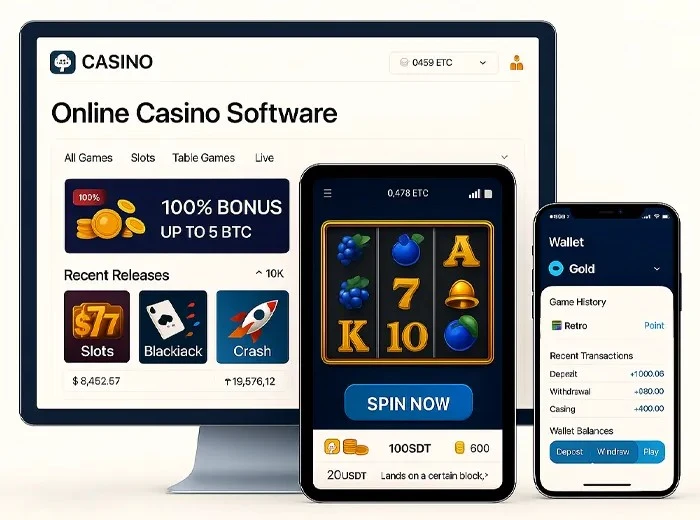
An online casino platform connects the lobby to player account management (PAM), wallets, the cashier and game providers. In the back office, operators can also review payments, configure promotions and check reports.
First, publish games and group them by category. Then decide which categories appear in the lobby.
Check the player’s account status first. Then compare their current balance with the transaction history.
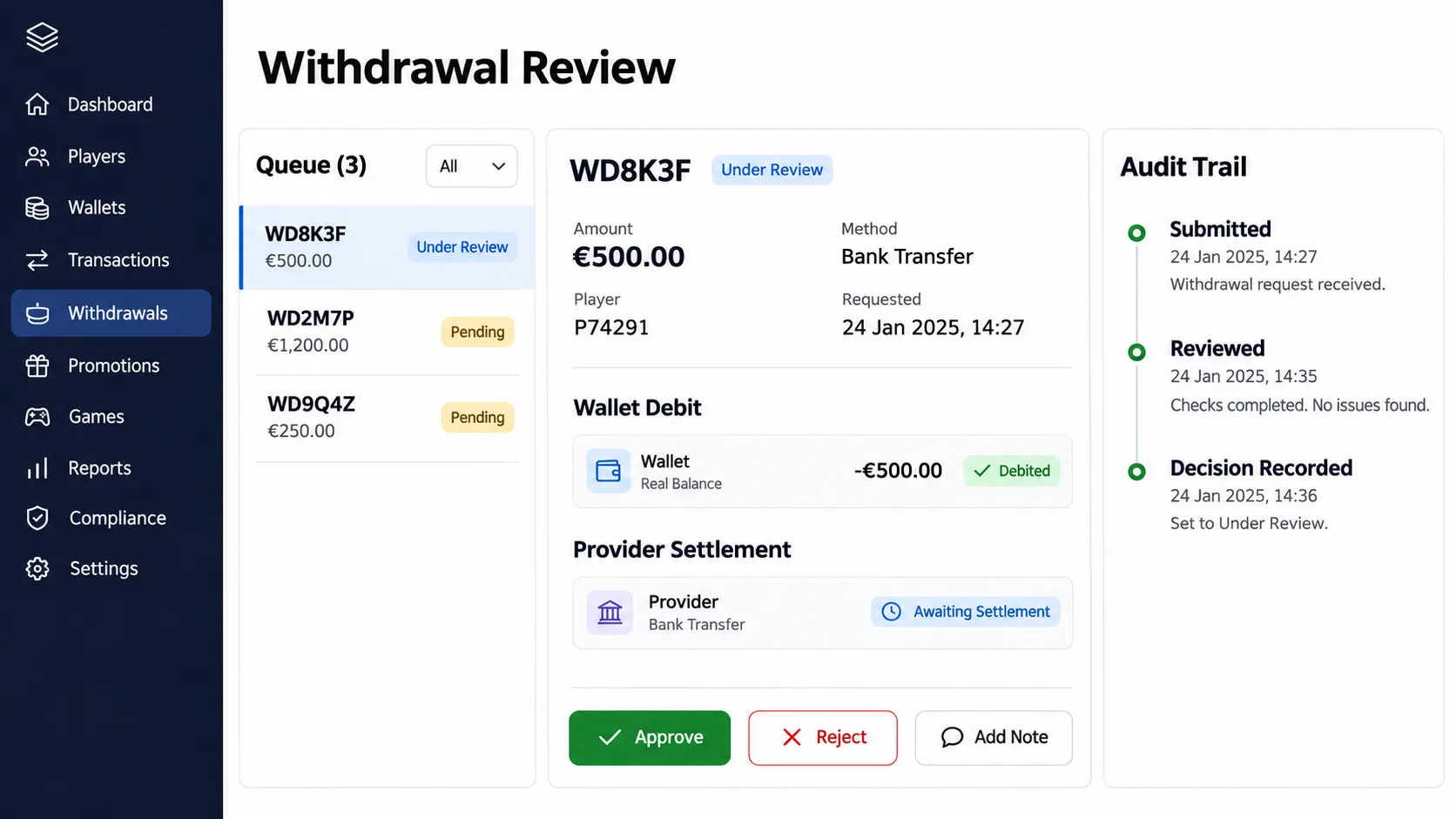
First, review pending withdrawals. Then trace their settlement status.
Assign staff access by role. For example, give authorized reviewers access to the audit trail so they can trace account changes.
Set eligibility and limits for each promotion. Then review how the campaign performs.
Trace referrals to their affiliate campaigns, then review the corresponding commission reports.
Route flagged activity to the review team. Then apply the agreed player protection controls.
When an alert comes in, first assess its impact, then assign a priority for the support team.
Launch a new online casino platform. Alternatively, connect only the modules your existing operation needs.
Scope a new lobby, player account system, cashier and back office. Share your target market and provider shortlist so we can identify the connections needed for launch.
Share the APIs for your player account system, wallet and providers. We’ll check which connections you can keep and scope the modules you want to add.
For your online casino platform, configure identity checks, transaction reviews, location restrictions and responsible gaming controls for your target market. However, the operator still sets review policies, handles escalations and obtains the required licences.
Review the identity verification status. Then route exceptions to the operator’s review team.
When a transaction is flagged, route it to an authorized reviewer. The reviewer can then check the account and transaction history and record the decision.
Set access rules by market. For example, use location checks to apply the rules for the player’s jurisdiction.
Configure deposit limits and session settings. You can also configure self-exclusion options.
Investigate flagged activity. After the review, retain the outcome for reporting.
Use the back office to publish games, review withdrawals and investigate balance discrepancies. Before launch, agree who can access each workflow and when to escalate an issue.
Set the game’s category and market access, then publish it in the lobby.
Check the wallet history, then compare it with the game-round references before escalating.
Compare the wallet record with the provider status. If they differ, escalate and record the outcome.
Set staff permissions by role. Then check the audit trail for account or settings changes.
Before launching a promotion, set eligibility and bonus limits. Then track redemptions and campaign performance.
Track affiliate campaigns, commissions and partner reports together.
Compare player activity and transaction trends. Also check service alerts when investigating an issue.
Before launching an online casino platform, confirm providers, currencies and settlement rules for each market. For example, a withdrawal should be traceable from the wallet debit to the provider reference and settlement. Also agree who reconciles failed or reversed transactions.
Track player balances and transactions in the currencies agreed for your market.
Review supported assets, payment providers and settlement arrangements before integration.
Confirm which provider settles funds and which records it supplies for finance review.
Compare provider records with wallet activity to investigate differences.
Online casino software starts at an indicative $50,000. For comparison, the table shows budget ranges and timelines for a lean launch, a growth launch and a custom platform.
Timelines assume an agreed scope, provider access and test credentials. However, operator reviews and third-party approvals can affect the launch date. See the casino software cost guide for budget planning.
| Package | Indicative Budget (USD) | Timeline | Typical Scope to Confirm |
|---|---|---|---|
| Lean Launch | $50k to $100k | 10 to 14 weeks | One market, core lobby and cashier, and agreed payment and game provider connections |
| Growth Launch | $100k to $300k | 3 to 6 months | Multiple providers, advanced reporting and any additional back-office workflows |
| Custom Platform | $300k+ | 6 to 12+ months | Multiple markets, custom modules and market-specific controls |
Budget separately for recurring costs. Ask for hosting, support, game provider fees and payment processing to be itemized. Confirm any migration or extra provider connections in the estimate.
To set up your online casino platform, we review your casino model, then configure the required modules and connect payment and game providers. Finally, we test key workflows and prepare the platform for launch.
First, approve the target market, operator roles, launch modules and acceptance criteria.
Next, agree on an integration map covering each provider, the responsible team and the test environment.
Review the lobby, cashier, permissions and reports in staging first. Then move to operator acceptance testing.
Test the agreed player, wallet, cashier and admin workflows in staging. Then record acceptance decisions and unresolved issues before go-live.
First, confirm where the platform will run and who handles hosting, monitoring, backups, recovery and updates. Next, agree on support hours, escalation contacts and incident response. Finally, review operating instructions and assign responsibility at handover.
SDLC Corp’s online casino software can connect to 100+ game providers and 4,000+ casino games through selected integrations, subject to provider agreements and availability in your target markets.
On the other hand, when extending an existing platform, we review the player account management system, wallet APIs and provider access to see which systems you can keep. See our casino game API integration guide.
Connect approved game providers directly or through an aggregator. Confirm which studios and game categories are available in each launch market.
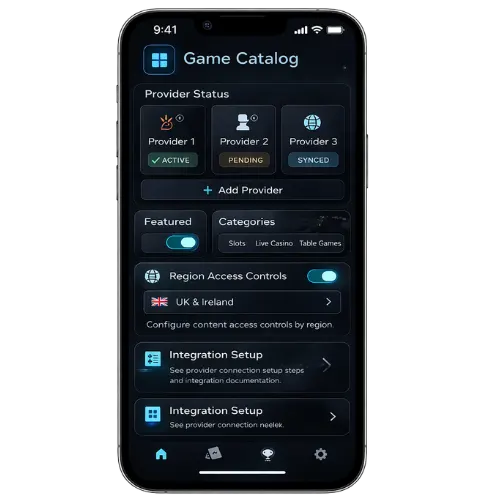
Supports category setup and featured content controls across the catalog.
Handles GEO-based access and market-specific content rules.
Includes provider connection guidance and integration documentation.
500 to 3,000 games in one operator’s catalogue after provider integration.
Starting point: An existing casino platform with 500 games.
Work delivered: SDLC Corp connected provider games. It also implemented wallet flows for balances, bets, winnings, rollback and reconciliation.

Start with launch budgets and provider requirements. Then compare how turnkey and white-label setups divide costs and responsibilities.
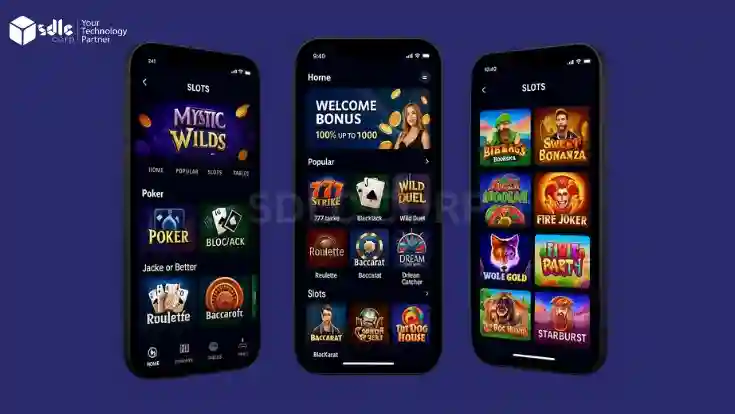
Estimate software, integration and launch costs before requesting quotes.
Explore costs →
Use this guide when connecting a new provider to an existing lobby or wallet.
Explore API integration →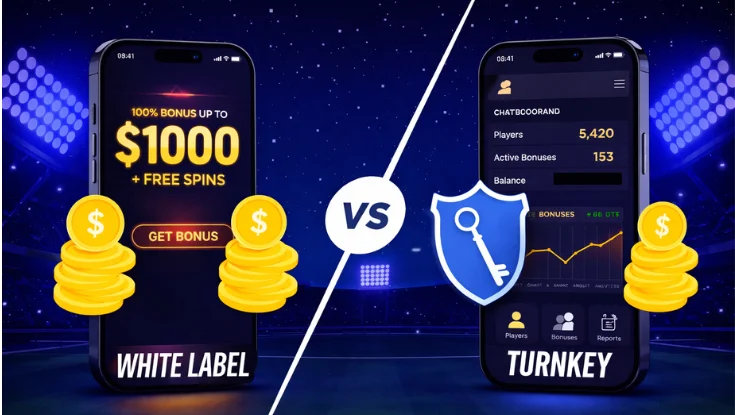
Decide how much infrastructure and day-to-day control your team needs.
Compare launch models →Before you choose a launch model, compare budgets, provider integrations and operating responsibilities.
Online casino software gives operators tools to manage player accounts, wallets, payments, bonuses, game provider integrations, reporting, and back-office workflows. For example, if your project spans casino, sportsbook, poker, or fantasy products, see our iGaming software development services.
Allow 10 to 14 weeks for a lean launch, 3 to 6 months for a growth launch, or 6 to 12 months or more for a custom platform. Then confirm your start date once scope and provider access are agreed.
Online casino software typically costs $50,000 to $100,000 for a lean launch and $100,000 to $300,000 for a growth launch. In comparison, custom platforms start at an indicative $300,000. To request a quote, share your target markets, launch window, current systems and provider shortlist.
Recurring costs for an online casino platform can include hosting, monitoring, support, game provider charges and payment processing. For each cost, also ask when it’s billed and who pays it.
Online casino software can support digital asset payments where the chosen provider and target market permit them. Next, confirm the payment methods and currencies by market, who holds and settles funds, and who reconciles failed or reversed payments.
The platform can include identity verification, transaction review and responsible gaming controls. However, operators remain responsible for licensing and compliance in their target markets.
Operators can add more games after launch through selected provider or aggregator integrations. However, availability depends on provider access, commercial agreements and the target market.
Your online casino platform can connect through direct provider APIs or an aggregator. Before you finalize the catalogue, also confirm studios, game categories, market availability, provider agreements and test credentials.
Choose a custom build or configure existing casino software modules around the systems you already use. If you need a complete launch setup with dedicated infrastructure, see our turnkey casino solution. If you need a ready-built platform under your brand, see our white-label casino solution. For prize-based models, see our sweepstakes casino software.
Online casino software manages the operator platform, including wallets, payments, KYC, reporting, bonuses, and back-office workflows. Casino game development focuses on building individual games such as slots, blackjack, roulette, baccarat, or poker.
We can assess whether your existing player account management system or wallet can stay in place. First, share the API documentation, test access and provider terms. The integration plan then identifies what can be retained, what needs a new connection and what requires replacement.
Code ownership for an online casino platform, software licences, player data access and export rights are defined in the agreement. In particular, ask it to identify which components are custom-built or third-party and to specify source-code rights, exportable data, export formats and handover responsibilities if you change vendors.
A live casino migration starts with a review of account, balance and transaction exports. Next, reconcile the test import against the source records and agree on sign-off, pause and rollback criteria before cutover. Finally, after cutover, repeat the balance and transaction checks before accepting the migration.
Submit the form to request a private demo link. Also tell us your target market and which workflows you want to see. For example, ask to see withdrawal review, wallet reconciliation or staff permissions.
Indicative platform budgets start at $50,000.

United States:
2457 Kane Lane, Batavia, Illinois
60510

United Kingdom:
30 Charter Avenue, Coventry, CV4 8GE, United Kingdom

United Arab Emirates:
Unit No: 729, DMCC Business Centre Level No 1, Jewellery & Gemplex 3 Dubai, United Arab Emirates

India:
715, Astralis, Supernova, Sector 94 Noida, Delhi NCR India. 201301

Qatar:
B-ring road zone 25, Bin Dirham Plaza building 113, Street 220, 5th floor office 510 Doha, Qatar

© 2026 SDLC Corp. All Rights Reserved.