
Fantasy Sports App Development Company
Hiring the right fantasy sports app development company means choosing between studios that bolt feeds onto generic templates and studios that engineer the full stack from scratch. SDLC Corp delivers real-money DFS platforms and fantasy cricket apps with full source code ownership and no revenue share. Full source code — no revenue share.



Why the $49B market demands a specialist fantasy sports app development company
The industry will reach $49B by 2027 at a 13.9% CAGR. The operators who capture that growth build proprietary scoring engines, regulatory-compliant wallets, and data-API pipelines their competitors cannot replicate.
The fastest-growing segment of digital sports entertainment globally, driven by mobile-first markets in South Asia, North America, and Europe.
Sustained CAGR makes this one of the most reliable digital investment categories for operators entering between 2024 and 2028.
Fantasy cricket in India and South Asia, alongside NFL and NBA fantasy in North America, are simultaneously expanding the total addressable user base. Fantasy cricket India alone accounts for over 400 million active fantasy users.
"SDLC Corp delivered our fantasy cricket platform in 16 weeks. The scoring engine handles ball-by-ball updates at sub-300ms lag across 200,000 concurrent users. No other vendor could spec the Redis pub-sub architecture on day one."
"The anti-fraud system caught multi-account abuse patterns we had never seen before. Their rule engine flagged 1,200 suspicious accounts in the first week, preventing an estimated $85,000 in fraudulent prize payouts."
"We needed a Dream11-clone white-label for three regional markets with separate KYC flows and payment gateways per country. SDLC Corp built the multi-tenant architecture in 18 weeks. Two other vendors had quoted this as impossible."
What we build — DFS platforms, contest engines, and real-money wallets
Our fantasy sports app development company covers every format: real-money DFS platforms, season-long leagues, white-label fantasy products, and fantasy cricket apps for cricket, football, basketball, and eSports operators. Salary cap contests, head-to-head leagues, and draft engine tools are all supported. NFL fantasy and NBA fantasy salary cap formats sit alongside cricket and football scoring systems. Production-grade platforms start at $60,000.

We build real-money daily contest platforms: fantasy cricket apps for India, DFS apps for North America, entry fee handling, prize pool distribution, and real-time scoring from Sportradar and CricketAPI. Daily fantasy contests require sub-500ms score propagation during live matches. We use Redis pub-sub rather than database polling — eliminating the scoring delays that plague competitors built on generic frameworks.

Our game development team builds season-long fantasy leagues with custom scoring systems, trade markets, waiver wires, and draft engines. Season-long leagues require consistent data accuracy across six to nine months of fixtures. We build redundant sports data ingestion with automatic API failover, preventing scoring blackouts during high-stakes match days.

Our white-label solution runs multiple operator brands on a shared backend — separate player databases, KYC flows, payment gateways, and branding per tenant. White-label does not mean shared codebase risk. Each operator's data is fully isolated at the database level — one operator's compliance incident cannot affect another's player accounts.

Cricket-first fantasy platforms with ball-by-ball scoring, over-by-over point calculations, and captain/vice-captain multiplier logic. Cricket scoring systems vary across T20, ODI, and Test formats. Operators can reconfigure scoring rules through the admin panel without a code deployment for each new tournament format.

Real-money contest platforms require an atomic wallet ledger — entry fee deductions and prize credits must be database-transaction-safe so concurrent contest entries cannot create double-spend vulnerabilities. Our blockchain game development experience informs how we design these ledgers: every balance change is an append-only event with full audit trail.

We build fantasy eSports platforms for FIFA, League of Legends, Dota 2, and CS2 with match data APIs from PandaScore, Abios, and custom tournament scrapers. eSports matches are shorter than traditional sports contests. We build rapid-settlement contest engines that distribute prizes within 90 seconds of match completion — a retention driver that daily operators consistently underestimate.
Core features of a production-grade fantasy sports platform
These are the engineering decisions that separate a production-grade contest platform from a template clone. Every fantasy sports app development company makes these choices — explicitly or by default. Competitors frequently under-engineer the scoring engine, wallet system, and anti-fraud layer. We document every technical choice so operators know exactly what they are buying.
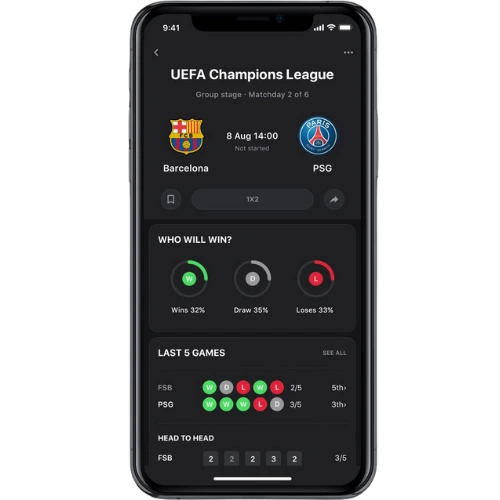
Ball-by-ball and play-by-play scoring via WebSocket push — not polling. Polling at 1-second intervals creates a 1,000-request/second load at 1,000 concurrent users. We use Socket.io rooms so each match update triggers a single server emit that fans out to all subscribers simultaneously.
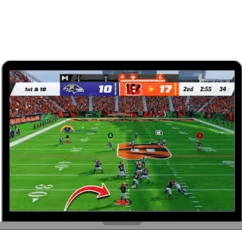
Team selection UI with salary cap budget constraints, captain/vice-captain multipliers, and real-time player availability updates. Pre-match player locks require a time-sync layer between app client and server. A 30-second clock drift can allow illegal team edits after match start — the most common DFS compliance violation.
Private leagues with custom scoring rules, invite systems, trade markets, and commissioner controls. Our Android game development team builds the rule-config UI so operators — not developers — can create new contest formats through an admin panel without code deployments.
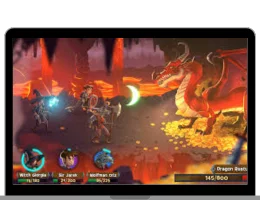
In-app chat, head-to-head challenges, friend leaderboards, and social sharing. Social features are the highest-retention driver in the space. Users with 3+ active friends have 4× higher 90-day retention than solo users. We build the social graph into the core data model rather than bolting it on post-launch.
Player performance history, ownership percentages, lineup optimisers, and projected point ranges. Advanced analytics is the primary reason users pay for premium subscriptions. We build the stats engine as a first-class feature, not a third-party embed that disappears when the provider changes their API.

Single codebase via React Native targeting iOS, Android, and web browser. React Native introduces a native bridge overhead but reduces multi-platform maintenance cost by 60% versus separate native apps — the right trade-off for startups that need fast feature velocity.
Mobile, web, and tablet — one backend for all access points
Contest platform audiences span mobile-first fantasy cricket fans in India to desktop-heavy NFL and NBA DFS players in North America. Our team builds across all access points from a single shared backend — scoring, wallet, and contest state are always consistent regardless of which device your users are on.

React Native or Flutter for iOS and Android. Offline match-watch mode with local score cache so users stay engaged even on 2G connections during live matches.

Next.js PWA with server-side rendering for SEO-discoverability, real-time WebSocket scoring, and full desktop lineup management with drag-and-drop player selection.

Adaptive layout for iPad and Android tablets showing split-screen lineup view and live scoring side-by-side — the highest-engagement UI for IPL and NFL match days.

WebOS and Android TV apps for second-screen fantasy viewing alongside live broadcasts — growing as smart TV penetration increases in cricket and football markets.
How we deliver — 14 weeks from architecture spec to App Store
Week ranges reflect a standard real-money DFS platform with live scoring, wallet infrastructure, and iOS/Android apps — the baseline scope for our fantasy sports app development company. White-label multi-tenant and season-long league features add four to six weeks to the backend phase.

We document the full data architecture before writing any application code: API ingestion pipeline, scoring rule schema, wallet ledger design, contest engine state machine, and anti-fraud rule set. Architecture errors found after the backend is built cost 5–10× more to fix than errors caught in week two. This specification phase is the highest-ROI investment in the entire project.

The design team builds team-selection flow, live scoring view, contest lobby, and wallet screens in Figma while the backend integrates the sports data API. The live-scoring UI needs to reflect actual API response shapes, not mock data. Designing against mock data causes the most common mid-project rework cycle in competitive platform builds.

The scoring engine, contest management, wallet ledger, and anti-fraud rule engine are built in parallel sprints. Since the sports betting and fantasy sports wallet infrastructure shares similar atomic-transaction requirements, we apply the same event-sourcing pattern we use in betting platforms — ensuring every balance change has a complete audit trail from the first day of testing.

We load-test the scoring engine at 150% of projected launch-day concurrent users and validate wallet transactions under concurrent-settlement conditions. App Store and Play Store submission — privacy manifests, data handling disclosures, and real-money app age ratings — run in parallel so store rejections will not delay launch.
We deploy to AWS EKS with Kubernetes autoscaling for match-day traffic spikes. We monitor scoring engine latency, wallet settlement throughput, and anti-fraud alert volumes in the first 72 hours post-launch. These platforms experience 10–20× normal traffic during major match days — IPL finals, Super Bowl, Champions League knockouts. Pre-launch scaling configuration is the difference between a successful launch and a server crisis.
Why operators choose our fantasy sports app development company
These are specific engineering practices. Every point corresponds to something verifiable on day one of the project.

All fantasy point calculations run server-side — not in the mobile client. This is a core practice of our fantasy sports app development company on every project. This prevents score manipulation in real-money contests and ensures consistent scoring across iOS, Android, and web — eliminating device-specific floating-point discrepancies.

Our wallet uses PostgreSQL advisory locking so entry-fee deductions and prize credits are always atomic — a double-credit exploit is architecturally impossible, not only policy-blocked. Our blockchain development background informs every financial ledger we build.

Our anti-fraud engine uses device fingerprinting, IP velocity checks, and behavioural pattern analysis to detect multi-account abuse in real time. Multi-accounting in DFS can shift prize distribution by 40% in large contests. We treat fraud detection as a core feature, not a post-launch add-on.
Our Clutch profile and GoodFirms listing are verified by iGaming and sports-tech operators. Operators seek long-term partners for compliance updates and season-end feature releases. Documented review history reduces your vendor selection risk significantly.
We build automatic failover between sports data providers — if Sportradar experiences an outage during a live IPL match, our secondary Stats Perform integration activates within 15 seconds without a scoring blackout. A 10-minute scoring outage during peak match hours causes 30–40% of users to abandon the session permanently. Data redundancy is non-negotiable on every project we deliver.
You receive the complete React Native project, Node.js backend, database schema, infrastructure-as-code, and deployment scripts. No licensing fee. No revenue share. Contest platforms require continuous regulatory updates as gambling laws evolve across jurisdictions. Owning your source code means your legal team — not your vendor — controls your compliance timeline.