Introduction
Agentic AI for healthcare enables intelligent systems that can reason and act across clinical and operational workflows. However, healthcare environments change constantly as patient conditions evolve, data flows from multiple systems, and decisions must remain safe and timely. Because static automation cannot adapt quickly, delays and lost context often occur. As a result, teams struggle to respond early to risk. Agentic AI addresses this gap by maintaining continuous awareness of patient state, clinical rules, and workflow progress.
1. Challenges in Healthcare Systems
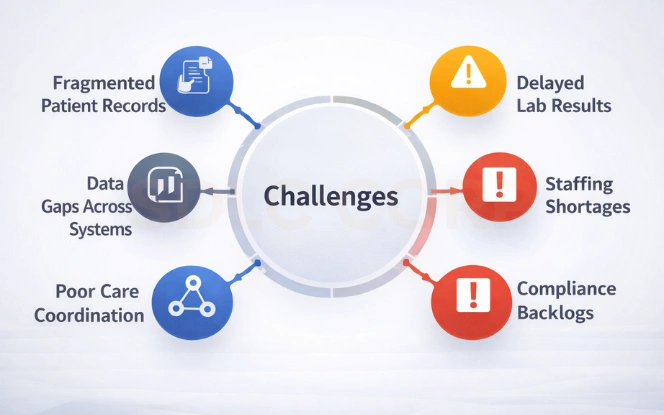
Healthcare systems operate under constant pressure to deliver safe care, manage resources, and meet regulatory requirements. Even small gaps in visibility or coordination can escalate into clinical or operational risk.
Key challenges include:
- Fragmented decision making across systems
Clinical records, lab data, monitoring tools, and operational workflows often exist in separate platforms. Because information is not unified, teams struggle to see the full patient and workflow picture.
- Rising cognitive load for clinicians
Clinicians manage alerts, documentation, coordination tasks, and patient care simultaneously. When systems require constant attention, mental fatigue increases.
- Delayed recognition of patient deterioration
Rule based systems respond only when thresholds are crossed. Gradual changes in patient condition often go unnoticed until risk becomes severe.
- Inefficient coordination between teams
Care delivery depends on collaboration across departments and roles. Without shared visibility, handoffs rely on manual updates and repeated communication.
- Strict regulatory and safety requirements
Healthcare organizations must maintain accurate records, approvals, and audit trails. When data is scattered or inconsistent, compliance becomes difficult and risk increases.
2. How Agentic AI Supports Healthcare Operations
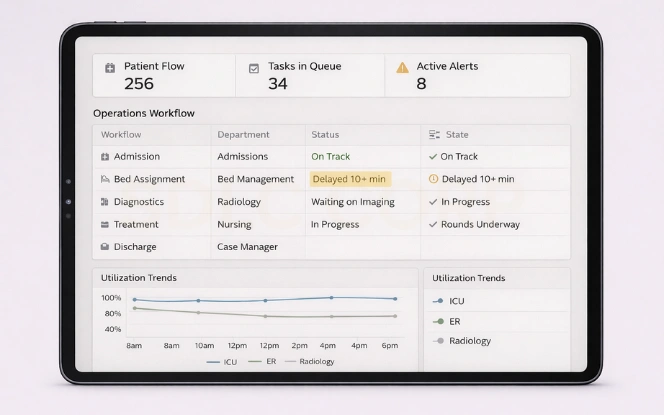
Agentic AI connects clinical and operational workflows through continuous reasoning rather than isolated automation. Systems evaluate the broader care context before acting, which improves relevance and coordination without removing human oversight.
Agentic AI supports healthcare teams by:
- Maintaining continuous situational awareness
Patient status, task progress, and resource availability are monitored in real time across systems. This reduces reliance on delayed reports and manual status checks. Teams gain earlier visibility into emerging risks and bottlenecks.
- Improving decision relevance
Actions are triggered based on trends, patient history, and workflow context instead of single data points. This reduces unnecessary alerts and interruptions. Clinicians receive information aligned with actual clinical risk.
- Automating routine coordination
Follow ups, task routing, and status updates occur automatically within defined limits. Manual tracking decreases while workflow consistency improves. Teams can focus more on care delivery.
- Supporting consistent workflows across departments
All teams operate using shared and current information. This reduces miscommunication and duplicated effort. Care delivery becomes more predictable and reliable.
Organizations often review agentic AI fundamentals to understand how this goal driven approach differs from traditional automation.
3. Core Capabilities of Agentic Healthcare Systems
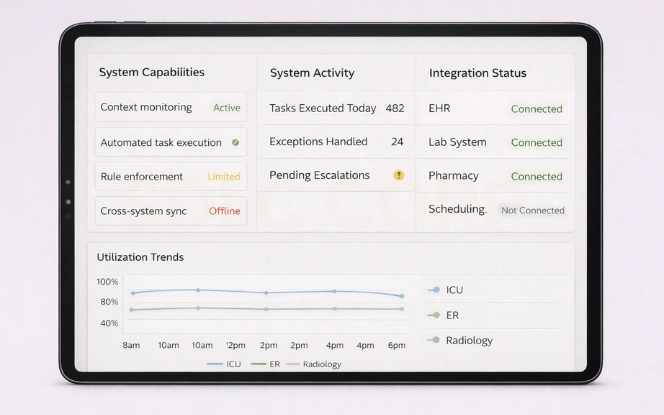
Agentic AI systems rely on structured internal capabilities that allow autonomy without sacrificing safety. These capabilities ensure systems remain predictable, explainable, and aligned with clinical standards.
Key capabilities include:
- Real time data ingestion
Systems continuously process clinical records, monitoring signals, and operational updates. Patient and workflow state remains current at all times. Decisions reflect real conditions rather than outdated snapshots.
- Context driven reasoning
Patient history, clinical guidelines, safety rules, and operational constraints are evaluated together. Decisions balance urgency, risk, and policy requirements. This prevents unsafe or premature actions.
- Controlled execution of actions
Recommendations and actions follow defined approval rules and escalation paths. Every action is logged with context and timing. Accountability and traceability remain clear.
A detailed explanation of this architecture is available in what is agentic AI.
4. Clinical Decision Support Improvements
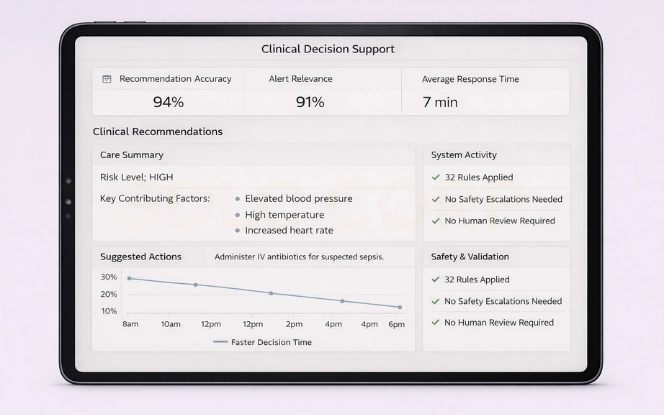
Clinical decision support often fails due to alert overload and poor relevance. Agentic AI changes how recommendations are generated and delivered by focusing on clinical meaning rather than alert volume.
Agentic AI improves decision support by:
- Analyzing trends over time
Clinical indicators are evaluated across extended periods rather than single measurements. Gradual deterioration becomes visible earlier. False alerts caused by temporary changes are reduced.
- Considering combined risk factors
Patient history, medications, comorbidities, and current signals are assessed together. Escalation occurs only when overall risk rises meaningfully. This improves trust in system recommendations.
- Aligning alerts with clinical judgment
System behavior mirrors how clinicians prioritize care in practice. Notifications reflect urgency instead of rigid numeric thresholds. Adoption and response improve.
5. Care Coordination Across Teams
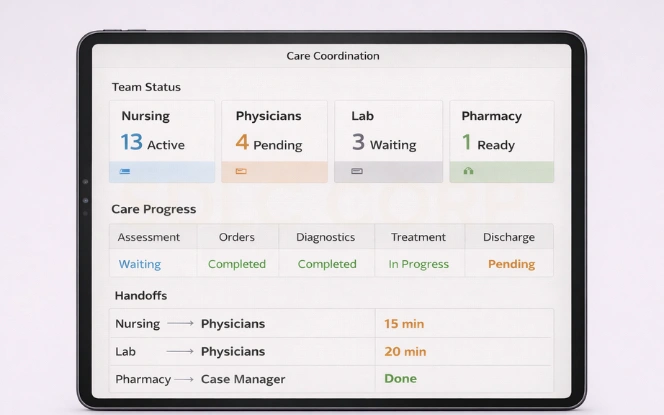
Healthcare delivery depends on reliable coordination between departments and roles. Delays often occur when information is incomplete or outdated, affecting continuity of care.
Agentic AI supports coordination by:
- Tracking patient progress across departments
Diagnostics, consultations, approvals, and follow ups are monitored as a connected process. Missing or delayed steps are identified early. This reduces downstream disruption.
- Enforcing correct task sequencing
Clinical dependencies are respected automatically. Tasks proceed only when prerequisites are met. Workflow errors are prevented.
- Reducing manual handoffs
Persistent system awareness replaces repeated communication and status chasing. Information remains consistent across teams. Continuity of care improves.
6. Long Term Monitoring and Follow Up
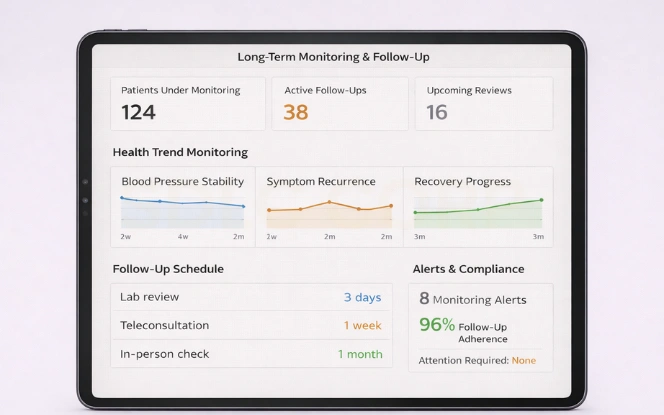
Chronic and high risk patients require continuous observation beyond episodic visits. Short term reviews often miss early warning signs.
Agentic AI supports monitoring by:
- Evaluating long term patient patterns
Weeks or months of patient data are analyzed together. Subtle deterioration becomes visible earlier. This supports proactive care.
- Adjusting monitoring intensity dynamically
Stable patients generate fewer alerts over time. Higher risk patients receive closer attention. Workload remains balanced.
- Supporting proactive intervention
Clinicians receive timely signals before conditions escalate. Early action becomes possible. Outcomes improve.
7. Operational Efficiency and Resource Planning
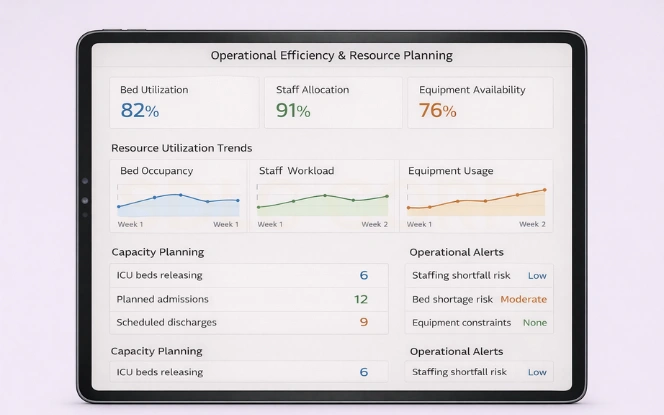
Operational performance directly impacts patient care quality and safety. Poor planning leads to delays, overcrowding, and staff strain.
Agentic AI improves operations by:
- Anticipating demand using historical data
Admission patterns and workload trends inform planning. Staffing and capacity adjustments occur before surges. Readiness improves.
- Prioritizing resources based on clinical urgency
Beds, staff, and equipment are allocated according to patient need. High risk cases receive attention first. Care quality remains protected.
- Balancing efficiency with safety
Operational speed never overrides clinical constraints. Decisions always respect patient safety. Trust is maintained.
8. Compliance, Safety, and Governance
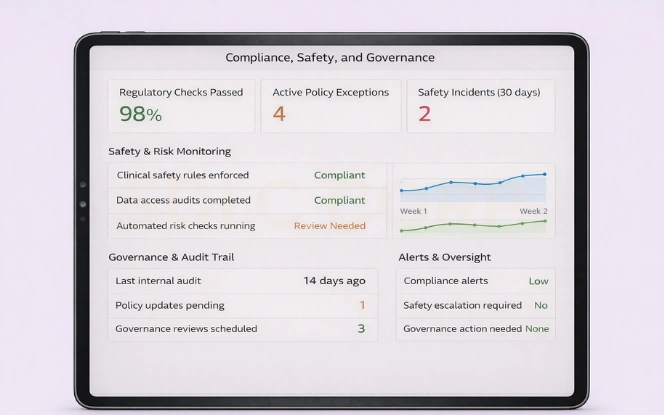
Healthcare autonomy requires strict oversight and accountability. Systems must remain explainable, auditable, and predictable.
Agentic AI supports governance by:
- Operating within approved boundaries
Systems act only within defined scopes and rules. High risk actions require human confirmation. Unauthorized behavior is prevented.
- Providing transparent reasoning
Clinicians can review why recommendations were generated. Decisions remain explainable and reviewable. Accountability stays intact.
- Maintaining complete audit trails
Every action is logged with time and context. Regulatory review becomes simpler. Compliance risk decreases.
9. Implementation Considerations
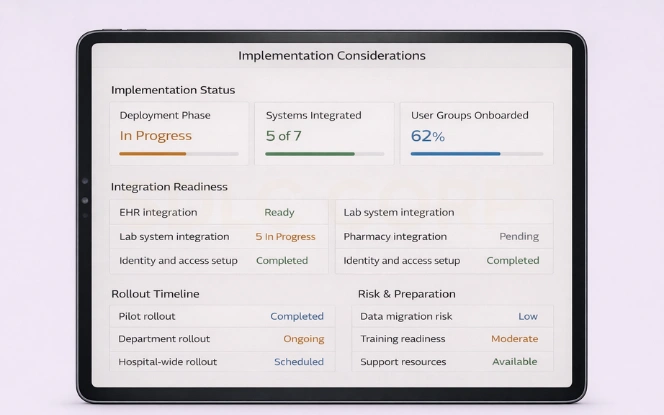
Successful adoption depends on preparation and discipline rather than technology alone. Implementation quality determines long term value.
Healthcare organizations should:
- Align data sources and workflows early
Integration gaps are identified before deployment. Stability improves and risk decreases.
- Monitor system behavior continuously
Ongoing review ensures safe and expected operation. Deviations are corrected early. Reliability remains high.
- Scale deployment responsibly
Structured rollout supports long term success. Growth does not compromise control or safety.
10. Enterprise Deployment and Sustainability
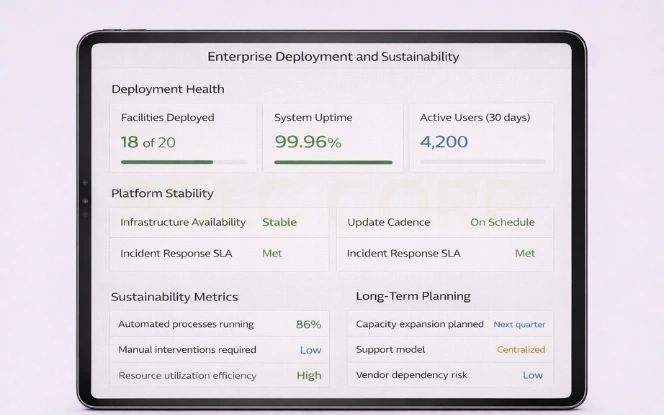
Healthcare systems must remain adaptable as regulations, care models, and technology evolve. Long term sustainability requires systems that can change without disruption.
Agentic systems enable sustainability by:
- Adapting to evolving clinical workflows
Reasoning logic updates without full redesign. Change becomes manageable instead of disruptive.
- Supporting continuous improvement
Feedback loops refine behavior over time. System performance improves steadily.
- Maintaining stability at scale
Growth does not increase complexity disproportionately. Operations remain manageable.
Structured deployment practices are outlined in AI ML implementation.
Conclusion
Agentic AI for healthcare enables intelligent coordination across clinical and operational workflows. By combining continuous context awareness with controlled autonomy, these systems support safer decisions and reduce manual effort.
When implemented with strong governance and human oversight, autonomous AI agents enhance care delivery without replacing clinicians. Early planning helps organizations define the right structure and safeguards.
For guidance on responsible adoption, Contact us SDLC Corp
FAQs
What Is Agentic AI For Healthcare And How Is It Different From Traditional AI?
Agentic AI for healthcare uses goal driven intelligence to reason and act across clinical workflows. Unlike traditional AI, it adapts decisions based on patient context, workflow state, and constraints instead of fixed rules.
How Do Autonomous AI Agents In Healthcare Support Clinical Teams?
Autonomous AI agents in healthcare continuously monitor patient data and workflows. They help prioritize risks, coordinate tasks, and reduce manual follow ups while keeping clinicians in control of decisions.
Is Agentic AI In Healthcare Systems Safe To Use In Clinical Environments?
Agentic AI in healthcare systems operates within strict safety boundaries, approval rules, and audit trails. High risk actions require human confirmation, which supports compliance and patient safety.
How Do AI Agents For Clinical Decision Support Reduce Alert Fatigue?
AI agents for clinical decision support analyze trends and combined risk factors instead of single data points. This reduces unnecessary alerts and delivers fewer, more relevant notifications to clinicians.
Where Do Autonomous Healthcare AI Solutions Deliver The Most Value?
Autonomous healthcare AI solutions add the most value in care coordination, chronic patient monitoring, operational planning, and compliance. They improve visibility, reduce workload, and support timely decisions.