Custom software development cost in 2026 usually starts around $50,000 for a focused MVP and can exceed $300,000 for a large-scale enterprise platform. The final budget depends on scope, workflow complexity, integrations, security, scalability, and support needs. For most buyers, the better question is not “What is the lowest quote?” but “What should phase one include to support the business without adding delivery risk?”
A strong estimate starts with scope clarity. If you are planning a custom software project, this guide will help you understand pricing, process, timelines, and cost risks before you compare proposals.
Custom Software Project Cost in 2026

There is no single fixed price for custom software because there is no single type of project. A better way to estimate cost is to group projects by scope, complexity, and business use case.
Typical Cost Ranges by Project Type
| Project Type | Planning Range | Timeline | Best Fit |
|---|---|---|---|
| Focused MVP | $50,000 – $120,000 | 6–10 weeks | Validation, early workflow testing, first release |
| Business Web Application | $80,000 – $200,000 | 2–5 months | Multi-user products, subscriptions, customer platforms |
| SaaS Product v1 | $100,000 – $300,000 | 4–7 months | Multi-system integrations, compliance, migration, governance |
These are planning ranges, not universal quotes. Final pricing changes based on workflow depth, integrations, compliance, migration effort, user roles, architecture needs, and support expectations.
Assumptions Behind These Cost Ranges
Pricing ranges become more useful when the assumptions are visible. The ranges above generally assume:
- Web-first or platform-first delivery
- Moderate UI complexity
- Standard QA coverage
- Defined first-release scope
- Common business integrations
- Limited migration complexity unless stated
- Delivery team with product, engineering, and QA involvement
If the project includes real-time systems, strict compliance controls, advanced reporting, complex approval layers, or large data migration, the budget can rise quickly.
What Affects Custom Software Development Cost
Workflow Complexity
Screen count is not the real cost driver. Workflow depth matters more.
Even a simple screen can become expensive when it includes permissions, approval rules, audit history, notifications, exception handling, escalations, and role-based visibility.
Integration Depth
Integrations often increase cost faster than expected.
Connecting with ERPs, CRMs, payment systems, identity providers, analytics tools, or legacy platforms usually requires field mapping, validation logic, retries, error handling, monitoring, and testing across different conditions.
Security and Compliance
If the software supports regulated workflows or stricter security controls, cost usually increases.
Access control, auditability, encryption standards, documentation, testing depth, and compliance review all add delivery effort.
Architecture and Future Scale
A small internal tool does not need the same foundation as a SaaS product or enterprise platform.
However, if the software needs modular architecture, multi-tenant logic, observability, performance planning, or long-term extensibility, engineering effort increases earlier in the project to reduce rebuild risk later.
Data Migration and Cleanup
Migration is one of the most underestimated parts of software delivery.
Legacy data often needs mapping, cleanup, transformation, validation, deduplication, and rollback planning. When teams treat migration as a minor task, both timeline and budget usually slip.
Delivery Quality
A lower hourly rate does not always create a lower total project cost.
In many cases, weak documentation, slow communication, low QA coverage, and unclear ownership lead to more expensive rework later. Delivery quality matters more than headline rate alone.
Why Software Quotes Vary So Much
Two vendors may quote the same project very differently because they are not pricing the same level of work.
One quote may only cover the build. Another may already include discovery, scalability planning, QA depth, release support, documentation, and post-launch coverage.
That is why businesses should not compare software estimates only by total price. They should compare:
- What is included
- What is excluded
- How integrations are treated
- How QA is handled
- What assumptions were made
- How change requests are managed
- What support happens after launch
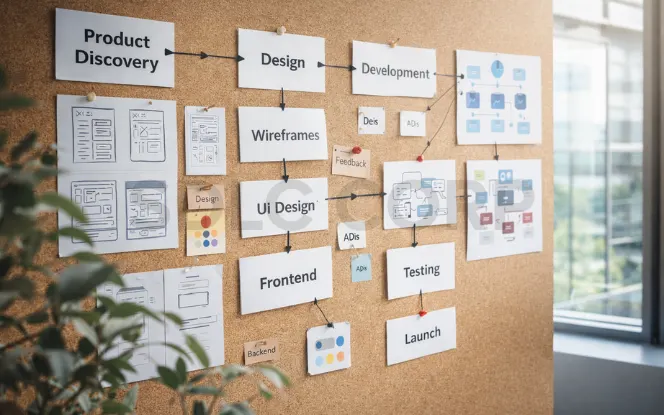
What Is the Custom Software Development Process in 2026
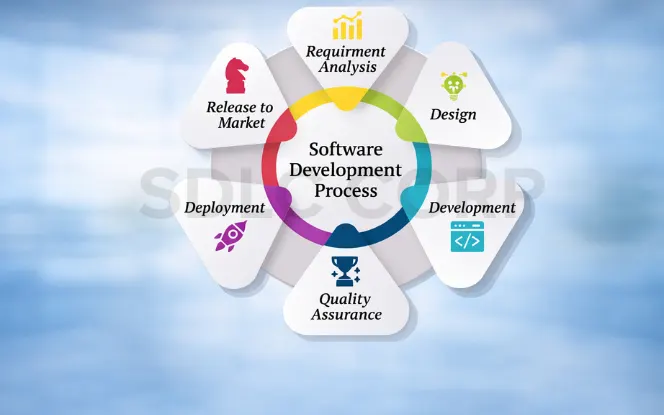
A strong process helps teams reduce rework, improve estimate accuracy, and deliver with fewer surprises.
Most custom software projects move through these stages:
Discovery and Requirements Planning
The discovery phase defines business goals, user roles, workflows, integrations, priorities, constraints, and first-release scope.
Good discovery improves estimate quality because it reduces guesswork before development starts.
Architecture and Technical Planning
At this stage defines how the software should work behind the interface. It covers database structure, API strategy, hosting direction, security controls, and scale planning.
If this phase is weak, later releases usually become slower and more expensive.
UI/UX Design
Design should improve task completion, not just appearance.
Good UX reduces friction, lowers training effort, improves adoption, and helps users complete workflows with fewer errors.
Development and Integrations
Development is the main build phase. It includes frontend, backend, business rules, permissions, admin features, integrations, and infrastructure setup.
Development usually takes the largest share of the budget, but its success depends heavily on the quality of earlier planning.
QA and Release Readiness
Testing should cover workflows, user roles, integrations, regressions, edge cases, and release validation.
Underfunded testing often leads to more expensive fixes after launch.
Launch and Post-Launch Support
Launch is not the end of the software lifecycle.
Monitoring, bug fixing, tuning, operational support, and product improvements continue after release. That is why post-launch work should be treated as part of the real software investment.
Where the Budget Usually Goes
A realistic software budget is spread across more than engineering.
| Budget Area | Typical Share |
|---|---|
| Discovery and requirement mapping | 5% – 10% |
| Architecture and technical planning | 5% – 10% |
| UI/UX design | 10% – 15% |
| Development and integrations | 40% – 55% |
| QA and release readiness | 15% – 20% |
| DevOps, deployment, and environment setup | 5% – 10% |
| Project coordination and communication | 5% – 10% |
The exact split changes by project type. Internal tools may spend less on design. Customer-facing products may spend more on UX. Integration-heavy systems often require more planning and QA.
Use this calculator to estimate custom software pricing, project scope, and delivery timelines before approving a software proposal.
Example Software Budgets by Scenario
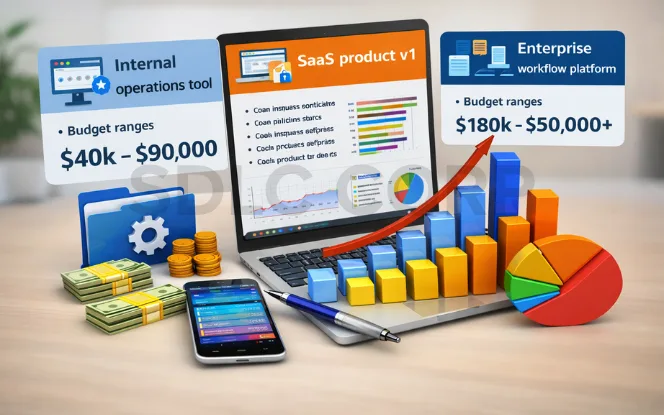
Internal Operations Tool
One company needs a custom web application for approvals, reporting, and audit history across one department.
Likely Scope
- Role-based access
- Workflow approvals
- Dashboard and reporting
- Admin controls
- One or two business integrations
Typical Range: $40,000 – $90,000
Typical Timeline: 2–4 months
Main Cost Drivers: workflow rules, reporting logic, permissions, integration stability
SaaS Product V1
Here, business is launching a subscription-based SaaS platform with onboarding, account roles, notifications, analytics, and usage controls.
Likely Scope
- Authentication and account setup
- Subscription billing
- Multi-user access
- Admin dashboard
- Onboarding flows
- Analytics and notifications
Typical Range: $90,000 – $180,000
Typical Timeline: 4–7 months
Main Cost Drivers: subscription logic, user roles, analytics, release quality, scalability planning
Enterprise Workflow Platform
An organization needs software that connects internal systems, supports multiple departments, manages audit history, and enforces controlled access.
Likely Scope
- Multi-system integrations
- Approval layers
- Role hierarchies
- Migration planning
- Audit logs
- Compliance-oriented controls
Typical Range: $180,000 – $500,000+
Typical Timeline: 6–15+ months
Main Cost Drivers: integration depth, data migration, governance, QA scope, phased rollout planning
How Timeline Affects Budget
Timeline and cost are connected, but not in the way many teams assume.
A shorter deadline does not automatically reduce cost. In many cases, compressed delivery increases coordination overhead, creates parallel work, raises release risk, and makes changes more expensive.
The biggest timeline drivers are usually:
- Scope clarity
- Decision speed
- Design approval speed
- Integration complexity
- Migration effort
- QA coverage
- Compliance review
- Change requests during delivery
Best way to improve timeline is not to skip important steps. It is to reduce avoidable ambiguity early and release the most important workflows first.
Hidden Costs Businesses Often Miss
Launch cost is not the same as total software ownership cost.
Teams often budget for delivery and forget the costs that appear after adoption begins.
Common Hidden Cost Areas
- Scope changes after approval
- Third-party API and software fees
- Hosting and storage growth
- Compliance and security reviews
- Monitoring and observability tools
- Documentation and training effort
- Support and post-launch fixes
- Data cleanup and migration rework
- Refactoring caused by weak early architecture
- Internal stakeholder time during approvals and testing
Many businesses also underbudget maintenance. A common planning benchmark is to reserve 15% to 25% of the original project cost per year for support, updates, security work, performance tuning, and operational upkeep.
How to Reduce Cost Without Hurting Quality

Reducing cost does not mean making software cheap. Instead, it means spending the budget where it creates real business value.
The most effective ways to control cost are:
- Define a sharp first-release scope
- Separate must-have features from later-phase items
- Invest in discovery before approving a large build
- Avoid unnecessary custom work where proven components are enough
- Clarify integrations early
- Decide who owns approvals and scope decisions
- Plan support and maintenance before launch
- Use phased rollout instead of solving every workflow at once
A strong outcome is not the lowest quote. It is a product that reaches production with fewer surprises, less rework, and a cleaner path for future releases.
What a Good Software Estimate Should Include
A reliable software estimate should explain more than price. It should explain what the budget covers, what it excludes, and where risk can increase.
Before approving a proposal, check whether the estimate includes:
- Business requirements and scope assumptions
- Workflow complexity and role logic
- Architecture and technical planning
- UI/UX effort
- Frontend and backend delivery
- Integration scope
- QA coverage
- Deployment and environment setup
- Documentation and handover expectations
- Support and maintenance assumptions
- Exclusions, risks, and change-request rules
Fixed Price vs Time and Material

Both pricing models can work. The right choice depends on how stable your scope is.
Fixed Price
- Requirements are clear
- Scope is unlikely to change
- Integrations are already understood
- The first release is tightly defined
Time and Material
- Discovery is still shaping the scope
- The product may evolve during delivery
- Integrations or workflows still need validation
- The business wants more flexibility during execution
For many custom software projects, time and material is more realistic because requirements usually change as teams learn more during discovery and testing.
Need a Realistic Custom Software Estimate?
If you are planning a custom software project, the best way to avoid budget mistakes is to define scope before comparing quotes.
A strong estimate should reflect your workflows, integrations, business priorities, rollout plan, and support expectations. It should not be based only on screens or hours.
Talk to our team for a tailored software estimate built around your actual delivery requirements.

Conclusion
Custom software development cost, process, and timeline in 2026 depend on more than coding alone. Clear scope, better planning, and transparent estimates help businesses control budget and make better decisions.
FAQs
How much does custom software development project cost in 2026?
A focused MVP may start around $15,000, while larger enterprise platforms can exceed $500,000. Final cost depends on workflow depth, integrations, compliance, migration effort, security requirements, and support scope.
What increases software development cost the most?
The biggest drivers are workflow complexity, integration effort, architecture needs, compliance requirements, migration work, and QA depth.
How long does custom software development take?
A focused MVP may take 6–10 weeks, a business application may take 2–5 months, a SaaS v1 may take 4–7 months, and an enterprise platform may take 6–15+ months.
How much should businesses budget for maintenance?
Many teams plan around 15% to 25% of the original project cost per year for maintenance, support, updates, security work, and operational upkeep.
What should be included in a software estimate?
A proper estimate should include scope assumptions, architecture, design, development, integrations, QA, deployment, support assumptions, exclusions, and risk notes.
Why do software quotes vary so much?
Quotes vary because vendors often price different levels of delivery quality, QA depth, scalability planning, support, and integration complexity.
Is fixed price or time and material better?
Fixed price works best when scope is stable and clearly defined. Time and material is usually better when requirements may evolve during discovery or delivery.
What hidden costs should businesses plan for?
Common hidden costs include third-party tools, hosting growth, migration cleanup, documentation, training, post-launch fixes, security reviews, and internal stakeholder time.