
Poker Game Development Company
SDLC Corp builds custom poker software for web, mobile, PC, and desktop platforms. Our team designs multiplayer architecture, tournament systems, fair play controls, admin tools, and full source code ownership for operators that need long term product control without licensing lock in.
- Custom Poker Game Development
- Scalable Custom Poker Software



Request A Proposal

What We Build in Custom Poker Software
We build poker platforms for businesses that need ownership, technical depth, and room to scale. Each build can include custom game rules, multiplayer table logic, tournaments, admin workflows, fair play controls, wallet modules, and cross platform delivery across web, mobile, PC, and console.
- Full code ownership from day one
- Custom rules engine and multiplayer architecture
- Admin, reporting, and fair play systems included
Custom Poker Software Cost, Timeline and Ownership
A custom poker platform is priced around the product model, game variants, table traffic, tournament logic, wallet requirements, admin controls, fair play systems, compliance needs, and ownership expectations. The ranges below help you plan the right build scope before requesting a detailed estimate.
Poker MVP
Best for one core variant, simple multiplayer, basic lobby, limited wallet or chip flow, and a lean admin panel.
Typical timeline: 6 to 10 weeks
Mid Level Poker App
Best for multiple variants, tournaments, wallet workflows, chat, reporting, admin controls, and stronger player engagement.
Typical timeline: 3 to 5 months
Advanced Poker Platform
Best for real money flows, wallet ledgers, anti collusion signals, compliance support, analytics, and scalable backend architecture.
Typical timeline: 5 to 9+ months
| Business need | Best fit | Where to go next |
|---|---|---|
| Full source code ownership, custom rules, proprietary backend, and long term platform control. | Custom poker software | Continue with this custom build service |
| Faster branded launch with less custom engineering at the start. | White label poker setup | White label poker software |
| Bitcoin, stablecoin, multi currency cashier, blockchain confirmations, and crypto wallet ledger flows. | Crypto poker platform | Crypto poker software |
| Extra poker engineers for an existing roadmap, sprint team, or module level delivery. | Dedicated poker developers | Hire poker developers |
Ownership note: Custom poker software is built for operators that need source code ownership, custom rules, wallet logic, admin workflows, tournament systems, and long term product control. If speed matters more than deep customization, a white label poker setup may be a better first step.
Poker Platform Architecture for Real Operations
Your poker platform needs more than visible player screens. Behind the table, the system must manage table state, wallet events, tournament rules, player actions, admin permissions, risk checks, support workflows, and reporting visibility.
Server Authoritative Gameplay
The server controls table state, player actions, side pots, hand ranking, timeouts, reconnects, and game event logs so gameplay stays consistent across devices.
Wallet Ledger Design
Deposits, withdrawals, bets, wins, rake, refunds, and manual adjustments are recorded as traceable ledger events instead of simple balance changes.
Risk and Audit Visibility
Admin roles, hand histories, transaction reports, player flags, device signals, and audit logs help operators investigate disputes and suspicious behavior.
RNG, Fair Play, Anti Collusion and Compliance Readiness
Poker operators need fair play systems that support certification, monitoring, audits, dispute handling, responsible gaming, and secure operations across launch markets.
RNG and Game Integrity Planning
Define shuffle logic, game event recording, hand history storage, audit trails, and certification readiness requirements before development starts.
Suspicious Play Signals
Track patterns such as repeated table pairing, unusual folding behavior, chip dumping, shared devices, account clusters, and timing anomalies.
Responsible Gaming and Market Controls
Add deposit limits, cooling off tools, self exclusion, KYC and AML support, region controls, admin approvals, and compliance exports where the launch market requires them.
What You Receive in a Custom Poker Build
Each poker project is delivered with the systems needed to launch, manage, and improve the platform after release.
| Deliverable | What it includes | Why it matters |
|---|---|---|
| Player app | Lobby, tables, profiles, wallet or chips, chat, tournaments, notifications, and account settings. | Creates the player experience across web and mobile. |
| Game engine | Variant rules, betting rounds, side pots, all in logic, hand ranking, timers, and reconnect behavior. | Controls fair and stable gameplay. |
| Admin panel | User controls, table management, tournament setup, reports, risk flags, permissions, and audit logs. | Gives operators control over daily operations. |
| Wallet and reporting | Ledger events, transaction history, approvals, settlement reports, refunds, and reconciliation views. | Reduces payment disputes and improves financial visibility. |
| Source code handover | Codebase, deployment notes, environment setup, documentation, and support plan. | Protects long term ownership and avoids vendor lock in. |
Built Around Operator Control
SDLC Corp builds custom poker platforms around ownership, operational visibility, secure architecture, scalable delivery, and post launch support.
Plan a Poker Platform With Real Product Control
Share your preferred game variants, wallet model, launch market, payment needs, admin workflows, and ownership requirements. SDLC Corp can turn that into a clear build scope, timeline, and development estimate.
Discuss Your Custom Poker BuildCustom Poker Platform Features
Our builds cover the systems that matter most in a serious poker product: variant rules, real time multiplayer, tournament infrastructure, wallet and payment workflows where required, admin controls, reporting, fair play tooling, and scalable deployment.
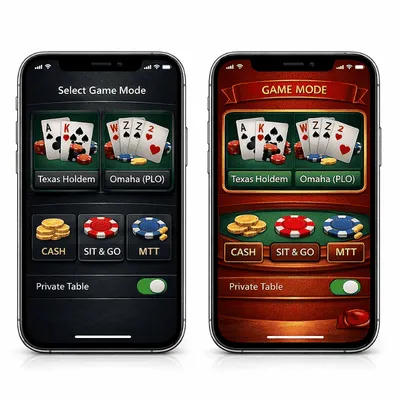
Variants & Formats
Run multiple poker variants and table formats from one backend
- Texas Hold’em + Omaha (PLO)
- Cash, Sit & Go, MTT
- Private tables + fast formats (optional)
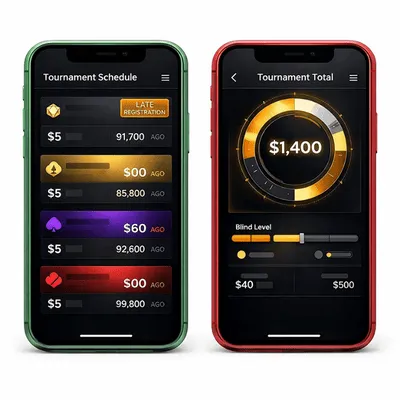
Tournaments
Run tournaments with flexible structures and scaling.
- Scheduled events + late registration
- Blinds + prize pools
- Rebuy/add-on/re-entry (optional)

Wallet & Payments
Wallet and payment workflows can be integrated where required.
- Wallet ledger + transaction history
- Multi-currency (optional)
- Payment gateway integration + withdrawal flows
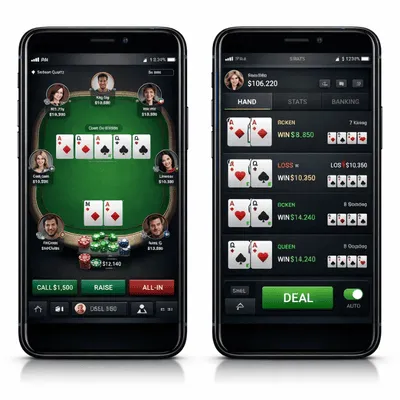
Hand History & Tools
Give players tools and keep disputes easy to audit.
- Hand history + session summaries
- Hand replayer (optional)
- Player notes + dispute logs

Rake, VIP & Promos
Configure rake logic, VIP tiers, promo rules, and bonus mechanics from the admin layer.
- Rake rules + rake caps
- Rakeback/cashback (optional)
- VIP tiers + promo codes (optional)
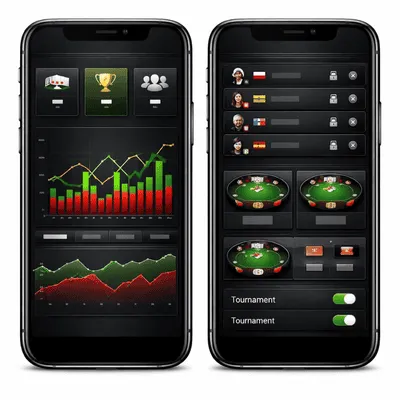
Admin Panel & Reports
Admin controls for tables, players, tournaments, and reporting.
- Manage players/tables/tournaments
- Transaction approval workflows + audit controls
- DAU/MAU, retention, revenue reports
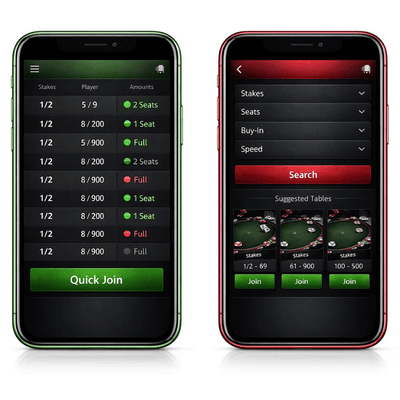
Lobby & Matchmaking
Improve seat allocation and table discovery with lobby filters, quick-join logic, and balancing controls.
- Filters: stakes, seats, buy-in, speed
- Quick-join suggestions
- Table balancing + multi-tabling

Security & Fair Play
Protect the ecosystem with risk signals and audit trails.
- Anti-collusion signals (optional)
- Bot detection flags (optional)
- Risk limits + full audit logs

Responsible Gaming
Add market-ready RG settings when required.
- Deposit/loss/time limits
- Cooling-off + self-exclusion
- Configurable compliance rules (KYC/AML, limits, self-exclusion)
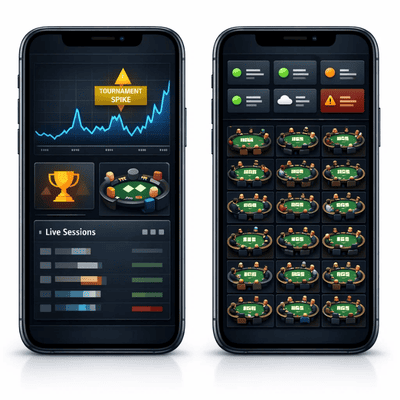
Performance & Scalability
Stable gameplay during spikes and tournament peaks.
- Low-latency real time sessions
- Reconnect + recovery handling
- Monitoring + observability hooks
Custom Poker Development Services
2D and 3D Poker Games
We build custom poker platforms from architecture to deployment, game logic, multiplayer and tournament systems, admin controls, fair play controls, and cross platform delivery. Every build is scoped to your product requirements and owned fully by you.
Cross Platform Poker App Development
We build cross platform poker apps that run consistently on Android, iOS, web, and desktop. Architecture decisions are made early so performance and feature parity hold across every target platform.
Android and iOS Poker Game
We build poker apps across Android, iOS, web, PC, and tablet from a single architecture. Each platform build is optimised for the target environment, not a generic port, and tested for performance, latency, and concurrent-player load.
End-to-End Poker Platform Development
We handle every layer of the build, architecture, game engine, backend, wallet, admin panel, and deployment. You get a fully custom poker platform with complete code ownership and the flexibility to evolve it over time.
Poker Website Development
We build poker websites and web apps with the same custom architecture as our mobile and desktop products, shared backend, unified admin panel, and consistent game logic across environments.
RNG-Certified Poker Game Development
We build poker platforms with RNG-certified card dealing, third-party audit support, and provably fair game mechanics. Certification-ready architecture is included by default for operators who require compliance with gaming standards.
Video Poker Game App Development
We build video poker game apps with electronic card dealing, configurable payout tables, variant rule sets (Jacks or Better, Deuces Wild, Double Bonus), and single or multi-hand play. Available for web, iOS, Android, and desktop.
We build game logic with audit-ready hand history, randomness validation hooks, and configurable fair play controls. Architecture is structured to support third-party certification review where required by your target market.
Poker Software Development Portfolio
These are real poker products delivered by SDLC Corp, built for performance, fair play, and cross platform scale.
World Of Poker
Features:
- Authentic WOP tournaments and events.
- Multi-level tournaments with various buy-ins.
- Texas Hold’em and Omaha poker variants.
- Daily free chips and bonuses.
- Compete against players worldwide in real time.

Governance of Poker
Features:
- Play Texas Hold’em in various formats: Cash games, Sit & Go tournaments, and multiplayer modes.
- Customize your character and showcase your personality at the poker tables.
- Social features allow you to chat with other players and make friends.
- Regular updates with new content, events, and challenges.
- Cross-platform support, play on PC, mobile, or tablet.

Poker Amaze
Poker Amaze is a feature-rich poker game built with secure architecture, stunning UI, and seamless gameplay offering an immersive, fair, and scalable gaming experience.
Features:
- Texas Hold’em poker tables with a variety of stakes and buy-ins.
- Join tournaments and compete for virtual chips and in-game rewards.
- Connect with friends or meet new players through social features.
- VIP program with exclusive benefits and rewards.
- Regular promotions, events, and challenges to keep gameplay fresh.

Our Custom Poker Build Capabilities
Collaborate with us for bespoke poker software engineered for reliability, scalability, and an consistent player experience across devices and load conditions. From concept and UI design to backend architecture and live deployment, we deliver the complete technology stack so you can launch, grow, and adapt for any market.
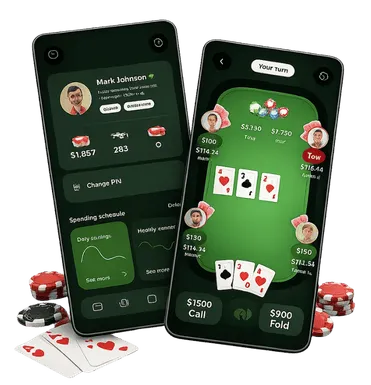
Poker Platform Technology Stack
SDLC Corp delivers secure, high-quality poker games using Unity, Unreal Engine, Node.js, and AWS. With advanced graphics and PCI DSS compliance, we ensure immersive gameplay and robust data protection.
Programming Languages
- Python
- JavaScript
- C++
Databases
- PostgreSQL
- MongoDB
- Redis
Front-End Development
- React.js
- Unity UI Toolkit
- Flutter
Integration Tools
- Firebase
- Socket.IO
- RESTful APIs / GraphQL
Development Frameworks
- Unity
- Unreal Engine
- Node.js + Express
Cloud Infrastructure
- AWS
- Azure PlayFab
- Google Cloud Platform
DevOps and CI/CD Tools
- Git
- Jenkins
- Docker
Security Protocols
- OAuth 2.0
- SSL/TLS Encryption
- JWT
Start Your Custom Poker Build
Ready to launch a poker product? Work with a poker software development team that builds secure multiplayer, scalable backends, and payment and compliance workflows. Book a demo and we’ll map the quickest path from scope to launch
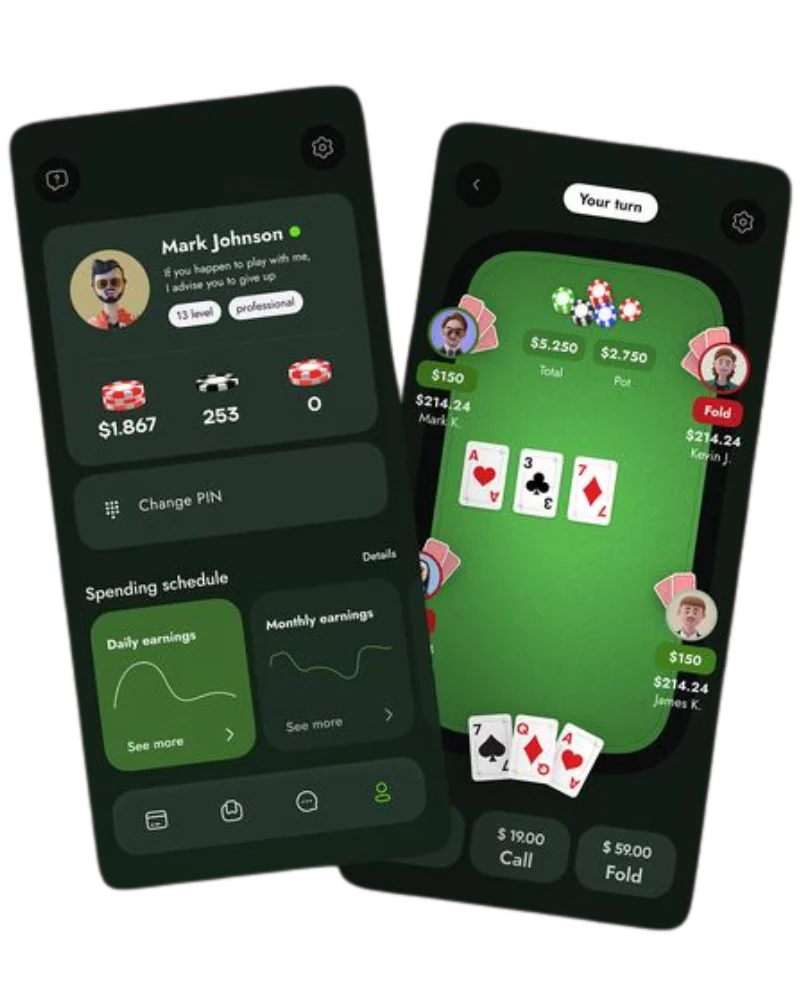
Poker Platform Build Standards
We deliver top-tier poker game development with intuitive gameplay, engaging interfaces, secure payment integration, and real time scalability. Our focus on fairness, data security, and compliance ensures player trust and retention.
Understand the Audience
Conduct thorough market research to understand your target audience’s preferences and behaviors. Develop customized Poker Game Development services tailored to player demographics and psychographics for engaging experiences.
Compliance with Regulations
Stay updated with legal requirements and gambling regulations across jurisdictions. Obtain necessary licenses and ensure full compliance with local laws a vital part of successful and responsible poker game development.
Effective Monetization Strategies
Focus on User Experience (UX)
We ensure intuitive navigation and user-friendly interfaces with fast loading and minimal lag. Our responsive poker games run seamlessly across all devices, reflecting the quality of top poker game development companies in India.
Robust Testing and Quality Assurance
Security and Fairness
Poker Variants and Game Formats
We build classic and modern poker variants, from Texas Hold’em and Omaha to 6+ Hold’em and Open Face Chinese Poker, on a secure, scalable, easy-to-use platform. Built-in features support fair play enforcement, fraud detection, and player experience personalisation.

Texas Hold'em

Omaha

Seven-Card Stud

Five-Card Draw

Razz

Pineapple

Caribbean Stud

Triple Draw Lowball
Poker Software for Web, Mobile, PC and Console
We build poker products across web, mobile, PC, and console from a unified codebase. Platform-specific optimisation is applied at the UI, performance, and network layers, not added as an afterthought.

Mobile

PC

Tablet

Console
Choosing the Right Poker Development Partner

Poker Project Case Studies
These projects represent real poker products delivered by SDLC Corp, built for multiplayer performance, tournament operations, and cross platform scale. The stats below reflect live deployment outcomes on poker projects in our portfolio.
Poker Platform Delivery
We built a fast, immersive poker game experience with smooth navigation and quick access to popular variants. The focus was real time gameplay, strong UI/UX, and performance that stays stable across devices.
- Works smoothly on mobile, tablet, and desktop
- Real-time multiplayer with low latency + quick reconnect
- Compliance-ready controls + scalable architecture for growth
1M
50,000
500,000
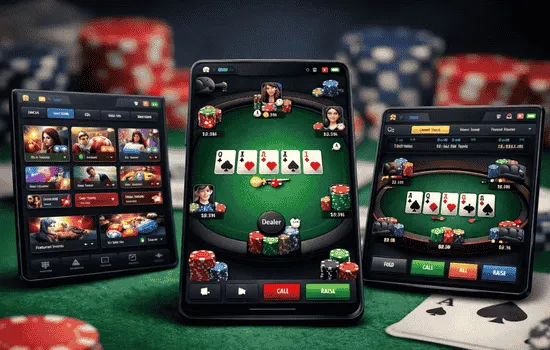
Why Operators Choose SDLC Corp
Choose SDLC Corp as your poker game development company built for performance and scale. With 10+ years of expertise, our team delivers secure, scalable solutions that improve player experience and support long term business growth.

Poker-Specific Game Design
Our development team focuses on poker-specific mechanics, variant logic, table dynamics, hand history, and fair play systems, rather than adapting generic game engines to poker use cases.

Modern Tech Stack
Our tech stack includes Unity, Android Studio, Node.js, Socket.IO, React Native, PostgreSQL, Redis, AWS, and PCI DSS compliance tooling. We select the right combination for your product type, platform targets, and performance requirements.

Regional Support
Regional Support ensures timely, local assistance for uninterrupted operations. As a poker game development company USA, we provide expert staff to deliver quality, reliable gaming solutions nationwide.

Expert guidance

Dedicated Build Teams
We build poker apps for Android and iOS with platform-native performance, optimised for touch controls, low-latency multiplayer, and consistent gameplay across device types and screen sizes.
Poker Development Insights
Discover SDLC Corp’s treasure trove of insightful blogs on poker games! Immerse yourself in expert analyses, industry trends, and winning strategies for both online and offline poker. Stay informed with our latest articles and elevate your gaming knowledge and skills!
Development Process
Our Poker Software Development Company delivers 30+ custom games, validated through rigorous QA, load testing, and peer review. Experts in Poker Game App Development, we ensure client collaboration and compliance for engaging web and mobile experiences.
Requirement Analysis
We begin by understanding client needs, gathering requirements, and defining project scope. Our team ensures a customized poker game that aligns with your brand vision, audience expectations, and integrates features like RNG and multiplayer functionality.
Design & Prototyping
Our design team creates wireframes and interactive prototypes, focusing on a user-friendly interface. We ensure responsive designs compatible across devices, from mobile to web, providing a seamless experience with optimized poker game mechanics .
Game Development
Our developers use Unity, Unreal Engine, Node.js, React Native, and AWS to build poker games that are performant, maintainable, and scalable. We integrate advanced features such as real time multiplayer support, chat functionality, secure payment systems, and performant rendering and consistent UI.
Testing & Quality Assurance
Rigorous testing and QA processes are employed to ensure bug-free performance. We conduct functional, usability, and security testing for seamless gameplay, proper card shuffling, and a secure online environment. All tests guarantee the integrity and fairness of the poker .
Deployment & Maintenance
Client Results and Delivery Experience

Working with SDLC Corp has been a game-changer for our business. Their team of poker-certified developers took the time to understand our specific needs and delivered a tailored solution that exceeded our expectations. From consultation to implementation, every step was seamless. We’re thrilled to have partnered with an official poker game partner who truly understands our industry. Highly recommend SDLC Corp for any poker game development needs!

“SDLC Corp’s experience and dedication were evident from day one. We needed a partner who could guide us through the complexities of poker game design and implementation. With 10+ years of expertise, the team provided clear recommendations and ensured a smooth launch. Our games are now more engaging and perform reliably at scale.”

We had a fantastic experience with SDLC Corp! Their poker game development services transformed our outdated games into a seamless, engaging experience. The fact that they’re an official poker game partner gave us confidence, and their team’s expertise shone through every step of the way. Their commitment to quality and attention to detail is unmatched. We now have a scalable game solution that meets our needs perfectly.
Contact Us
Share a few details about your project, and we’ll get back to you soon.
Let's Talk About Your Project
- Free Consultation
- 24/7 Experts Support
- On-Time Delivery
- sales@sdlccorp.com
- +1(510-630-6507)