Introduction
AI is now part of daily iGaming operations. The reason is simple. Operators need faster, better decisions across player experience, fraud checks, support, and platform health.
At its best, AI helps teams work through large amounts of live data. It can spot risk early, cut manual work, improve recommendations, and support safer play when clear rules are in place.
Why AI Matters in iGaming
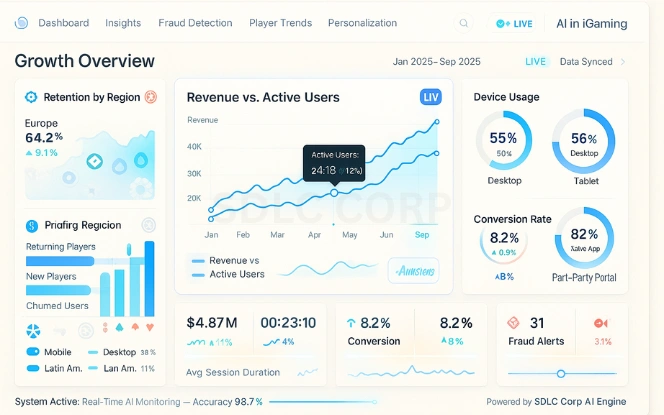
An iGaming platform creates a steady flow of signals: logins, deposits, bet patterns, session length, bonus use, device changes, and support requests. No team can review all of that well by hand.
AI helps by finding patterns quickly. It can help operators:
- understand player behavior more clearly
- catch suspicious activity earlier
- improve the timing of offers and messages
- support safer gambling reviews
- keep systems steady during busy periods
The value is usually practical. It is not about adding AI to everything. It is about making better decisions where volume is high and timing matters.
Where AI Creates the Most Value
Some AI use cases are still experimental. Others are already part of everyday platform operations. The sections below are the areas where AI tends to create the clearest value for operators.
1. Personalization and Player Understanding
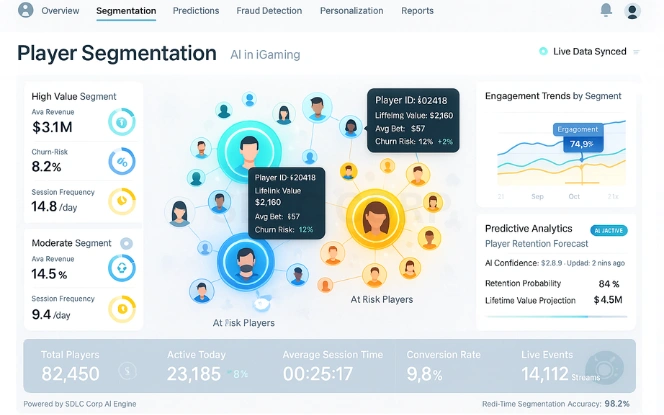
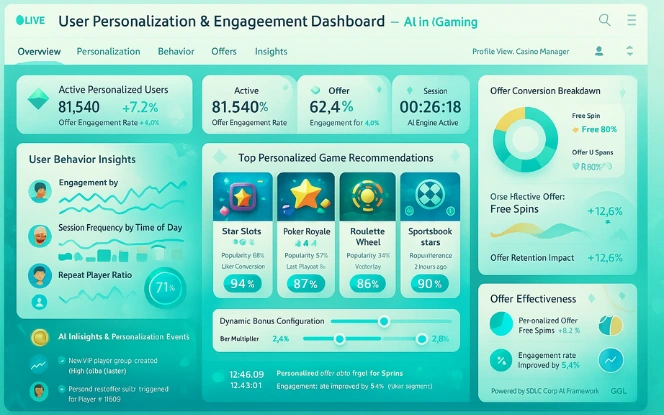
Personalization is one of the clearest use cases. AI can group players by behavior, value, risk, or intent instead of treating everyone the same way.
That helps with lobby order, game suggestions, bonus timing, and lifecycle messages. A new player may need simple guidance. A returning player may respond better to familiar game types or timely reminders.
Good personalization reduces friction. Bad personalization feels pushy or careless. In iGaming, that line matters.
2. Real-Time Analytics and Faster Decisions
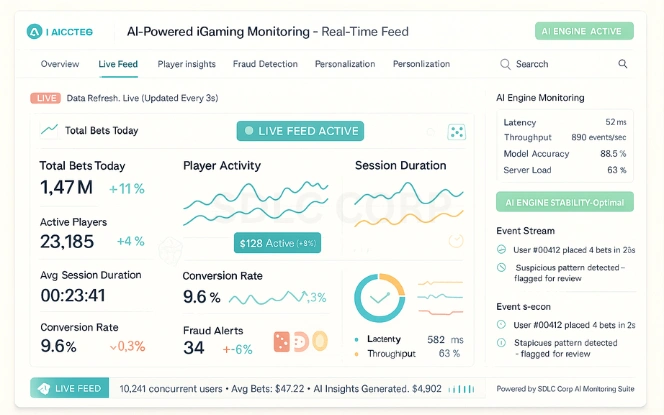
AI is also useful when timing matters. Operators can use live scoring or model-assisted rules to track changes in engagement, campaign response, betting patterns, or support demand.
That means teams do not need to wait for a weekly report. They can respond while the change is happening. They may pause a risky offer, review an account, or adjust game placement when interest shifts.
For many operators, this is where AI proves its value. It helps with daily decisions, not just reporting.
3. Fraud, Abuse, and Risk Monitoring
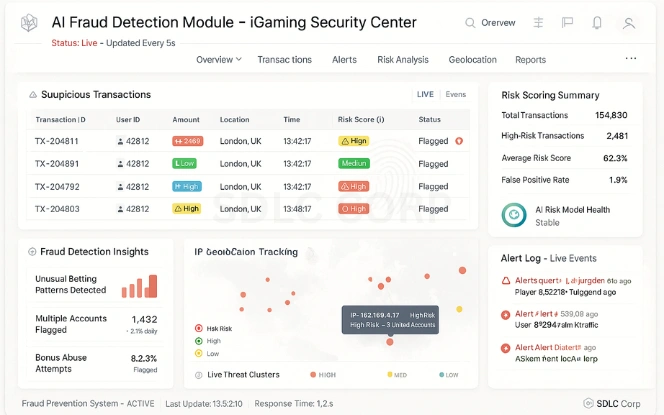
Fraud detection is one of the strongest AI use cases in iGaming. Models can help flag account farming, bonus abuse, payment anomalies, device mismatches, and unusual betting behavior.
The goal is not to block players on autopilot. The goal is to cut noise, rank cases better, and catch patterns that fixed rules miss.
Strong setups usually combine:
- event data from gameplay, identity, devices, and payments
- scoring models or anomaly checks
- human review for higher-risk actions
That balance matters. If automation is too aggressive, false positives rise and real players get caught in the mess.
4. Player Protection and Safer Play
AI can also support player protection. It can highlight signs that may need a closer look, such as sharp spend changes, repeated failed deposits, late-night escalation, or behavior linked to chasing losses.
Used carefully, this helps teams review cases earlier and more consistently. It can also improve records by showing why a case was flagged.
This is where governance matters most. If AI affects player interventions, the system should be explainable, tested, and backed by human review.
5. Platform Performance and Operational Efficiency
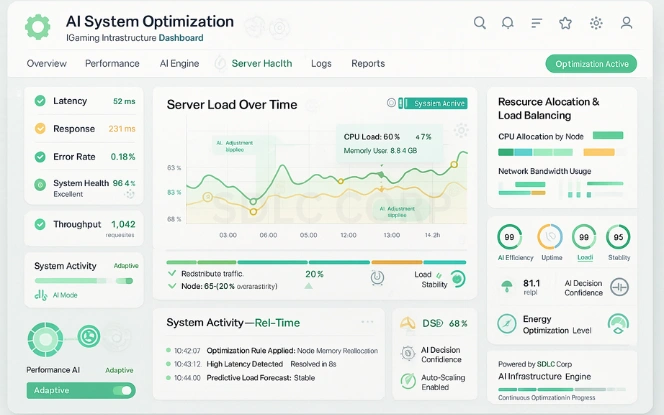
AI is not only for player-facing features. It can also help with load forecasting, support routing, unusual system alerts, and health checks.
A platform can use predictive models to spot traffic spikes before a major event, send support cases to the right queue faster, or detect latency before it affects gameplay.
Players may never notice these systems directly. They still feel the result in faster support, fewer interruptions, and smoother play.
Governance, Compliance, and Human Oversight
AI in iGaming has to work inside real compliance limits. Fairness, privacy, player welfare, and clear records matter as much as performance.
That means a useful AI setup needs a few basics:
- clear rules for where automation is allowed
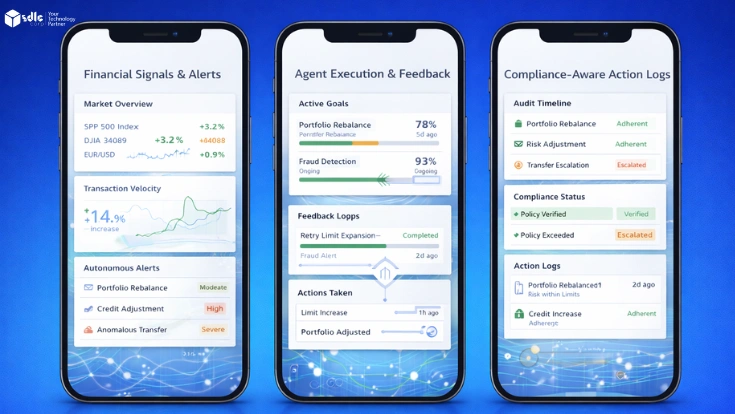
- logs for important actions
- checks for drift, bias, and false positives
- human review for sensitive decisions
- data controls that match the markets involved
This is not an extra layer. It is part of the work.
What Implementation Actually Looks Like
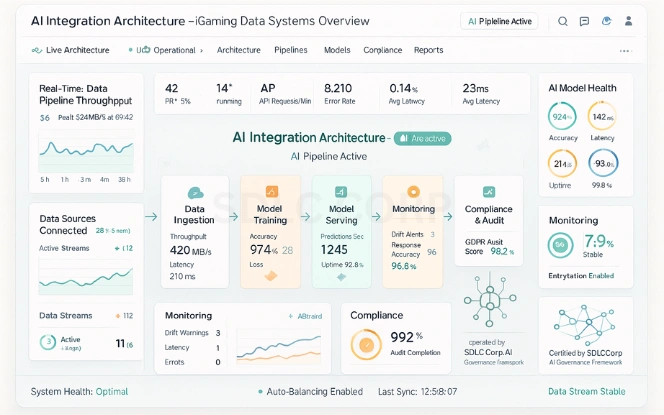
Most operators do not struggle with the model first. They struggle with fragmented data, weak event tracking, and disconnected tools.
A sensible rollout often starts with one narrow use case, such as fraud scoring, churn prediction, or recommendation logic. From there, teams can test quality, set thresholds, and measure whether the output improves an existing workflow.
On platforms that are still modernizing their stack, that work often sits alongside broader iGaming software development so wallets, player profiles, event streams, and compliance controls stay aligned.
When an operator moves into custom scoring, recommendation engines, or real-time decisioning, the work starts to look less like a plug-in and more like a focused AI development services effort.
Start Small and Keep Governance Tight
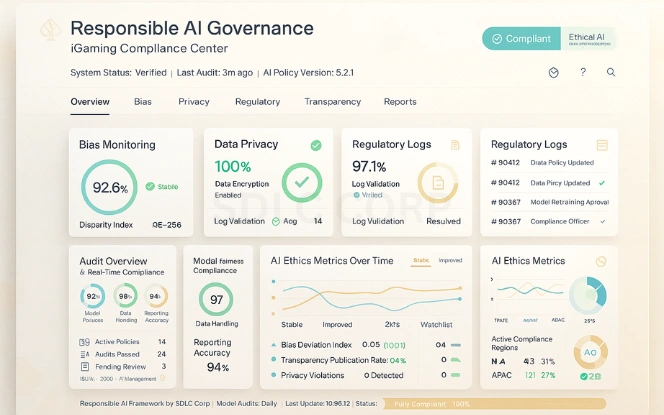
The best starting point is usually not the biggest idea. It is the one with clear data, a real workflow problem, and an outcome that can be measured.
Good starting areas include:
- fraud and abuse triage
- player segmentation and churn signals
- safer gambling case review
- support automation for repeat issues
- recommendation logic for large game catalogs
The strongest programs start small, prove value, and expand with better controls.
Final Take
AI in iGaming works best when it solves real operator problems. That may mean finding risk earlier, making recommendations more useful, improving player protection, or keeping the platform steady under load.
The opportunity is real, but so is the responsibility. Operators that treat AI as part of a governed decision system, not just a growth add-on, are in a better position to build something that lasts.
Quick Answers
What does AI do in iGaming? It helps operators improve recommendations, fraud detection, player protection, analytics, and platform performance.
Where does it work best? In high-volume workflows where faster decisions and better review matter more than hype.
FAQs
How is AI used in iGaming today?
AI is mainly used for recommendations, fraud detection, behavior analysis, player protection signals, support automation, and platform optimization.
Does AI in iGaming help with compliance?
It can. AI can support monitoring, case review, and audit trails, but it still needs clear rules, testing, and human oversight in regulated markets.
Where does AI deliver the fastest value for operators?
Fraud monitoring, live segmentation, and operational triage are often the fastest wins because they improve high-volume decisions and cut manual work.
What is the biggest risk of using AI in iGaming?
Weak governance. If a model is inaccurate, opaque, or too aggressive, it can create false positives, frustrate players, and raise compliance risks.