
How Edge AI Is Transforming Mobile Casino Games
Mobile casino players expect fast response times, smooth gameplay, personalization, and strong security. Meeting those expectations is difficult when every action depends on a remote cloud response.
That is why Edge AI is becoming more important in mobile casino game development. By running AI models closer to the player—often on the device itself—developers can reduce latency, improve privacy, and create more responsive game experiences. In this guide, we look at how Edge AI works, where it adds value in mobile casino products, and why it is becoming a practical advantage for modern game teams.
1. What Is Edge AI and How Does It Work in Mobile Casino Games?
Edge AI refers to artificial intelligence models that run directly on the device, at the edge of the network, instead of relying entirely on a remote server. For mobile casino games, this reduces the delay between player input and system response.
In practice, Edge AI can:
- Process certain game and behavior data locally on the device.
- Respond quickly even when connectivity is weak or unstable.
- Support faster in-session decisions, personalization, and safer play signals.
This matters in mobile casino environments because even small delays can affect perceived quality, trust, and retention. When combined with a strong AI development services strategy, Edge AI helps teams build products that feel faster and more responsive without depending on constant server round-trips.
2. How Edge AI Improves Mobile Casino Game Experiences
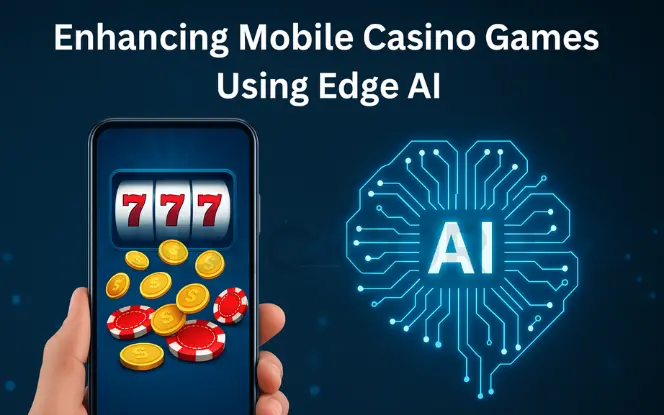
Edge AI can make mobile casino games feel faster, smarter, and more personal. Because some decisions happen on the device, apps can react to behavior in real time instead of waiting on cloud processing.
Examples include:
Adaptive Slot Experiences
Slot games can adjust themes, recommendations, volatility presentation, or feature prompts based on session behavior and player preferences.
Behavior-Based Bonus Timing
Models can identify signs that a player may be about to leave a session and trigger a timely reward, reminder, or content prompt to improve retention.
Faster In-Session Responses
On-device inference can support instant responses for animations, bonus events, or player guidance without adding visible lag.
Used well, Edge AI is not just a technical upgrade. It changes how mobile casino experiences are delivered and how smoothly they respond to player behavior.
3. Real-World Use Cases for Edge AI in Casino Games
Edge AI is already useful in several practical casino-game scenarios:
Personalized Game Journeys
Instead of showing every player the same lobby, apps can recommend games, bonus content, and themes based on recent actions and session patterns.
Real-Time Risk Detection
On-device models can help identify suspicious behavior such as bot-like taps, unusual play patterns, or abnormal login activity before they create wider platform issues.
Low-Connectivity Support
In regions with unstable networks, Edge AI can help preserve a smoother experience by reducing how often key gameplay responses depend on remote processing.
4. Personalization Through On-Device AI Models
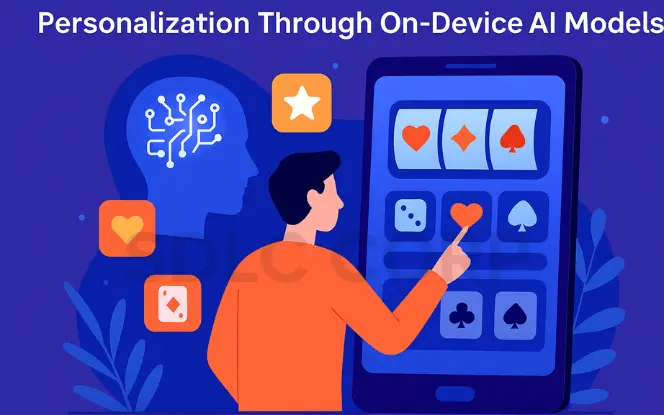
Players increasingly expect games to reflect their habits and preferences. Edge AI helps by analyzing behavior directly on the device and adapting the session in real time.
That can support:
- Dynamic game feeds that surface relevant titles based on recent activity, session length, or time of day.
- Smarter in-session adjustments to music, autoplay options, bonus prompts, and interface behavior.
- More tailored retention moments that feel timely instead of generic.
The strength of on-device AI is that it can react quickly while keeping more decision-making close to the player. That makes personalization feel smoother, faster, and more natural inside the session.
5. Security, Compliance, and Responsible Gaming
Security and compliance matter even more in real-money and regulated gaming environments. Edge AI can help by reducing how much sensitive behavior data needs to move back and forth to the cloud.
Fraud Detection
On-device analysis can flag unusual input patterns, suspicious device behavior, or abnormal play activity quickly, helping teams respond earlier.
Responsible Gaming Support
Edge AI can support cooling-off reminders, risk signals, or safer-play prompts based on session behavior without waiting for constant server-side analysis.
Because more decisions can happen on the device, Edge AI can also support privacy-focused design and data-minimization goals in regulated markets.
6. Tools, Frameworks, and Deployment Strategy
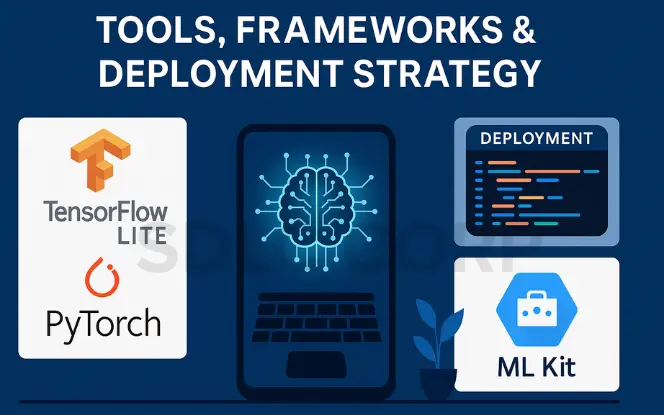
To make Edge AI work well on mobile, teams need frameworks that balance speed, model size, and battery efficiency.
Common tools include:
- TensorFlow Lite for compact models such as classification, behavior analysis, or risk signals.
- PyTorch Mobile for more dynamic mobile AI workflows and adaptive in-session features.
- ML Kit for selected mobile use cases where lightweight integration matters.
A typical deployment workflow looks like this:
- Train models using anonymized and relevant gameplay data.
- Convert them into mobile-optimized formats.
- Ship updates through app releases or managed model updates.
- Collect performance feedback and retrain where needed.
Teams that want to use Edge AI effectively need strong coordination across product, engineering, analytics, and model lifecycle management.
7. Why Edge AI Matters for Scale, Cost, and Accessibility
Edge AI can also create practical business advantages for casino products on mobile.
- Better scalability: more local processing can reduce pressure on central systems during peak usage.
- Lower infrastructure overhead: selective on-device processing can reduce cloud compute and data-transfer costs.
- Improved accessibility: players in lower-connectivity regions can still get a smoother experience.
- Stronger retention: more responsive and personalized sessions can improve satisfaction and session quality.
For mobile casino teams, Edge AI is not only a technical upgrade. It can also improve reach, resilience, and user experience across different markets.
Conclusion
FAQs
What is Edge AI in mobile casino games?
Edge AI refers to artificial intelligence that runs directly on a user’s mobile device rather than a cloud server. In casino games, this allows for instant decision-making, faster gameplay, enhanced personalization, and better security by keeping sensitive data on the device.
How does Edge AI improve mobile casino game performance?
Edge AI reduces latency and enables real-time interactions by processing actions locally. For example, spin results, bonus triggers, and fraud checks can happen instantly, providing a smoother and more immersive experience for players.
Is Edge AI secure for online gambling apps?
Yes. Edge AI enhances security because personal data stays on the user’s device. It reduces the risk of data breaches and complies better with privacy regulations like GDPR, making it ideal for casino apps that handle financial and identity information.
Can Edge AI support responsible gaming?
Absolutely. Edge AI can detect signs of compulsive behavior, such as rapid betting or extended play without breaks. It enables responsible gaming features like real-time alerts, self-exclusion prompts, or session reminders—triggered instantly without server calls.
What tools are commonly used to implement Edge AI in mobile casino games?
Developers often use frameworks like TensorFlow Lite, PyTorch Mobile, and ML Kit to build lightweight AI models for mobile apps. These tools allow real-time decision-making with minimal battery and memory consumption.