
Introduction
An NFT marketplace is a blockchain-based platform where users mint, list, buy, sell, and trade non-fungible tokens. It connects creators, collectors, brands, and buyers through crypto wallets, smart contracts, auctions, fixed-price listings, platform fees, and royalty rules.
OpenSea, Rarible, SuperRare, Foundation, Magic Eden, and Nifty Gateway show how different NFT marketplace platforms work. Some are open marketplaces, some are curated, some support multi-chain trading, and some are built for gaming assets, music rights, sports collectibles, or brand-owned communities. Businesses that need custom fees, token standards, wallet flows, admin roles, analytics, and ownership control usually move toward NFT marketplace development instead of relying only on public platforms.
Key Takeaways
- NFT marketplaces let users mint, list, buy, sell, and trade blockchain-based digital assets.
- Most marketplace transactions use crypto wallets, smart contracts, token metadata, auctions, fixed-price sales, gas fees, and ownership records.
- Common NFT marketplace fees include minting fees, gas fees, listing fees, platform commissions, and creator royalties.
- Types of NFT marketplaces include open, curated, niche, single-chain, multi-chain, centralized, decentralized, and custom branded platforms.
- A custom NFT marketplace gives businesses more control over branding, user data, royalty rules, fee logic, admin workflows, and community ownership.
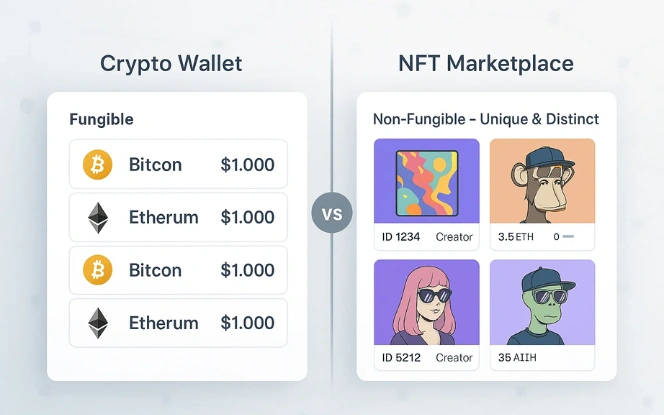
NFT Marketplace Explained: A dollar can be exchanged for another dollar because both have the same value. An NFT works differently. Each token carries its own token ID, metadata, ownership history, and smart contract record on a blockchain.
That is why an NFT marketplace needs wallet connection, minting, bidding, listing, royalty, gas fee, and transaction tracking features. The platform does more than display digital art. It manages ownership, transfers, payments, creator rules, and marketplace records for every listed digital asset.
What Is an NFT Marketplace?
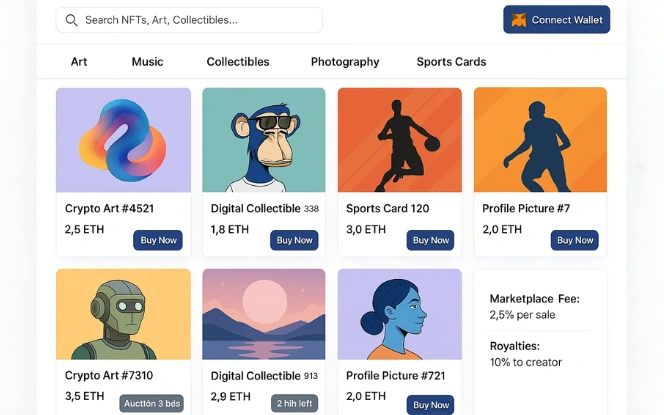
An NFT marketplace is a digital asset marketplace for blockchain-based tokens. Creators mint or upload NFTs, buyers connect crypto wallets, and the platform verifies ownership before a sale is completed.
Most NFT marketplaces support fixed-price listings, timed auctions, bidding, collection pages, wallet login, search filters, transaction history, gas fees, and creator royalties. A marketplace may support one blockchain or multiple chains depending on the audience, token standard, and asset category.
What Is an NFT?
NFT stands for non-fungible token. It is a blockchain-based token that represents a unique asset such as digital art, music, collectibles, gaming items, memberships, tickets, domain names, or virtual land. Businesses creating their own digital asset ecosystem can also explore NFT development services for token creation, metadata design, minting workflows, and blockchain integration.
Unlike cryptocurrencies, NFTs are not identical to each other. Ethereum-based NFT marketplaces commonly use ERC-721 for one-of-one assets and ERC-1155 for semi-fungible batches, gaming items, and collection-based assets.
ERC-721 vs ERC-1155 Token Standards
ERC-721 and ERC-1155 are the most widely used NFT token standards on Ethereum. While both support digital assets, they serve different purposes depending on the marketplace and asset type.
| Feature | ERC-721 | ERC-1155 |
|---|---|---|
| Token Type | Unique NFT | Unique and semi-fungible assets |
| Batch Transfers | Not Supported | Supported |
| Gas Efficiency | Lower | Higher |
| Gaming Assets | Limited | Excellent |
| Best For | Digital art and collectibles | Games, tickets, memberships |
Types of NFT Marketplaces
Types of NFT marketplaces differ by access model, asset category, blockchain support, and business goal. The right model depends on whether the platform is built for public trading, curated creators, gaming assets, music rights, sports collectibles, brand communities, or enterprise-owned digital assets.
- Open NFT marketplaces: Approved users can list, buy, and sell NFTs across multiple categories.
- Curated NFT marketplaces: Artists, brands, or projects are reviewed before they can list assets.
- Niche NFT marketplaces: Built for gaming, music, sports collectibles, real estate, fashion, or metaverse assets.
- Single-chain marketplaces: Focus on one blockchain and one wallet ecosystem.
- Multi-chain marketplaces: Support NFT assets across multiple blockchains and wallet types.
- Custom branded marketplaces: Built for businesses that need their own fees, royalty logic, admin controls, analytics, and marketplace experience.
Open vs Curated NFT Marketplaces
Choosing between an open and a curated NFT marketplace depends on your goals. Open marketplaces allow anyone to mint, list, and sell NFTs, making them ideal for new creators and projects seeking maximum exposure. Curated marketplaces review creators and collections before approval, helping maintain quality and exclusivity.
Businesses, artists, and brands should evaluate their audience, quality standards, and revenue model before selecting a marketplace type. While open marketplaces offer greater reach, curated platforms often attract collectors looking for premium digital assets.
| Feature | Open NFT Marketplace | Curated NFT Marketplace |
|---|---|---|
| Access | Anyone can list NFTs | Approval required before listing |
| Audience | Large public audience | Premium collectors |
| Quality Control | Limited | Strict review process |
| Best For | New creators and startups | Professional artists and brands |
| Example | OpenSea | SuperRare |
Single-chain vs Multi-chain NFT Marketplaces
NFT marketplaces can operate on a single blockchain or support multiple blockchain networks. A single-chain marketplace focuses on one ecosystem, while a multi-chain marketplace enables users to trade NFTs across different blockchain networks from one platform.
Businesses planning long-term growth usually prefer multi-chain marketplaces because they provide greater flexibility, broader user reach, and support for multiple wallet ecosystems.
| Feature | Single-chain Marketplace | Multi-chain Marketplace |
|---|---|---|
| Blockchain Support | One blockchain | Multiple blockchains |
| Wallet Compatibility | Limited | Multiple wallets |
| Development Cost | Lower | Higher |
| Scalability | Moderate | High |
| Best For | Small projects | Enterprise platforms |
Why Creators, Buyers, and Businesses Use NFT Marketplaces
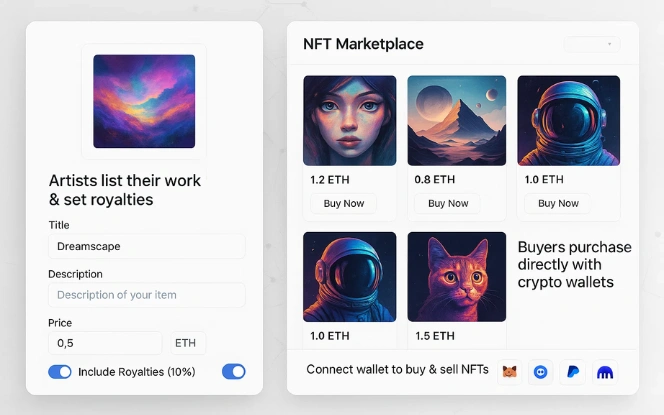
NFT marketplaces give creators a direct way to sell digital assets without depending only on galleries, auction houses, or third-party distributors. Buyers can verify ownership, track asset history, compare collections, and trade digital collectibles through wallet-based transactions.
For businesses, the use case goes beyond art. Gaming studios use NFTs for in-game items, sports brands use them for collectibles, music platforms use them for fan access, and communities use them for memberships. A custom NFT marketplace helps control fees, user roles, royalty rules, security, analytics, and the complete buyer journey.
How Does the NFT Marketplace Work?
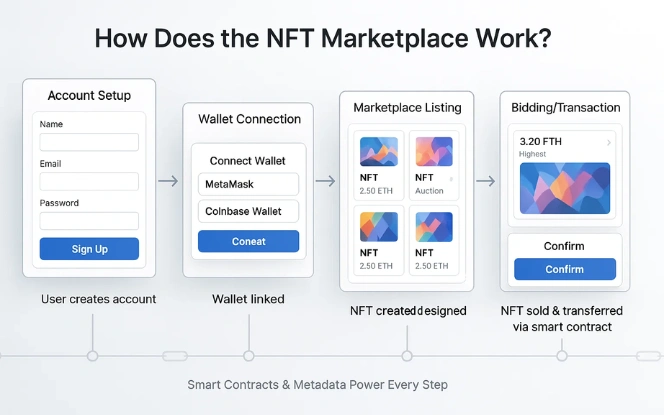
An NFT marketplace usually follows this transaction flow:
- The user creates an account or signs in with a crypto wallet.
- The creator mints or uploads an NFT with asset metadata.
- The NFT is listed with a fixed price, auction, or bidding option.
- The buyer connects a wallet and confirms the transaction.
- The smart contract verifies ownership, payment terms, royalties, and transfer rules.
- The NFT moves to the buyer’s wallet after the transaction is completed on the blockchain.
Smart contracts control the transaction logic. They define who owns the NFT, how payments move, whether royalties apply, and how the marketplace records each sale. Secure transaction automation can be planned with a professional smart contract development company to support ownership transfers, royalties, auctions, and escrow rules.
How NFT Minting Works
NFT minting is the process of converting a digital asset into a blockchain-based token. During minting, the asset receives a unique token ID and ownership record, making it a verifiable digital collectible that can be bought, sold, or transferred.
The NFT minting process usually follows these steps:
- Upload the digital asset.
- Add metadata such as title, description, and attributes.
- Select the blockchain network.
- Execute the smart contract.
- Pay the required gas or minting fee.
- Publish the NFT on the marketplace.
NFT Marketplace Fees Explained
NFT marketplace fees affect both buyers and sellers, so they should be visible before a user lists, bids, mints, or purchases an asset. Most NFT platforms use a mix of platform fees, blockchain fees, and creator royalty rules.
- Minting fee: Paid when a creator turns a digital file into an NFT.
- Gas fee: Paid to process blockchain transactions, especially on networks such as Ethereum.
- Listing fee: Charged by some platforms when an NFT is listed for sale.
- Transaction fee: A marketplace commission charged when a sale happens.
- Creator royalty: A percentage paid to the original creator on primary or secondary sales, depending on platform rules.
- Withdrawal or conversion fee: Charged when users move funds, convert crypto, or withdraw from the platform.
What Is NFT Escrow?
NFT escrow is a secure transaction process where smart contracts temporarily hold digital assets or payments until all conditions of the transaction are satisfied. This helps reduce fraud and protects both buyers and sellers.
Escrow mechanisms are commonly used for high-value NFT transactions, auctions, and marketplace disputes. Once payment is confirmed and ownership conditions are met, the smart contract automatically transfers the NFT to the buyer and releases funds to the seller.
How to Choose the Right NFT Marketplace
The right NFT marketplace depends on the asset category, buyer base, fee model, wallet support, blockchain network, and security controls. A creator selling one-of-one digital art may need a curated marketplace, while a game studio or brand may need a custom NFT marketplace with user roles, admin tools, royalty rules, and token-gated access.
- Blockchain support: Check whether the marketplace supports Ethereum, Polygon, Solana, BNB Chain, or another network used by the audience.
- Wallet compatibility: Confirm support for wallets such as MetaMask, Coinbase Wallet, WalletConnect, or chain-specific wallets.
- Fees and royalties: Review minting, gas, listing, transaction, withdrawal, and royalty rules before listing assets.
- Liquidity and audience: Public NFT platforms help with discovery, while custom marketplaces help with owned users and brand control.
- Security controls: Smart contract testing, scam reporting, content moderation, and wallet safety features matter before every launch.
How to Build a Custom NFT Marketplace
A custom NFT marketplace starts with the business model, not the interface. The team must define who will mint assets, who can buy or sell them, which fees apply, how royalties work, and what the admin team can control after launch.
- Choose the marketplace type: open, curated, gaming, music, sports, enterprise, or branded community marketplace.
- Select token standards such as ERC-721 for unique assets or ERC-1155 for collection-based assets.
- Define wallet login, minting, listing, auction, royalty, and payment flows.
- Build and test smart contracts before connecting them to the marketplace UI.
- Add admin controls for users, assets, categories, fees, disputes, and transaction monitoring.
- Launch with analytics, security checks, support workflows, and a clear marketplace growth plan.
SDLC Corp builds NFT marketplace development solutions for businesses that need smart contracts, wallet integration, listing flows, admin panels, royalty logic, and marketplace-ready Web3 architecture.
NFT Marketplace Development Process
Building a successful NFT marketplace requires more than smart contracts. Every stage, from planning to post-launch maintenance, affects security, performance, and user experience.
1. Requirement Analysis
Identify business objectives, target audience, marketplace type, monetization strategy, and supported blockchain networks.
2. UI/UX Design
Create wireframes, user journeys, responsive layouts, and an intuitive buying and selling experience.
3. Smart Contract Development
Develop secure ERC-721 or ERC-1155 smart contracts with royalty logic, ownership verification, and transaction automation.
4. Wallet Integration
Integrate popular crypto wallets such as MetaMask, WalletConnect, Coinbase Wallet, and Phantom for secure authentication and payments.
5. Marketplace Feature Development
Develop NFT minting, listings, auctions, bidding, search filters, notifications, creator profiles, admin dashboard, and analytics.
6. Testing & Security Audit
Test smart contracts, wallet integration, marketplace performance, transaction flow, and security vulnerabilities before launch.
7. Deployment
Deploy smart contracts, backend services, cloud infrastructure, and blockchain nodes while monitoring platform stability.
8. Maintenance & Upgrades
Regularly update security, add new features, improve scalability, and support new blockchain networks as the platform grows.
NFT Marketplace Safety and Security
NFT marketplace security depends on smart contracts, wallet flows, asset verification, and platform moderation. Buyers should verify the collection, creator profile, contract address, fees, royalty terms, and transaction details before confirming a wallet signature.
For platform owners, security planning should include smart contract audits, rate limits, scam reporting, duplicate asset checks, suspicious wallet monitoring, admin access control, and clear dispute workflows. These controls reduce fraud risk and protect creators, buyers, and marketplace operators.
Key Features of an NFT Marketplace
Crypto Wallet Integration
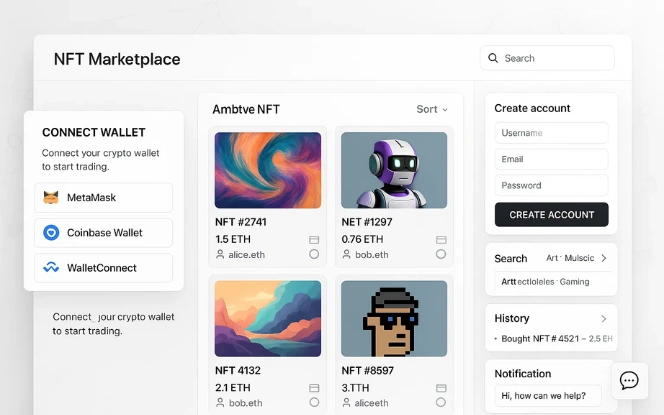
Every NFT marketplace needs wallet support because buying, selling, minting, and transferring NFTs depend on wallet-based transactions. Popular integrations include MetaMask, Coinbase Wallet, WalletConnect, and chain-specific wallets. Businesses that need secure wallet authentication, transaction signing, asset storage, and multi-chain support can use cryptocurrency wallet development services.
NFT Listing and Asset Display
Each NFT listing should show the asset name, image or media file, collection, creator, owner, price, blockchain, token standard, royalty terms, sale type, and transaction history.
User Registration and Profiles
Users need account profiles, wallet connection, collection pages, owned assets, listed NFTs, bids, purchase history, and creator verification where required.
Search, Filters, and Categories
Search and filters help users find NFTs by category, collection, price, blockchain, sale type, creator, rarity, and ownership status. This is important for art, gaming, music, sports, and collectible marketplaces.
Transaction and Ownership History
The marketplace should record minted assets, bids, purchases, transfers, royalties, failed transactions, and wallet activity so users can track ownership and trading history.
Alerts and Notifications
Notifications can alert users about new listings, bids, offers, sales, price drops, auction endings, royalty payments, and wallet activity.
Security and Customer Support
An NFT marketplace needs smart contract testing, wallet security, content moderation, scam reporting, dispute handling, and clear support flows. Businesses planning a custom marketplace should also define admin roles, transaction monitoring, and user verification before launch.
SDLC Corp supports NFT marketplace development with marketplace architecture, smart contract logic, wallet flows, admin panels, UI/UX, and launch support.
Top NFT Marketplace Platforms Compared
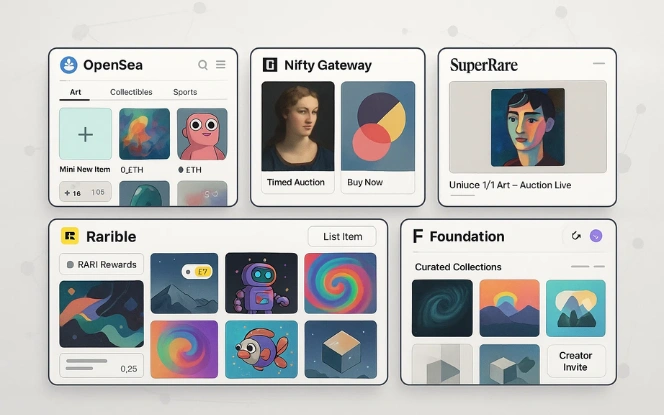
OpenSea, Rarible, SuperRare, Foundation, Nifty Gateway, and Magic Eden show six common NFT marketplace models. The differences matter because each platform handles discovery, curation, fees, royalties, wallet flow, and asset categories in a different way.
| Marketplace | Best For | Key Model | What to Notice |
|---|---|---|---|
| OpenSea | General NFT trading | Open marketplace | Large discovery layer for art, collectibles, gaming assets, and creator collections. |
| Rarible | Creator-led NFT trading | Marketplace protocol | Useful reference for royalties, fees, community tools, and custom marketplace ideas. |
| SuperRare | Premium digital art | Curated marketplace | Strong creator curation and high-value digital art positioning. |
| Foundation | Artists and creator drops | Curated creator marketplace | Works well for auction-led creator collections and art communities. |
| Nifty Gateway | Premium drops | Curated drop marketplace | Known for brand, celebrity, and artist-led NFT drops. |
| Magic Eden | Gaming and multi-chain NFTs | Trading-focused marketplace | Strong reference point for NFT discovery, collections, and chain-specific communities. |
OpenSea vs Custom NFT Marketplace
Open marketplaces are useful when creators need fast public discovery. A custom NFT marketplace is better when a business needs branded control, custom fee rules, wallet flows, token standards, user roles, admin dashboards, analytics, and community-specific trading features.
| Option | Best For | Main Limitation |
|---|---|---|
| Public NFT marketplace | Fast listing, existing traffic, and public discovery | Less control over fees, branding, data, rules, and platform experience. |
| Custom NFT marketplace | Brands, games, creators, communities, and enterprises | Requires smart contract planning, development, testing, and launch strategy. |
A custom build makes sense when the marketplace is part of a larger business model, not just a place to list tokens. That includes gaming economies, loyalty assets, membership passes, creator platforms, ticketing, digital collectibles, and enterprise NFT use cases.
Final Thoughts
NFT marketplaces give digital assets a structured way to be minted, listed, sold, owned, and traded. The strongest platforms combine wallet connection, smart contracts, search, auctions, fees, royalties, security controls, and clear marketplace rules.
For buyers and creators, the goal is to understand how ownership, payments, fees, and royalties work before trading. For businesses, the bigger question is whether a public platform is enough or whether a custom NFT marketplace is needed for brand control, user data, revenue models, compliance, and long-term community growth.
SDLC Corp builds custom NFT marketplace development solutions for businesses that need smart contracts, wallet integration, admin panels, marketplace UX, royalty logic, and scalable Web3 architecture.
FAQs
An NFT marketplace is a platform where users mint, list, buy, sell, and trade NFTs. It connects creators and buyers through crypto wallets, smart contracts, listings, auctions, fees, and ownership records.
A creator mints or lists an NFT, the buyer connects a wallet, and a smart contract verifies payment, ownership, royalties, and transfer rules. After the transaction is confirmed, the NFT moves to the buyer’s wallet.
NFT marketplaces earn through minting fees, listing fees, transaction commissions, bidding fees, premium creator tools, promoted listings, and sometimes subscription or white-label marketplace services.
Common NFT marketplace fees include minting fees, gas fees, listing fees, platform commissions, creator royalties, withdrawal fees, and conversion fees. The exact fee model depends on the blockchain and marketplace rules.
The main types include open marketplaces, curated marketplaces, art marketplaces, gaming marketplaces, music marketplaces, sports collectible marketplaces, single-chain marketplaces, multi-chain marketplaces, and custom branded marketplaces.
OpenSea is a public marketplace for listing and trading NFTs. A custom NFT marketplace is built for a brand, game, creator network, or enterprise that needs its own fees, user roles, wallet flows, royalty rules, admin panel, analytics, and community experience.
Building a custom NFT marketplace can be worth it when the business needs control over branding, revenue model, user data, compliance, security, royalties, and long-term community ownership. Public platforms are better for quick listing and discovery.
NFTs are not banned in India, but businesses should review tax, crypto payment, intellectual property, KYC, and platform compliance requirements before launching or trading NFTs. Legal and tax review is important for commercial NFT projects.
NFT minting is the process of converting a digital file into a blockchain-based token. During minting, a smart contract creates a unique token ID, stores ownership details, and links the asset metadata to the NFT.
NFT escrow is a smart contract-based system that holds the NFT or payment until all transaction conditions are met. It helps protect buyers and sellers during high-value sales, auctions, and disputed transactions.
ERC-721 is designed for unique, one-of-one NFTs, while ERC-1155 supports both unique and semi-fungible assets. ERC-1155 also allows batch transfers, making it more suitable for gaming items, tickets, and large collections.