Car dealerships handle far more than vehicle sales. They need to track stock, parts, customer enquiries, finance, servicing, warranties, and team activity. When those tasks sit in separate tools, delays grow and mistakes become harder to avoid.
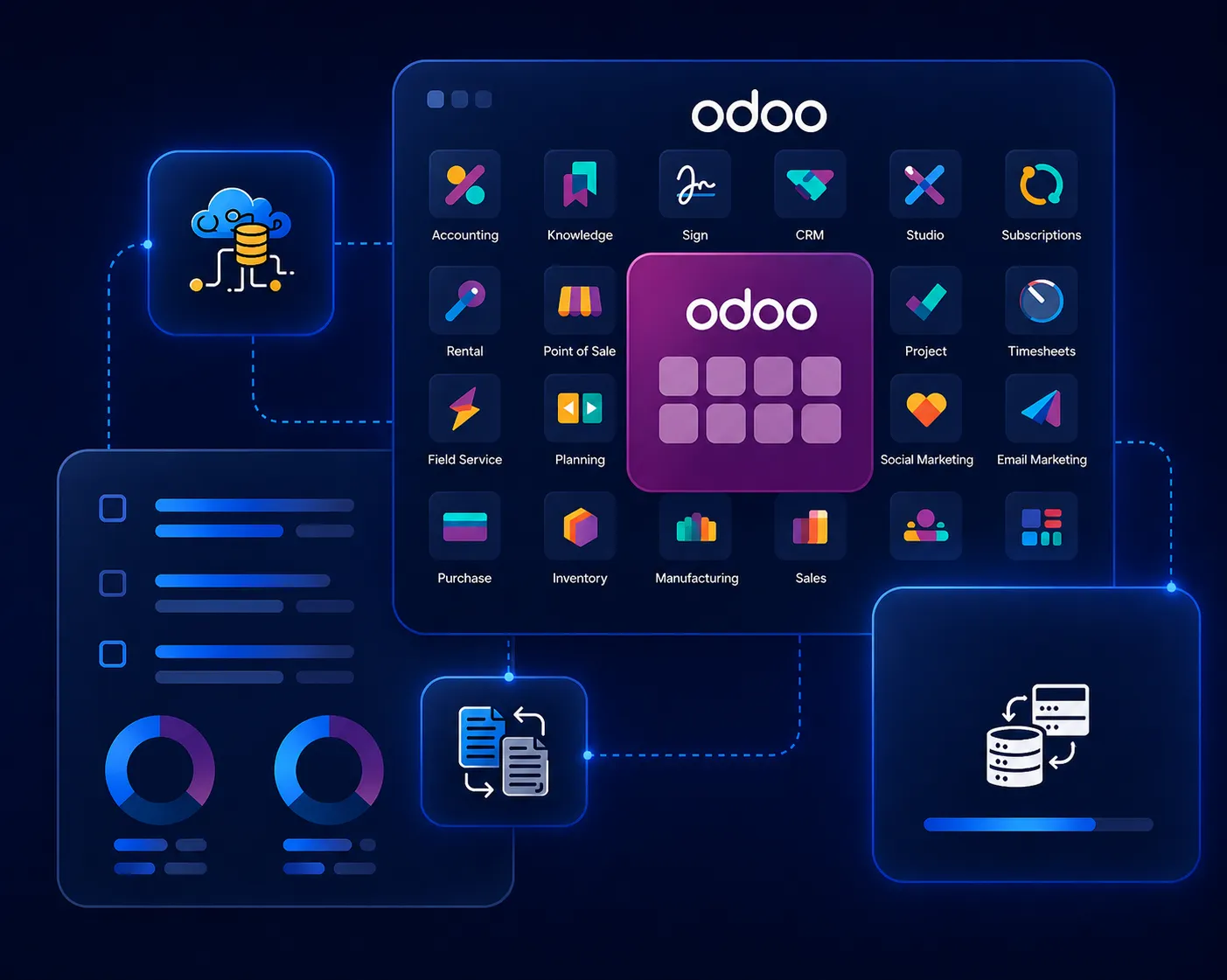
Odoo ERP helps bring those workflows into one connected system. Instead of moving between disconnected apps, dealerships can manage inventory, lead tracking, accounting, and service activity in one place. That gives teams better visibility and makes daily work easier to manage.
Why Odoo ERP Fits Car Dealership Operations
Odoo ERP fits car dealerships because it connects key business functions in one platform. Inventory, CRM, accounting, service operations, and reporting can all work from the same records. That cuts duplicate entry and helps teams rely on one version of the truth.
This is especially useful in dealerships, where one customer journey can move from enquiry to test drive, sale, invoice, service booking, and repeat business. A connected ERP setup makes those handovers smoother and gives managers a clearer view of where work slows down.
Inventory Visibility Across Vehicles, Parts, and Accessories
Inventory control is a daily challenge for dealerships. Teams need a clear view of available vehicles, incoming stock, spare parts, accessories, and item movement across locations. When records are outdated, sales teams lose confidence in availability and service teams struggle to plan work.
Odoo’s inventory tools support real-time stock visibility, faster lookups, and better coordination between operations, sales, and finance. For dealerships that also manage internal vehicle movement or service scheduling, it can help to review related workflows such as fleet management and scheduling with Odoo.

Lead Management and Sales Follow-Up
Sales in a dealership rarely move in a straight line. Buyers compare models, ask about financing, book visits, pause decisions, and often come back later. That means strong follow-up matters just as much as the first enquiry.
With Odoo CRM, dealerships can capture leads from web forms, calls, and walk-ins, assign them to the right salesperson, and track each opportunity through the pipeline. Shared notes, reminders, and activity history help teams respond faster and reduce the risk of losing promising deals.
Finance, Invoicing, and Reporting in One System
Finance teams need a reliable view of invoices, payments, taxes, margins, and operating costs. When sales, inventory, and finance data live in different systems, reporting slows down and reconciliation takes more work.
Odoo improves this by linking commercial activity to accounting workflows. As sales orders, stock movements, and service transactions flow through the same system, dealerships can track revenue more accurately and get faster access to reports that support better decisions.
After-Sales Service and Long-Term Customer Retention
After-sales service plays a big role in customer loyalty. Maintenance reminders, service history, warranty records, and parts usage all shape the ownership experience and influence whether customers return.
Odoo can support that continuity by keeping service activity tied to the customer and vehicle record. This makes it easier to schedule repeat work, coordinate parts, generate invoices, and deliver a more consistent service experience.
HR, Roles, and Day-to-Day Coordination
Dealership performance also depends on how well teams work together. Sales staff, service advisors, technicians, finance teams, and managers all need timely updates and clear responsibilities.
Odoo’s HR and administrative tools can help centralize attendance, role management, payroll support, and team reporting. These features may not be the first reason a dealership chooses ERP, but they become valuable when the business wants more consistency across teams or locations.
Customization and Implementation Planning
No two dealerships follow exactly the same workflow. Some focus on new vehicles, others on pre-owned sales, and some earn a large share of profit from servicing, financing, or accessories. That is why implementation planning matters as much as the software itself.
A strong rollout starts with process mapping, module selection, data cleanup, and clear choices about what should be standardized. If a dealership is moving away from spreadsheets or disconnected tools, structured Odoo implementation services can reduce migration mistakes, improve adoption, and keep the system aligned with real operating needs.

Key Benefits for Car Dealerships
- Better operational visibility: teams can work from shared records instead of chasing updates across separate tools.
- Faster response times: sales, finance, and service teams can act on the same data without repeated manual checks.
- Stronger customer continuity: enquiries, purchases, service history, and follow-up activity stay easier to track.
- Improved reporting: managers get a clearer view of stock, revenue, costs, and performance trends.
- More room to scale: as the dealership grows, a connected ERP foundation is easier to extend than a patchwork of standalone systems.