
Choosing the right casino software is essential for building a secure and reliable online casino. It should manage games, payments, player accounts, bonuses, reporting, and compliance while staying fast and easy to use. This guide covers the key features, development process, costs, security needs, and practical checks to consider.
Key Takeaways
Before selecting a platform or development company, focus on the areas that directly affect security, player experience, compliance, and business growth.
Security Comes First
Player data, payment details, account access, and game transactions must be protected at every stage.
Licensing Depends on the Market
The platform should support the technical and reporting rules of each jurisdiction where it will operate.
Scalability Matters
The system should handle more players, games, providers, currencies, and markets as the business grows.
Back-Office Tools Are Essential
Operators need clear control over players, payments, bonuses, risks, reports, and platform settings.
Who Needs Casino Software?
Casino software requirements change depending on the business model, technical resources, launch plan, and target audience.
Online Casino Operators
Operators need a stable platform that simplifies daily management. It should provide player management, payment monitoring, bonus controls, reports, game configuration, and customer support tools.
New Casino Entrepreneurs
Startups usually need a cost-effective solution that can launch quickly and expand later. White-label or turnkey platforms may reduce initial development work, but customization and ownership should be reviewed carefully.
Established Gaming Businesses
Existing businesses may require platform modernization, new game providers, stronger payment systems, better reporting, or migration from an older casino system.
Casino Software Developers
Development teams need secure APIs, clear documentation, testing environments, modular architecture, and reliable third-party integrations for effective casino game development.
Land-Based Casino Businesses
Physical casinos may use digital software for player loyalty, wallets, reporting, game monitoring, customer accounts, promotions, and omnichannel gaming experiences.
Game Aggregators and Providers
Aggregators need systems that can connect several game studios through one integration while managing game data, sessions, transactions, and reporting.
Main Components of a Casino Software Platform
A complete casino platform includes more than a collection of games. Several connected systems work together to manage the player journey and business operations.
Player Account Management
This system manages registration, login, identity details, account limits, verification status, transaction history, preferences, and responsible gaming controls.
Game Management System
Operators use it to add games, manage categories, configure visibility, review provider performance, and control which games are available in each market.
Payment and Wallet System
The wallet records deposits, withdrawals, bonuses, wins, losses, refunds, and adjustments. It should prevent duplicate or inconsistent transactions.
Bonus and Promotion Engine
This engine manages welcome offers, free spins, cashback, loyalty rewards, wagering rules, expiry dates, and player eligibility.
Risk and Fraud Management
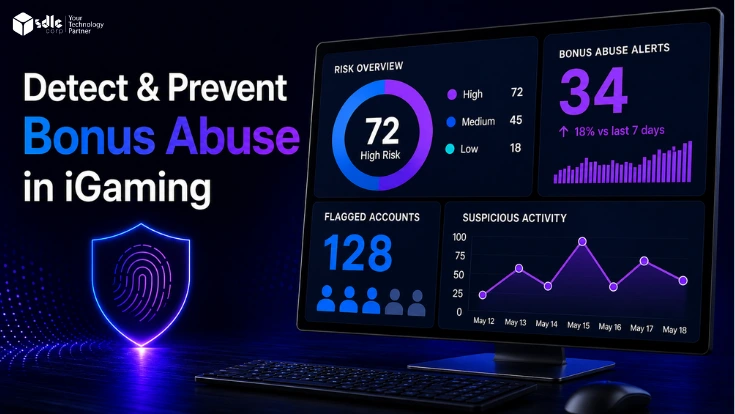
Risk tools help detect unusual account behavior, payment abuse, duplicate accounts, bonus misuse, account takeovers, and suspicious transactions.
Reporting and Analytics
Dashboards should show player activity, deposits, withdrawals, game performance, bonus costs, revenue, retention, and operational risks.
Key Factors to Consider When Choosing Casino Software
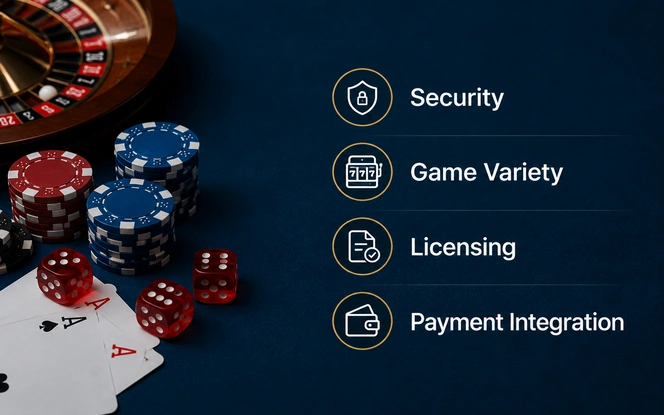
1. Security and Data Protection
Security should be built into the software architecture rather than added after development. The platform handles sensitive account information, identity records, payment activity, game sessions, and administrative controls.
- Encryption: Protects data while it is being transferred and stored.
- Two-factor authentication: Adds extra protection for players and administrative users.
- Role-based access: Limits access based on the responsibilities of each employee.
- Audit logs: Record important actions, configuration changes, account activity, and financial events.
- Secure development practices: Help reduce common application and API weaknesses.
- Monitoring and alerts: Support the early detection of suspicious behavior and system failures.
Development teams can use the OWASP Application Security Verification Standard when reviewing important application controls. The OWASP Authentication Cheat Sheet also explains recommended account security practices.
2. Game Variety and Provider Integration
Players expect different game types, themes, volatility levels, betting limits, and playing styles. The software should make it easy to integrate third-party providers and organize games into clear categories.
- Online slots and progressive jackpot games
- Blackjack, baccarat, roulette, and table games
- Poker and multiplayer card games
- Live dealer casino games
- Bingo, lottery, crash, and instant-win games
- Custom casino games developed for the brand
3. Licensing and Regulatory Support
Licensing requirements depend on the target country, state, province, or gaming jurisdiction. The software should support identity verification, responsible gaming tools, player limits, transaction reporting, audit records, and market-specific restrictions.
Examples of established regulators and technical guidance include:
Important
A software provider can support technical compliance, but the operator remains responsible for obtaining appropriate legal and licensing advice for every target market.
4. Payment Integration
The payment system should provide a smooth experience while maintaining strong security and accurate transaction records. Deposit and withdrawal options may differ by region.
- Credit and debit cards
- Bank transfers
- Digital wallets
- Instant payment services
- Cryptocurrency payments where permitted
- Local payment methods for specific markets
Platforms that store, process, or transmit cardholder data should review applicable PCI DSS requirements.
5. Mobile Performance
The casino should work smoothly on smartphones and tablets without forcing users to zoom, wait for large files, or struggle with difficult navigation. Games, cashier pages, registration, and account tools should remain easy to use on smaller screens.
6. Scalability and Reliability
The system should continue working when traffic, transactions, and game sessions increase. Cloud infrastructure, load balancing, database optimization, caching, and monitoring can help maintain performance during peak periods.
7. Back-Office Management
A strong back office helps the operations team manage the business without depending on developers for every change. Operators should be able to review players, games, payments, bonuses, risks, reports, and platform settings through one secure dashboard.
Read also: How to Compare Casino Software Providers for Your Online Casino
How Casino Software Works
Casino software connects the player-facing website or mobile app with several back-end services. Each service performs a specific function and exchanges information through secure APIs.
| Platform Layer | Main Purpose | Common Responsibilities |
|---|---|---|
| Frontend | Provides the player interface | Registration, game browsing, promotions, wallet access, account settings and support |
| Backend | Runs business logic | Player accounts, sessions, bonuses, transactions, permissions and platform rules |
| Game Integration Layer | Connects casino games | Game launch, session validation, balance updates, transaction records and provider communication |
| Payment Layer | Manages financial activity | Deposits, withdrawals, payment status, refunds, limits and transaction verification |
| Compliance Layer | Supports regulatory controls | Identity checks, limits, exclusions, audit logs, monitoring and reporting |
| Analytics Layer | Provides business insight | Revenue, player activity, retention, game performance, payment trends and risk indicators |
Casino Software Development Process
A structured process helps reduce delays, control costs, and identify technical or regulatory problems before launch.
Business and Market Research
Define the target market, player type, business model, preferred games, payment methods, licensing path, budget, and revenue goals.
Requirement Planning
Create a clear feature list for player accounts, games, wallets, bonuses, security, back-office tools, reporting, and third-party integrations.
Architecture and Technology Selection
Select the platform architecture, hosting model, databases, APIs, development framework, monitoring tools, and integration approach.
UI and UX Design
Design simple registration, game discovery, cashier, account, promotion, and support journeys for desktop and mobile users.
Frontend and Backend Development
Build the player interface, administrative dashboard, wallet logic, account services, bonus engine, reporting, and supporting APIs.
Game and Payment Integration
Connect game providers, aggregators, payment gateways, identity services, customer support tools, and analytics platforms.
Testing and Security Review
Test functionality, mobile compatibility, payments, game sessions, transaction accuracy, security, load handling, and failure recovery.
Launch and Ongoing Support
Deploy the platform, monitor performance, fix launch issues, release updates, improve security, add games, and support future expansion.
Challenges and Opportunities in Casino Software Development
Online casino projects offer strong business opportunities, but they also involve technical, legal, operational, and customer experience challenges.
Different Market Regulations
Rules can change between regions. The platform may need different payment options, player limits, verification processes, game restrictions, and reports for each market.
Strong Industry Competition
Players can quickly move between casino websites. A successful platform needs fast performance, reliable payments, useful promotions, strong support, and a clear brand experience.
Complex Integrations
Casino systems may connect with several game providers, payment gateways, verification services, CRM tools, analytics systems, and affiliate platforms.
Player Acquisition and Retention
Attracting users is expensive. Personalized offers, loyalty programs, smooth payments, reliable games, and responsive customer support can improve retention.
Fraud and Payment Risk
Operators must manage stolen payment details, account takeovers, bonus abuse, duplicate accounts, suspicious withdrawals, and identity fraud.
Global Expansion
Multi-language, multi-currency, localized payment, regional content, and market-specific configuration can help a platform enter new regions more efficiently.
Build Casino Software Around Your Business Model
Develop a secure and scalable casino platform with custom games, provider integrations, payments, player management, bonus tools, reporting, and ongoing technical support.
Start Your Casino Software Project
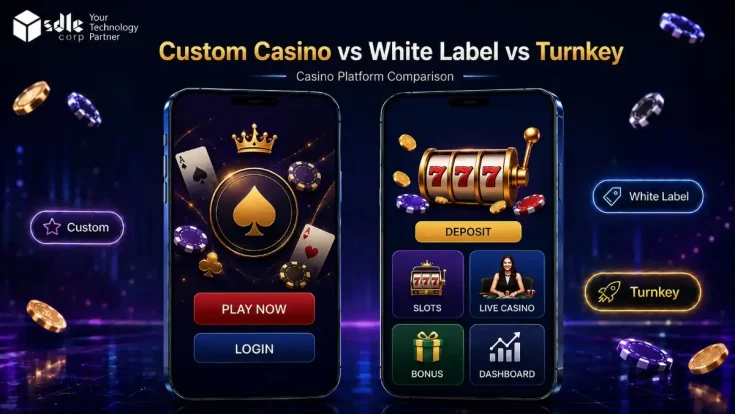
Custom, White-Label, or Turnkey Casino Software
The right solution depends on your launch timeline, budget, ownership requirements, internal team, and long-term business plan.
| Option | Best For | Main Benefits | Main Limitations |
|---|---|---|---|
| Custom Casino Software | Businesses with unique requirements and long-term growth plans | Greater control, custom features, flexible architecture and stronger brand ownership | Higher initial investment and a longer development timeline |
| White-Label Platform | Startups that want to enter the market quickly | Faster launch, lower initial development work and prebuilt features | Limited customization, platform dependency and possible revenue-sharing terms |
| Turnkey Casino Solution | Operators that need a more complete ready-to-configure package | Games, payments, back office, integrations and operational tools in one solution | Customization and ownership depend on the provider agreement |
How to Compare Casino Software Providers
A provider should be reviewed using business, technical, security, and support criteria. Avoid selecting a company based only on the number of games or the lowest quoted price.
| Evaluation Area | Questions to Ask | Why It Matters |
|---|---|---|
| Industry Experience | Has the team developed casino platforms, wallets, game integrations, or betting products before? | Relevant experience can reduce technical mistakes and integration delays. |
| Security | How are data, APIs, administrative accounts, payments, and transaction records protected? | Weak security can lead to financial loss, account abuse, and reputational damage. |
| Architecture | Can the platform scale, support new markets, and integrate additional providers? | A flexible architecture makes future growth easier and less expensive. |
| Ownership | Who owns the source code, infrastructure, data, configurations, and integrations? | Ownership terms affect control, migration, customization, and long-term costs. |
| Support | What support hours, response times, maintenance services, and service commitments are included? | Casino platforms require regular monitoring and fast issue resolution. |
| Pricing | Does the price include design, development, testing, integrations, deployment, updates, and support? | A low initial quote may exclude important services needed before launch. |
Step-by-Step Guide to Choosing Casino Software

Step 1: Define Your Business Model
Decide whether you need a custom, white-label, or turnkey platform. Define the target market, preferred games, payment options, revenue model, and expected player volume.
Step 2: Prioritize Essential Features
Separate launch requirements from features that can be introduced later. Start with essential player, game, payment, security, and back-office functions.
Step 3: Review Licensing Requirements
Understand the legal and technical requirements of your target market before development begins. This can prevent expensive redesign work later.
Step 4: Evaluate Providers
Review experience, case studies, development process, technical skills, communication, security approach, ownership terms, and post-launch support.
Step 5: Request a Demo or Prototype
Test navigation, mobile responsiveness, cashier flow, game launch, account tools, administrative features, reports, and platform performance.
Step 6: Confirm Integrations
Check whether the platform supports your selected game providers, payment services, identity tools, CRM, affiliate system, analytics, and customer support software.
Step 7: Review the Full Contract
Confirm development scope, ownership, hosting, maintenance, support, third-party fees, change requests, delivery milestones, and termination conditions.
Step 8: Plan Testing and Launch
Set aside enough time for functional testing, payment testing, security review, load testing, user acceptance testing, and production monitoring.
What Affects Casino Software Development Cost?
Casino software does not have one fixed price. Cost depends on the type of solution, number of features, game integrations, security needs, target markets, and support requirements.
Platform Type
A fully custom platform usually requires more time and investment than configuring a white-label or turnkey solution.
Number of Games and Providers
Each provider may require integration, certification, testing, reporting, and commercial agreements.
Payment Integrations
Cost increases when the platform requires several gateways, currencies, regional methods, wallets, or cryptocurrency options.
Compliance Features
Identity checks, responsible gaming tools, audit logs, exclusions, player limits, and regulatory reporting add development work.
Design and Customization
Custom branding, animations, advanced user journeys, loyalty systems, and personalized interfaces require more design and development.
Infrastructure and Support
Hosting, monitoring, backups, security updates, technical support, and ongoing maintenance create continuing operational costs.
Better Budgeting Approach
Request a detailed estimate that separates design, development, integrations, third-party services, infrastructure, testing, launch, and ongoing support.
Casino Software Launch Checklist
Before launching, confirm that the platform has been reviewed from the player, operator, financial, security, and technical perspectives.
- Registration and login work correctly
- Identity verification flow is tested
- Deposits and withdrawals are verified
- Wallet balances update accurately
- Game sessions launch and close correctly
- Failed transactions are handled safely
- Bonus and wagering rules are tested
- Player limits and exclusions work
- Administrative permissions are restricted
- Important actions appear in audit logs
- Mobile pages are responsive and fast
- Monitoring and alerts are active
- Backup and recovery procedures are tested
- Customer support tools are ready
- Legal and licensing checks are complete
- A post-launch support plan is in place
Conclusion
Choosing the right casino software requires more than comparing game libraries. Operators should review security, licensing support, payment systems, player management, back-office tools, performance, scalability, ownership, and long-term support.
A strong platform should make the player experience simple while giving the operator clear control over games, payments, promotions, risks, and reports. Careful planning before development can reduce delays, prevent expensive changes, and make future growth easier.
Whether you choose custom, white-label, or turnkey casino software, the final decision should match your target market, launch plan, budget, internal resources, and long-term business goals.
Frequently Asked Questions
The main stages are market research, requirement planning, architecture, UI and UX design, development, game and payment integration, testing, deployment, and ongoing support.
A simple white-label setup may launch faster, while a custom casino platform can take several months. The timeline depends on features, integrations, testing, licensing, and project complexity.
Casino software can support slots, poker, blackjack, roulette, baccarat, bingo, lottery games, live dealer games, crash games, and custom casino games.
Cost depends on the platform type, number of features, game providers, payment integrations, design, compliance tools, security requirements, hosting, testing, and support.
Define requirements early, launch with essential features, use proven integrations, avoid unnecessary customization, and consider a white-label or turnkey solution.
It connects the player interface with account, wallet, game, payment, bonus, compliance, reporting, and administrative systems through secure back-end services and APIs.
Casino software may manage real-money transactions, identity checks, responsible gaming controls, player limits, audit records, payment risks, and regulatory reporting.
Yes. A business can build custom casino software with its own design, games, payments, bonuses, reports, and management tools, but it needs an experienced team and appropriate licensing advice.
Custom software provides more control and flexibility. White-label software is usually faster to launch and may require less initial investment. The better option depends on your goals.
Check industry experience, security, platform scalability, integrations, source-code ownership, pricing, delivery process, support terms, and previous casino projects.