

Building a betting app like Sportsbet means building specifically for the Australian market — a jurisdiction with its own regulatory framework (the NTRC, or Northern Territory Racing Commission), its own payment infrastructure (PayID and POLi), a player base that bet heavily on racing and AFL, and mandatory integration with BetStop, Australia's national self-exclusion register. Sportsbet, owned by Flutter Entertainment, is Australia's largest online bookmaker by market share. Replicating its product architecture requires understanding what makes Australian sports betting technically and legally distinct from UK or European platforms.
How this differs from our other betting app guides: Our Sky Bet guide covers UK/UKGC/Entain and GAMSTOP integration. Our Paddy Power guide covers the Flutter/Betfair Exchange hybrid model in Ireland and the UK. This guide covers the Australian market specifically — NTRC licensing, PayID/POLi payments, racing-first product design, BetStop, and the Same-Game Multi mechanic that Sportsbet popularised. Different market, different regulatory stack, different product priorities.
The Australian betting market — what a Sportsbet-like app competes in
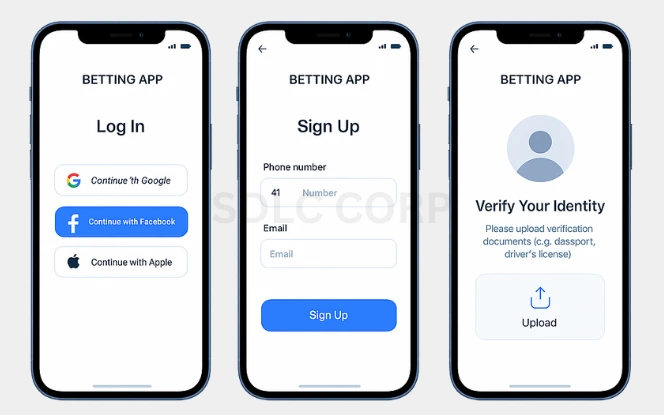
Australia has one of the highest per-capita sports betting rates in the world. The Australian gambling market generates over AUD $25 billion annually, with online sports betting the fastest-growing segment. Key market characteristics that shape a Sportsbet-like product:
- Racing is dominant: Horse racing, greyhound racing, and harness racing account for the majority of bet volume — not football or cricket as many overseas developers assume. A Sportsbet-like product must prioritise racing markets, race meeting schedules, form guides, and the SP (starting price) betting model that Australian punters expect.
- AFL and NRL drive football betting: Australian rules football (AFL) and rugby league (NRL) are the two major football codes. The product must handle complex AFL markets — line markets, winning margin, player disposals, Same-Game Multi — not European football markets.
- Three major competitors: Sportsbet (Flutter), TAB (Sky Racing ownership), and Ladbrokes (Entain). A new entrant needs a clear differentiation — typically better odds, faster payouts, a superior same-game multi product, or a niche sports coverage advantage.
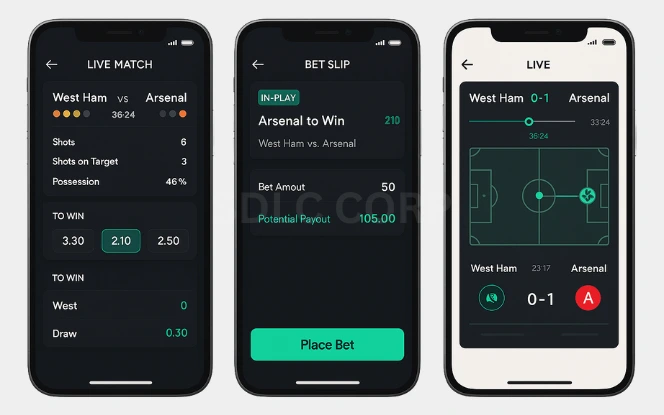
- Interactive Gambling Act 2001: Australian federal law prohibits in-play (live) betting on sports events via the internet or mobile — a major product constraint. In-play betting on racing is permitted. Any Sportsbet-like app must geo-restrict in-play sports betting for Australian IP addresses while supporting pre-match betting in full.
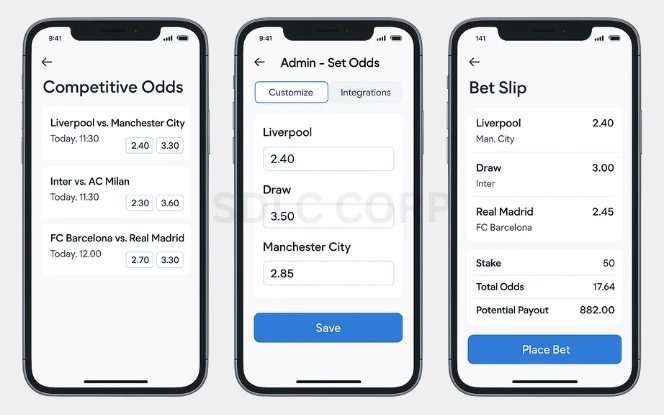
Key features of a betting app like Sportsbet
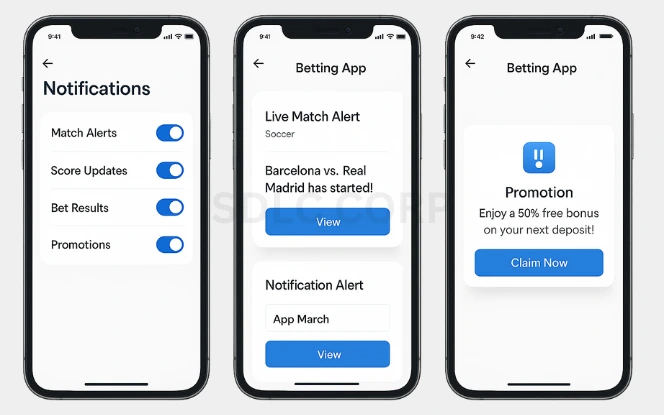
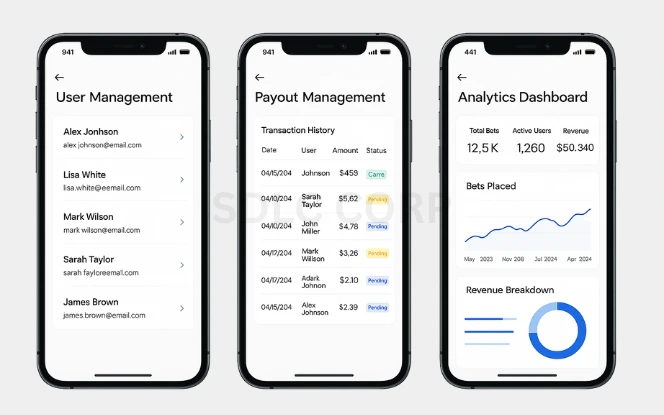
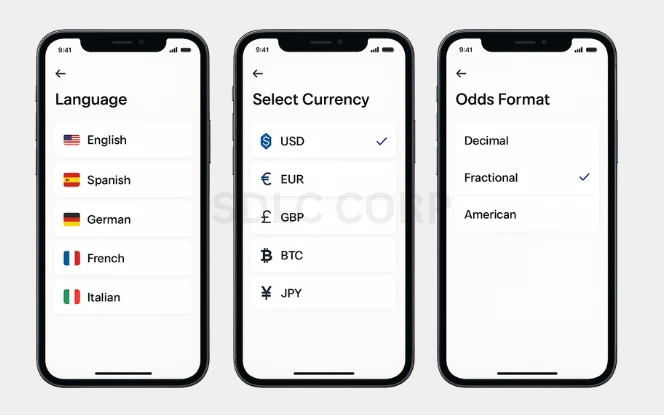
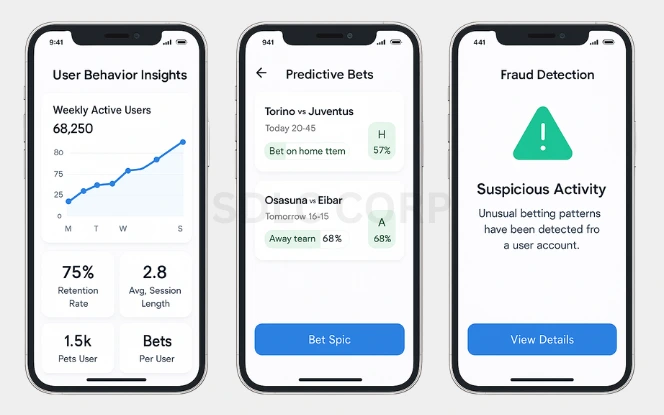
Legal and regulatory requirements for an Australian betting app like Sportsbet

Australian sports betting regulation is structured differently from UK or European frameworks. There is no single national gambling regulator — licences are issued at the state and territory level, with Northern Territory being the dominant licensing jurisdiction for national online bookmakers.
- NTRC licence (Northern Territory Racing Commission): Most large-scale Australian bookmakers (including Sportsbet) are licensed in the Northern Territory, which allows them to offer services nationally. The NTRC requires demonstration of financial viability, fit and proper persons checks, and ongoing compliance reporting. NT Racing charges an annual fee based on betting turnover.
- Interactive Gambling Act 2001 (Cth): Federal law restricts real-money interactive gambling services for Australian residents. Sports betting pre-match is permitted. In-play (live) sports betting online or via app is prohibited — players must call a dedicated phone line to place in-play sports bets. In-play racing betting is permitted online.
- Point of Consumption Tax (POCT): Each state and territory has enacted POCT legislation taxing bookmakers on the gross revenue derived from bets placed by customers in that jurisdiction — regardless of where the bookmaker is licensed. Rates vary: NSW 10%, Victoria 8%, Queensland 15%, WA 10%. Your financial model must account for blended POCT across all states.
- BetStop (mandatory): National self-exclusion register operated by the Australian Communications and Media Authority (ACMA). Integration is mandatory for all licensed interactive wagering service providers under the Interactive Gambling Amendment (National Self-Exclusion Register) Act 2023.
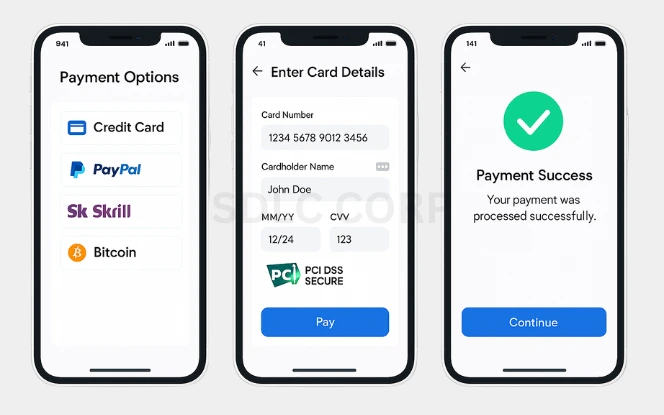
- Credit card ban: ASIC guidance prohibits the use of credit cards for gambling deposits with licensed Australian wagering operators. Payment infrastructure must be built without credit card deposit support.
- Responsible gambling obligations: Under NTRC and state-level codes, operators must offer deposit limits, loss limits, time limits, activity statements, and cooling-off periods. Pre-commitment functionality is mandatory.
Important: Operating without an NTRC or equivalent state licence while accepting bets from Australian residents is an offence under the Interactive Gambling Act. The ACMA actively enforces compliance — including issuing formal warnings and blocking orders against unlicensed operators targeting Australia.
Technology stack for a Sportsbet-like betting app
Step-by-step development process for a betting app like Sportsbet
Cost to build a betting app like Sportsbet
| Component | Cost range | Notes |
|---|---|---|
| NTRC licence | AUD $15,000–$30,000 | Initial application and licence fee. Annual fee based on turnover thereafter. |
| Legal and compliance advisory | $20,000–$60,000 | Australian gaming lawyer, POCT advice, licence application support, responsible gambling policy development. |
| Betting engine development | $80,000–$200,000 | Core engine: bet acceptance, settlement, SGM correlation model, Cash Out, multi builder. The most complex and critical component. |
| Mobile app (iOS + Android) | $40,000–$100,000 | React Native or Flutter. Includes race card UI, live odds display, bet slip, account management, push notifications. |
| Payment integration (PayID, POLi) | $15,000–$40,000 | NPP payment partner setup, PayID integration, POLi, e-wallets. Ongoing payment partner fees apply. |
| BetStop + compliance systems | $10,000–$25,000 | BetStop API integration, responsible gambling tools, geo-restriction, POCT reporting systems. |
| Odds data feeds | $20,000–$50,000/year | Sportradar or Stats Perform contract plus Australian racing data provider. Ongoing annual cost. |
| Infrastructure (AWS Sydney) | $5,000–$20,000/month | Scales with concurrent users and bet volume. Dedicated servers for betting engine, Redis cluster, RDS, WebSocket servers. |
| Total — MVP launch | $200,000–$450,000 | NTRC licensed, PayID, BetStop, core betting engine, mobile apps, racing + 3–4 sports covered. |
| Total — full-scale launch | $450,000–$1M+ | SGM, Cash Out, full racing coverage, multiple sports, trading desk, responsible gambling tools, marketing budget. |
White label option: A white-label Australian sportsbook platform (from providers like SBTech or Amelco) can reduce time-to-market to 3–6 months and upfront cost to $80,000–$150,000, but you pay ongoing revenue share (typically 15–25% of GGR) and have limited product control. Custom builds cost more upfront but give full ownership of the product and all revenue. See our sports betting app development services for a scoped estimate.
Monetisation strategies for an Australian betting app
- Margin on bets (overround): The primary revenue source. The platform builds a margin into all offered odds — the sum of probabilities implied by the odds exceeds 100%, generating a guaranteed theoretical return to the house. Australian bookmakers typically operate at 5–8% overround on sports markets and 15–20% on racing (where the TAB's traditional pari-mutuel model has historically priced less competitively).
- Same-Game Multi margin: SGM products carry higher margins than single-event bets because the correlation deduction applied to multi-leg odds within the same game can significantly reduce the fair odds without players being able to easily verify the calculation. SGM is one of the highest-margin product categories in Australian sports betting.
- Bonus bet liability management: Welcome offers and ongoing promotions (free bets, bonus bets, money back specials) are a customer acquisition cost, not a revenue source — but their structural design significantly affects profitability. Wagering requirements, qualifying bet rules, and maximum withdrawal caps from bonus bets must be carefully designed.
- Subscription racing products: Premium racing form guides, speed ratings, and tipster services can be monetised as subscription products alongside the core betting functionality.
Challenges in developing a betting app like Sportsbet
FAQ — Developing a betting app like Sportsbet
How much does it cost to develop a betting app like Sportsbet?
An MVP Australian sportsbook with NTRC licensing, PayID, BetStop, a core betting engine, and mobile apps costs approximately $200,000–$450,000. A full-scale launch matching Sportsbet's feature set — including Same-Game Multi, Cash Out, full racing coverage, and a live trading desk — runs $450,000–$1M+. Key cost drivers unique to the Australian market are the PayID bank partnership, NTRC licence fees, and POCT reporting infrastructure across all states.
What licence do I need to build a betting app like Sportsbet in Australia?
Most national online bookmakers operating in Australia (including Sportsbet) hold an NTRC (Northern Territory Racing Commission) licence. The NTRC allows the licence holder to accept bets from residents in all Australian states and territories. Some operators hold additional state-level licences (particularly for retail betting). The licence application process takes 3–6 months — apply before starting development so licensing does not delay your launch.
What is BetStop and is integration mandatory?
BetStop is Australia's National Self-Exclusion Register, operated by ACMA. Under the Interactive Gambling Amendment (National Self-Exclusion Register) Act 2023, all licensed interactive wagering service providers must check all new account registrations against BetStop before activation. Matched accounts cannot be created. Existing accounts where a BetStop match is detected must be suspended immediately. Integration is mandatory — non-compliance is a breach of both federal law and NTRC licence conditions.
How do I integrate PayID into an Australian betting app?
PayID runs on Australia's New Payments Platform (NPP). Accessing NPP for betting deposits requires either direct NPP membership (restricted to banks and large financial institutions) or a sponsorship arrangement with an NPP member institution. In practice, new betting operators work with a licensed payment intermediary (such as Cuscal, ConnectID, or a banking-as-a-service provider) to access NPP through their sponsorship. This partnership arrangement is typically the longest lead-time item in an Australian betting platform launch — begin this process early.
Can I offer in-play (live) sports betting on an Australian betting app?
No — the Interactive Gambling Act 2001 (Cth) prohibits live in-play sports betting via the internet or mobile application for Australian residents. Players who want to place in-play sports bets must do so via a dedicated telephone service. In-play betting on horse racing and greyhound racing is permitted via app. Your platform must enforce this restriction at the API level — geo-restricted for Australian IPs — and not merely at the UI level.
How long does it take to develop a betting app like Sportsbet?
An MVP Australian sportsbook takes 12–18 months from project start to launch, with the NTRC licence process (3–6 months) and PayID bank partnership (3–6 months) typically running in parallel with development. A full-featured platform matching Sportsbet's capabilities takes 18–30 months. The regulatory and payment integration timelines dominate the critical path — technical development can proceed in parallel but cannot launch until licensing and payment infrastructure are in place.


