
Securing a gambling license for an online casino is the foundational legal step before launching any real-money product. The right licence determines where you can legally accept players, which payment processors will work with you, whether players trust your platform, and — critically — which regulators can sanction you if something goes wrong. Getting the jurisdiction wrong, or skipping the process, creates existential risk to the entire business.
This guide covers the full process of obtaining an online casino gambling licence: jurisdiction selection, application steps, technical and financial requirements, typical costs, common mistakes, and the ongoing compliance obligations operators must sustain after approval. It is designed for operators, founders, and development teams planning a licensed real-money launch.
This is the overview guide. For country-specific detail, see our dedicated jurisdiction guides: Curaçao vs Malta licence comparison, Curaçao licence guide, UK gambling licence guide, Europe licensing guide, and USA licensing guide. This post covers the universal process — jurisdiction-specific rules are in those guides.
Need help choosing the right gambling license?
Get a jurisdiction-fit assessment for your casino, sportsbook, or iGaming platform before you start the licensing process.
B2C, B2B, white-label, or local approval.
Curaçao, Malta, UKGC, USA, Brazil, Panama, and more.
AML/KYC, RNG, responsible gambling, and platform documents.
B2B vs B2C gambling licence — which do you need?
Before selecting a jurisdiction, you must determine which licence type matches your operating model. This decision is not always obvious and getting it wrong means applying for the wrong licence, wasting months and thousands of dollars.
- You operate a casino that accepts players directly
- You handle player deposits, withdrawals, and account management
- You are the operator of record — the licence is in your name
- Requires AML/KYC infrastructure, responsible gambling tools, and player funds segregation
- Higher ongoing compliance burden, higher cost
- Examples: an online casino brand, a sports betting site, a poker platform
- You supply software, games, or platform services to other licensed operators
- You do not accept players directly — you power other people's casinos
- Required to supply games or platform software in most regulated markets
- Lower player-facing compliance burden, but technical certification requirements
- Typical for: game studios, platform providers, payment aggregators
- Examples: a slot game studio, a casino platform provider, a bonus engine vendor
White label route: A third option is operating under a white label or sub-licence arrangement — using an existing licence holder's authorisation to run your brand. This is faster and cheaper than obtaining your own licence, but you operate under someone else's compliance framework and have less control. See our iGaming development services for guidance on whether a white label or full licence is the right fit for your project scope.
Which gambling license route fits your business?
Your licensing route depends on whether you operate directly, supply software, use an existing licence holder, or target a regulated local market. Use the decision path below to narrow the right direction before preparing your application.
1. B2C operator license
Choose this route if your business accepts players directly, manages deposits and withdrawals, owns the player account relationship, and operates the casino, sportsbook, or iGaming brand.
2. B2B software supplier license
Choose this route if you provide casino software, games, payment tools, bonus engines, or platform infrastructure to licensed operators without accepting players directly.
3. White-label / sub-license route
Choose this route if you want to launch faster under an existing licence holder’s framework, while accepting less control over compliance rules, payments, and operating terms.
4. State-level or country-specific approval
Choose this route if you plan to target regulated markets such as the USA, UK, Brazil, or other countries where local approval is required before player acquisition.
How to get a gambling licence for an online casino — step by step
The application process for an online casino gambling licence follows a broadly consistent sequence across most jurisdictions, even though the specific requirements, fees, and timelines differ. The steps below reflect the standard workflow — jurisdiction-specific deviations are covered in the country guides linked in this article.
Key gambling regulatory bodies worldwide
Each jurisdiction has its own regulator, licensing standards, approval timeline, and compliance burden. The table below summarises the major authorities operators consider. For country-specific guidance, see the linked jurisdiction guides.
Jurisdiction comparison for online casino gambling licences
| Jurisdiction | Initial cost | Annual fee | Timeline | Market access | Reputation | Guide |
|---|---|---|---|---|---|---|
| Malta (MGA) | €25,000–€35,000 | €25,000–€35,000/yr + GGR tax | 3–6 months | EU, global | High | MGA vs Curaçao |
| UK (UKGC) | £17,000–£25,000+ | Annual fee based on GGY | 4–8 months | UK only | Highest | UK guide |
| Curaçao (GCB) | $15,000–$30,000 | $30,000–$50,000/yr | 2–4 months | Global excluding restricted markets | Medium | Curaçao guide |
| Isle of Man (GSC) | £5,000 application + licence fee | £5,000–£35,000/yr | 4–8 months | UK with UKGC agreement, global | High | — |
| Gibraltar (GRA) | £100,000+ capital requirement | 1% GGY, £85,000 max | 6–12 months | UK, EU access | High | — |
| Kahnawake (KGC) | $30,000–$50,000 | $10,000–$20,000/yr | 3–6 months | Global excluding USA | Medium | — |
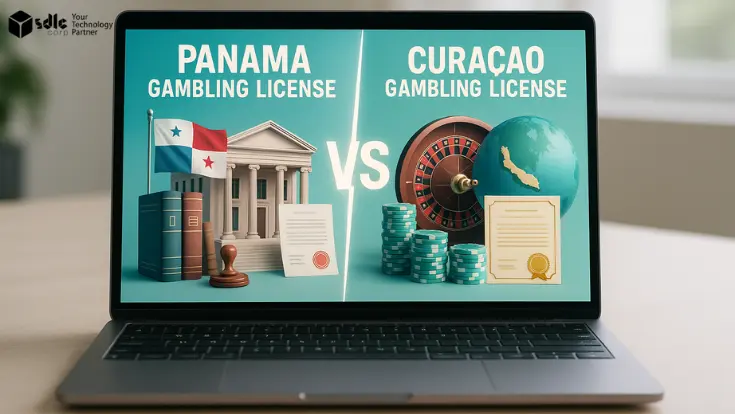
| Panama | $40,000–$80,000 | $20,000–$40,000/yr | 4–8 months | Global excluding restricted markets | Medium | Panama guide |
| USA (state-level) | $100,000–$500,000+ | Significant ongoing GGR taxes | 12–36 months | Specific US states only | Highest | USA guide |
Note on Curaçao reform: Curaçao completed a regulatory overhaul in 2024–2025, transitioning from the old master licence sub-licence system to direct licensing under the Gaming Control Board. New applicants apply directly to the GCB. Costs and timelines reflect the new GCB framework. See the full Curaçao licensing guide for 2025 for the updated process.
Gambling License Jurisdiction Shortlist
Download a quick comparison of Curaçao, Malta, UKGC, Panama, Isle of Man, Kahnawake, USA, Brazil, and Philippines licensing routes.
Choosing the right jurisdiction for your online casino gambling licence
The right jurisdiction is not simply the cheapest or the fastest. It is the one that enables the commercial model you are actually building. The four factors that matter most in practice:
- Target market access: A Curaçao licence does not permit you to actively market to UK players. A UKGC licence is required to legally acquire UK customers. If the UK or EU are your primary markets, a high-reputation licence such as UKGC, MGA, or Gibraltar is often required for the payment infrastructure and marketing channels you need.
- Banking access: Lower-reputation licences can face difficulty with banking and payment processing. Your jurisdiction choice affects who will process deposits and withdrawals.
- Compliance burden vs revenue stage: A UKGC licence carries ongoing compliance costs for legal review, audits, reporting, and compliance staff. At launch scale, some operators choose a lighter jurisdiction before moving into stricter markets.
- Tax structure: Point-of-consumption taxes in regulated markets can stack on top of licence costs. Model your full tax burden across jurisdictions, not just the headline licence fee.
Country-specific gambling licence guides
Gambling licence requirements for online casino apps
To qualify for a gambling licence, your online casino platform must meet legal, financial, and technical requirements. These vary by jurisdiction but the categories below appear across all major regulators.
Cost to get a gambling licence for an online casino — full breakdown
Total licensing cost varies widely by jurisdiction and the scale of your operation. The table below separates licence fees from the supporting costs operators consistently underestimate.
| Cost category | What it covers | Typical range |
|---|---|---|
| Application fee | Non-refundable assessment fee paid on submission | $1,000 – $20,000 |
| Licence fee (initial) | Fee for the licence itself, paid on approval | $15,000 – $100,000+ |
| Annual renewal fee | Ongoing licence fee per year or GGY-based | $10,000 – $100,000+/yr |
| Company formation | Entity registration, registered office, local director where required | $3,000 – $15,000 |
| RNG / platform certification | Independent lab testing of games and platform | $5,000 – $30,000 |
| Legal consultation | Licensing lawyer to review documents, advise on jurisdiction, and liaise with regulator | $10,000 – $50,000 |
| Compliance setup | AML/KYC policy development, responsible gambling tools, and compliance officer cost | $5,000 – $25,000 setup + ongoing |
| Player funds segregation | Trust or segregated account setup and minimum capital requirement | $20,000 – $150,000 reserved |
| GGR / point-of-consumption tax | Revenue tax on gross gaming revenue in regulated markets | Varies — model before applying |
| Total budget (Curaçao / offshore) | All-in first-year estimate for lower-cost jurisdiction | $60,000 – $150,000 |
| Total budget (MGA / UKGC) | All-in first-year estimate for tier-1 jurisdiction | $150,000 – $500,000+ |
Always budget a 30–40% contingency on top of your licence cost estimate. Regulatory timelines, document revision requests, and certification delays are common, and most related costs continue accumulating during any delay.
Common mistakes when applying for an online casino gambling licence
Post-licensing compliance for online casino operators
Securing the licence is the beginning, not the end. Ongoing compliance is what keeps the licence active, the banking relationships intact, and the operation viable. The most common cause of licence suspension for established operators is not original misconduct — it is compliance drift over time.
- Annual audits: Most regulators require annual financial audits by an approved auditor and periodic technical platform reviews. Schedule these before the deadline.
- AML reporting: Suspicious activity reports must be filed with the relevant financial intelligence unit. Thresholds, forms, and timelines vary by jurisdiction.
- Responsible gambling updates: Regulatory standards for responsible gambling evolve. Budget for system updates when standards change.
- Game and software updates: Any material change to your platform, such as a new game provider, new payment method, or major software update, may require notification to or approval from your regulator.
- Player funds review: Regulators periodically verify that player funds remain correctly segregated and that the segregated account balance matches player liability.
For the technical architecture that makes compliance operationally sustainable, see our guide to compliance-by-design iGaming platforms and our regulatory compliance challenges guide.
Need a licence-ready iGaming platform?
SDLC Corp can help prepare licence-ready platform documentation, AML/KYC flows, RNG certification support, responsible gambling tools, and technical compliance architecture.
FAQ — Gambling licence for online casino apps
How do you get a gambling licence for an online casino?
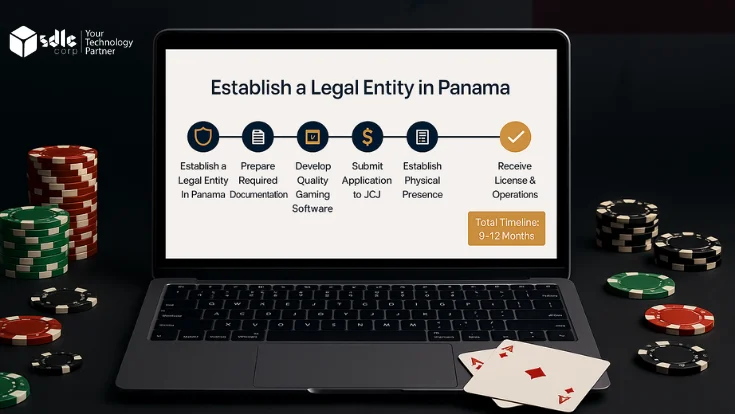
Choose a jurisdiction aligned with your target markets and budget, register a legal entity there, prepare documentation, submit the application with fees, undergo due diligence review, and await approval. The process typically takes 2–8 months depending on jurisdiction. Start RNG certification in parallel with documentation because it is often a critical path item.
How much does an online casino gambling licence cost?
Offshore jurisdictions such as Curaçao, Kahnawake, and Panama can run $60,000–$150,000 all-in for the first year, including company setup, legal fees, and RNG certification. Tier-1 jurisdictions such as Malta, UKGC, and Gibraltar can run $150,000–$500,000+ depending on scope and compliance needs.
Which is the best jurisdiction for an online casino gambling licence?
There is no universal answer. The best jurisdiction depends on your target markets, budget, and operating model. Curaçao can suit lower-cost global launches. Malta provides stronger EU access. UKGC is required for the UK market. USA state licences provide access to regulated American markets but require higher budgets and longer timelines.
Do I need a separate licence for every country I operate in?
Not always, but often yes for your primary markets. A base licence may permit some passive access, but markets such as the UK, Germany, Sweden, and some US states require their own local licences or authorisations for active marketing and player acquisition.
What is RNG certification and is it required for a gambling licence?
RNG certification is independent testing of your game outcomes by an accredited laboratory to verify that results are random and that payout percentages match stated RTPs. It is required by major regulators and should be started before or during the licence application.
Is a free-to-play casino app exempt from gambling licence requirements?
Usually yes, provided there is no real-money wagering and no prizes with material monetary value. However, the exemption depends on the jurisdiction. Some markets apply broader gambling or consumer protection rules, so legal treatment should be confirmed before launch.