
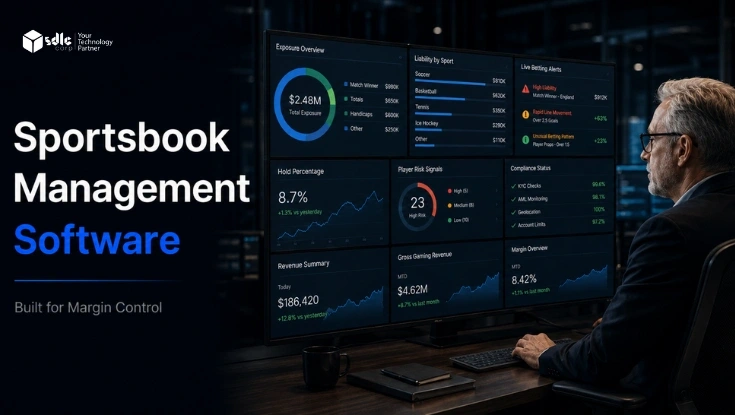
Sportsbook management software connects exposure control, liability tracking, live odds movement, player risk signals, fraud checks, compliance rules, and finance reporting into one operating layer, so trading and risk teams can make margin decisions before settlement, not after.
According to the American Gaming Association, U.S. sports betting generated $166.94 billion in handle in 2025 with revenue hitting $16.96 billion, a 22.8 percent increase year over year. At that scale, a two-point hold compression costs a $10 million handle operator $200,000 every month. At a $100 million handle that becomes $2 million. It builds quietly before it ever appears in a report.
Key Takeaways
- Margins leak through disconnected controls. Exposure, liability, limits, fraud, and live odds need one shared operating layer.
- Hold compression becomes expensive fast. At $100 million handle, a drop from 9% to 7% hold creates a $2 million monthly gap.
- Operators need infrastructure, not dashboards. Sportsbook management software must connect odds feeds, player data, wallets, trading, and compliance.
- Live betting turns latency into loss. Slow odds updates or delayed suspensions can expose profitable markets within seconds.
- Configuration gaps can become margin events. Weak same-game parlay, bet builder, or limit rules can turn small stakes into large payout exposure.
This guide is written for operators comparing sportsbook management software, a sportsbook management solution, or a sportsbook management system that can improve trading visibility, odds control, liability tracking, and daily sportsbook operations.
Where Sportsbook Margins Leak Before Operators See the Loss
If a sportsbook handles $10 million in monthly bets at a 9% hold, expected revenue is $900,000. If weak exposure control, slow limit decisions, stale odds, or poor trading visibility compresses hold to 7%, revenue falls to $700,000. That is a $200,000 monthly margin gap.
Margin leakage usually starts before it looks like a loss. A live market stays open with stale odds. A sharp bettor keeps placing value bets before price movement. A manual limit approval arrives after exposure has already grown. Sportsbook management software should help trading, fraud, compliance, and finance teams act before weak controls turn into margin loss.
Signs the Platform Is Already Behind
If the answer is unclear, the sportsbook is still making margin decisions with partial visibility.
Find margin gaps before they hit hold numbers
Review exposure visibility, live betting latency, fraud signals, limits, reports, and compliance routing in one focused audit.
Core Capabilities of Sportsbook Management Software for Operators
Core capabilities should not sit as disconnected features. Exposure visibility, player profiling, live betting controls, fraud checks, compliance rules, and reporting need to work together when margin is under pressure.
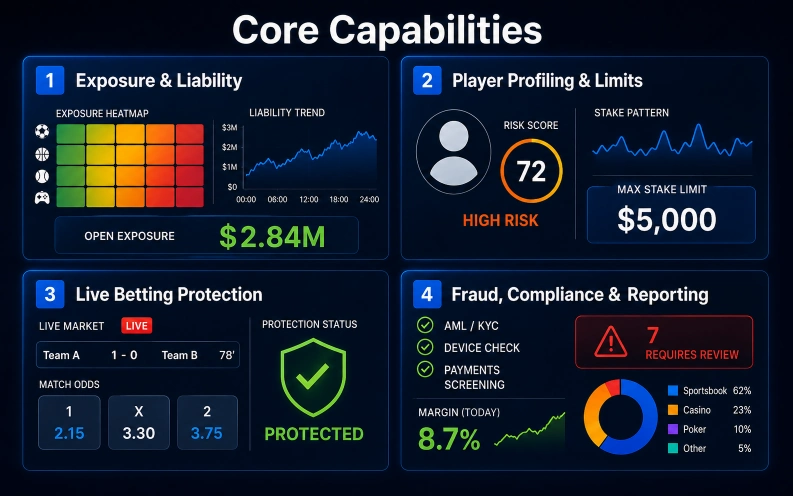
This guide is for teams building, upgrading, or extending a sportsbook platform where exposure control, liability visibility, live betting speed, fraud detection, and compliance routing directly affect margin.
For operators planning a new sportsbook stack.
For teams replacing weak risk and reporting layers.
For operators adding controls around an existing platform.
Sportsbook Management Tools Operators Should Check First
A strong sportsbook management tool should help teams see exposure, adjust limits, review live markets, control risky players, track payouts, and report margin from one place. If these tools sit in separate screens, the sportsbook team still works with delays and partial data.
For operators managing sportsbook, wallet, KYC, payments, and back-office workflows across a wider betting ecosystem, this control layer often connects with broader iGaming software development needs.
Sportsbook Management Software Architecture for Margin Control
Margin-focused sportsbook software needs one architecture where odds, trading, player data, liability, fraud, compliance, and reporting work together.
| Layer | What It Connects | Why It Matters for Margins |
|---|---|---|
| Odds feed layer | Pre-match odds, live odds, suspension signals | Reduces stale-odds exposure |
| Trading layer | Trader alerts, overrides, risk thresholds | Speeds up margin decisions |
| Player data layer | Bet history, account behavior, limits, device data | Helps identify sharp action and abuse |
| Liability engine | Market, event, player, selection, and bet-type exposure | Shows worst-case payout risk |
| Fraud and compliance layer | AML/KYC, geofencing, linked accounts, suspicious clusters | Reduces abuse and regulatory leakage |
| Odds automation layer | Trading rules, price movement, margin settings, and suspension logic | Supports odds automation and faster margin optimization |
| Reporting layer | Risk, margin, exposure, finance, and compliance views | Gives teams one trusted view |
This is the difference between a dashboard that reports risk and a sportsbook management solution that helps operators control it.
How SDLC Corp Builds Sportsbook Management Software and Solutions
SDLC Corp helps sportsbook operators choose the right build path based on speed, control, market complexity, and margin-protection needs. Operators planning the customer-facing product can also connect this work with sports betting app development so the front end, trading layer, wallet, and risk controls follow the same operating logic.
The goal is not to sell every operator the same platform. The goal is to identify whether the operator needs speed, deeper control, platform extension, or a full custom build.
That is why SDLC Corp supports both models: prebuilt sportsbook management software for faster launch paths and custom-built sportsbook management software for operators with deeper trading rules, live betting complexity, wallet flows, compliance needs, or reporting requirements.
For teams that also need operational support, this can connect with sportsbook managed services, managed sportsbook trading services, reporting support, and platform improvement work around the existing stack.
Two Build Paths for Sportsbook Operators
| Build Path | Best For | What Operators Get | Pricing |
|---|---|---|---|
| Prebuilt Sportsbook Management Software | Faster launch or ready operating foundation | Core sportsbook operations, player management, exposure visibility, limits, reporting, and back-office workflows | $1,999 monthly rental |
| Custom-Built Sportsbook Management Software | Unique trading rules, complex markets, live betting growth, or multi-jurisdiction needs | A platform built around trading model, risk appetite, wallet flow, integrations, compliance, and reporting needs | Custom monthly quote based on operator requirements |
For operators looking for a faster launch path, the prebuilt sportsbook management software model gives them a ready operational foundation with dashboards, exposure views, live betting visibility, player analytics, risk alerts, and reporting screens already structured for sportsbook operations.
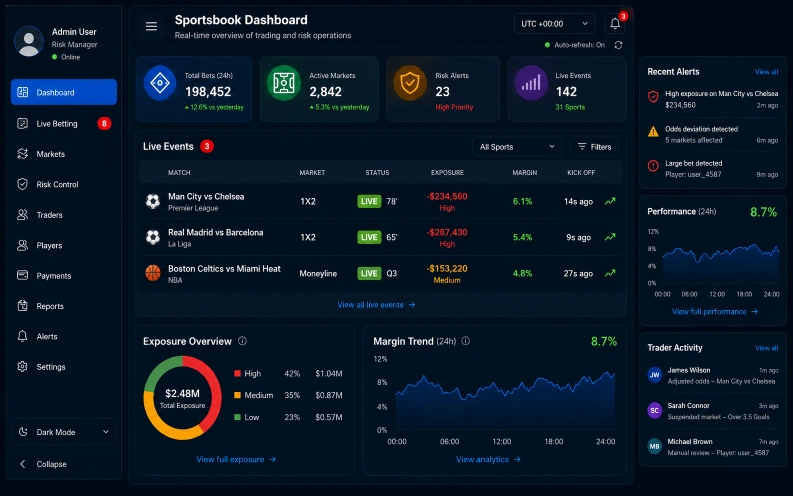
Operators can use this prebuilt model when they want to move faster, reduce setup time, and start from a sportsbook management foundation that already covers core operational workflows.
The prebuilt route helps operators move faster when the core requirements are clear. The custom route gives more control when margin protection depends on deeper integrations, specific trading logic, or a more advanced operating model.
What SDLC Corp Helps Operators Build
| Area | What the System Controls | Operator Outcome |
|---|---|---|
| Exposure and liability control | Event, market, player, selection, and bet-type risk | Traders see liability earlier |
| Player risk and limits | Bet timing, stake patterns, market behavior, and player limits | Sharp action is easier to review |
| Parlay and bet builder controls | Related outcomes, unsafe combinations, and review triggers | Hidden payout spikes can be blocked |
| Live betting safeguards | Latency, suspensions, stale-odds alerts, and repricing | Exposure reduces during fast in-play movement |
| Fraud and abuse detection | Account, device, payment, withdrawal, and affiliate signals | Small abuse patterns are caught earlier |
| Compliance and margin reporting | AML/KYC, geo rules, finance views, and leadership reporting | Teams work from one trusted view |
Operators can start with a prebuilt sportsbook management system when speed matters, extend an existing platform when the foundation is already in place, or build a custom sportsbook platform when control matters more than speed.
SDLC Corp helps operators scope the right model before weak visibility, delayed controls, or disconnected workflows start affecting margin.
Exposure and Liability Management Across Markets, Events, and Players
Margin control starts with one question: how much risk is the sportsbook carrying right now?
A $50,000 liability on one market may look safe. But the same event can also carry exposure across player props, bet builders, live markets, and cashout positions. The real risk is often bigger than the number shown on a single-market dashboard.
The real liability number is never the one a single-market dashboard shows.
Track exposure by market, event, player, selection, and bet type before risk reaches settlement.
Use thresholds, trader alerts, and faster escalation when live exposure moves within seconds.
For operators working across multiple jurisdictions, limit rules may also need logic across states, countries, or licensing markets. Once that visibility is in place, the next control gap operators need to watch is correlated betting exposure.
Player Risk Profiling, Sharp Betting Detection, and Limit Controls
Player risk is not about one winning bet. It is about repeated behavior that puts margin under pressure before it appears in reports.
Recognizing the Pattern Before It Becomes a Problem
One bet rarely reveals the risk. Over time, the signals become clear: bets placed just before odds move, repeated value on niche markets, unusual stake sizing across sessions, similar activity across linked accounts, and heavy pressure on the same outcome repeatedly.
Sportsbook management software should connect these signals into one player view automatically, so traders can see who is creating the risk, why the account is risky, and what control should apply next.
A sportsbook platform can become more effective when connected with sportsbook CRM software for player segmentation, retention campaigns, and personalized communication.
How SDLC Corp Builds Player Risk Workflows
SDLC Corp helps operators connect player signals, market history, limit history, linked accounts, device data, payment behavior, and jurisdiction rules into one trader workflow. The trading team sees the full context before making a limit decision, not after the exposure has already grown.
Limits as the Action Layer
Player-level limits control sharp accounts without blocking all activity. Market-level limits protect exposed selections. Event-level limits cap liability on high-risk fixtures. Jurisdiction-specific rules apply where compliance requirements differ. VIP exceptions and manual overrides can still stay inside a clear approval workflow.
The goal is not to block every profitable player. It is to apply limits with precision so sharp action and healthy volume are not treated the same way.
Real-World Example: Correlated Parlay Risk in Sportsbook Software
This example shows why correlation controls matter. Same-game parlays and bet builders can turn a small configuration mistake into a major payout event.
When related outcomes are treated as independent markets, the sportsbook accepts payout exposure that was never correctly priced.
Massachusetts regulators ordered DraftKings to pay $934,137 after a configuration flaw allowed 27 correlated parlay bets totaling $12,950 on related Nathan Lukes ALCS hit-total markets during the 2025 ALCS. Controls against combining related outcomes were reportedly disabled, and 24 of the 27 bets won.
The stake volume was small. The configuration gap was not.
For operators, the lesson is direct: pricing logic, trader configuration, and bet-builder rules must connect inside the sportsbook platform. Operators running same-game parlays without connected correlation rules are accepting liability they cannot see until after settlement.
This is exactly the kind of risk that a sportsbook operator should catch during configuration, trader review, and liability testing before the market goes live.
Check parlay rules before payout exposure grows
Map correlation rules, review paths, liability limits, and audit reports before risky bet-builder combinations go live.
Live Betting Latency and Stale-Odds Exposure
Live betting exposes weak sportsbook infrastructure faster than any pre-match market. Odds move in seconds, bettors react instantly, and even a short delay can create stale-odds exposure.
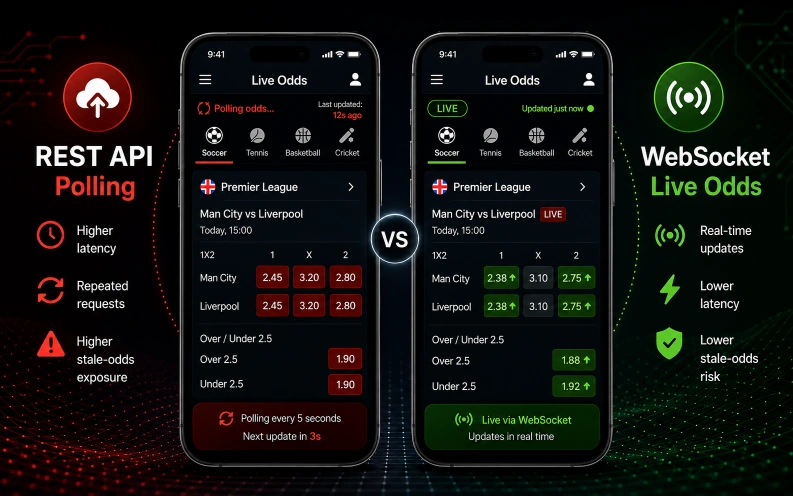
For operators using predictive models, real-time odds movement, or automated market logic, the same latency problem also affects the wider sports betting algorithm software layer.
A 2-second API feed delay during a live NFL market can give automated bettors enough time to attack stale odds before the sportsbook suspends or reprices the line. That is latency arbitrage.
How SDLC Corp Builds Live Betting Safeguards
The American Gaming Association estimated Americans would legally wager $1.76 billion on Super Bowl LX. During high-volume events like this, slow odds updates, feed delays, suspension gaps, and cashout errors can create real margin pressure.
SDLC Corp treats live betting protection as an architecture problem, not a screen-level feature. Odds feeds, suspension triggers, repricing logic, cashout rules, trader alerts, and exposure thresholds should work together so the platform can react while the market is still moving.
For operators with high live betting volume, SDLC Corp can help design low-latency workflows around feed structure, market suspension rules, stale-odds protection, and risk escalation paths.
Fraud, Bonus Abuse, and Multi-Account Risk Controls
Fraud does not always look like one major attack. It usually appears as repeated small signals across accounts, devices, payments, withdrawals, traffic sources, and betting behavior.
Linked accounts, repeated patterns, unusual betting behavior, and suspicious clusters.
Deposit behavior, withdrawal patterns, device fingerprints, and IP indicators.
AML/KYC checks, geo controls, jurisdiction rules, and affiliate traffic quality.
Why Disconnected Systems Let Fraud Scale Quietly
When these signals stay separate, abuse can remain below detection thresholds until the cost appears in settlement, payout exposure, or unexplained hold compression. Operators reviewing deposit, payout, and cashier risk can also connect this work with iGaming payment solutions so fraud checks and payment status do not stay in separate workflows.
Decide Whether Your Sportsbook Platform Can Protect Margins at Scale
Before building or upgrading sportsbook management software, operators should look beyond design, dashboards, and demo screens. If the player journey also needs work, the same review can sit beside a sportsbook UX design audit. The real question is whether the system can protect margin when exposure, live betting, fraud, limits, and compliance pressure move at the same time.
Platform Evaluation Checklist
A weak answer to these questions is not just a software limitation. It is an operating gap. The strongest sportsbook management software is not the one with the most screens. It is the one that helps operators act before margin loss becomes visible.
Sportsbook operators do not need more disconnected screens. They need connected infrastructure that helps trading, fraud, compliance, finance, and leadership act from the same margin-protection layer.
Build a sportsbook system with stronger margin control
Choose the right prebuilt, custom, or extension path for trading, risk, fraud, compliance, and reporting needs.
FAQs
1. How does sportsbook management software protect operator margins?
Sportsbook management software protects margins by connecting exposure monitoring, liability control, sharp betting detection, automated limits, correlated bet controls, stale-odds alerts, fraud detection, and reporting into one operating layer. When these controls share data, operators can act before weak visibility, delayed limits, or configuration gaps turn into hold compression.
2. What is the difference between a risk dashboard and margin-focused sportsbook management software?
A risk dashboard shows what has already happened. Margin-focused sportsbook management software helps operators act before settlement by connecting exposure, liability, player risk scores, limit rules, fraud signals, and compliance routing. The difference is simple: one reports margin loss, while the other helps prevent it.
3. Why is live betting risky for sportsbook margins?
Live betting is risky because odds move quickly and feeds can lag. Legacy REST API polling can create short stale-data windows between updates. During that gap, automated bettors may attack mispriced lines before suspension or repricing. WebSocket-based live odds architecture can reduce that window by pushing market changes faster.
4. Why do same-game parlays and bet builders need special controls?
Same-game parlays and bet builders can combine related outcomes that look separate on the front end but carry correlated risk in the pricing model. Without blocked combinations, correlation checks, and trader review workflows, small stakes can create major payout exposure. A reported DraftKings case showed 27 correlated bets totaling $12,950 leading to a $934,137 payment order.
5. How should sportsbook management software handle multi-jurisdiction compliance and AML requirements?
Sportsbook management software should apply risk rules, AML/KYC checks, stake limits, geofencing logic, and reporting rules by jurisdiction. Operators working across multiple states, countries, or licensing markets should not rely on one flat rule set. Compliance routing helps trading and compliance teams apply the right controls without manual delays.
6. Can sportsbook management software integrate with an existing sportsbook platform?
Most operators do not need to replace their entire platform to strengthen their margin controls. Sportsbook management software can integrate with existing sportsbook platforms, odds feeds, wallets, PAM systems, payment flows, fraud tools, and reporting dashboards. For many operators, the goal is to strengthen the exposure, compliance, liability, and reporting layer around the existing platform.
7. Why should operators build custom sportsbook management software?
Operators who try to adapt generic tools to a specific trading model often spend more time working around the software than working with it. Custom sportsbook management software fits the operator’s odds feeds, player data, payment behavior, jurisdiction rules, fraud signals, and reporting workflows, so margin controls match the way the sportsbook actually operates.