
Home / Blogs & Insights / How to Create an NFT Game: A Complete Guide

How to Create an NFT Game: A Complete Guide

Create an NFT Game: A Complete Guide

Table of Contents

NFT Game Development

What Is an NFT Game?

Click to read the definition
An NFT game integrates non-fungible tokens into gameplay so players can own, trade, and earn from in-game assets. Unlike traditional games where the developer controls all items, NFT games give players verifiable on-chain ownership of characters, equipment, land, or collectibles.

NFT games are built on blockchain infrastructure and use smart contracts to manage asset ownership, token economics, and game rules. Players can trade or sell assets on open marketplaces, and some models reward players with tokens through gameplay. See our blockchain technology guide for foundational context.
NFT Game Development Services
Ready to build your NFT game?
Explore SDLC Corp's full-service NFT game development — smart contracts, gameplay, tokenomics, marketplace, and launch support.
View NFT Game Services  →
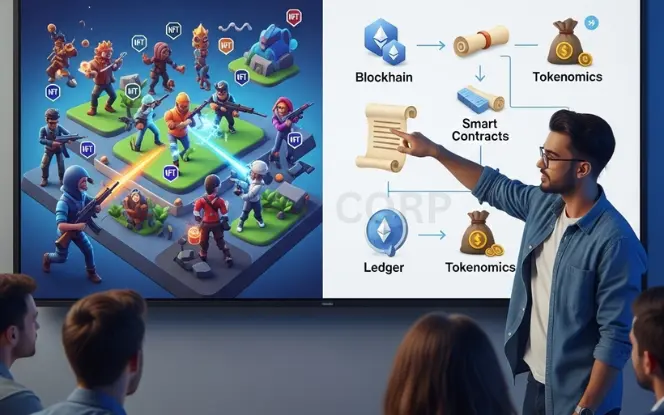
NFT game development overview showing blockchain asset ownership and play-to-earn mechanics
FeatureWhat It Means for Players
NFT OwnershipPlayers own in-game assets as NFTs on the blockchain: tradeable outside the game
Play-to-EarnPlayers earn tokens or NFTs with real-world value through gameplay
Provable ScarcitySmart contracts enforce asset limits — no developer can print infinite copies
InteroperabilityNFTs can potentially move across games or be sold on resale markets
Transparent RulesGame logic and economics run on verifiable smart contracts
Is It Right for You?

Should You Build an NFT Game?

NFT games add significant technical and economic scope. The model works best when the game is genuinely fun and the token economy is carefully designed — not when NFTs are added as an afterthought.

Build an NFT game when…Be careful when…
✓ You want players to own and trade in-game assets⚠ You want fast, low-cost development without blockchain overhead
✓ you are building a P2E or collectible card game⚠ Your game economy hasn't been designed yet — token design needs to come first
✓ You have a community and pre-launch audience⚠ You expect the NFT model itself to drive player acquisition without a fun core game
✓ You can support smart contract audits and ongoing token management⚠ You cannot maintain in-game economics, marketplace fees, or security patches long term
The best-performing NFT games lead with fun gameplay and use NFT ownership as an enhancement — not the primary reason to play.
Benefits

Benefits of Creating an NFT Game

NFT games create new business models and player relationships that traditional games cannot replicate — when the tokenomics are designed correctly and the core game is genuinely enjoyable.

True Player Ownership

Players own assets on-chain rather than holding a license that can be revoked. Ownership persists even if the developer shuts down servers.

Monetization Opportunities

Developers earn on primary NFT sales, resale royalties, and in-game token transactions. Players earn through gameplay, trading, and staking.

Cross-Game Interoperability

NFT standards allow assets to potentially move between compatible games — creating broader networks when studios collaborate.

Community and Engagement

Asset ownership gives players a stake in the game's success. Active communities form around NFT collection and trading, increasing retention.

Development Process

How to Create an NFT Game — Step by Step

Building an NFT game involves game design, blockchain development, smart contract engineering, and reward model design. Token design and game design should progress in parallel — neither fully waits for the other.

Step-by-step NFT game development process from concept to blockchain smart contract deployment
1
Define Your Game Concept

Choose genre (RPG, card game, strategy, battle royale), target audience, and core gameplay loop. The game must be enjoyable without the NFT layer — reward design comes after solid game design.

2
Design Your Token Economy

Define how players earn tokens, how NFTs are minted and burned, marketplace fees, and supply limits. Poor reward design destroys game economies. Tokenomics consulting can help avoid common pitfalls before development starts.

3
Choose a Blockchain

Select a blockchain that balances transaction cost, speed, network, and developer tooling. Ethereum, Polygon, Solana, and Immutable X are common choices. Each has different gas costs, community size, and marketplace support.

4
Develop Smart Contracts

Build ERC-721 or ERC-1155 contracts for NFT assets and ERC-20 contracts for in-game tokens. Smart contracts must be audited before launch. They cannot be changed once deployed. Use smart contract development services if your team lacks Solidity or Rust experience.

5
Build the Game

Develop the core game using Unity, Unreal Engine, or web-based frameworks. Integrate wallet connection, NFT display, marketplace features, and on-chain transaction handling.

6
Set Up a Marketplace

Players need a way to buy, sell, and trade NFTs. You can build a custom marketplace or integrate with OpenSea, Blur, or Magic Eden. Define fees, royalty splits, and listing rules.

7
Audit and Test

Security audits are essential before launch. Bugs found post-deployment cannot be patched. Test all gameplay loops, token flows, edge cases, and marketplace transactions on testnet first.

8
Launch and Grow

Launch in phases: whitelist, public mint, then marketplace opening. Build community on Discord and X. Monitor token price, player engagement, and in-game economy health post-launch.

Technical Stack

Tools, Platforms, and Blockchain Choices

Your technology choices affect development cost, player reach, gas fees, and marketplace access. Blockchain choice in particular is difficult to reverse post-launch.

NFT game development technical stack including Unity blockchain SDK and smart contract tools
BlockchainBest ForWatch Out For
EthereumLargest NFT network, most developer toolingHigher gas costs on mainnet; Polygon L2 often used
PolygonLow fees, Ethereum-compatible, fast transactionsSmaller native community than Ethereum
SolanaVery fast and low cost, growing NFT communityDifferent programming model (Rust), fewer tools
Immutable XBuilt for games, zero gas fees, Ethereum securityMore opinionated platform with Immutable-specific tooling
BNB ChainLarge user base, low transaction costsMore centralized; marketplace community smaller for games

Core Development Tools

Game Engines

Unity and Unreal Engine are the standard choices. Unity has the largest Web3 SDK library. Unreal suits high-fidelity 3D games.

Blockchain SDKs

Moralis, Thirdweb, and Alchemy provide backend APIs and wallet integration. they reduce the effort of connecting games to blockchain.

Smart Contract Frameworks

OpenZeppelin provides audited contract templates for ERC-721, ERC-1155, and ERC-20 tokens. Hardhat and Foundry are standard testing environments.

Wallet Integration

MetaMask, WalletConnect, and Phantom are the most common player-facing wallets. Support depends on the blockchain you choose.

Decentralized Storage

IPFS and Arweave store NFT metadata and images off-chain. Storing media on-chain is prohibitively expensive.

Marketplace Integration

OpenSea (Ethereum/Polygon), Magic Eden (Solana), and Immutable Marketplace (Immutable X) are the main secondary market options for NFT games.

Cost Breakdown

How Much Does It Cost to Create an NFT Game?

Cost depends on gameplay scope, number of blockchain integrations, smart contract scope, art direction, and team location. Final cost requires a scoped estimate based on your specific gameplay, integrations, and team.

NFT game development cost breakdown from simple game to AAA blockchain game
Project TypeTimelineEstimated CostScope Notes
Simple NFT Game2–4 months$15,000–$50,000Basic gameplay, standard ERC-721 NFTs, single blockchain
mid-range game4–8 months$50,000–$150,000Multiple game modes, custom marketplace, token economy
Complex P2E or Multiplayer8–14 months$150,000–$300,000Advanced tokenomics, multi-chain, custom marketplace, rankings
AAA-Quality NFT Game12–24 months$300,000+High-fidelity graphics, large world, full economy design
Smart Contract Audit2–4 weeks$5,000–$30,000Essential for any NFT game before launch
Ongoing MaintenanceMonthly$3,000–$15,000/moBug fixes, balance patches, economy monitoring
Audit costs are not optional. Smart contracts that handle real-money assets must be independently audited before launch. Budget for ongoing economy monitoring. Token price and player behavior can shift post-launch.
Real Examples

Successful NFT Games to Learn From

Each project took a different approach to NFT game design. The challenges are as instructive as the successes.

GameBlockchainKey Learning
Axie InfinityRonin (Ethereum sidechain)Pioneered player-earning mechanics at scale. Players breed and battle Axies. Faced significant economic challenges when AXS token declined — shows the risk of unsustainable reward models.
Gods UnchainedImmutable XFree-to-play trading card game. cards are nfts tradeable on open markets. Immutable X provides zero-fee transactions.
DecentralandEthereum / PolygonVirtual world where land parcels are NFTs. Users build experiences and monetize them. Activity is concentrated in events and exhibitions.
Star AtlasSolanaSpace strategy game with high-quality visuals. Still in development with playable mini-games. Ambitious AAA blockchain project.
SorareEthereum / StarkwareFantasy football with NFT player cards. Licensed from real football clubs. Structured around weekly competitions.
None of these projects maintained their peak token values. NFT game economies are difficult to sustain long term. Axie Infinity's experience — where AXS/SLP collapsed when new player growth slowed — is the most studied case in P2E economics.
Best Practices and Future Trends

Best Practices for NFT Game Development

The NFT games that have lasted share these characteristics — fun gameplay, audited contracts, and a community invested in long-term success.

Lead With Fun Gameplay

NFTs do not make a poorly designed game enjoyable. The game itself must be enjoyable without token rewards. Players who stay for fun sustain game economies longer than players who play only for income.

Audit Smart Contracts

All smart contracts handling player assets must be independently audited before launch. A single vulnerability can drain all in-game assets and funds.

Design a Balanced Token Economy

Define token sinks (ways to spend or burn tokens) before launch. Unlimited token rewards without sinks inflate supply and collapse game economies. Model the economy under different player growth scenarios.

Build Community Early

Start Discord and social channels months before launch. Whitelist early supporters. Community momentum affects primary mint success and long-term player retention.

Future Trends in NFT Gaming

TrendWhat to Watch
AI-generated game contentAI creates dynamic NPCs, procedural quests, and personalized content (potentially unique to each NFT holder)
Cross-game NFT standardsNew cross-game standards aim to let NFTs work across compatible game worlds
Mobile NFT GamingLower-cost blockchains like Solana and Immutable X are making mobile NFT games more viable for casual players
Account AbstractionNew wallet standards reduce friction: players can log in without managing private keys directly, reducing onboarding friction
Real-World Asset IntegrationNFTs linked to physical collectibles, event tickets, or brand experiences create new hybrid engagement models
Build Your Game

What Type of NFT Game Should You Build?

Answer 5 questions and get a recommended technology stack, blockchain, budget range, and team composition.

Step 1 of 5

What is your primary goal?

This helps determine the right game model and reward structure.

What game genre interests you?

Genre affects blockchain choice, smart contract scope, and art requirements.

What platform do you want to target?

Platform determines the game engine, wallet UX, and distribution strategy.

What type of blockchain assets do you need?

This determines smart contract scope and reward model requirements.

What is your approximate budget range?

Budget determines realistic scope, team size, and feature set for Phase 1.

Based on your answers

Your Recommended NFT Game Stack

Validate this stack with your development team before committing to a technology choice.

Need an architecture review?

Book a free consultation with SDLC Corp's NFT game architects to validate this stack for your specific project.

Book a Free Consultation

Build Your NFT Game with SDLC Corp

If the recommendation wizard matched a game type to your goals, the next step is scoping the technical requirements with an experienced team. SDLC Corp provides end-to-end NFT game development, from concept and tokenomics design to smart contract development, game engineering, marketplace integration, and launch.

Smart contract development and security audits
Unity and Unreal Engine game development
Tokenomics design and play-to-earn model architecture
NFT marketplace integration and custom marketplace development
SDLC Corp NFT game development services including smart contracts tokenomics and blockchain gaming

Frequently Asked Questions

What is an NFT game?
An NFT game integrates non-fungible tokens into gameplay so players can own, trade, and earn from in-game assets. Items like characters, weapons, land, or cards exist as NFTs on a blockchain — giving players verifiable ownership that persists outside the game environment.
Do I need coding experience to build an NFT game?
Smart contract development requires Solidity (Ethereum/EVM) or Rust (Solana) experience. Game development requires knowledge of Unity or Unreal Engine. Platforms like Moralis and Thirdweb reduce some of the technical effort, but professional development of a production-ready NFT game requires experienced developers.
Which blockchain is best for NFT games?
The best choice depends on your priorities. Ethereum has the largest NFT network but higher gas costs. Polygon offers low fees with Ethereum compatibility. Solana is fast and low-cost. Immutable X is purpose-built for games with zero gas fees. Each has different marketplace integrations and developer tooling.
How do players earn in NFT games?
Players can earn through gameplay (tokens awarded for wins or achievements), trading nfts on open markets, staking tokens, participating in tournaments, or renting assets to other players. Earning potential depends heavily on the game's economy and token price.
How much does NFT game development cost?
Simple NFT games with basic mechanics can cost $15,000–$50,000. Mid-range games with custom tokenomics and marketplaces typically run $50,000–$150,000. Complex P2E or AAA-quality projects can exceed $300,000. Audits add $5,000–$30,000 on top of development cost.
Are NFT games still relevant in 2025?
Yes, though the market has matured since the 2021 peak. Projects that led with genuine gameplay quality and balanced token economics have retained audiences. The focus has shifted from speculative P2E models toward ownership-based games where NFTs enhance, rather than define, the experience.
What are the risks of building an NFT game?
Key risks include smart contract vulnerabilities (bugs cannot be fixed after deployment), unsustainable in-game economies where inflation outpaces token sinks, regulatory uncertainty (NFTs and tokens are subject to evolving rules), poor player retention (speculative players leave when token prices fall), and high development and audit costs.
How long does it take to develop an NFT game?
Simple games can be built in 2–4 months. Mid-range games typically take 4–8 months. Complex P2E or multiplayer games take 8–14 months or more. Auditing and testnet testing add time — neither is optional.

ABOUT THE AUTHOR

SDLC Corp Game Development Team

The Game Development Team at SDLC Corp is the specialist editorial and engineering group behind our game development content. The team covers Unity, Unreal Engine, mobile, PC, console, AR/VR, blockchain games, fantasy sports apps, and production workflows. Each article is reviewed by practicing game developers and led by Ankit Yadav, CTO at SDLC Corp, who oversees the technical direction and engineering quality standards for the company’s game development practice.
PLAN YOUR SOLUTION

More Insights
You Might Find Useful

Explore expert perspectives, practical strategies, and real-world solutions related to this topic.

Casino game development platform illustration

How to Choose the Right Blockchain for Your Game

In the world of digital innovation, blockchain technology has become

A modern laptop displaying blockchain and gaming icons including Bitcoin, NFT, and a futuristic robot, symbolizing how blockchain technology is revolutionizing the gaming industry.

How Blockchain In Gaming Is The Next Big Thing

The gaming industry has always embraced innovation—from pixelated 8-bit consoles

Blockchain Game Development Cost

How Much Does Blockchain Game Development Cost

Blockchain technology is revolutionizing the gaming industry by enabling players

Let’s Talk About Your Product

Get expert guidance on scope, architecture, timelines, and delivery approach so you can move forward with confidence.

What happens next?