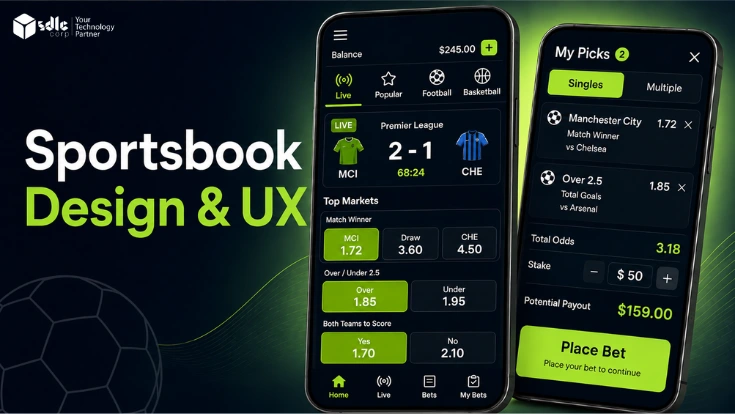
A strong sportsbook UX design helps players move from market discovery to bet placement without friction. Players scan event pages, complete bet slips, deposit funds, follow live states, and cash out without losing momentum.
In 2026, sportsbook UX design is about how the full player journey works together across search, bet slip, payments, KYC, mobile actions, rewards, and repeat sessions. When these parts feel connected, operators see stronger conversion, retention, trust, and long-term player value.
Key Takeaways
- Strong sportsbook UX design supports revenue growth by helping players complete bets, deposits, verification, cashout, and repeat sessions with less friction.
- A clear bet slip drives conversion through visible stake input, odds changes, balance, payout preview, and simple confirmation.
- Live betting UX needs stable state design so players always know if a market is open, suspended, pending, accepted, or rejected.
- Mobile design must match real player behavior with thumb-friendly actions, readable odds, sticky bet slip, and inline deposit.
- Reward UX must stay transparent so players understand cash balance, bonus funds, wagering progress, and expiry dates.
- Custom sportsbook UX gives operators more control over journeys, regional fit, live states, payments, and analytics visibility.
Why Sportsbook UX Design Matters
A strong sportsbook UX design helps players move from interest to action with less friction. Whether players find markets, read odds, place bets, or deposit funds, the journey should feel smooth and clear.
With the American Gaming Association estimating $30 billion in legal NFL wagering for the 2025 season (via Reuters), sportsbook operators cannot afford design friction during high-volume betting windows.
At this scale, even minor UX improvements like a clearer bet slip or a smoother deposit flow can significantly boost operator revenue and protect acquisition spend.
Find the friction points costing you deposits, bets, and repeat play
Before the next major sports calendar spike, operators should know where players drop off across onboarding, bet slip, deposits, KYC, live betting, rewards, and cashout.
When design, odds movement, mobile flow, and payments work together, players face less doubt. Operators also create a stronger path from intent to action.
How Sportsbook UX Design Affects Operator ROI
Sportsbook UX design affects ROI because it shapes the actions that create value. Better UX can improve registration, first deposits, bet slip completion, live betting activity, and player lifetime value. The biggest gains usually come from four areas.
Onboarding Improves Acquisition Value
Operators spend money to bring players in. A long sign-up, an unclear KYC step, or a confusing first deposit can waste that spend. A better flow uses short steps, clear instructions, and simple progress messages so the player reaches gameplay quickly.
Live Betting Supports More Action
Live betting needs speed and clarity. Players should understand odds changes, pending bets, accepted bets, rejected bets, and suspended markets without delay. Clear live UX helps players act faster and trust the platform during fast markets.
Payment UX Protects Deposits
Deposits, withdrawals, and cashout need clear status updates. If a payment fails, the player should know why and what to do next. Good cashier UX reduces confusion and protects deposit conversion across every market.
Personalization Improves Retention
Returning players should see relevant teams, leagues, markets, and offers faster. Saved preferences and personalized lobbies reduce search effort and support repeat sessions, which makes promotional spend more useful.
A sportsbook gets more value from the same traffic when players can register, deposit, bet, cash out, and return with less friction. That is why UX should be measured through conversion, retention, support ticket volume, and player lifetime value.
How Sportsbook UX Design Supports Different Players
Players do not all follow the same path. Some want detailed stats before placing a bet. Some want fast live updates. Others want a simple mobile flow or quick access to the teams and leagues they follow.
A strong sportsbook UX design supports these habits with clear journeys for each player type.
| Player Type | What They Need | Better UX Approach |
|---|---|---|
| Traditional sports players | Stats, market depth, odds comparison | Clear event pages, filters, and grouped markets |
| Live betting players | Fast updates and clear confirmation | Simple odds change messages and clear bet states |
| Esports players | Fast-changing markets | Micro-event clarity and quick market signals |
| Mobile-first players | Short flows and fast access | Sticky bet slip, simple navigation, and quick deposit access |
| Returning players | Relevance and saved preferences | Favorites, personalized lobby, and useful offers |
When the sportsbook supports these behaviors, the journey feels easier. Players reach the right market faster, understand the next step clearly, and return to familiar options without starting from zero. For operators, this improves engagement, retention, and value from each player session.
Where Sportsbook UX Design Loses Players
Players usually drop off when the next action is not clear. In a sportsbook, this can happen before the bet slip, during deposit, at KYC, in live betting, while checking cashout status, or when a reward rule feels unclear. These moments matter because the player already has intent, and the UX should help them continue instead of making them stop and think.
Dense Homepages and Odds Grids
The homepage should guide players quickly to sports, leagues, live events, and popular markets. When too many banners, dense odds grids, and promotion blocks compete for attention, players can miss the path they came for. A cleaner homepage uses spacing, grouped markets, clear sports categories, and direct routes to live events.
Unclear Event Pages, Weak Search, and Broken Deep Links
Event pages should make odds, markets, match details, and live status easy to scan. A better event page groups markets clearly and keeps the main betting actions visible. Search, filters, and deep links should also work properly so promotional banners and push notifications route players to the exact event, market, or offer they clicked.
Bet Slip Friction Before Confirmation
Players can abandon the journey when stake input, balance, odds changes, payout preview, or final confirmation feels unclear. A stronger bet slip keeps selected bets visible, explains odds movement, and gives players a clear next action when a bet is pending, accepted, rejected, or blocked.
Deposit and Cashier Interruptions
Deposit friction is one of the most expensive sportsbook UX problems because the player already has intent. Failed payment messages, missing local methods, unclear limits, or a cashier flow that opens away from the bet slip can interrupt conversion. A better UX keeps payment status visible and helps the player return to the selected bet quickly.
KYC and Verification Drop-Offs
KYC can become a conversion blocker when players do not understand what is required, why it is required, or how long the review may take. Operators should use clear upload instructions, progress states, document examples, and next-step messages so verification feels guided instead of confusing.
Live Betting State Confusion
Live betting creates fast decision moments. If odds freeze, markets suspend, or bet confirmation takes too long without clear messaging, players lose trust. Strong live UX should make every state visible, including open, suspended, odds changed, pending, accepted, rejected, and cashed out.
Turn sportsbook drop-off points into a clear improvement roadmap
SDLC Corp can help operators review the journeys that usually leak revenue first: sign-up, KYC, cashier, bet slip, live betting, cashout, and rewards.
Bet Slip UX That Helps Players Complete Bets
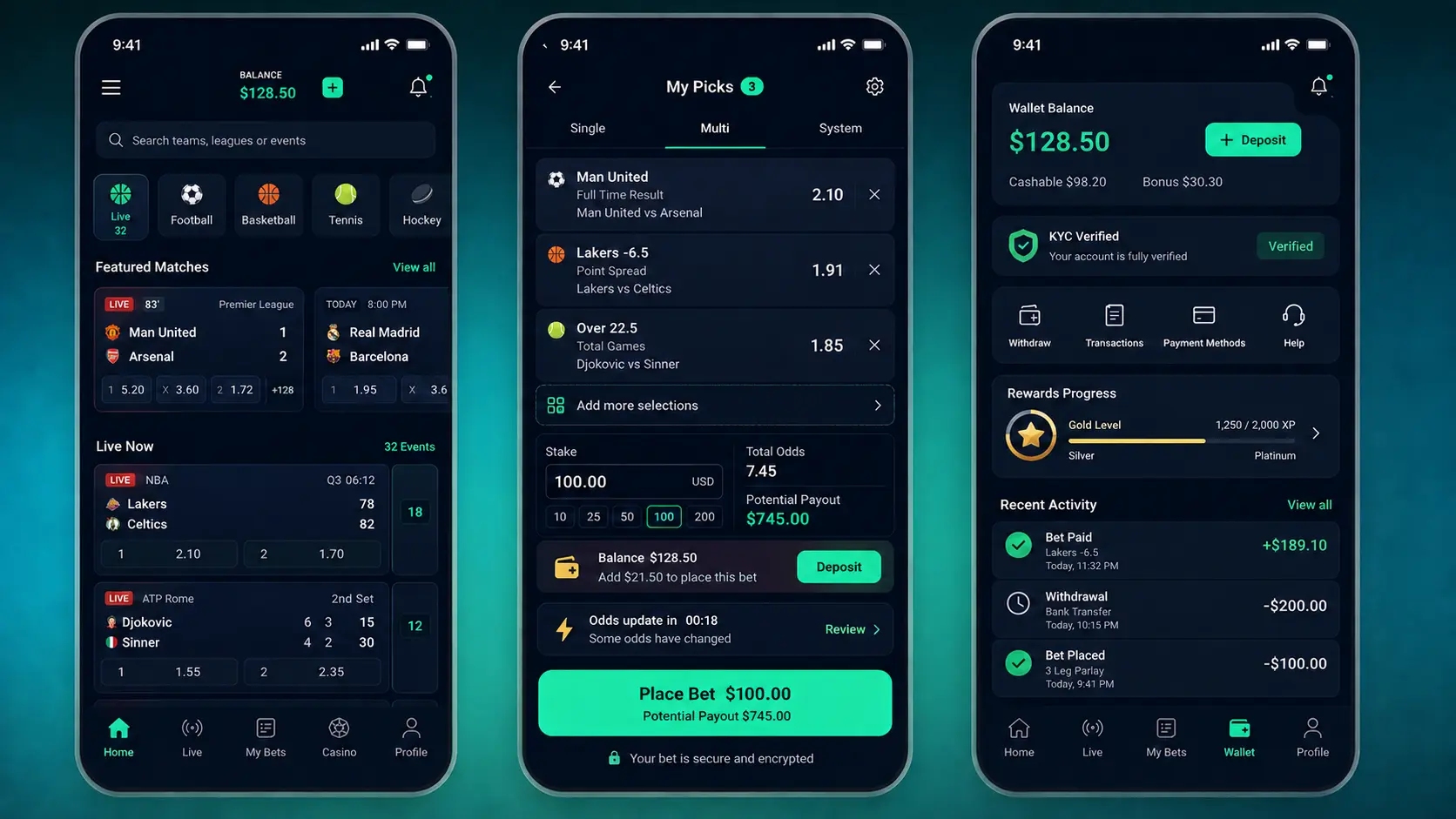
A good bet slip should make the final step feel simple. Once players choose a market, they should clearly see their stake, balance, odds, possible return, and final confirmation before placing the bet.
The goal is to keep the player in control. When odds change, the bet slip should show the update clearly. A low balance should trigger a deposit option without removing the selected bet. If a bet cannot be placed, the interface should explain the reason in simple terms.
| Bet Slip Area | Better UX Approach |
|---|---|
| Stake and balance | Show clear stake input, quick edits, and available balance. |
| Odds changes | Show the updated odds and ask for confirmation. |
| Payout preview | Display stake, odds, and possible return in one place. |
| Low balance | Offer inline deposit without removing selected bets. |
| Confirmation | Show pending, accepted, or rejected status clearly. |
A strong bet slip reduces doubt at the most important point of the journey. It helps players complete bets with confidence and gives operators a better chance to convert betting intent into completed action.
Mobile Sportsbook UX Design for Faster Market Discovery
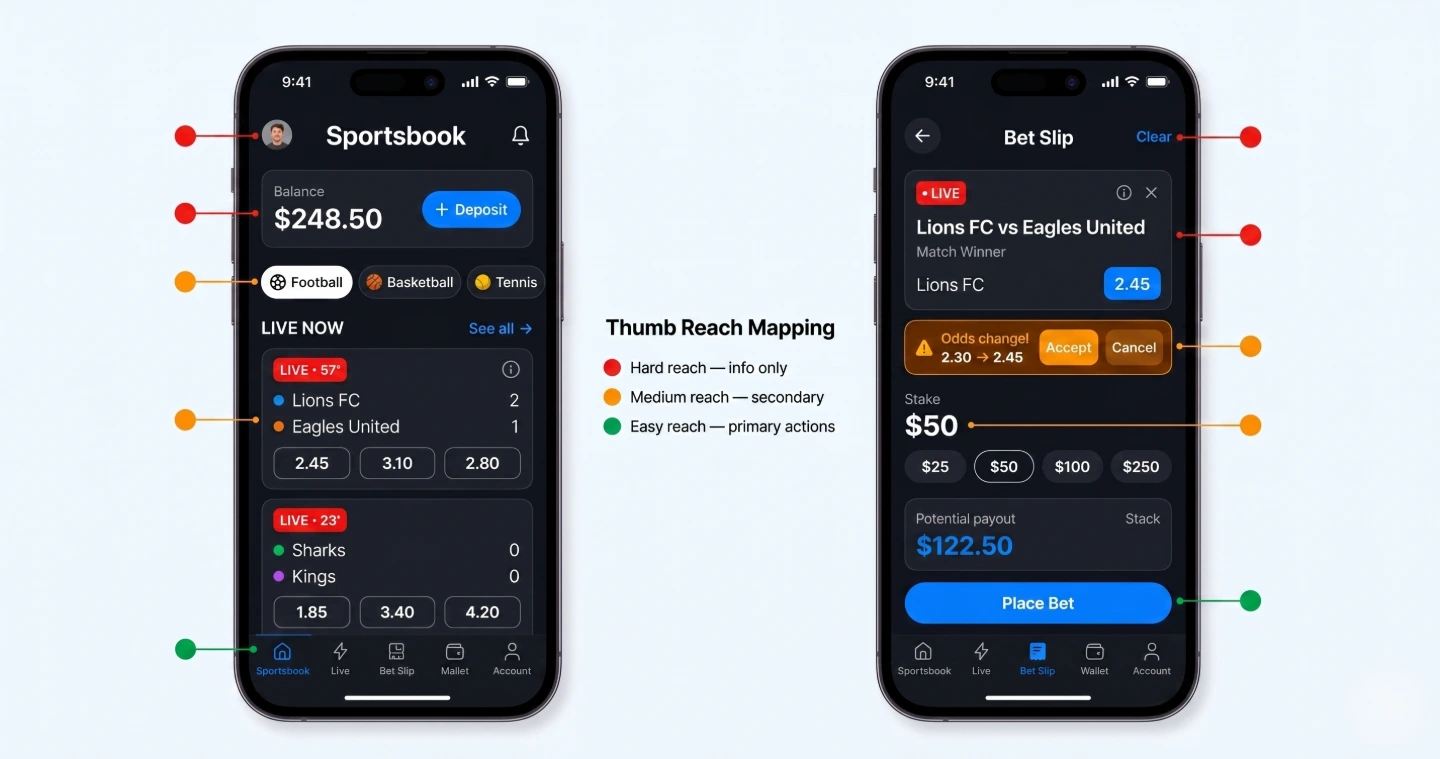
Mobile sportsbook UX design should help players move quickly on a small screen. The goal is simple. Find the event, scan the odds, add the bet, and reach the bet slip without extra effort.
Thumb-Friendly Navigation
Most mobile betting actions happen with one hand. Sports menu, live filters, bet slip, wallet, deposit, and account access should sit where players can reach them easily.
Fast Market Discovery
Clear search, useful filters, favorite teams, saved leagues, compact odds cards, and separate live and upcoming sections help players reach relevant markets faster.
Theme, Color, and Visual Comfort
Color should guide action without confusing players. Odds changes, bet status, deposit buttons, win states, and warning messages should each have clear visual meaning without overwhelming contrast.
Sticky Bet Slip and Quick Deposit
A sticky bet slip keeps selected bets visible while players continue browsing. If the player has low balance, the deposit option should support the journey without removing selected bets.
Trust, Payments, KYC, and Responsible Gambling UX
Trust matters most when players share details, move money, or use account controls. These steps should not feel confusing. A sportsbook should guide the player clearly from registration to verification, deposit, cashout, withdrawal, and safety settings.
Explain What Is Needed
If the platform asks for age checks, location checks, or KYC documents, the player should know why it is required and what to upload.
Show the Current Status
Deposits, withdrawals, cashout, and verification should always show simple updates such as processing, completed, failed, or under review.
Guide the Next Step
If a payment fails, a document is rejected, or a limit is reached, the platform should clearly tell the player what to do next.
Responsible gambling tools should follow the same approach. Account limits, self-exclusion, reminders, and support access should be easy to find, not hidden deep inside settings. Bonus terms and wagering progress should also stay visible without searching account menus.
Also read: For a deeper look at how payment infrastructure shapes operator revenue and player trust, see iGaming Payment Solutions.
What Operators Gain From Custom Sportsbook UX Design
A template can help an operator launch faster. As the platform grows, operators need more control over player journeys, revenue flow, live betting states, rewards, regional language, theme design, and analytics visibility. A custom sportsbook UX design system built on real iGaming software development gives operators that control.
Better Operator Visibility
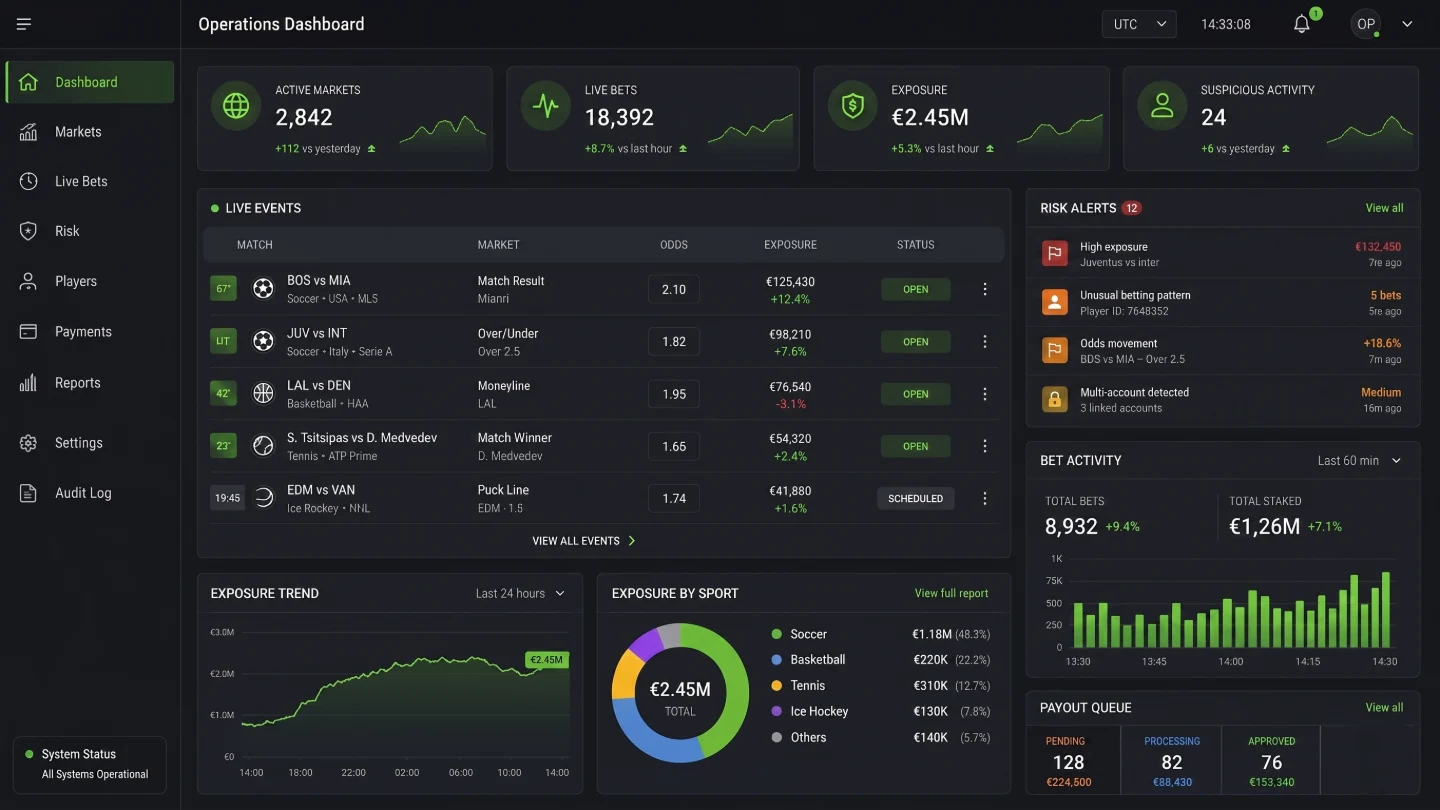
Operators need to track drop-offs across search, event pages, bet slip, deposit, KYC, live betting, rewards, cashout, and withdrawal. Custom UX usually comes paired with custom analytics that show this detail by step, device, event, and player segment.
How SDLC Corp Builds Better Sportsbook UX Design
SDLC Corp builds sportsbook UX design as a revenue journey, not just a visual interface. The process starts by identifying where players lose momentum across discovery, registration, KYC, deposit, bet slip, live betting, cashout, withdrawal, rewards, and repeat sessions.
Then the UX is connected with the sportsbook platform logic underneath, including odds movement, wallet behavior, payment flows, verification rules, player segments, and operator analytics.
Journey Review and Sportsbook UX Design Connected to the Build
Every engagement starts with a review across homepage, event pages, bet slip, deposit, KYC, live betting, cashout, withdrawal, and rewards. UX design connects directly with sports betting app development logic, so the experience matches the platform underneath instead of a static mockup.
UX Built Around Real Sportsbook Systems
A sportsbook interface cannot work well if it is disconnected from trading logic, wallet rules, payment status, KYC checks, and live market states. SDLC Corp designs UX flows that match the real system behavior behind the platform, so players receive clear feedback while operators get better visibility into conversion and drop-off points.
Analytics Visibility for Operators
Custom sportsbook UX should give operators more than a better-looking front end. It should help teams see where users abandon registration, fail deposits, leave bet slips, exit live betting, ignore rewards, or contact support. These insights help operators improve the platform after launch instead of guessing where the friction sits.
Fix the friction before the next high-traffic event reveals it
Super Bowl traffic, Champions League knockouts, World Cup qualifiers, and IPL openers are the windows where small UX gaps turn into real revenue gaps.
Conclusion
Good sportsbook UX design is not only about how the interface looks. It also shapes how quickly players find markets, understand odds, place bets, deposit funds, complete KYC, use cashout, and return for another session.
Operators should review the full journey before only changing screens. The strongest improvements usually come from fixing the moments where intent is already high, such as bet slip confirmation, deposits, live betting states, verification, rewards, and withdrawal updates.
FAQs
1. What makes a good sportsbook UX design?
A good sportsbook UX minimizes friction from discovery to bet placement. It features clear navigation, intuitive bet slips, real-time odds updates, and seamless cashier flows, helping players place bets and manage funds with confidence.
2. How does UX impact sportsbook revenue?
UX directly impacts ROI by improving conversion rates. A streamlined onboarding process, clear live betting states, and frictionless deposits reduce player drop-off, meaning more acquired users successfully place bets and return for future sessions.
3. What are the most common UX drop-off points in sports betting apps?
Players typically drop off due to cluttered odds grids, confusing bet slip behavior during odds changes, complex KYC verification steps, unclear deposit and withdrawal statuses, broken deep links, and live betting states that do not explain what is happening.
4. Why is mobile UX so critical for sportsbooks?
Mobile sportsbook UX matters because players often browse markets, follow live games, deposit funds, and place bets on smaller screens. Mobile UX must prioritize thumb-friendly navigation, sticky bet slips, fast loading speeds, readable odds cards, and quick cashier access.
5. Can operators improve sportsbook UX without rebuilding the full platform?
Yes. Many operators can improve UX by auditing and redesigning high-friction journeys first, such as onboarding, bet slip, cashier, KYC, live betting states, rewards, and cashout. A full rebuild is only needed when the existing platform cannot support the required journey logic, performance, integrations, or analytics visibility.
6. How much does custom sportsbook UX and design cost?
The cost of custom sportsbook UX design depends heavily on the platform's scope. Building from scratch costs more than running a UX audit to redesign specific friction points. Factors include the complexity of live betting states, custom personalization engines, payment flows, KYC journeys, and backend integrations. A thorough UX audit is the best way to get a precise estimate based on operator needs.