

Unlock the secrets to developing a fantasy football app that rivals NFL Fantasy Football. Learn how to build and create engaging features while exploring top-notch fantasy football app development services from SDLC Corp. You can also study NFL free fantasy football leagues to understand league creation, player engagement, and user flow before planning your own platform.

Growth Stats of NFL Fantasy Football App
To effectively create a fantasy app like NFL Fantasy Football, understanding its growth statistics is essential. With a staggering 102 million users, the app showcases its immense popularity. Its mobile presence, including the NFL Fantasy Football iOS app, also shows how important a smooth mobile experience is for fantasy sports users. In 2023 alone, it generated an impressive annual revenue of $200 million, demonstrating the lucrative potential of the fantasy sports market. Analyzing these key stats can provide invaluable insights for aspiring app developers.
These stats clearly demonstrate the massive potential of creating a well-designed betting app. The online sports betting industry is booming, driven by the increasing popularity of digital platforms and seamless user experiences. With the right strategy, innovative features, and a focus on user engagement, you can tap into this thriving market and achieve remarkable growth. Collaborating with a reliable Fantasy Sports App Development Company can help you build a feature-rich, secure, and scalable app tailored to meet market demands. Their expertise ensures your app stays ahead of the competition, providing users with an exceptional experience while maximizing your business potential.
Architecture of a Scalable Fantasy App
Building a scalable architecture for an NFL fantasy football app involves creating a robust, flexible system that can handle large user volumes, real-time updates, and high data loads during peak times. Key architectural components, from CDN and caching systems to database and auto-scaling groups, work together to optimize performance and provide users with a seamless experience.
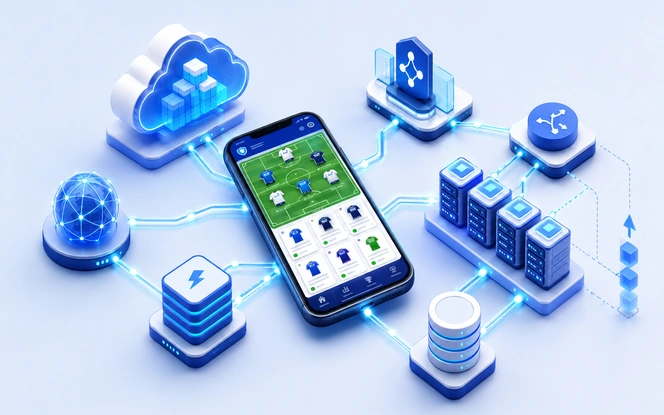
A well-structured architecture ensures that your NFL fantasy football app remains responsive, reliable, and scalable. It supports important layers such as users, CDN, stateful servers, auto-scaling groups, cache, regions, app assets, Redis, MySQL database, and Kafka. For high-traffic systems, teams can review AWS Auto Scaling documentation to understand how cloud resources can adjust during peak demand. By using auto-scaling, caching, and efficient data management across regions, this setup gives your platform the flexibility needed to grow with user demand and handle peak periods such as game days.
Features
Creating a fantasy app like NFL Fantasy Football involves incorporating essential features that improve user engagement and make the app easier to use. The right mix of live updates, team management, user profiles, and alerts helps keep players active and encourages them to return during every match week.
User Registration and Profiles
Enable users to create accounts easily and manage their profiles. Users can track their teams, achievements, and performance stats while interacting with friends and other fantasy players.
Live Scoring and Updates
Provide real-time scoring and match updates so users can instantly see how their fantasy players are performing. Reliable feeds from a provider such as Sportradar Sports Data API can support live scores, player stats, schedules, and match data. This keeps users engaged throughout live games.
Custom Leagues and Scoring Systems
Allow users to create private leagues, join contests, and set custom scoring rules. This makes the app more flexible for friends, office groups, and competitive players.
Player Stats and Analysis
Offer detailed player statistics, historical performance, injury updates, and form insights. These details help users make smarter team selection and trade decisions.
Trade and Waiver Wire Management
Support user trades and waiver wire pickups to add more strategy to the game. This feature keeps users involved even between live matches.
Push Notifications
Send alerts for injuries, team changes, scoring updates, trade offers, and game reminders. Timely notifications help users stay informed and active.
Process To Build
Developing a fantasy app like NFL Fantasy Football requires a systematic approach that balances user experience and technical robustness. This process encompasses market research, feature definition, technology selection, design, and rigorous testing. By leveraging Fantasy Football Software Development Services from a reliable provider like SDLC Corp, you can ensure a successful and efficient development journey.

Requirement Gathering
The initial phase involves thorough communication with stakeholders to comprehend their needs and expectations. A detailed analysis of the gathered information helps in creating a clear and concise set of requirements that will serve as the foundation for the entire software development process.

Development
Developers follow coding standards, utilize chosen technologies, and work collaboratively to build the solution iteratively. Regular check-ins and code reviews are essential to maintain code quality and ensure adherence to the design specifications.

Maintenance & Support
Post-deployment, the software enters the maintenance and support phase. This involves monitoring the system's performance, addressing any issues that may arise, and releasing updates or patches as needed. User feedback is crucial during this phase, guiding the development of future enhancements or features.

Design and UI/UX
The design phase focuses on translating the gathered information into a blueprint for the software solution. This includes creating system architecture, database design, and user interface mock-ups. The design phase also involves making decisions about technologies, platforms, and frameworks that will be utilized in the development process.

Testing and Deployment
Quality assurance is paramount in the testing phase. Bugs and issues are identified, addressed, and retested before moving to the deployment phase. Continuous monitoring during and after deployment allows for prompt identification and resolution of any unforeseen issues.
Challenges and Solutions in Developing a Fantasy App
Building a Fantasy app involves overcoming several challenges that can impact its functionality, user trust, and market success. Here are the top challenges and actionable solutions, supported by industry statistics, to help navigate these complexities effectively.
Compliance with Fantasy App Regulations
One of the foremost challenges in developing a fantasy app is ensuring compliance with local and international regulations surrounding online gaming and fantasy sports. Different regions have varying laws governing online fantasy platforms, making it essential for developers to stay informed about these legal requirements. A robust legal framework and compliance processes should be in place to ensure the app adheres to the relevant laws and prevents legal repercussions.
Real-Time Data Management
Fantasy apps require accurate and up-to-date data for live games, player statistics, and event outcomes. Managing real-time data efficiently can be challenging due to the need for constant updates, seamless integrations with third-party APIs, and low-latency performance. Developers can review the Sportradar developer getting started guide before planning API setup, authentication, and data workflows. Implementing scalable cloud infrastructure, APIs with real-time data feeds, and optimizing server performance can help handle large volumes of data and ensure smooth and immediate user experiences.
Security Concerns
Security is a critical challenge, given the financial stakes and personal information involved in fantasy apps. Protecting user data and financial transactions and ensuring a safe gaming environment are top priorities. Developers must implement end-to-end encryption, secure payment gateways, and anti-fraud measures to safeguard user privacy and prevent malicious attacks. Regular security audits and updates will also help maintain the app's integrity and build user trust.
How To Build?
Learn how to make a fantasy app like NFL Fantasy Football with expert insights from SDLC Corp's fantasy football app development services, designed for engaging user experiences and seamless performance.
1. Hire Companies
Developing an NFL Football-like app requires extensive experience and specialized capabilities. The following companies are recommended for their expertise in creating engaging and feature-rich football applications:
These companies can help you bring your vision to life, ensuring a high-quality app that enhances user engagement and delivers a seamless experience.
2. Hire Developer
Developing an NFL Football-like app requires extensive experience and specialized capabilities. The following companies are recommended for their expertise in creating engaging and feature-rich football applications:
These platforms can connect you with skilled developers who can help turn your vision into reality, ensuring a high-quality app that enhances user engagement and provides a seamless experience.
3. Learn Yourself
Developing a fantasy app requires not only collaboration with skilled professionals but also a commitment to enhancing your own knowledge and skills. By immersing yourself in learning resources, you can gain valuable insights into the development process, design principles, and technologies that drive successful fantasy applications.
- YouTube Channel: YouTube offers tutorials and courses on fantasy app development, game design, coding techniques, and user experience strategies.
- W3Schools: W3Schools provides tutorials on HTML, CSS, JavaScript, and other web development technologies needed for app development basics.
Cost Break-UP
Understanding the cost involved in developing a fantasy app like NFL Fantasy Football is crucial for budgeting and planning. Various factors contribute to the overall expenses, including design, development, and ongoing maintenance. Engaging a reliable Fantasy Football Software Development Agency can help streamline the budgeting process. Here’s a breakdown of key cost components involved in building your app.
| Features/Services | Basic/POC | Advanced |
|---|---|---|
| App Design & UI/UX | User-friendly design with custom themes | Advanced UI/UX with animations, personalized design, and high-end user experience |
| Core Features | Full-featured fantasy gameplay: user login, team creation, real-time scoring, leaderboards | Multiple game modes, dynamic user dashboards, and highly scalable gameplay |
| Backend Development | Robust backend with database and APIs for handling moderate user load | Scalable cloud infrastructure, real-time data processing, load balancing, and microservices architecture |
| Third-Party Integrations | Integrated payment gateways, push notifications, and basic analytics | Advanced integrations: AI-based analytics, real-time notifications, blockchain for transactions, and cryptocurrency payments |
| Post-launch Support & Updates | 3-6 months support with minor updates | 12+ months of premium support, regular updates, AI-driven user personalization, and advanced data security features |
| Pricing | $10,000+ | $50,000+ |
Start Building Your Fantasy App Today Get in Touch with Our Experts!
Launch your successful fantasy app with expert guidance. From design to development, our team ensures a seamless process for creating a high-performance, user-friendly platform that fits your business goals.
Start Your Fantasy Sports AppMonetization Strategies for Fantasy Apps
Fantasy apps can leverage proven monetization strategies to generate substantial revenue while ensuring user satisfaction. Below are three key approaches enhanced with relevant statistics to highlight their effectiveness.
In-App Purchases
In-app purchases remain a highly lucrative monetization strategy for fantasy apps. They allow users to access additional features or credits, enhancing their betting experience.
Virtual Credits or Fantasy Tokens: Fantasy apps often rely on virtual currencies, with 60% of mobile app revenue worldwide coming from in-app purchases. Offering tiered credit packages encourages both casual users and high-stakes bettors to engage with the app.
Premium Fantasy Tools: Advanced tools, such as analytics or odds calculators, can be offered as one-time purchases or upgrades. Research shows that users are willing to spend up to 50% more on apps that offer personalized experiences.
Customization Options: Personalization boosts engagement. Apps that offer customization options report a 30% increase in user retention rates, as users feel more invested in their experience.
Subscription Models
Subscription models create predictable and recurring revenue streams, making them a favorite for monetizing apps.
Tiered Membership Plans: By offering different levels of subscriptions, fantasy apps can cater to a wider audience. Statistically, 16% of app users globally subscribe to premium services for exclusive features.
Exclusive Insights and Content: Premium content, such as expert betting tips or event-specific strategies, can drive subscriptions. Surveys show that 45% of users are willing to pay for exclusive sports insights.
Event-Centric Plans: Major sports events like the FIFA World Cup or Super Bowl are golden opportunities. Apps that launched event-specific subscription plans saw a 40% spike in new sign-ups during event periods.
Advertising
Advertising remains one of the most straightforward and scalable ways to monetize fantasy apps, leveraging traffic to generate consistent revenue.
Sponsored Ads: Partnering with sports books or sports-related brands for sponsored ads can be highly profitable. A well-placed sponsored ad can result in a 200% increase in click-through rates compared to generic ads.
Video and Banner Ads: Video ads alone account for 72% of all mobile app advertising revenue. Incorporating short, non-intrusive video ads during app transitions or between sessions can be highly effective.
Affiliate Partnerships: Affiliate marketing in the fantasy niche offers commissions of up to 30% of referred user spending, making it a lucrative strategy for apps with high traffic.
Types Of Game
Popular Game Development Services
Our Happy Clients









Why Choose Us?
we take pride in providing customized solutions that elevate your fantasy gaming experience. Specializing in Fantasy Cricket App Development Services and Fantasy Hockey App Development, we are dedicated to assisting you in creating captivating platforms through fantasy app development like NFL that truly engage your audience.
Engaging game types
Engaging game types improve the player experience and help users stay active on your fantasy platform.
Live Scoring
Live scoring gives users instant match updates and helps keep the app exciting during ongoing contests.
Players Statistics
Detailed player statistics help users make better choices and improve fantasy team selection strategies.
Responsible Gaming
Responsible gaming features support safer play and show your platform is built with user trust in mind.
FAQs
What is the cost to develop a fantasy app like NFL Fantasy Football?
The cost to develop a fantasy app like NFL Fantasy Football usually starts from $10,000 and can go above $100,000. The final cost depends on features, UI/UX design, sports data API integration, payment system, admin panel, platform choice, and post-launch support.
What are the key features of an NFL fantasy football app?
Key features include user registration, fantasy team creation, player stats, live scoring, contest management, private leagues, leaderboards, push notifications, secure payments, wallet management, and an admin panel for complete platform control.
How much time does it take to develop a fantasy app like NFL Fantasy Football?
A basic fantasy football app can take 1 to 3 months, while an intermediate version may take 4 to 6 months. A fully featured fantasy football app with live scoring, advanced analytics, scalable backend, payment system, and mobile apps can take 7 to 12 months.
How can I earn money by launching a fantasy app like NFL Fantasy Football?
You can earn money through paid contests, platform commission, subscription plans, in-app purchases, advertising, sponsored leagues, premium analytics, and affiliate partnerships. The right monetization model depends on your target market and legal requirements.
How do I choose the right technology stack for a fantasy football app?
The right technology stack depends on app features, traffic expectations, real-time scoring needs, security, and platform choice. Common technologies include React Native, Flutter, Node.js, Laravel, PostgreSQL, MySQL, Redis, AWS, Google Cloud, and third-party sports data APIs.
How can SDLC Corp help in fantasy app development?
SDLC Corp helps businesses build secure, scalable, and feature-rich fantasy sports apps. The team can support UI/UX design, mobile app development, backend development, sports data API integration, payment integration, admin panel development, testing, deployment, and post-launch support.
Do I need a sports data API for a fantasy football app?
Yes. A sports data API is needed for live scores, player stats, injury updates, match schedules, leaderboards, and real-time fantasy points. Developers can use a trusted data source and review setup documents such as the Sportradar developer guide before integration. Without accurate API integration, the app cannot update user contests properly.
Can a fantasy football app handle high traffic during live matches?
Yes, but the app must be built with scalable backend architecture, cloud hosting, caching, load balancing, and database optimization. Cloud services such as AWS Auto Scaling can help manage changing traffic during live matches. This helps the app stay fast during peak match hours.
What admin panel features are required in a fantasy football app?
The admin panel should include user management, contest management, player data control, payment tracking, withdrawal approval, bonus management, reports, notifications, and fraud monitoring.
How do fantasy football apps keep user payments secure?
Fantasy apps use secure payment gateways, encrypted transactions, wallet management, KYC checks, fraud detection, and role-based access to protect user payments and financial data.