A Project Management Information System (PMIS) for capital construction projects helps owners manage costs, schedules, changes, documents, approvals, contractors, and reporting in a connected system. However, the best platform is not the one with the longest feature list. Instead, choose the platform that fits your project controls, workflows, users, integrations, and long-term needs.
Key Takeaways
-
Start with project problems before comparing PMIS vendors.
-
Build clear, testable PMIS requirements and identify mandatory criteria.
-
Check how the PMIS connects with ERP, scheduling, BIM, GIS, and other systems.
-
Test every shortlisted vendor with the same real construction scenarios.
-
Compare evidence, implementation effort, and PMIS total cost of ownership before selection.
Start With Your Capital Project Needs
Start by identifying where current project processes create delays, duplicate work, weak controls, or unreliable data. Then, use those problems to guide the vendor evaluation.
A team may track changes in spreadsheets while finance stores actual costs in an ERP. In that situation, “cost management” is too broad a requirement. The team needs controlled change workflows plus reliable financial integration.
| Current Problem | PMIS Requirement |
|---|---|
| Changes tracked in spreadsheets | Change management workflow |
| Manual cost updates | ERP integration |
| Outdated drawings | Document version control |
| Slow management reporting | Portfolio reporting |
As a result, PMIS selection stays focused on business outcomes and gives the evaluation team clear problems to test later.
Define Your PMIS Requirements
Create a PMIS requirements matrix that reflects the capabilities your capital program actually needs. Instead of collecting broad software features, keep each item tied to a defined business requirement.
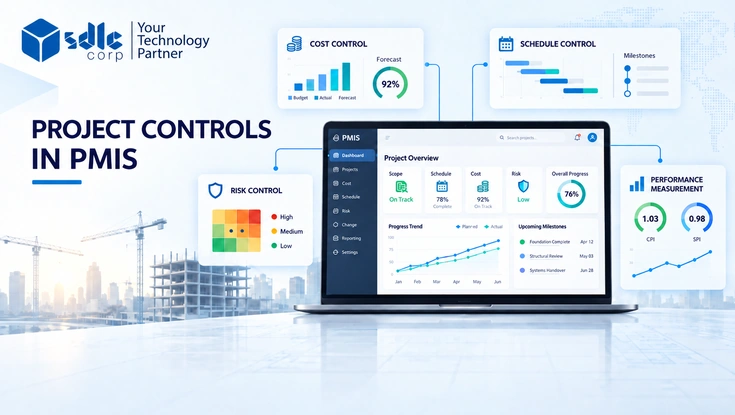
For project controls, assess budgets, commitments, actual costs, forecasts, contingency, schedules, risks, and change orders. Construction workflows may also require RFIs, submittals, contracts, drawings, approvals, inspections, and closeout records.
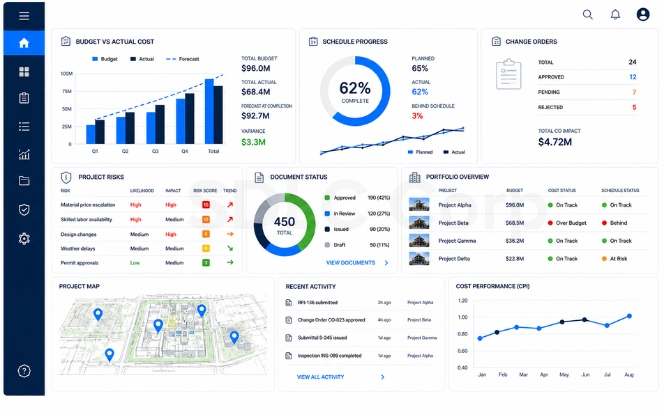
Technical PMIS requirements should include role-based access, audit history, SSO, APIs, mobile access, reporting, and data export. Moreover, larger programs should define security, retention, integration, and performance requirements. For document and information-management rules, use ISO 19650-1 information-management principles for structured information exchange, recording, versioning, and organization.
Make every requirement testable. For example, replace “good reporting” with “show budget, actual cost, forecast, approved changes, and variance by project.”
Prioritize Your PMIS Selection Criteria
Not every requirement carries the same importance. Classify your PMIS selection criteria before product demonstrations begin so critical needs drive the evaluation.
| Priority | Meaning | Example |
|---|---|---|
| Knockout | Vendor must support it | Required ERP integration |
| Must Have | Critical to operations | Cost and change control |
| Should Have | Important but negotiable | Offline inspections |
| Nice to Have | Useful but optional | AI assistant |
First, apply knockout requirements. Optional capabilities should never compensate for a vendor that fails a critical business need.
Check PMIS Integrations and Data Ownership
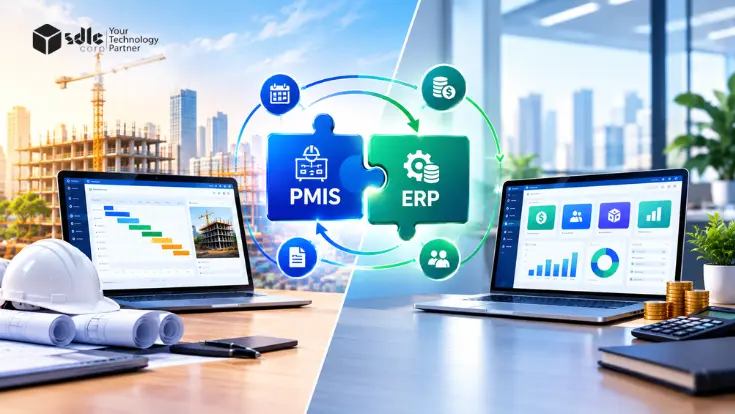
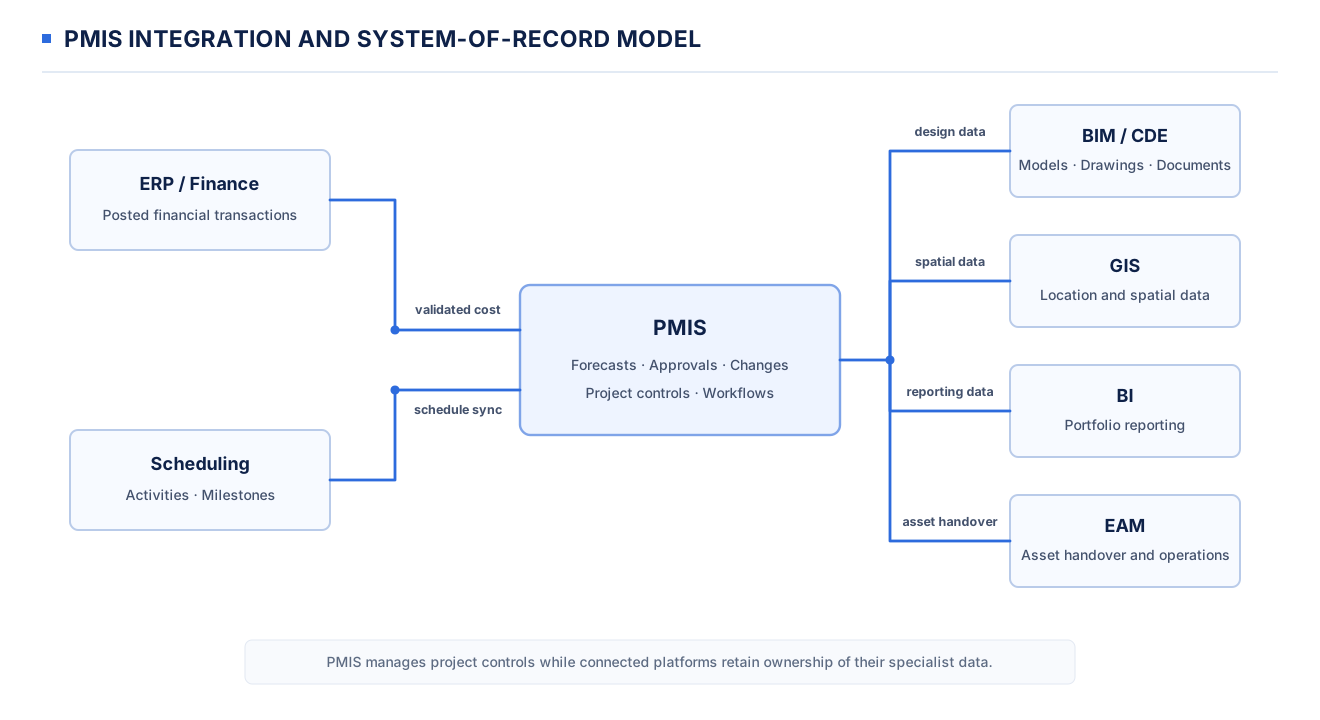
A construction PMIS rarely replaces every system already in use. In addition, most capital programs rely on ERP, scheduling, BIM or a Common Data Environment (CDE), GIS, BI, and Enterprise Asset Management (EAM) platforms. Therefore, where ERP and PMIS records must stay aligned, define the integration pattern early; SDLC Corp’s ERP consulting and integration services outline common approaches for connecting enterprise systems.
Before designing integrations, decide which system owns each type of information. For instance, ERP may remain the source for posted financial transactions, while the PMIS manages forecasts, approvals, changes, and project controls. In addition, the ISO 19650-1 standard can guide information-management responsibilities and Common Data Environment practices. However, contracts should separately define legal data ownership, access, retention, portability, and exit rights.
Do not accept “we provide APIs” as proof of PMIS integration. Instead, ask what data moves, whether synchronization works one way or both ways, how the platform detects failures, and who maintains each connection. For more complex application landscapes, review software integration services when planning APIs, data mappings, monitoring, and reconciliation.
Finally, run a practical test by sending an actual cost from the ERP into the PMIS with one incorrect cost code. Require the vendor to show validation, error handling, correction, and reconciliation.
Shortlist PMIS Vendors
Once your requirements and integration needs are clear, reduce the market to three to five serious candidates. However, do not shortlist platforms on brand recognition alone. The best PMIS for capital projects depends on project scale, operating model, existing systems, and governance needs.
The platforms below overlap in several areas. However, each one has a different center of strength. Therefore, compare the shortlist by primary capability, typical fit, and the areas that still need validation.
How Leading PMIS Platforms Differ
| Platform | Primary Strength | Best Fit | What to Validate |
|---|---|---|---|
|
Procore focuses strongly on construction execution, field collaboration, project financials, RFIs, submittals, commitments, and change management. |
Therefore, it fits owners, contractors, and project teams that need one environment for day-to-day construction delivery and collaboration. |
However, validate portfolio reporting, ERP integration, financial reconciliation, governance controls, and long-term record requirements. |
|
|
Autodesk Build connects drawings, documents, issues, RFIs, submittals, field workflows, cost management, and Autodesk BIM processes. |
As a result, it can be a strong fit for programs already centered on Autodesk design and model-coordination workflows. |
Still, evaluate enterprise cost controls, portfolio governance, ERP integration, reporting depth, and owner-specific approvals. |
|
|
Primavera P6 emphasizes detailed scheduling, planning, resource management, program controls, and enterprise project portfolio management. |
Consequently, it suits large or schedule-intensive programs where critical-path planning and schedule governance are major priorities. |
However, confirm how P6 will connect with cost, document, change, field, and financial systems. |
|
|
Primavera Unifier centers on owner-side capital planning, cost control, fund management, configurable processes, documents, facilities, and asset workflows. |
Therefore, it is well suited to owners that need strong capital governance, standardized approvals, and lifecycle visibility. |
Before selection, assess configuration effort, usability, integrations, implementation complexity, and customization needs. |
|
|
Kahua emphasizes configurable owner and program workflows, cost and funding management, documents, approvals, portfolio reporting, and analytics. |
In particular, it fits capital owners that need configurable processes across projects, contracts, funding structures, and portfolios. |
Finally, validate configuration effort, integration architecture, reporting requirements, implementation resources, and portfolio governance. |
Do not treat these categories as hard product boundaries. Instead, use their primary strengths to decide which vendors deserve a deeper scenario-based test for your capital program.
Also compare the shortlist with SDLC Corp’s Trestle PMIS when you need an owner-focused system of record for projects, contracts, costs, construction workflows, documents, reporting, and two-way ERP integration.
Finally, require every shortlisted platform to pass the same requirements, integration tests, security checks, scenario-based evaluation, and pilot validation.
Test Vendors With Real Project Scenarios
Control the demonstration instead of letting each vendor choose what to show. Therefore, give every shortlisted vendor the same workflow, sample data, roles, and acceptance criteria.
First, test document control by issuing a revised drawing, creating an RFI, approving the response, and confirming that users can identify the current document version.
Next, test PMIS integration with ERP by processing one valid financial transaction and one incorrect transaction. As a result, the team can see how the platform handles validation and errors.
Consequently, identical scenarios make PMIS vendor evaluation clearer because they compare actual platform performance rather than polished sales presentations.
Score Vendors Using Evidence
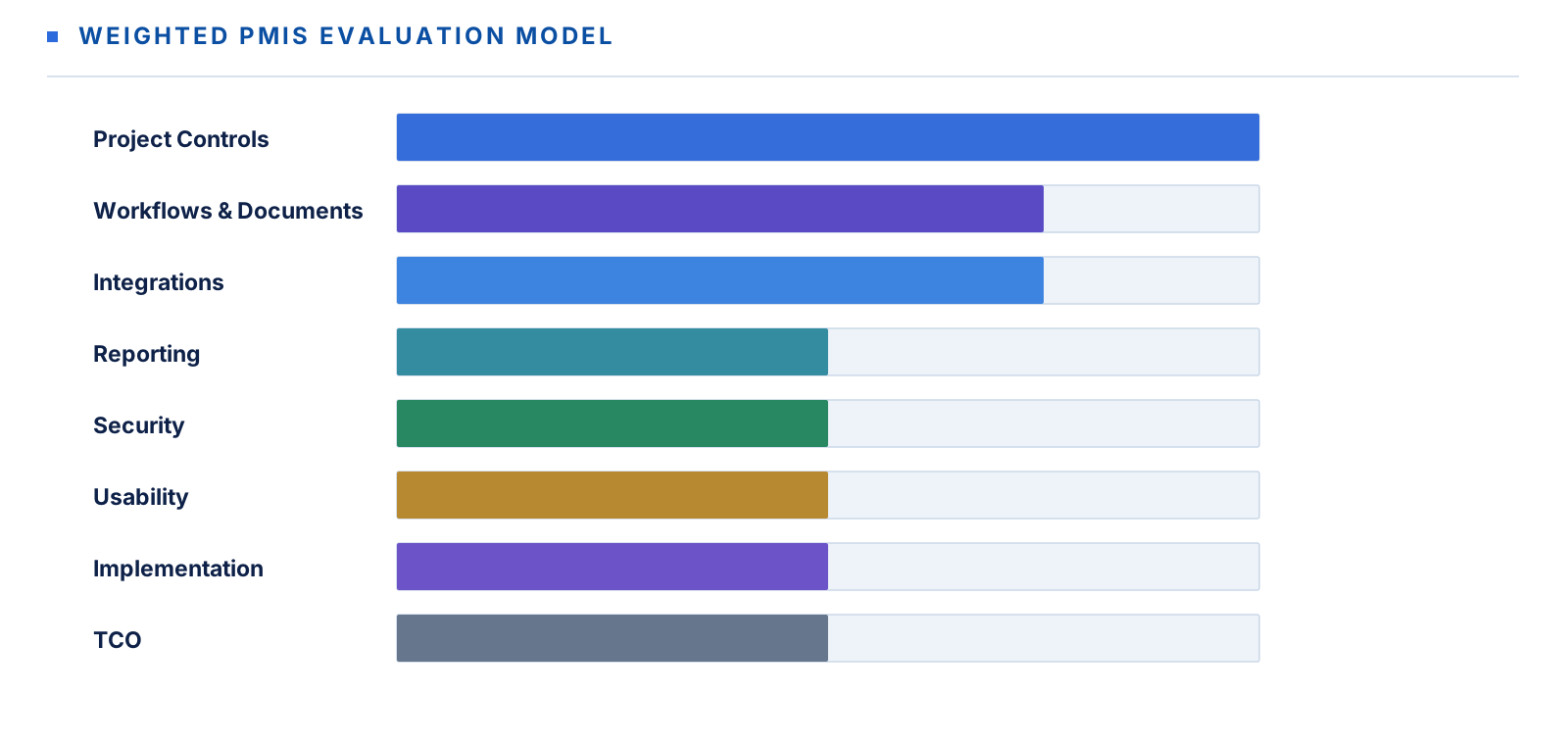
After testing, create a weighted PMIS vendor evaluation scorecard. Then, adjust the weights to reflect the priorities of your capital program.
| Evaluation Area | Example Weight |
|---|---|
| Project Controls | 20% |
| Workflows and Documents | 15% |
| Integrations | 15% |
| Reporting | 10% |
| Security | 10% |
| Usability | 10% |
| Implementation | 10% |
| TCO | 10% |
Next, score each category from 1 to 5 and record the evidence supporting that score. For example, a completed ERP transaction with successful reconciliation provides stronger proof than a claim that ERP integration exists.
Therefore, a documented scorecard makes the final PMIS decision easier to explain and defend internally.
Compare Implementation Risk and TCO
Compare PMIS total cost of ownership across the same period, such as five years. In addition, include software, implementation, integrations, migration, training, support, administration, customization, upgrades, and exit costs.
Planning basis: five years, about $250M annual construction volume, 50–100 core users, and 15–25 active projects. These figures are illustrative planning assumptions, not vendor quotes.
| Scenario | Cost Basis | Five-Year TCO |
|---|---|---|
| Low | $100k/year software; implementation at 0.75× first-year software; $100k setup; $40k/year admin | $875k |
| Base | $180k/year software; implementation at 1.0×; $160k setup; $60k/year admin | $1.54M |
| High | $300k/year software; implementation at 1.5×; $325k setup; $100k/year admin | $2.775M |
Before approval, replace these assumptions with vendor quotes and internal estimates. Then, compare customization effort, ongoing support, and how easily your team can export project data if the platform changes.
Validate the PMIS Before Full Rollout
A strong scorecard should narrow your options, but it should not end the evaluation. Therefore, check relevant customer references and validate the preferred platform through a controlled pilot.
First, define PMIS acceptance criteria before the pilot begins. During the pilot, confirm that critical workflows complete correctly, integrations reconcile, permissions work, reports match source data, and users can export required records.
Next, carry important requirements into the RFP, contract, implementation scope, and acceptance tests. As a result, each requirement has a clear path to verification.
Finally, before the decision, balance project controls, workflows, integrations, usability, security, implementation effort, and long-term cost.
PMIS Selection Checklist
Before approval, confirm that your evaluation team has completed and verified each step in the selection process. This final review helps prevent an attractive demo from outweighing missing evidence.
Choosing a PMIS for Your Capital Program?
Evaluate project controls, workflows, integrations, implementation requirements, and long-term costs with a selection approach that reflects your capital program.
Talk to SDLC CorpFinal Thoughts
Choosing the right PMIS for capital construction projects comes down to fit, not feature count. Therefore, define your needs, test critical workflows, verify integrations, compare evidence, and validate lifecycle cost before committing to a platform.
Frequently Asked Questions
What should a construction owner look for in a PMIS?
A PMIS for construction owners should support project controls, costs, changes, documents, approvals, reporting, security, and required integrations. Therefore, priorities should reflect the owner's capital program rather than a generic software checklist.
How do you compare PMIS vendors?
Use documented requirements, knockout criteria, controlled demonstrations, and a weighted scorecard. Then, compare evidence from identical tests instead of relying on separate vendor presentations.
What systems should a PMIS integrate with?
Common integrations include ERP or finance, scheduling, BIM/CDE, GIS, BI, procurement, and EAM systems. However, the correct architecture depends on where your organization owns financial, schedule, document, and asset data.
What does PMIS total cost of ownership include?
PMIS TCO includes software, implementation, integration, migration, configuration, training, support, administration, customization, upgrades, and exit costs. As a result, it gives a clearer picture than comparing license prices alone.
Should owners and contractors use the same PMIS?
Not always. For example, owners often need portfolio controls, governance, financial visibility, auditability, and long-term records. Meanwhile, contractors may focus more heavily on construction execution.